Artwork
Water Lilies (Agapanthus)
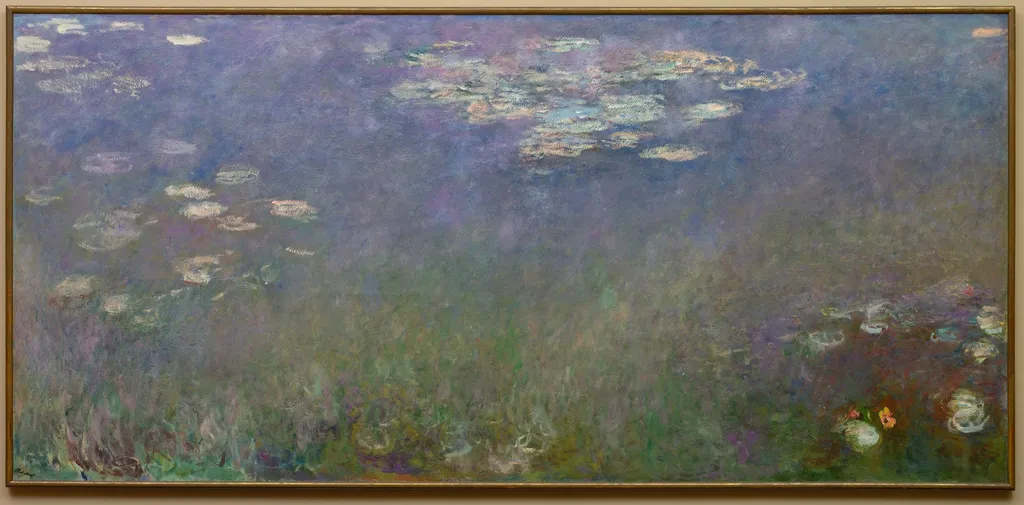
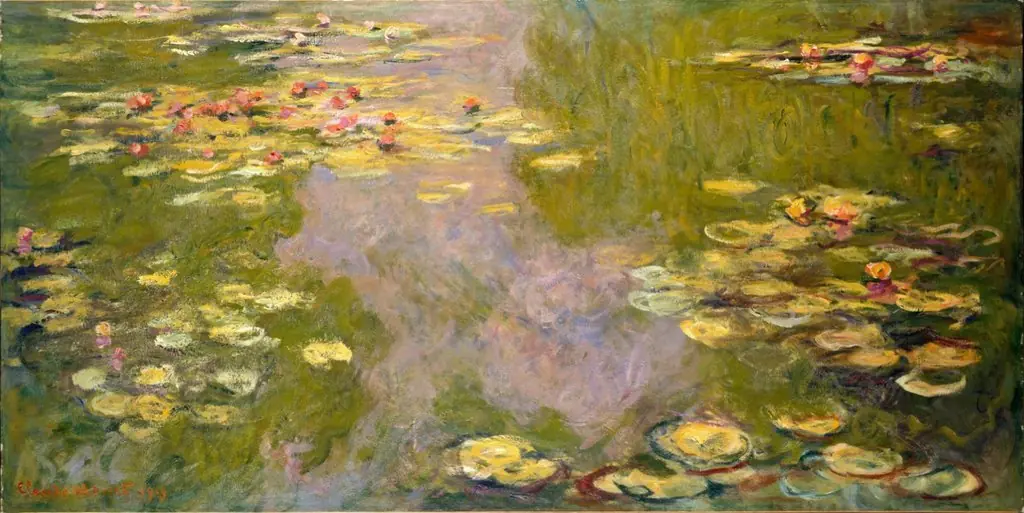
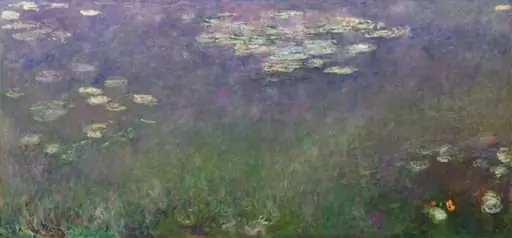
Water Lilies (Agapanthus) is an oil painting by the Impressionist artist Claude Monet. It dates from 1915 and is held in the collection of the Cleveland Museum of Art.
About this work
Subject & Meaning
Created in 1915, this large-scale oil painting by Claude Monet visually merges two distinct botanical subjects: water lilies and agapanthus.
Created in 1915, this large-scale oil painting by Claude Monet visually merges two distinct botanical subjects: water lilies and agapanthus. Unlike traditional compositions that separate flora from their aquatic settings, the work integrates the floating lily pads with the towering blue flowers of the agapanthus plant, creating a unified, immersive field of color and texture. The depiction focuses on the interplay of these specific garden elements found at the artist's residence in France, presenting them not as isolated specimens but as interconnected components of a single decorative whole.
The canvas serves as a direct representation of these natural forms, capturing their presence within the artist's cultivated landscape without relying on external narrative or allegorical symbolism beyond the immediate observation of nature.
Technique & Style
Executed in 1915, Water Lilies (Agapanthus) is an oil painting on canvas created by Claude Monet in France. The work exemplifies the artist's late style through its monumental horizontal format, measuring approximately 201.3 cm in height and 425.6 cm in width. This expansive support allows for an immersive depiction of aquatic flora, specifically combining agapanthus with water lilies.
The application of oil paint facilitates the fluid, atmospheric handling characteristic of Monet's decorative panels, where distinct brushwork merges to render light and reflection rather than precise botanical detail. The sheer scale of the canvas underscores the artist's intent to envelop the viewer within the garden scene, prioritizing sensory experience over traditional compositional boundaries.
Overview
Painted in 1915, Water Lilies (Agapanthus) is a significant work from Claude Monet's late series of large-scale canvases depicting the water garden at his home in Giverny. Executed in oil paint, the composition focuses on the surface of the pond, eliminating the traditional horizon line to create an immersive, all-over field of color and light. The painting features clusters of agapanthus rising from the water, distinguished by their tall green stems and purple buds, which contrast with the floating round leaves and white or yellow water lilies.
Monet employs thick, visible brushstrokes and a palette dominated by soft blues, grays, and greens to capture the shifting reflections of the sky and the aquatic vegetation. Created during a period of personal grief following the death of his second wife and the onset of cataracts, this work exemplifies the artist's move toward abstraction, prioritizing the sensory experience of light and atmosphere over precise botanical representation. It stands as a mature example of French Impressionism, bridging the gap between representational landscape and the abstract expressionism that would emerge in the mid-20th century.
Artist & collection
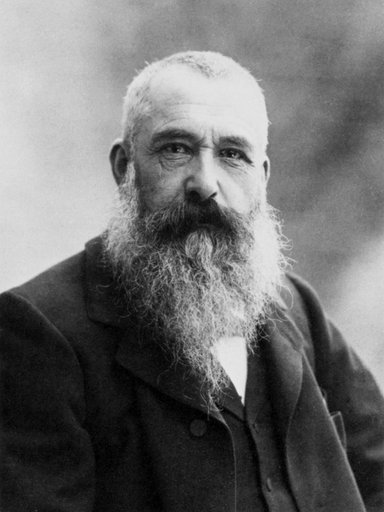
Artist
Oscar-Claude Monet was a French painter and founder of Impressionism who is seen as a key precursor to modernism, especially in his attempts to paint nature as he perceived it.