Artwork
A ruined cottage at Capel, Suffolk
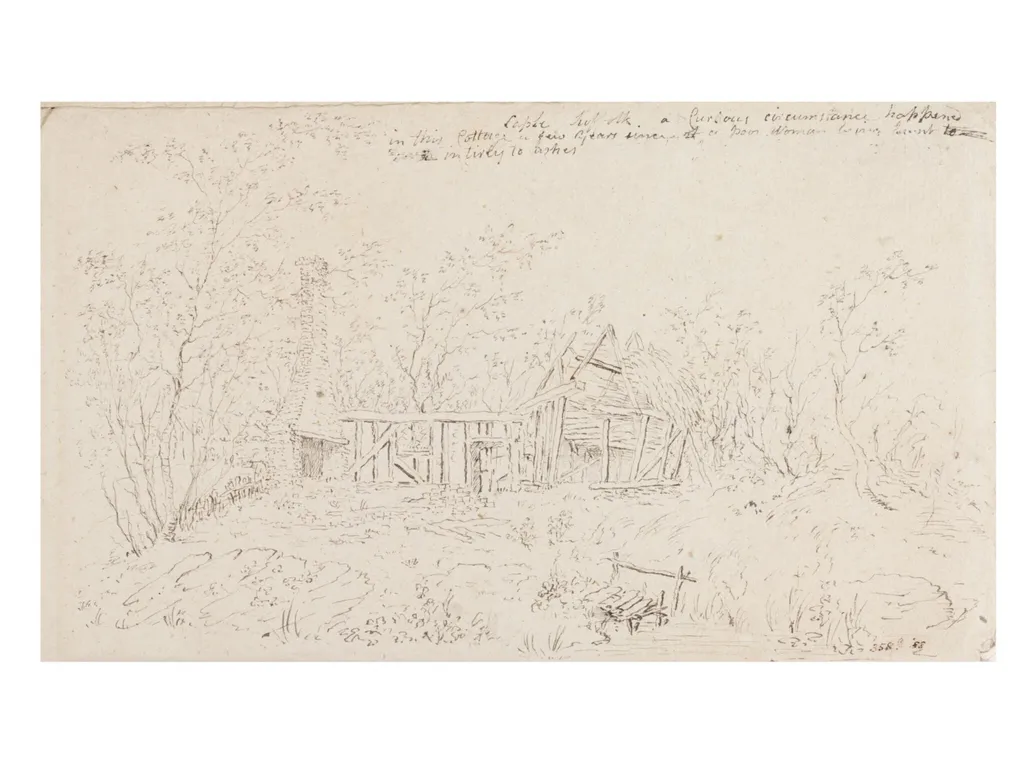
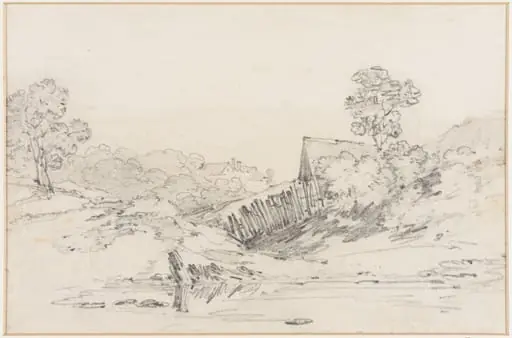
A ruined cottage at Capel, Suffolk is a drawing by the Romanticist artist John Constable. It dates from 1796 and is held in the collection of the Victoria and Albert Museum.
About this work
The artist jotted a note up top: a few years earlier, a fire burned an old woman inside without touching the rest of the cottage.
This pencil drawing shows a lonely cottage in Suffolk. It’s one of Constable’s very first sketchbook pages from 1796. The scene is simple, just a low-roofed building, but the story behind it is spooky.
The artist jotted a note up top: a few years earlier, a fire burned an old woman inside without touching the rest of the cottage. Neighbors blamed witchcraft. Smith, a writer working on a book about rural scenes, liked Constable’s sketches but never used them.
Local legend and early sketches mix here. Next, look up the Victoria and Albert Museum.
Overview
This early pencil drawing by John Constable depicts a solitary cottage in the Suffolk countryside. Rendered on a page from his first known sketchbook, the work dates to 1796, before Constable had committed to a professional artistic path.
Subject & Meaning
The cottage is linked to a local legend in which an elderly woman perished in a fire that mysteriously left the surrounding structure untouched. Contemporary observers attributed the incident to witchcraft, lending the scene an eerie narrative dimension.
Technique & Style
Executed in graphite, the drawing emphasizes the modest, low‑pitched roof and the isolation of the building within a sparse landscape. The line work is straightforward, reflecting Constable’s nascent observational approach and his interest in recording rural architecture.
History & Provenance
Created during a year when Constable was still expected to join his father’s business, the sketch was shown to the writer J. T. ‘Antiquity’ Smith, who was gathering material for a book on rural scenery. Although Smith praised the drawings, none were ultimately published.
Context
The piece belongs to a period when Constable was exploring the visual language of the English countryside, a theme that would dominate his later oeuvre. It also illustrates the early 19th‑century fascination with local folklore and its influence on artistic subject matter.
Own this work as a print
Artist & collection
Artist
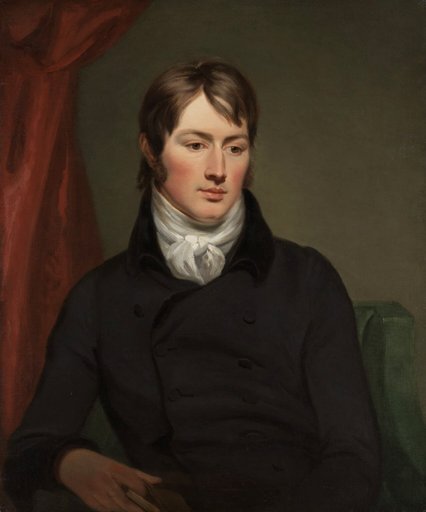
John Constable was an English landscape painter in the Romantic tradition. Born in Suffolk, he is known principally for revolutionising the genre of landscape painting with his pictures of Dedham Vale, the area on the…

 Cottage and landscape at Chirk, North Wales
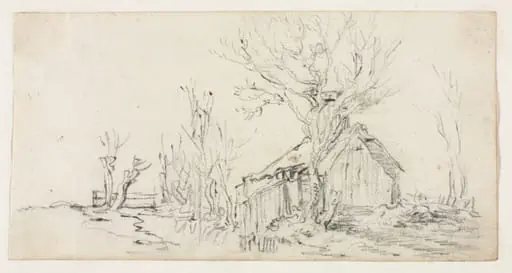 Sketch of Landscape with Cottage
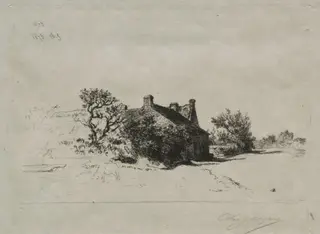 Les Petits Maisons Kercassier
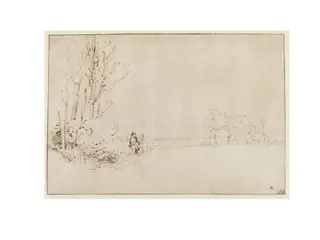 View Looking South Along the Amsteldijk, with a Man Sitting on a Sluice Gate Near a Farmstead
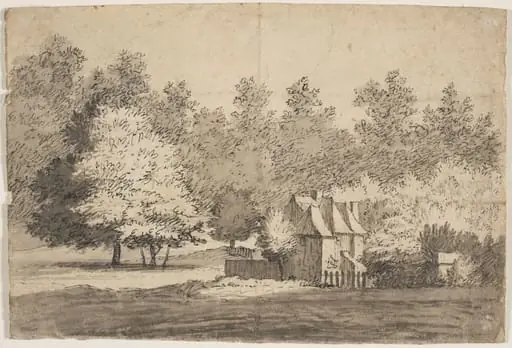 A cottage set among trees
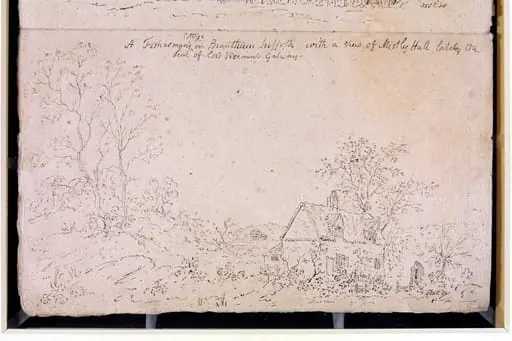 Cottage at Brantham, with a view of Mistley Hall
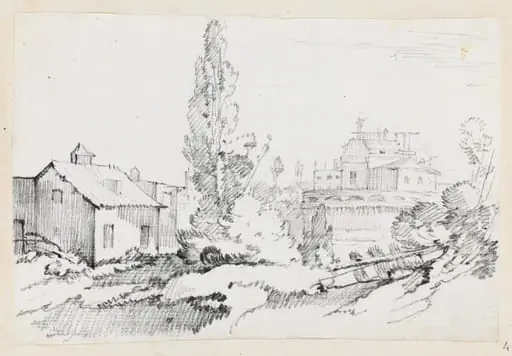 Castel Sant'Angelo from the Northwest
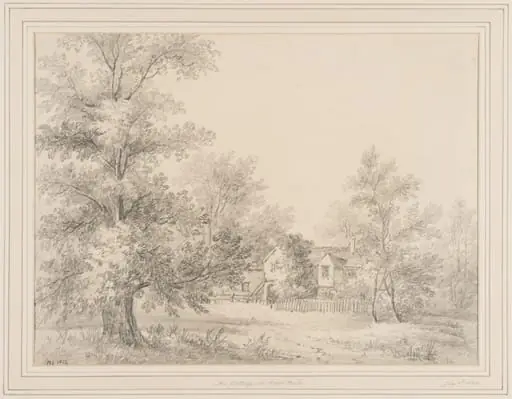 The cottage in Hyde Park
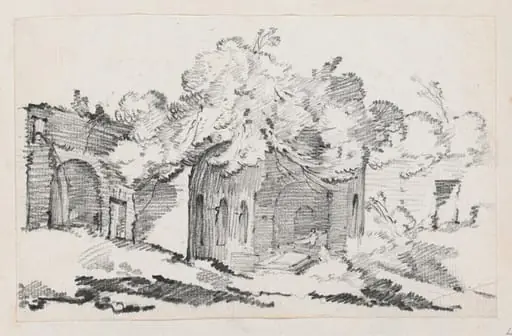 The Grotto of the Nymph Egeria