Artwork
Yarmouth Jetty
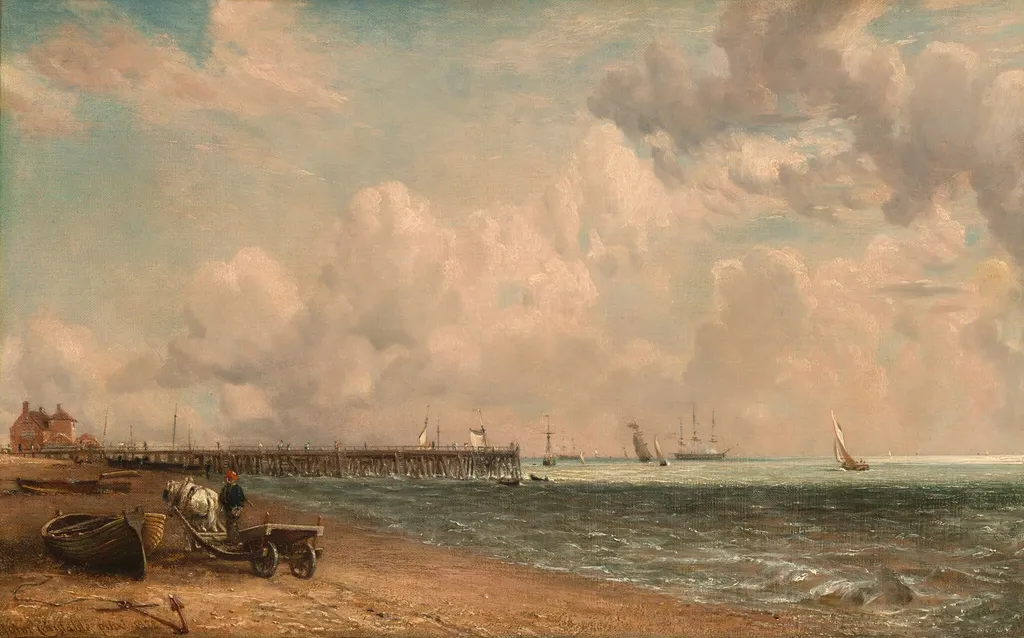
Yarmouth Jetty is an oil painting by the Romanticist artist John Constable. It dates from 1822 and is held in the collection of the National Gallery of Art.
- Inscription
- Inscribed:lower left: John Constable pinxt. 1822.
About this work
Overview
Yarmouth Jetty is an oil-on-canvas landscape painting by the English Romantic artist John Constable, dated 1822 and measuring 31.
Yarmouth Jetty is an oil-on-canvas landscape painting by the English Romantic artist John Constable, dated 1822 and measuring 31.7 by 50.8 centimetres. The work is held by the National Gallery of Art in Washington, D.C., acquired in 2016 through the bequest of Mrs. Ruth Carter Stevenson. It is one of at least three versions of this composition that Constable produced during the early 1820s, a period when his seascapes were highly sought after by collectors. The painting exemplifies Constable's dedication to capturing the transient effects of sky, sea, and coastal atmosphere, and it occupies a significant place in his oeuvre as a demonstration of his innovative approach to landscape painting, which prioritised direct observation of nature over idealised conventions.
Subject & Meaning
The painting depicts a view of the wooden jetty at Great Yarmouth on the Norfolk coast, extending into choppy greenish water beneath an expansive sky dominated by towering cumulus clouds. In the foreground, a white horse hitched to a small two-wheeled cart is attended by a figure wearing a red cap and dark clothing, while a small rowboat rests on the sand nearby beside a coiled basket, with an anchor in the lower left corner. Several sailing vessels of varying sizes dot the sea, and a red brick building stands near the jetty's start on the sandy shore to the left. The horizon sits low, giving the sky dominance over the composition. The scene captures ordinary working coastal life rather than grand or dramatic events, reflecting Constable's interest in everyday maritime activity. The sky, which Constable famously called the 'chief organ of sentiment' in landscape, carries particular weight here, with pale pinks, creams, and soft greys against patches of blue suggesting diffused light breaking through cloud cover. The iconography speaks to the economic and social vitality of a busy harbour town, with the jetty serving as a critical point for trade, fishing, and passenger movement in the early nineteenth century.
Technique & Style
Constable executed the work in oil on canvas, employing a varied brushwork that ranges from smooth in the sky to more textured in the water and sand. Visible strokes suggest movement in the clouds and waves, creating a sense of atmospheric dynamism. The palette relies ssd on earthy browns, muted greens, and atmospheric blues, with soft shadows rather than sharp contrasts created by the diffused light. This handling exemplifies Constable's naturalistic style, which contemporary critics sometimes found too rough and unfinished but which helped pave the way for later movements such as Impressionism. The loose, observational approach reflects his method of intensive sky studies, conducted during summers at Hampstead Heath, where he produced numerous annotated oil sketches noting weather conditions and wind speeds. The composition's handling of light and atmosphere demonstrates his commitment to portraying transient natural effects through direct observation rather than idealisation.
History & Provenance
The painting bears the inscription 'John Constable pinxt. 1822' in the lower left and was exhibited at the British Institution in London in 1823 as no. 148. Its provenance traces from John Gibbons, an ironmaster and art patron from Edgbaston near Birmingham who had a gallery specially built for his collection at his London home, 16 Hanover Terrace, Regent's Park. It passed by inheritance to his son, the Reverend Benjamin Gibbons, who lent it to the 1890 Winter Exhibition at the Royal Academy of Arts in London. Following sale at Christie, Manson & Woods on 26 May 1894, it was purchased by Thos. Agnew and Sons for Sir Charles Clow Tennant, 1st baronet, at The Glen, near Innerleithen, Peeblesshire, Scotland. The painting descended to his great-grandson, Colin Christopher Paget Tennant, 3rd baron Glenconner, and was sold in November 1975 through Agnew's to Mrs. Ruth Carter Stevenson of Fort Worth, who bequeathed it to the National Gallery of Art. The work was exhibited at the Royal Academy in 1890, 1903, and 1951, at the Castle Museum, Norwich in 1954, at the National Gallery of Art in 1991, and at the Kimbell Art Museum in 2009-2010.
Context
Constable was born in East Bergholt, Suffolk, adjacent to Norfolk, and maintained a lifelong focus on the natural landscapes of his home region. Despite this proximity, there is only one recorded trip he made to Norfolk during his career, likely in the 1790s, and he referred to sketches made during that visit to craft these paintings decades later. The composition and certain details, such as the red-capped man driving the cart, appear in at least two other canvases of similar size and date, indicating that Constable sometimes made several versions of a subject to meet high demand. A version exhibited at the 1824 Salon in Paris, where Constable's work drew great praise and he was awarded a gold medal, is now in the collection of Tate Britain. The jetty was also painted by the Norfolk landscape artist John Crome. Constable's growing reputation for innovative landscape art that prioritised direct observation of nature over idealised compositions was recognised in early analyses such as Charles John Holmes's Constable and His Influence on Landscape Painting (1902).
Legacy
The multiple versions of Yarmouth Jetty and their exhibition history underscore the work's significance in Constable's career and its role in establishing his international reputation. The version shown at the 1824 Paris Salon contributed to the great praise he received there and his award of a gold medal, marking a pivotal moment in the recognition of English landscape painting abroad. The painting's influence on subsequent landscape artists, noted in early critical literature, lies in its exemplification of Constable's commitment to portraying transient effects of sky and sea through direct observation. The work's afterlife is also tied to the physical structure it depicts: the Great Yarmouth Jetty, originally constructed in 1560, was rebuilt after storm damage in 1805, extended in 1846 for tourism, and finally demolished in 2012 when restoration costs were deemed unaffordable. Constable's paintings thus remain among the most significant visual records of this historic maritime structure, preserving its appearance during a period of economic and social vitality in early nineteenth-century England.
Own this work as a print
Artist & collection
Artist
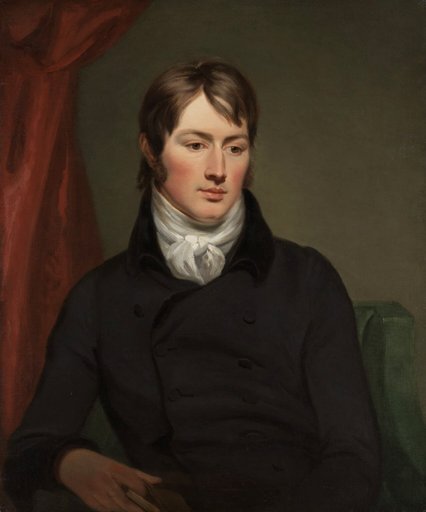
John Constable was an English landscape painter in the Romantic tradition. Born in Suffolk, he is known principally for revolutionising the genre of landscape painting with his pictures of Dedham Vale, the area on the…

- Coastal View in Normandy, with a Beached Boat
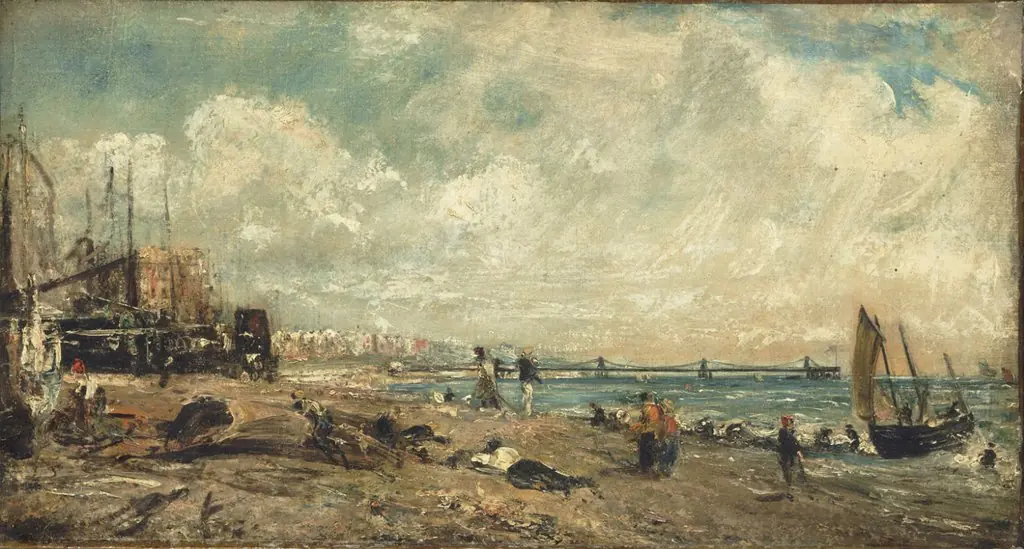 Sketch for The Marine Parade and Chain Pier, Brighton
 Sea harbour
 Coast scene
 Dover Pier
 A ship of the line at anchor
 Juvenile Shrimpers, Deal
 Fishing upon the Blythe-Sand, Tide Setting In
 New York Harbor with Brooklyn Bridge
 A Ship of the Line at Anchor
 Sea Groyn at Hastings
 Calais Harbour