Artwork
The Peasant War – Assembling
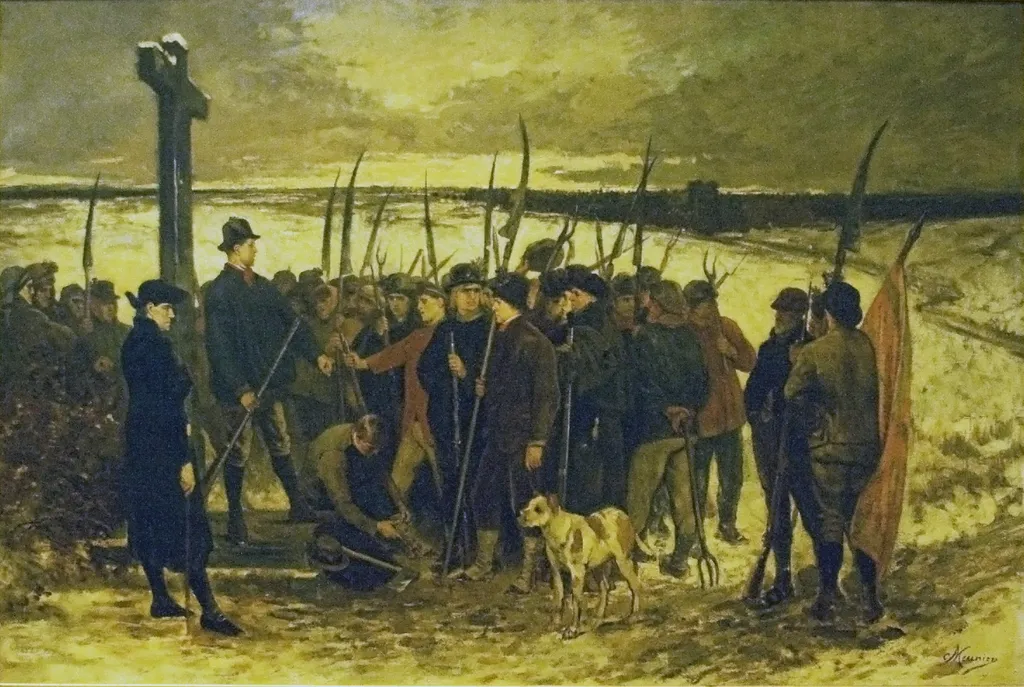
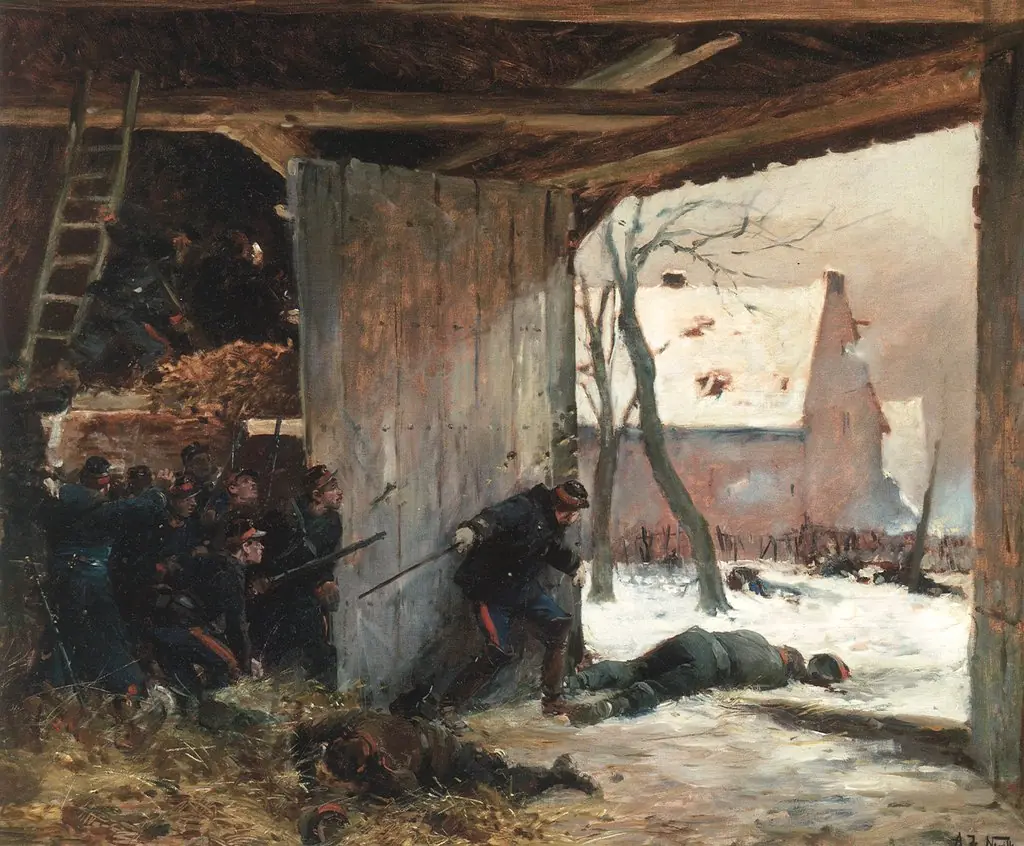
The Peasant War – Assembling is an oil painting by the Realist artist Constantin Meunier. It dates from 1875 and is held in the collection of the Royal Museums of Fine Arts of Belgium.
About this work
Overview
Created in 1875 by Belgian artist Constantin Meunier, The Peasant War – Assembling is an oil painting rooted in the Realist tradition.
Created in 1875 by Belgian artist Constantin Meunier, The Peasant War – Assembling is an oil painting rooted in the Realist tradition. It portrays a moment of collective preparation among rural laborers, capturing a scene of social unrest rather than idealized history. The work is part of the Royal Museums of Fine Arts of Belgium’s collection and reflects Meunier’s broader focus on the dignity and struggles of working-class communities during industrialization.
Subject & Meaning
The painting shows a group of peasants gathering in a field, armed with agricultural tools repurposed as weapons. Their postures suggest resolve, not panic, indicating organized resistance. The lone cross in the distance may symbolize both spiritual endurance and the weight of tradition.
The somber tone and lack of clear enemies imply a broader societal conflict, framing the peasants as agents of their own fate amid systemic hardship.
Technique & Style
Meunier employs chiaroscuro to emphasize the figures’ solidity and emotional gravity, contrasting dark, earth-toned clothing against a heavy, overcast sky. Brushwork is deliberate and unembellished, avoiding romantic flourish. The composition directs attention to the clustered forms of the peasants, their tools, and the looming horizon, reinforcing a sense of impending action without narrative specificity.
History & Provenance
Painted in 1875, the work entered the collection of the Royal Museums of Fine Arts of Belgium shortly after its completion. It was produced during a period of heightened labor activism across Europe, and Meunier’s focus on rural dissent aligned with his longstanding interest in the lives of laborers. The painting has remained in institutional hands since its acquisition, with no documented private ownership.
Context
In the mid-to-late 19th century, Belgium experienced rapid industrialization and rural displacement, fueling tensions between landowners and peasants. Meunier, influenced by socialist thought and firsthand observation, sought to depict laborers not as passive victims but as participants in historical change. This painting responds to broader European movements questioning class structure and economic inequality.
Legacy
Meunier’s depiction of peasants as dignified actors in social conflict influenced later realist and socially engaged art in Europe. While not widely exhibited outside Belgium, the work remains a key example of how 19th-century artists used visual narrative to document class struggle. It continues to inform scholarly discussions on the intersection of art, labor, and political consciousness in the modern era.
Own this work as a print
Artist & collection

Artist
Constantin Meunier (French pronunciation:; 12 April 1831 – 4 April 1905) was a Belgian painter and sculptor.

Museum
Royal Museums of Fine Arts of Belgium
Continue through works from the same source collection.
- Departure for hunting
 Turkey Shoot
 Corn Husking at Nantucket
 Dead Stag
 Insurrection episode
 Fair in Tyniec
 Soldaten ziehen durch ein Dorf
 St Martin cutting off part of his cloak for a beggar
 Execution
 Siege of the Citadel of Antwerp, December 22nd 1832
 Transport of colonial soldiers
 A Battle Scene, Soldiers in a Barn