Artwork
Rebekah and Eliezer at the Well
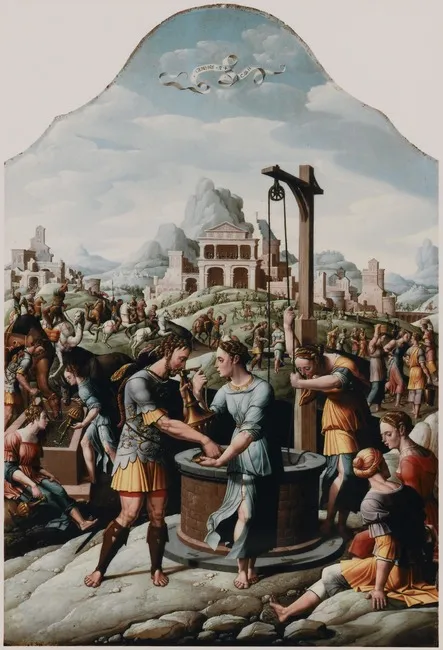
Rebekah and Eliezer at the Well is an oil painting by the Northern Renaissance artist Cornelis Buys. It is held in the collection of the Rijksmuseum.
About this work
Subject & Meaning
The painting depicts the biblical episode in which Eliezer, servant of Abraham, encounters Rebekah at a well in Haran, a scene from Genesis 24.
The painting depicts the biblical episode in which Eliezer, servant of Abraham, encounters Rebekah at a well in Haran, a scene from Genesis 24. According to the narrative, Eliezer prays for a sign to identify Isaac’s future wife; Rebekah’s act of watering his camels confirms her selection as Isaac’s bride. The well functions as a charged symbol of divine providence and covenantal destiny.
Rebekah’s gesture, drawing water for the stranger’s animals, signals her virtue and readiness for the role ordained by God, while Eliezer’s presence marks the fulfillment of Abraham’s commission.
History & Provenance
Cornelis Buys created the oil-on-panel painting Rebekah and Eliezer at the Well in 1550. The work depicts the biblical figures Rebekah and Eliezer alongside a water well, executed in oil paint on a support measuring 106 cm in height and 73 cm in width. Currently held in the collection of the Rijksmuseum, the piece is classified as a religious genre painting.
The creation date is firmly established as 1550, marking the inception of this specific artwork by the Dutch artist.
Cornelis Buys's 1550 oil painting Rebekah and Eliezer at the Well is held in the collection of the Rijksmuseum. The work is cataloged as a religious art piece depicting the biblical scene of Rebecca and Eliezer at a water well. Executed on panel with dimensions of 106 cm in height and 73 cm in width, the painting remains part of the museum's permanent holdings.
The provided sources do not contain specific inventory accession numbers or a record of past exhibitions for this artwork.
Legacy
The work titled Rebekah and Eliezer at the Well, painted by Cornelis Buys in 1550, is an oil on panel that belongs to the religious genre of Dutch art. Its inclusion in the Rijksmuseum’s collection has made it a reference point for studies of biblical narratives in 16th‑century painting. The composition exemplifies an early example of how the story of Rebecca at the well was visualized in Dutch art before later centuries. Its presence in the museum’s displays underscores the continuity of religious storytelling in Dutch art history.
Overview
This oil painting, titled Rebekah and Eliezer at the Well, was created by Cornelis Buys around 1550. It depicts a key moment from a biblical narrative, rendered with oil paint. The work is currently part of the collection at the Rijksmuseum, where it offers insight into 16th-century religious art.
Technique & Style
Buys employs oil paint to create a detailed narrative scene, contrasting the serene act of drawing water with a bustling environment. The composition places a calm, focused figure at the well, while a crowd of brightly dressed individuals observes from the surrounding hillside. This visual tension between the quiet central action and the dynamic background elements characterizes the artist's approach to depicting the biblical story.
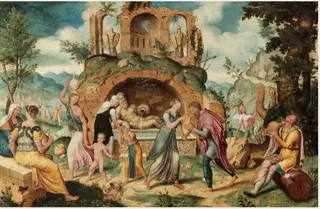
Artist & collection

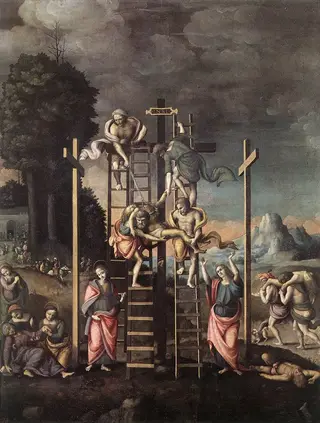 The Deposition
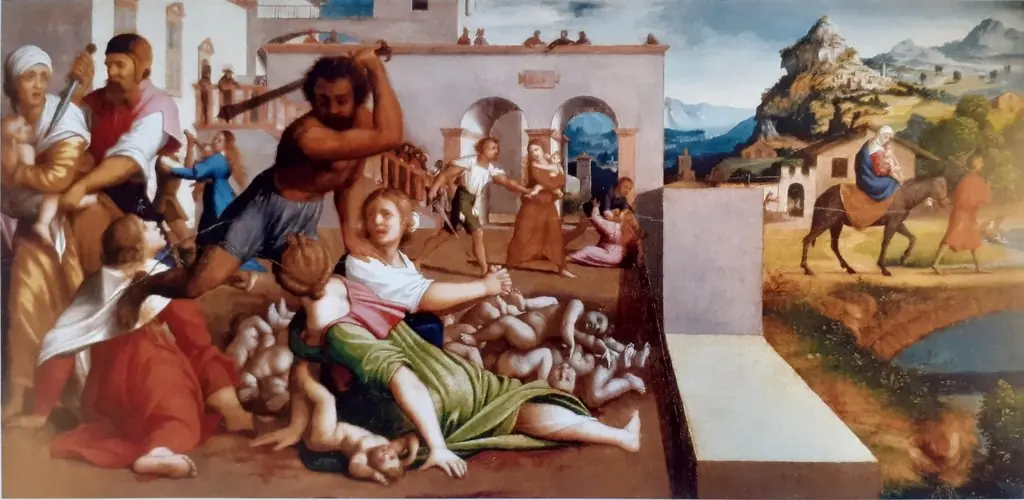 Strage degli Innocenti
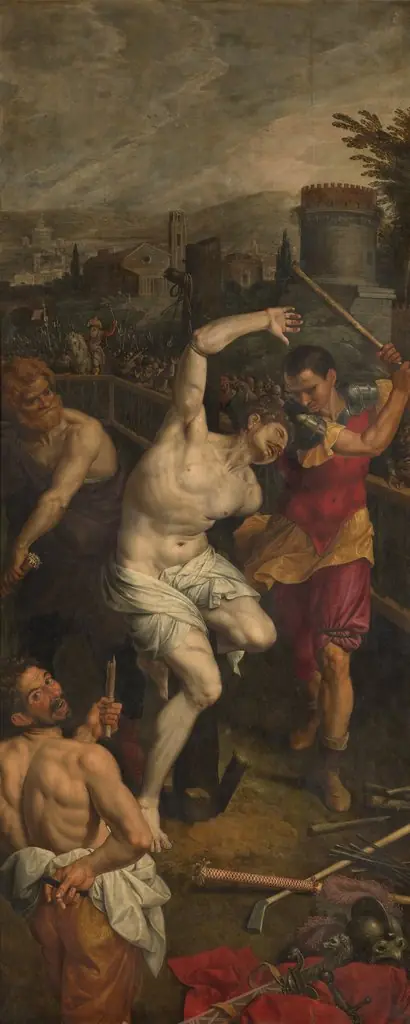 The Martyrdom of Saint Sebastian of Rome
 The Flagellation of Christ and Christ Before Pilate
 Descida da Cruz
 Christ on the road to Calvary
 Christ and the Woman of Samaria
 The Flagellation
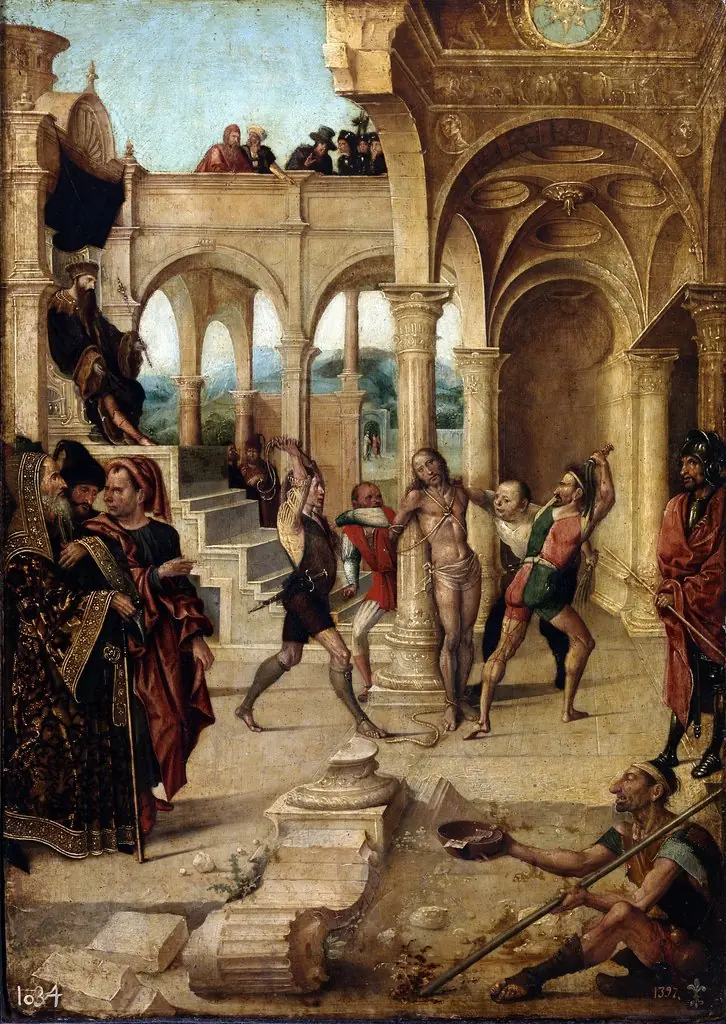 The Flagellation
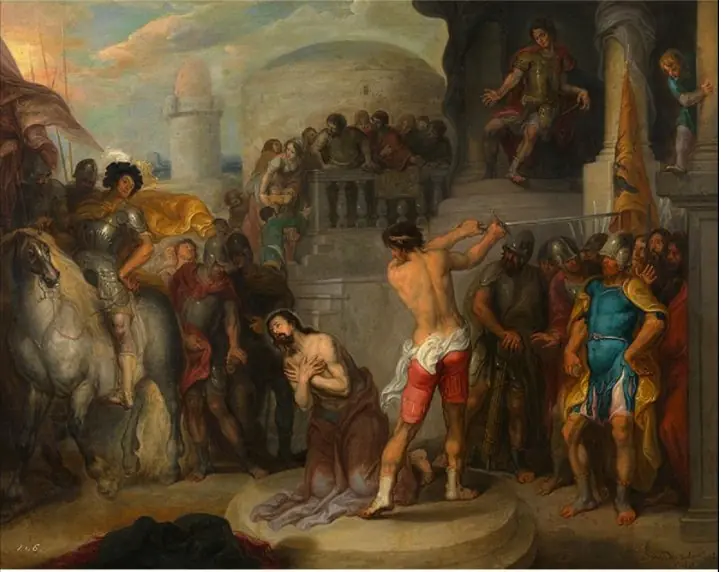 The Beheading of Saint Paul
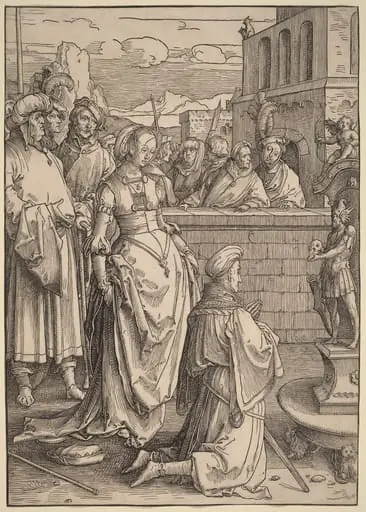 Solomon's Idolatry
- The Meeting of Rebecca and Abraham's Servant at the Well of Nahor