Artwork
Diana and her Nymphs
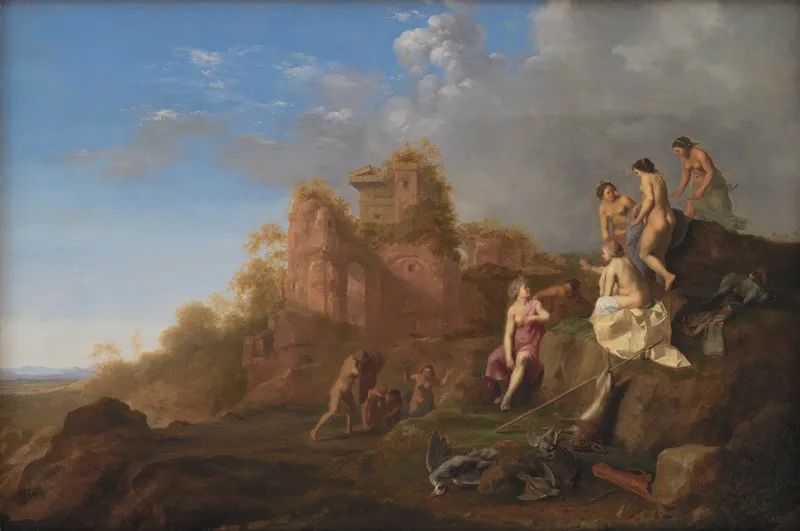
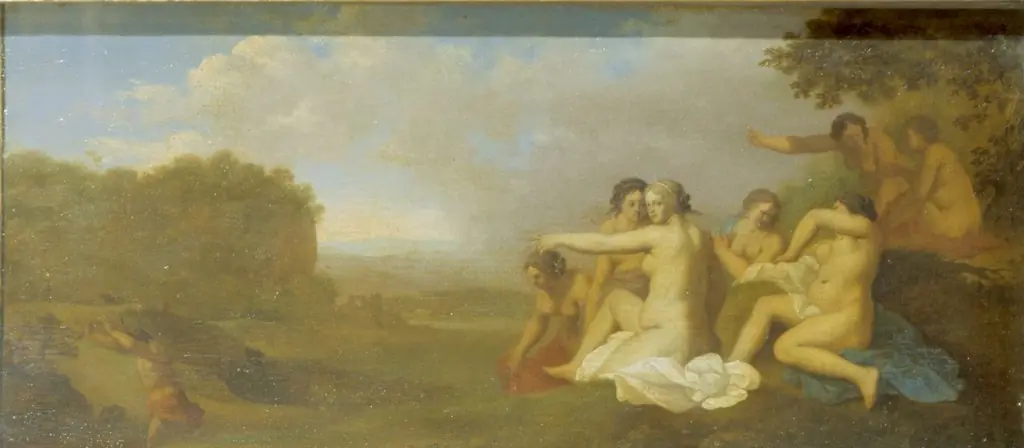
Diana and her Nymphs is an oil painting by the Dutch Golden Age artist Cornelius van Poelenburgh. It dates from 1659 and is held in the collection of the Statens Museum for Kunst.
About this work
Subject & Meaning
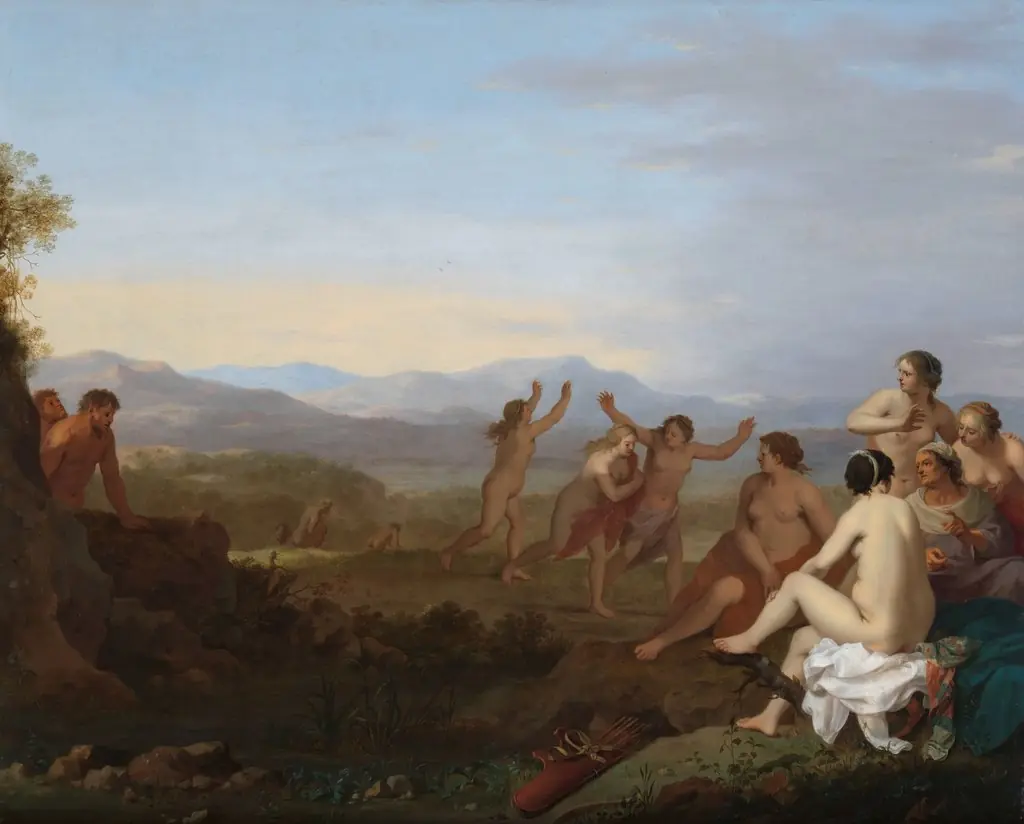
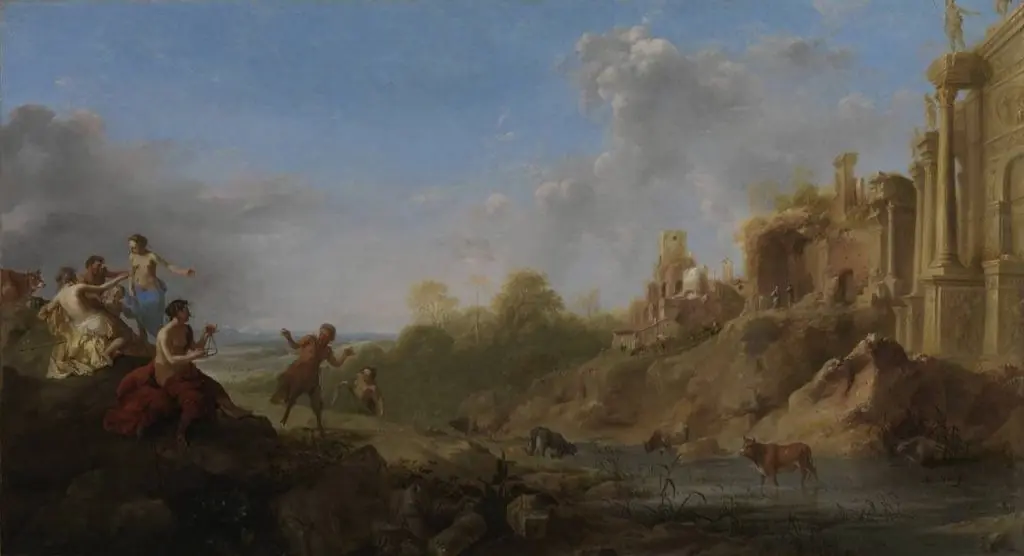
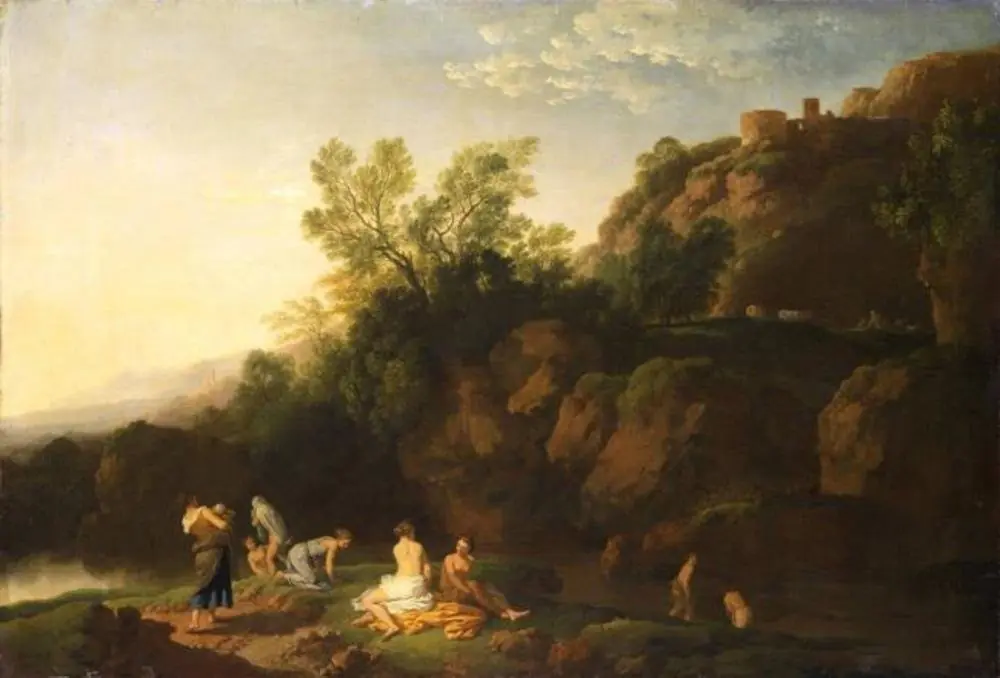
In the composition, Diana, identifiable as the central female figure, is accompanied by several nymphs who assist in her bath or stand guard.
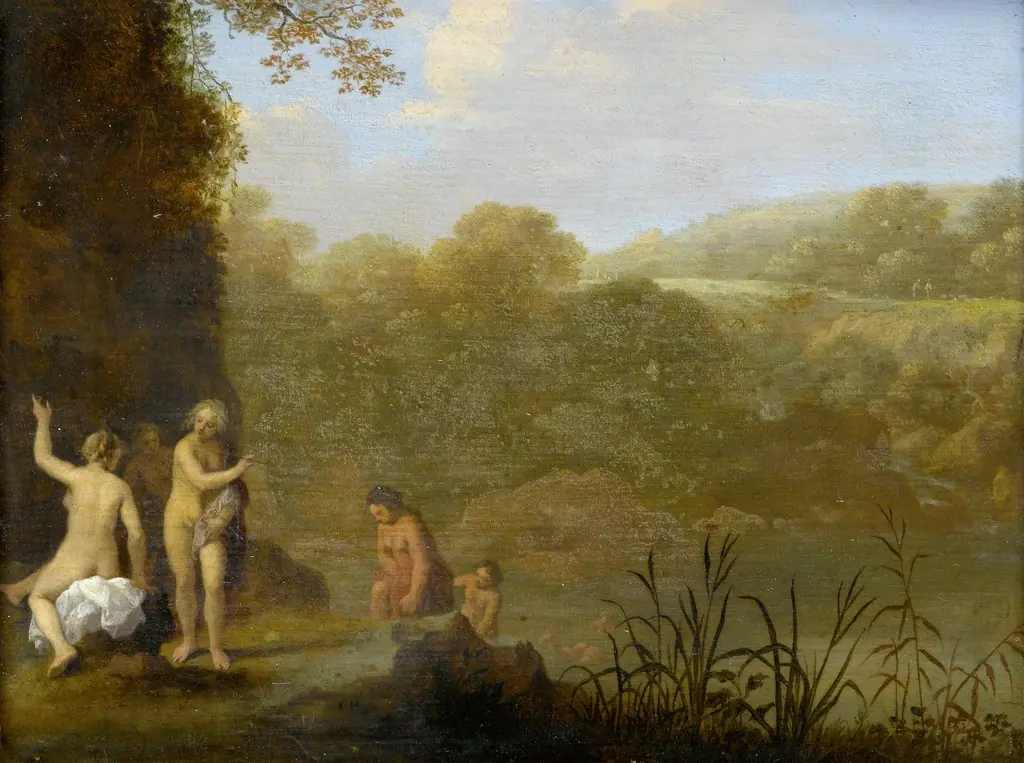
The painting depicts the Roman goddess Diana bathing with her nymphs in a wooded grove, a scene drawn from classical mythology.
In the composition, Diana, identifiable as the central female figure, is accompanied by several nymphs who assist in her bath or stand guard. The setting emphasizes seclusion and natural purity, with dense trees and dappled light framing the figures. The scene conveys themes of chastity and vigilance, as Diana was both a huntress and a protector of virginity, often associated with the moon and the wilderness.
The iconography underscores the contrast between untamed nature and the divine presence of the goddess, reinforcing the narrative of retreat and ritual purification.
Technique & Style
Cornelius van Poelenburgh's Diana and her Nymphs is executed in oil paint on a panel support. Created in 1659, the work measures 59 cm in height and 83 cm in width. Classified as a mythological painting, the piece depicts the goddess Diana bathing alongside her nymphs. The formal composition centers on this specific narrative subject within the artist's characteristic style for the genre.
History & Provenance
The painting Diana and her Nymphs by Cornelius van Poelenburgh is dated 1659, aligning with the artist’s mature period known for mythological landscapes.
It entered the collection of the Statens Museum for Kunst in Copenhagen, where it remains today. The museum’s records list the work as a 59 × 83 cm oil on panel depicting Diana bathing with her nymphs, consistent with Poelenburgh’s characteristic rendering of classical subjects within wooded settings.
The painting is held by the Statens Museum for Kunst, catalogued under inventory number KMS1943:1. It was created by Cornelius van Poelenburgh in 1659 and has been exhibited in the museum's collection displays, though specific exhibition dates are not documented in the available sources.
Overview
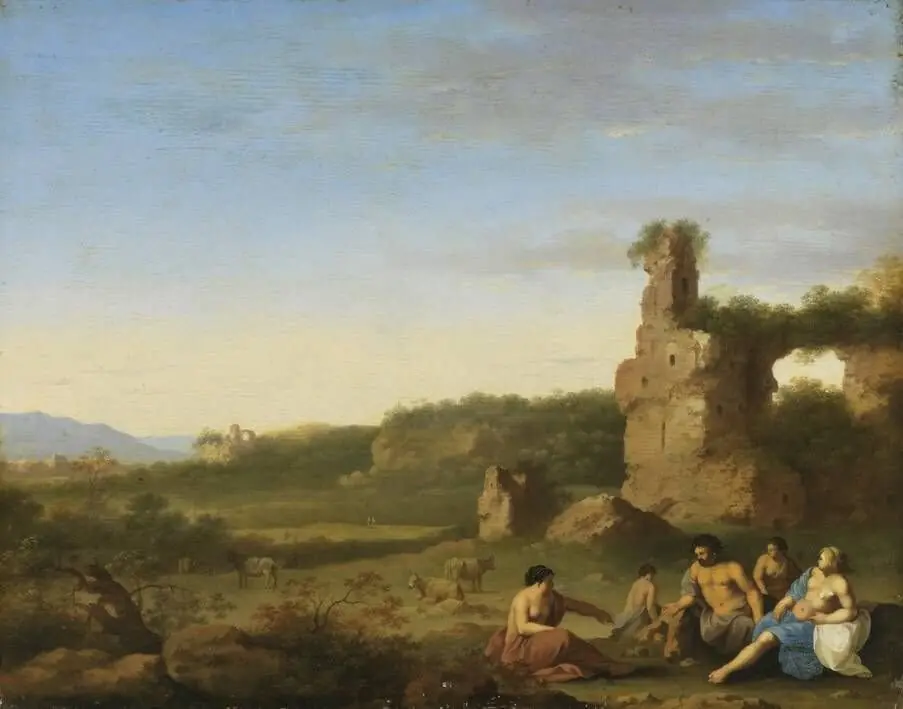
Cornelius van Poelenburgh’s oil painting Diana and her Nymphs (1659) presents a compact, mythological tableau set within an Italianate forest. The composition centers on the Roman goddess Diana, accompanied by several nymphs, a hunting bow, and a resting dog, all gathered near an ancient stone tower under a bright, cloud‑dotted sky.
Context
Van Poelenburgh, a Dutch painter who spent much of his career in Rome, was known for integrating mythological narratives into lush, idealized landscapes. Diana and her Nymphs reflects the 17th‑century fascination with classical antiquity among Northern artists, merging learned subject matter with the intimate, detailed approach favored in Dutch cabinet paintings.
Artist & collection
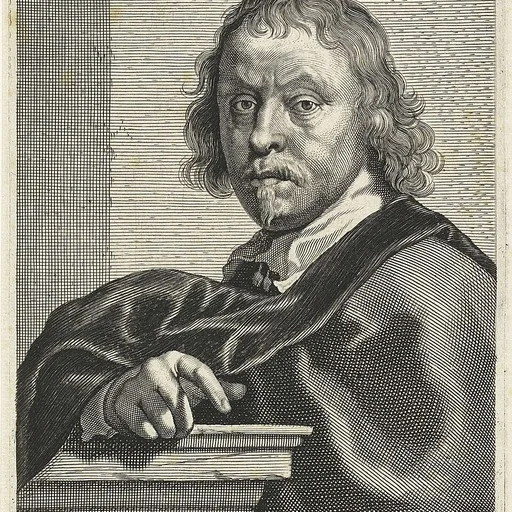
Artist
Cornelis van Poelenburgh or Cornelis van Poelenburch (1594 – 12 August 1667), was a Dutch landscape painter and draughtsman.