Artwork
Bath House
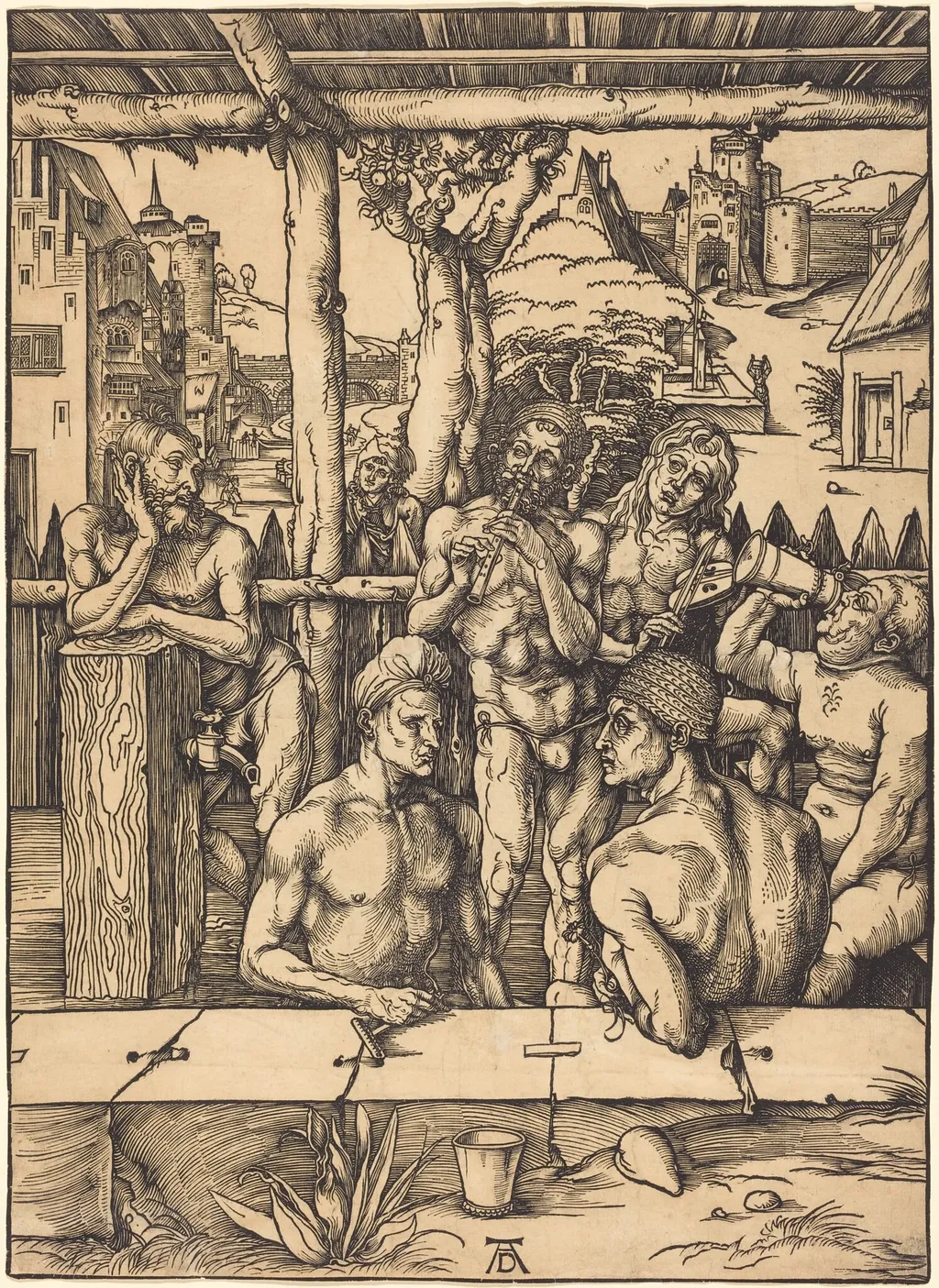
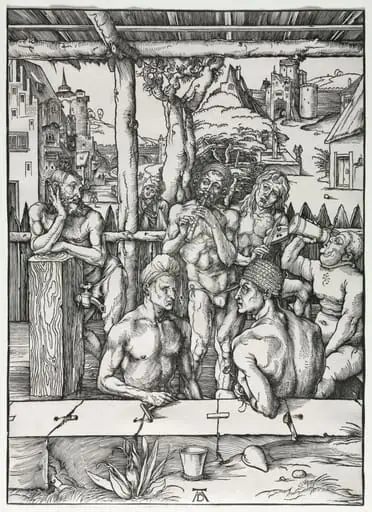
Bath House is an ink print by the Northern Renaissance artist Albrecht Dürer. It dates from 1496 and is held in the collection of the British Museum.
- Inscription
- Inscribed:recto: in block at lower center: AD; verso: at lower left in graphite in later hand: B40
- Markings
- Marked:recto: none; verso: Vincent Mayer (Lugt 2525), Doublette H.K.H. (Hamburger Kunsthalle, Lugt 686), and National Gallery of Art
About this work
Overview
Bath House, created by Albrecht Dürer in 1496, is a woodcut on laid paper that depicts a domestic scene of male bathing within a timber-framed structure.
Bath House, created by Albrecht Dürer in 1496, is a woodcut on laid paper that depicts a domestic scene of male bathing within a timber-framed structure. The composition centers on a man seated in a shallow wooden tub while an attendant pours water over his back from a bucket, capturing a moment of daily hygiene rather than a mythological or religious narrative. Dürer employs precise, sharp lines to render the cramped interior, emphasizing the texture of the wooden walls and the rising steam.
This work exemplifies Dürer's mastery of the woodcut medium during his early career, following his return from Italy. It reflects the German Renaissance interest in genre scenes and the observation of everyday life, distinct from the artist's more famous religious engravings or theoretical treatises. The piece demonstrates his ability to convey volume, atmosphere, and human interaction through the stark contrast of black and white, establishing a high standard for narrative clarity in printmaking of the late 15th century.
Subject & Meaning
The image presents a modest interior where a man sits in a shallow wooden tub while a second figure pours water over his back from a bucket. Steam rises from the hot water, emphasizing the intimate, communal nature of bathing in a medieval bathhouse. The composition captures a moment of routine hygiene, reflecting daily life in the late‑15th‑century German context.
Technique & Style
Dürer employs fine, sharply cut lines that render the wood grain of the walls and the texture of the tub with remarkable clarity. Thick outlines define the figures, while subtle variations in line density suggest light and shadow, giving the cramped space a sense of depth. The precision of the cuts demonstrates the artist’s early mastery of the woodcut medium.
History & Provenance
Produced at the outset of Dürer’s career, Bath House predates his more famous works such as the “Praying Hands” and his later engravings. The print illustrates the development of his technical skill with tools and his interest in realistic observation. Surviving copies are held in several European print collections, attesting to its circulation among early modern audiences.
Own this work as a print
Artist & collection
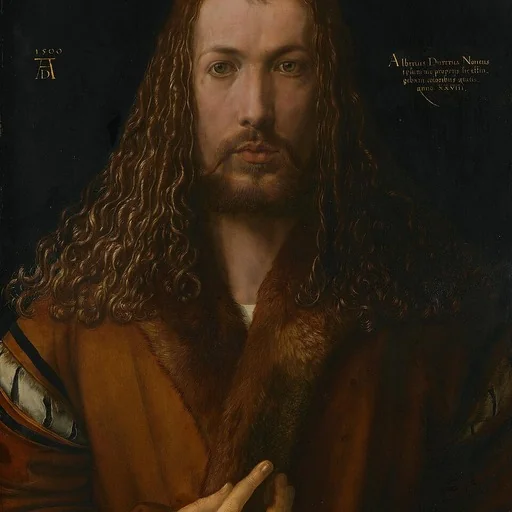
Artist
Albrecht Dürer spent his life in Nuremberg, a busy German city where artists traded prints like currency.

![Madonna and Child [obverse], by Albrecht Dürer](https://artifactworldgallery.com/img/albrecht-durer--madonna-and-child-obverse--d7b8ebf05d22ebe5-w320.webp)
![Lot and His Daughters [reverse], by Albrecht Dürer](https://artifactworldgallery.com/img/albrecht-durer--lot-and-his-daughters-reverse--b4ebf9b282faa17a-w320.webp)