Artwork
The Martyrdom of Saint John
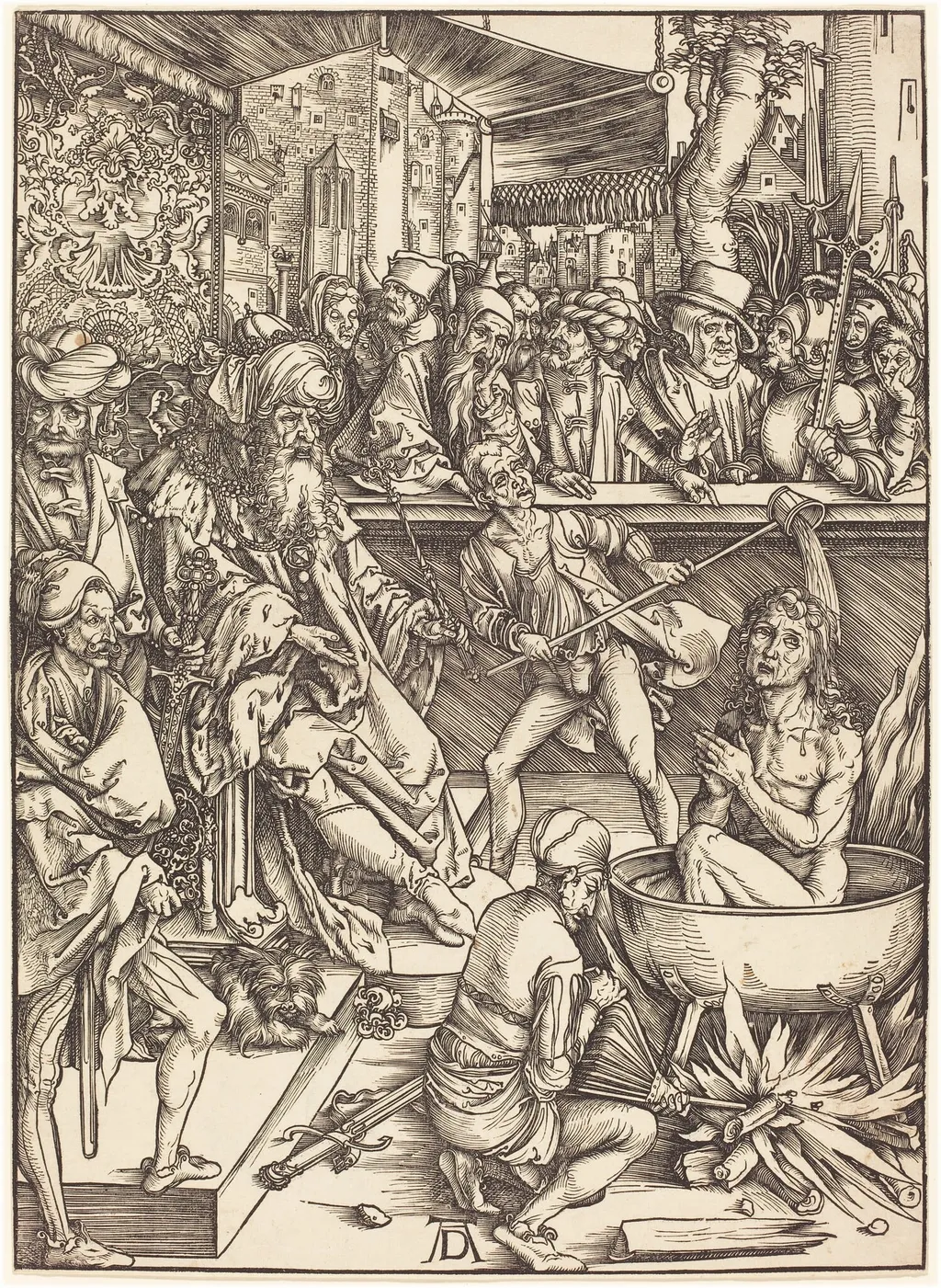
The Martyrdom of Saint John is an ink print by the Northern Renaissance artist Albrecht Dürer. It dates from 1497 and is held in the collection of the Cleveland Museum of Art.
About this work
Subject & Meaning
The print depicts the martyrdom of John the Evangelist as narrated in the Book of Revelation, showing the saint’s execution under imperial decree.
The print depicts the martyrdom of John the Evangelist as narrated in the Book of Revelation, showing the saint’s execution under imperial decree. Dürer’s composition emphasizes the moment of beheading, with the executioner poised above the prone saint and the severed head placed on a platter in accordance with apocryphal tradition. The surrounding architecture and classical costumes frame the scene within a late medieval German Renaissance context, reinforcing its religious urgency while underscoring the saint’s steadfast witness to faith amid persecution.
The work belongs to Dürer’s Apocalypse series, where the artist transforms the biblical text into a series of dramatic woodcuts that visualize divine judgment and martyrdom as contemporary events. By staging the martyrdom in a recognizably imperial setting, the print merges sacred history with the visual language of late medieval German art, evoking both the authority of Rome and the spiritual authority of the saint.
Technique & Style
Created in 1496, The Martyrdom of Saint John is a woodcut print executed by Albrecht Dürer on laid paper. As part of the Apocalypse series, the work exemplifies the technical precision of the German Renaissance, utilizing the woodcut medium to render complex religious narrative scenes. The sheet measures 39.2 cm in height by 28.3 cm in width.
Dürer's handling of the block allows for sharp line definition and dramatic contrast, characteristic of his printmaking style during this period. The composition depicts the Martyrdom of Saint John the Evangelist, drawing its subject matter from the Book of Revelation.
History & Provenance
Albrecht Dürer created the woodcut The Martyrdom of Saint John in Nuremberg, with its inception dated to 1496 as part of his Apocalypse series. The work is based on the Book of Revelation and depicts the martyrdom of Saint John the Evangelist. While specific commission details are not provided in the available records, the print was produced on laid paper with dimensions of 39.2 cm in height and 28.3 cm in width.
Over time, impressions of this work have entered the collections of major institutions, including the National Gallery of Art in Washington, D.C., where it is held within the Rosenwald Collection. Other notable holdings include the Metropolitan Museum of Art, the British Museum, and the Städel Museum, among several European and American libraries and museums.
Impressions of Albrecht Dürer's 1496 woodcut The Martyrdom of Saint John are held in numerous major institutions. These include the National Gallery of Art in Washington, D.C., where examples reside within the Rosenwald Collection, as well as the Metropolitan Museum of Art, the Cleveland Museum of Art, and the Los Angeles County Museum of Art in the United States. In Europe, holdings are documented at the Städel Museum, the British Museum, the Staatliche Kunsthalle Karlsruhe, and the Kupferstichkabinett in both Berlin and Dresden. Additional copies are preserved at the Chester Beatty Library, the Harvard Art Museums, and the Houghton Library.
While the work is part of the Apocalypse series and widely collected, the available records list these repository locations without specifying unique inventory or accession numbers for individual prints. No specific exhibition history for this particular sheet is detailed in the provided sources.
Context
Created by Albrecht Dürer in 1496, The Martyrdom of Saint John is a woodcut that forms part of his seminal Apocalypse series. This work exemplifies the German Renaissance movement, synthesizing religious narrative with the technical innovations of printmaking that defined Dürer's career. Based on the Book of Revelation, the print depicts the Martyrdom of Saint John the Evangelist and was produced in Nuremberg.
The artwork's significance is underscored by its widespread presence in major international collections, including the National Gallery of Art in Washington, D.C., the Metropolitan Museum of Art, and the British Museum. These holdings reflect the enduring scholarly and historical value of Dürer's contribution to the visual culture of the late 15th century.
Overview
The Martyrdom of Saint John is a woodcut print created by Albrecht Dürer around 1497, depicting the violent martyrdom of Saint John the Evangelist.
Legacy
The Martyrdom of Saint John contributes to Dürer's reputation for innovative woodcut techniques. For further comparison, examining a collection of his woodcuts can highlight his mastery of the medium.
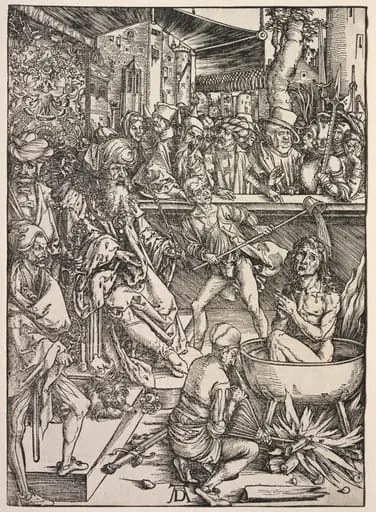
Own this work as a print
Artist & collection
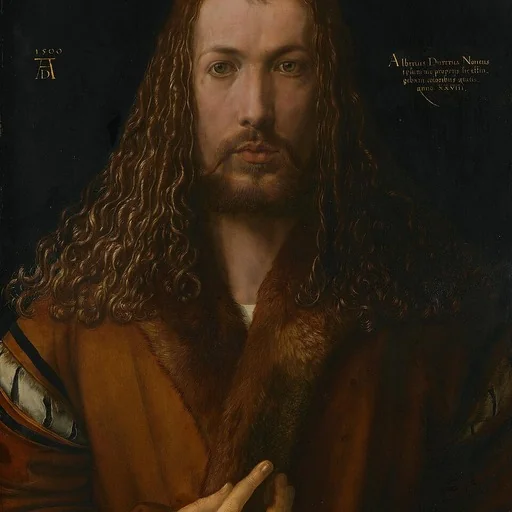
Artist
Albrecht Dürer spent his life in Nuremberg, a busy German city where artists traded prints like currency.

![Madonna and Child [obverse], by Albrecht Dürer](https://artifactworldgallery.com/img/albrecht-durer--madonna-and-child-obverse--d7b8ebf05d22ebe5-w320.webp)
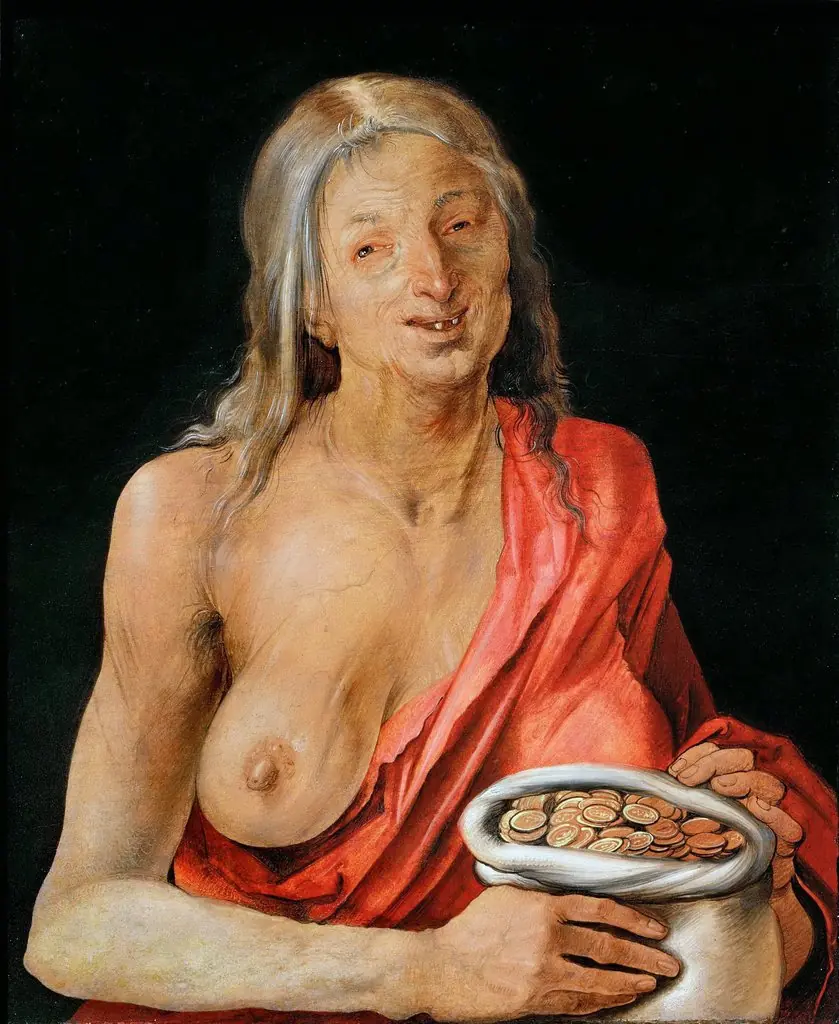

![Lot and His Daughters [reverse], by Albrecht Dürer](https://artifactworldgallery.com/img/albrecht-durer--lot-and-his-daughters-reverse--b4ebf9b282faa17a-w320.webp)