Artwork
Christ Carrying the Cross
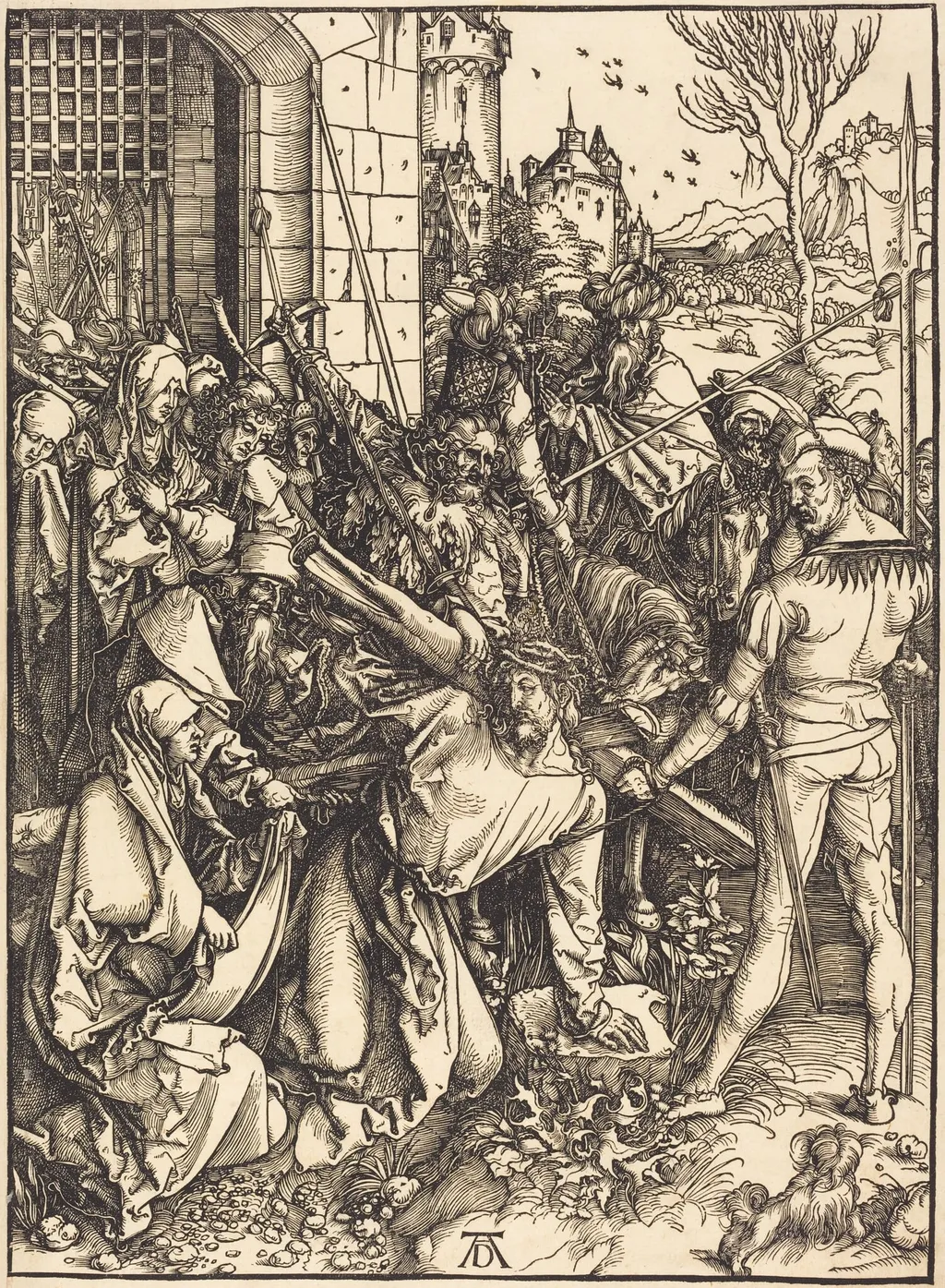
Christ Carrying the Cross is an ink print by the Northern Renaissance artist Albrecht Dürer. It dates from 1498 and is held in the collection of the Albertina.
About this work
Subject & Meaning
This woodcut by Albrecht Dürer illustrates the biblical episode of Jesus Christ carrying the cross to his crucifixion.
This woodcut by Albrecht Dürer illustrates the biblical episode of Jesus Christ carrying the cross to his crucifixion. As a component of the artist's Great Passion series, the work functions as a piece of religious art intended for devotional contemplation within the German Renaissance tradition. The image focuses entirely on the main subject of Christ bearing the instrument of his execution, emphasizing the physical and spiritual weight of the event leading up to the Passion.
Technique & Style
Christ Carrying the Cross is a woodcut print created by Albrecht Dürer as part of his Great Passion series. Executed in 1498, the work utilizes the woodcut medium on paper, a technique characteristic of Dürer's mastery in printmaking during the German Renaissance. The sheet measures 39 cm in height and 28 cm in width.
Stylistically, the image depicts Jesus Christ bearing the cross, rendered with the intricate line work and tonal contrast typical of Dürer's religious compositions from this period.
History & Provenance
The woodcut titled Christ Carrying the Cross was created by Albrecht Dürer in 1498 as part of his Great Passion series. It is cataloged in the collection of the National Gallery of Art in Washington, D.C., as well as the Cleveland Museum of Art and the Kupferstichkabinett Berlin, reflecting its inclusion in major museum holdings. The work measures 39 cm in height and 28 cm in width, and is classified as a religious print within the German Renaissance movement.
Its creation falls within the period from January 1, 1498, to January 1, 1500, aligning with the dating of the series.
The print is held in multiple institutions, including the National Gallery of Art in Washington, D.C., the Cleveland Museum of Art, the Albertina in Berlin, and the Kupferstichkabinett Berlin. It is cataloged under accession numbers associated with these collections, though specific identifiers are not detailed in the sources. The work has been part of exhibitions focusing on German Renaissance art, though exhibition histories are not explicitly documented in the provided sources.
The image is part of Dürer's Great Passion series, created between 1498 and 1500, and is classified as a religious woodcut.
Context
Albrecht Dürer's 1498 woodcut Christ Carrying the Cross occupies a pivotal position in the German Renaissance, reflecting both his mastery of printmaking and the era's religious intensity. Its reception has been shaped by scholarly interpretations of its emotional gravity and compositional innovation within the broader context of devotional imagery. The work's inclusion in major collections such as the National Gallery of Art and the Albertina underscores its enduring significance in art historical narratives, often cited as a defining example of late 15th-century print culture and its role in disseminating sacred narratives.
Overview
Christ Carrying the Cross is a woodcut print created by Albrecht Dürer around 1498.
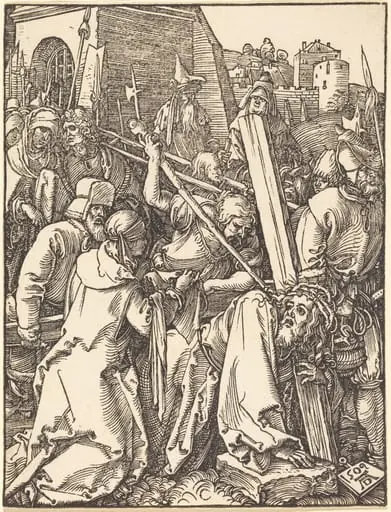
Own this work as a print
Artist & collection
Artist
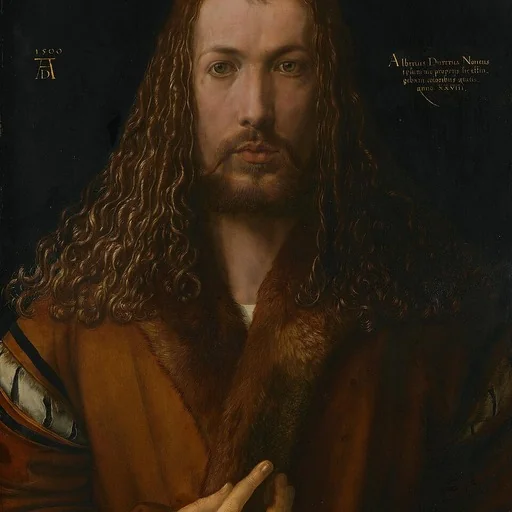
Albrecht Dürer spent his life in Nuremberg, a busy German city where artists traded prints like currency.

![Madonna and Child [obverse], by Albrecht Dürer](https://artifactworldgallery.com/img/albrecht-durer--madonna-and-child-obverse--d7b8ebf05d22ebe5-w320.webp)
![Lot and His Daughters [reverse], by Albrecht Dürer](https://artifactworldgallery.com/img/albrecht-durer--lot-and-his-daughters-reverse--b4ebf9b282faa17a-w320.webp)
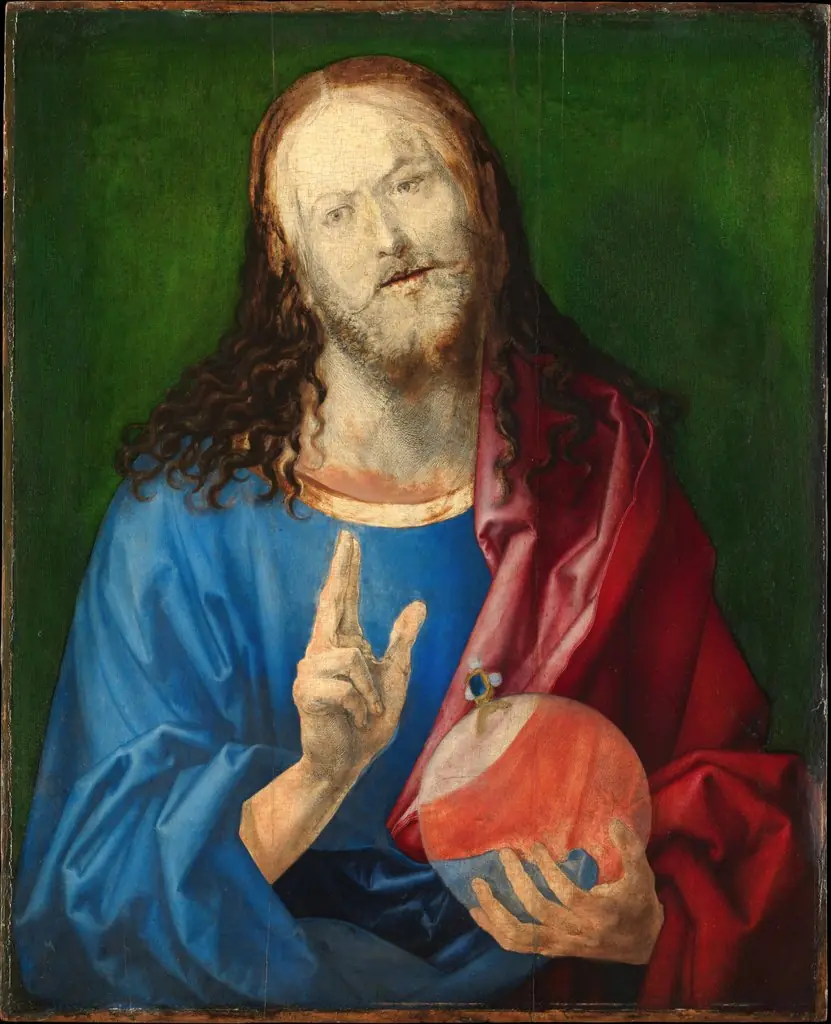
- Christ Carrying the Cross
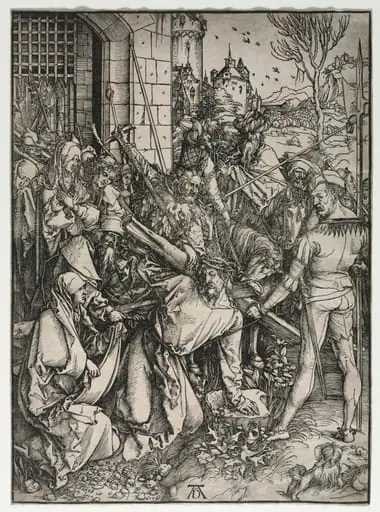 The Great Passion: Christ Bearing the Cross
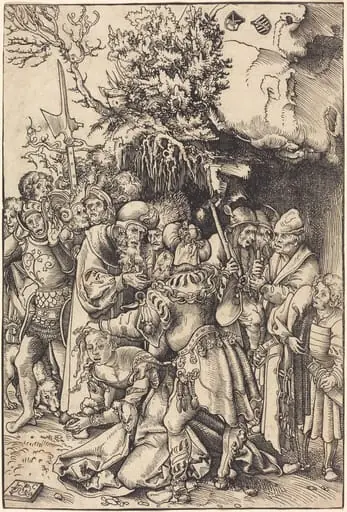 The Martyrdom of Saint Barbara
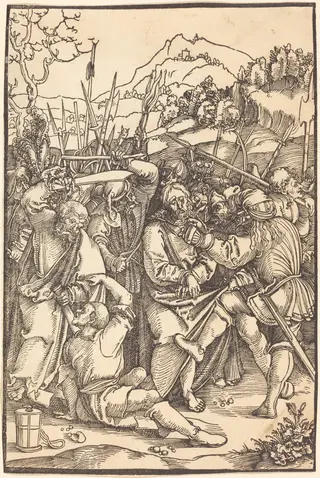 Christ Taken Prisoner
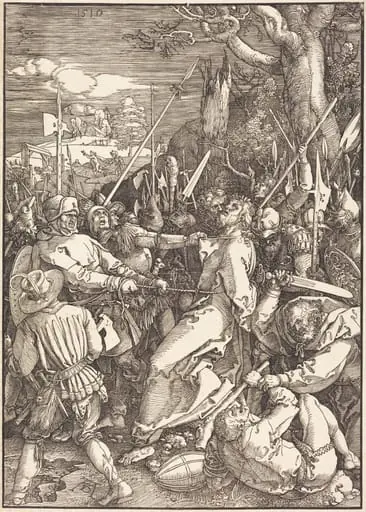 The Betrayal of Christ
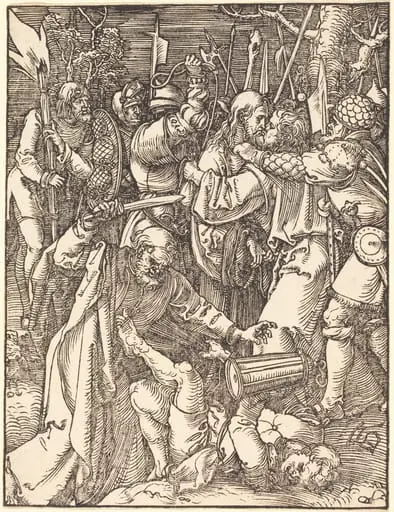 The Betrayal of Christ
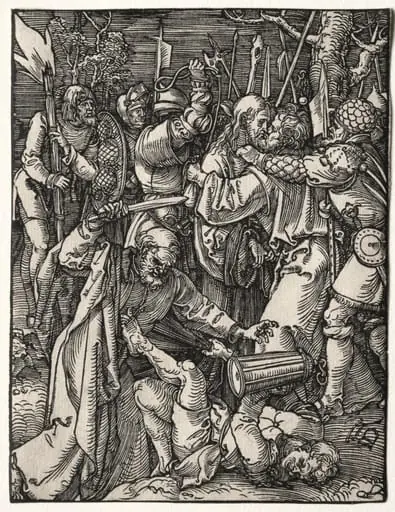 The Small Passion: The Betrayal of Christ
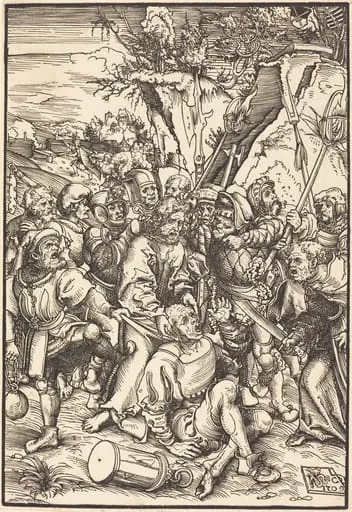 Christ Taken Captive
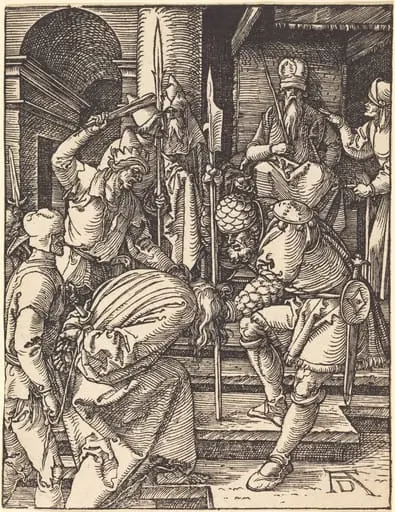 Christ before Annas
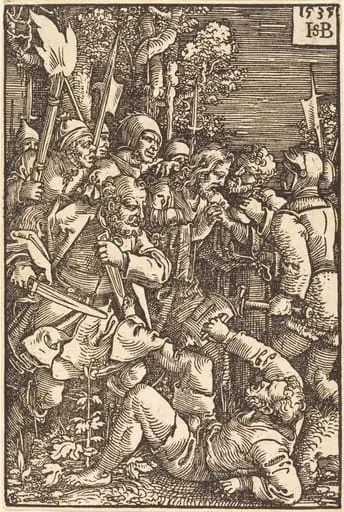 The Betrayal of Christ
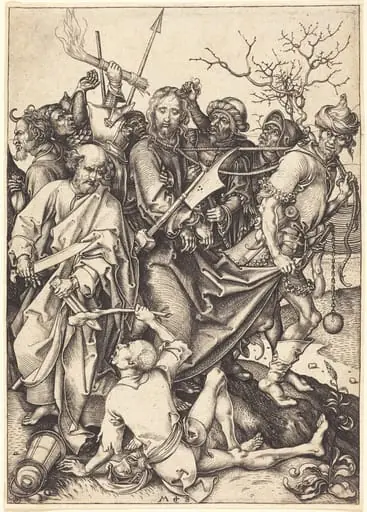 The Betrayal and Capture of Christ
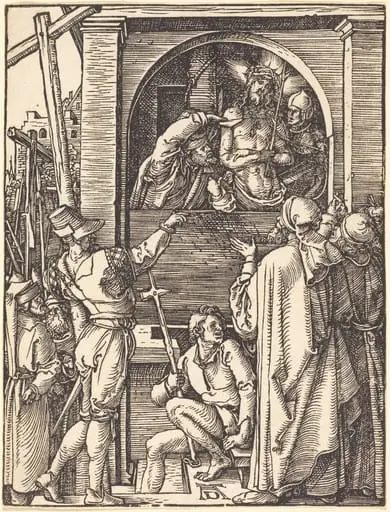 Ecce Homo