Artwork
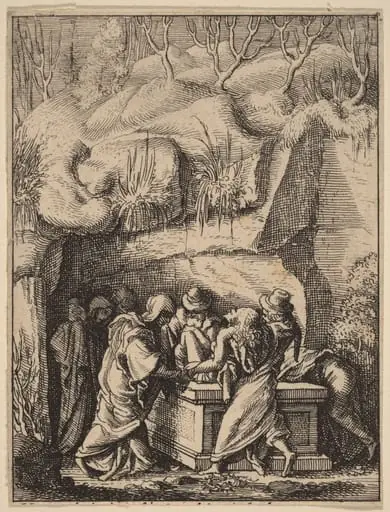
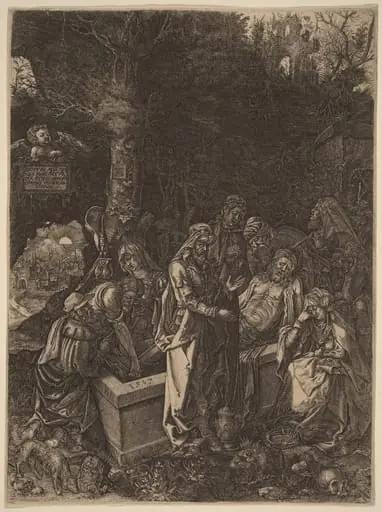
The Entombment
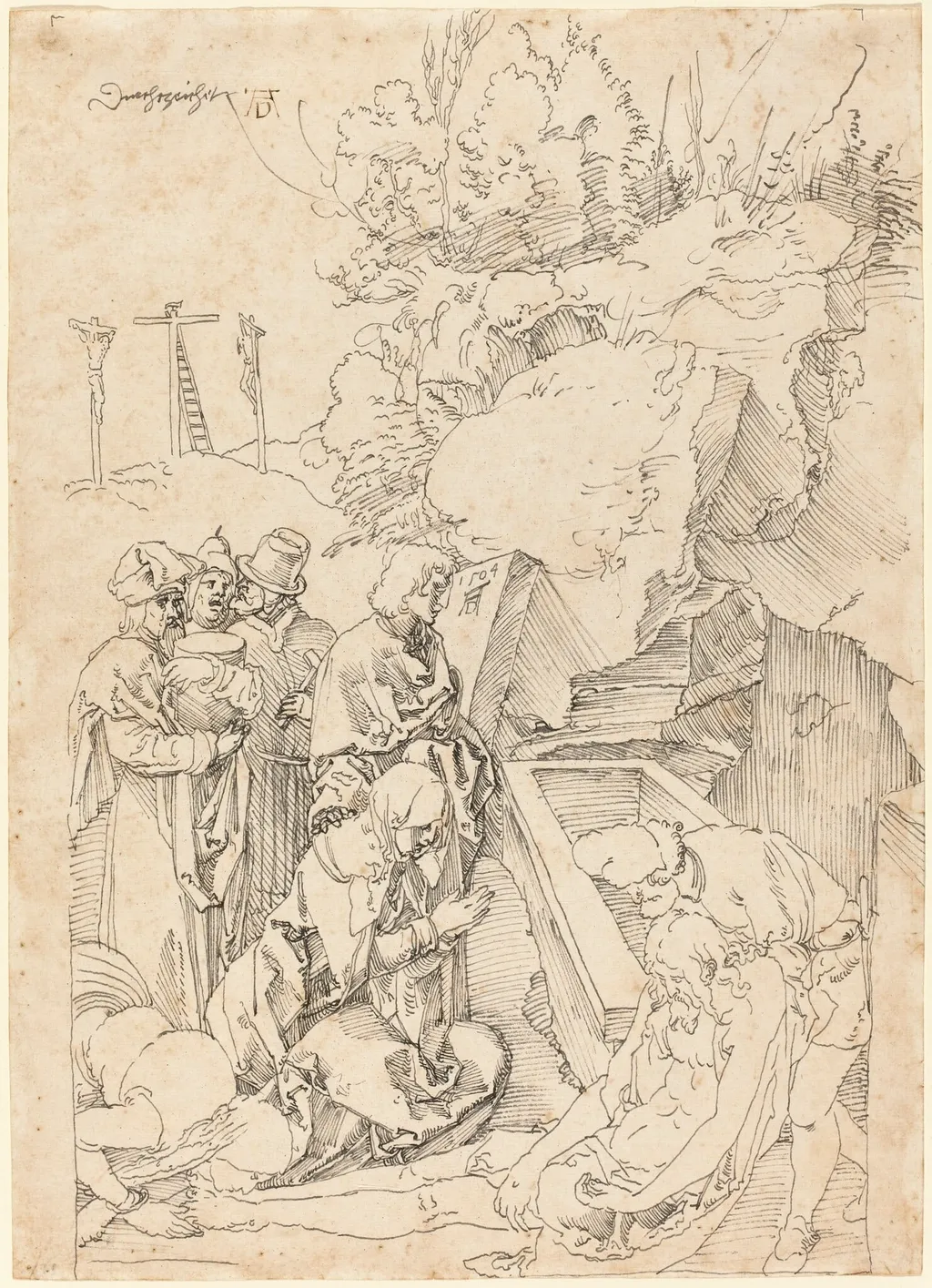
The Entombment is an ink drawing by the Northern Renaissance artist Albrecht Dürer. It dates from 1504 and is held in the collection of the National Gallery of Art.
- Inscription
- Inscribed:center on the lid of the tomb: 1504 / AD (in monogram); inscribed by artist upper left: Durchtzeichet; false monogram added to the right of the inscription
About this work
Overview
Created in 1504, this pen and gray ink drawing by Albrecht Dürer depicts the moment after Christ’s body is lowered into a shallow grave.
Created in 1504, this pen and gray ink drawing by Albrecht Dürer depicts the moment after Christ’s body is lowered into a shallow grave. Executed with rapid, expressive strokes, the work captures a moment of quiet solemnity. The composition is tightly packed, with figures clustered around the wrapped form, their gestures suggesting fatigue and grief. The background includes a distant cross and rugged terrain, reinforcing the scene’s raw, unidealized setting.
Subject & Meaning
The drawing illustrates the entombment of Christ, a key moment in the Passion narrative. Dürer focuses on the physical weight of the act, the strain of carrying the body, the earth being disturbed, the quiet reverence of those present. No divine light or heavenly intervention is shown; the emphasis lies in human labor and mourning, reflecting a devotional realism common in Northern Renaissance piety.
Technique & Style
Dürer employed fine, scratchy lines and dense cross-hatching to model form and depth. Shadows are built through layered strokes, particularly in the folds of cloth and the uneven ground. The ink flows with urgency, suggesting the drawing was made quickly, perhaps as a preparatory study. The lack of polish enhances the emotional immediacy, prioritizing expressive energy over refined finish.
History & Provenance
The drawing is documented as part of Dürer’s personal collection during his lifetime and later entered the holdings of the Albertina Museum in Vienna, where it remains today. Its survival in good condition reflects its value to collectors and scholars, though it was never intended as a finished work for public display.
Context
Made during Dürer’s second trip to Italy, the drawing reflects his engagement with Italian compositional ideas while retaining Northern attention to detail and emotional gravity. It may have served as a study for a larger engraving or painting, though no definitive finished work based on it is known. The sketch reveals his ongoing exploration of human emotion and spatial depth.
Legacy
This drawing exemplifies Dürer’s mastery of ink as a medium for conveying both physical and emotional weight. Its directness influenced later artists seeking expressive simplicity over idealized form. Though not widely exhibited in his time, it is now recognized as a pivotal example of Renaissance draftsmanship and devotional introspection.
Own this work as a print
Artist & collection
Artist
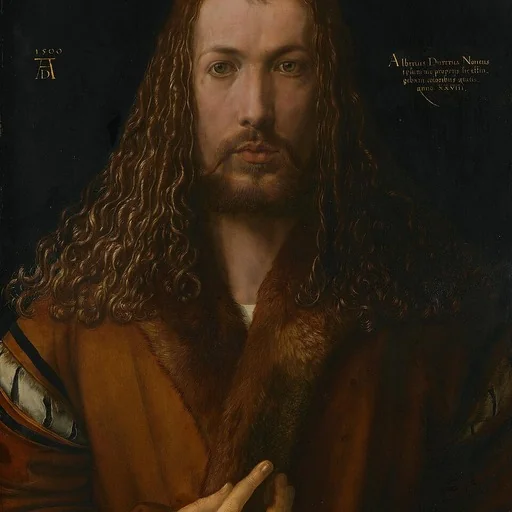
Albrecht Dürer spent his life in Nuremberg, a busy German city where artists traded prints like currency.

![Madonna and Child [obverse], by Albrecht Dürer](https://artifactworldgallery.com/img/albrecht-durer--madonna-and-child-obverse--d7b8ebf05d22ebe5-w320.webp)
![Lot and His Daughters [reverse], by Albrecht Dürer](https://artifactworldgallery.com/img/albrecht-durer--lot-and-his-daughters-reverse--b4ebf9b282faa17a-w320.webp)