Artwork
The Turkish Family
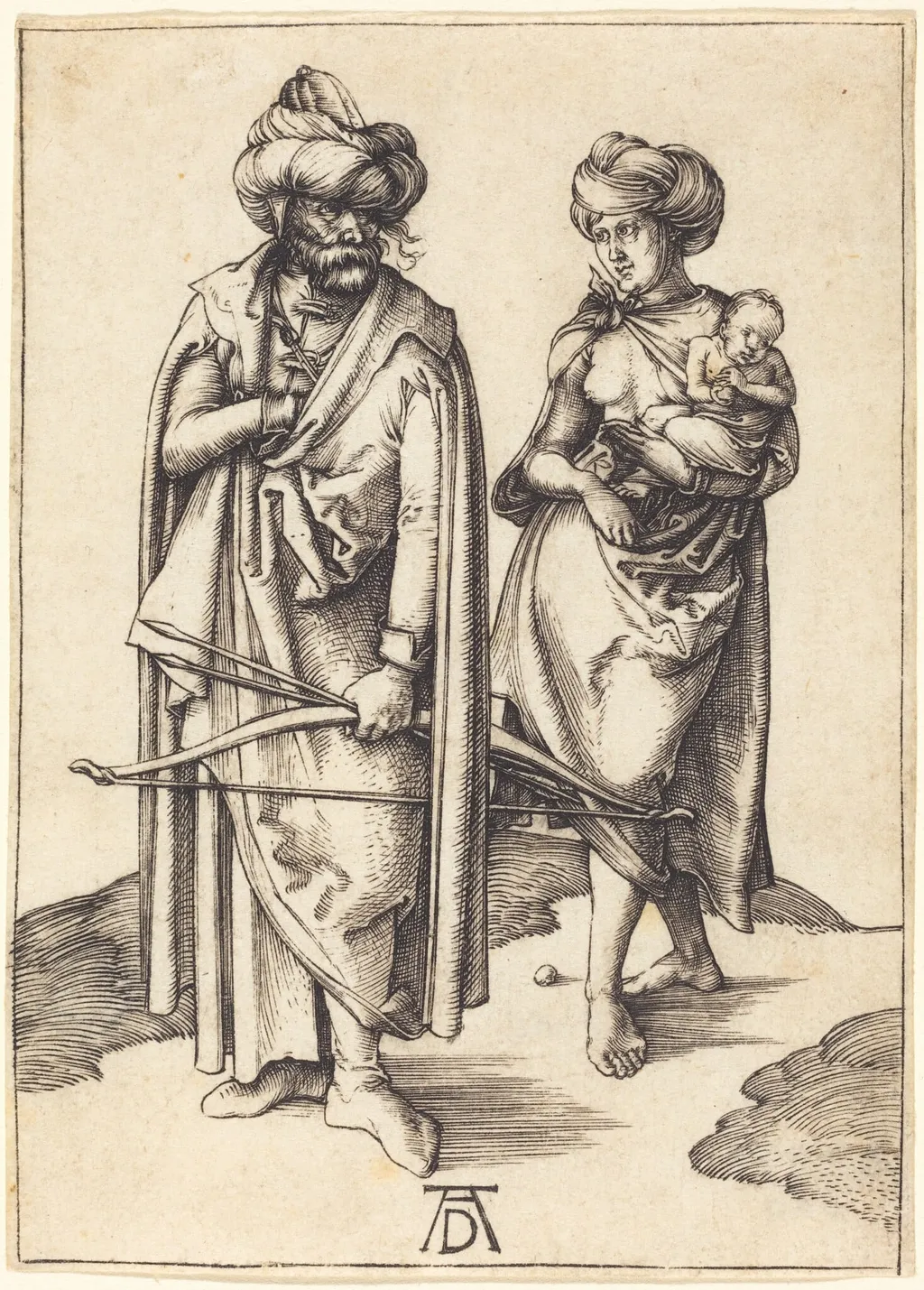
The Turkish Family is an ink print by the Northern Renaissance artist Albrecht Dürer. It dates from 1496 and is held in the collection of the Cooper Hewitt, Smithsonian Design Museum.
- Inscription
- Inscribed:in plate, bottom center: AD [artist's monogram]; verso, lower left, in graphite by a later hand: B.85; verso, lower left, in graphite by a later hand: C.2252 [underlined] / 600
- Markings
- Marked:none
About this work
Subject & Meaning
1475–1480) treats a comparable theme, though Dürer remained faithful to the burin rather than the drypoint that the Hausbuch Master favored.
The engraving depicts a family identified as Turks, presented as a small-scale genre scene of everyday life. According to French art-historical scholarship, the composition most likely represents a family of Romani people, nomads originating from Egypt who were present in the Holy Roman Empire from the early fifteenth century and were declared outlaws under Emperor Maximilian I in the late 1490s.
Dürer drew his inspiration for both the subject and the reduced format from the Master of the Hausbuch, whose Family of Vagabonds (c. 1475–1480) treats a comparable theme, though Dürer remained faithful to the burin rather than the drypoint that the Hausbuch Master favored. The work belongs to a category of small, profane subject prints that enjoyed commercial success in the period, and its imagery was copied by contemporaries including Wenzel von Olmütz and Marcantonio Raimondi, while Jacopo de' Barbari adapted it for his Man with a Cradle.
Technique & Style
Executed in 1496, this work is a burin engraving on laid paper, measuring 10.9 by 7.7 cm. Created in Nuremberg during the German Renaissance, the print utilizes the engraver's burin to achieve fine linear detail, a technique Dürer maintained even as he later experimented with drypoint. The composition features a reduced format typical of secular subjects that enjoyed commercial success at the time. Stylistically, the piece reflects influences from the Master of the Housebook, particularly regarding the subject matter and small scale, though Dürer adheres strictly to engraving rather than adopting the Master's preferred drypoint method.
The image depicts a family group, historically interpreted as nomadic people often labeled as Turks or Egyptians within the Holy Roman Empire.
History & Provenance
Albrecht Dürer produced The Turkish Family as a small-format engraving on laid paper in 1496, working in Nuremberg. The composition belongs to a category of modest, secular prints that circulated commercially and were copied by contemporaries such as Wenzel von Olmütz and Marcantonio Raimondi, while Jacopo de' Barbari drew on it for his own Man with a Cradle.
The documented ownership chain begins with the Parisian collector Gabriel Cognacq, whose collection was marked with the stamp Lugt 538d. The print subsequently passed through the dealer Maurice Rousseau in Paris before being acquired in 1952 by Lessing J. Rosenwald of Jenkintown, Pennsylvania. Rosenwald gave the engraving to the National Gallery of Art in Washington, D.C., in 1953, where it remains held in the Rosenwald Collection.
The Turkish Family is held by the National Gallery of Art in Washington, D.C., where it entered the collection in 1953 as a gift from Lessing J. Rosenwald, who had purchased it in 1952 through the Paris dealer Maurice Rousseau. Before that, the impression passed through the collection of Gabriel Cognacq in Paris, whose ownership is recorded by the collector's mark Lugt 538d.
The National Gallery of Art's Rosenwald Collection, which includes this print, is cited in Wikidata as the work's primary collection, with additional impressions documented at institutions including the Albertina, the British Museum, the Bibliothèque nationale de France, the Kupferstich-Kabinett Dresden, the Cooper Hewitt, and the Metropolitan Museum of Art.
No specific exhibition history beyond its entry into the NGA in 1953 is documented in the available sources.
Context
The Turkish Family, an engraving printed in 1496, was created by Albrecht Dürer during the early phase of the German Renaissance. The print shows a family of Turkish or Romani travelers and reflects contemporary European fascination with itinerant peoples, a subject that gained political attention after Emperor Maximilian I declared such groups outlaws in the late 1490s. Art historians note that Dürer adapted the composition from the Master of the Book of Reason while maintaining his preference for burin technique, and the work was widely reproduced by contemporaries such as Marcantonio Raimondi and Wenzel von Olmütz.
The piece entered the Rosenwald Collection in 1952 and was gifted to the National Gallery of Art in 1953, where it remains part of the Prints and Drawings department.
Legacy
The Turkish Family has been recognized for shaping the visual language of later artists interested in everyday and exotic subjects. Its small, genre‑type composition was widely copied in the early 16th century, influencing printmakers such as Wenzel von Olmütz, Marcantonio Raimondi, and Jacopo de' Barbari, who adapted its format and subject matter in works like the Homme au berceau. The piece entered the Rosenwald Collection in 1952 and was gifted to the National Gallery of Art in 1953, where it remains part of the Prints and Drawings department’s holdings.
Its legacy is also noted in scholarly surveys that trace its influence on the development of profane, small‑scale engraving in the German Renaissance, linking it to broader trends of Orientalist representation in early modern print culture.
Overview
The Turkish Family is an engraving on laid paper, created by Albrecht Dürer around 1496, presenting a domestic genre scene featuring a Turkish family.
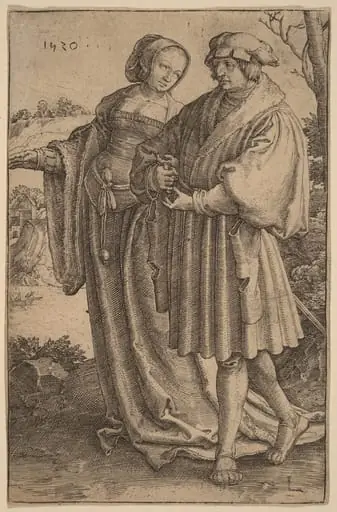
Own this work as a print
Artist & collection
Artist
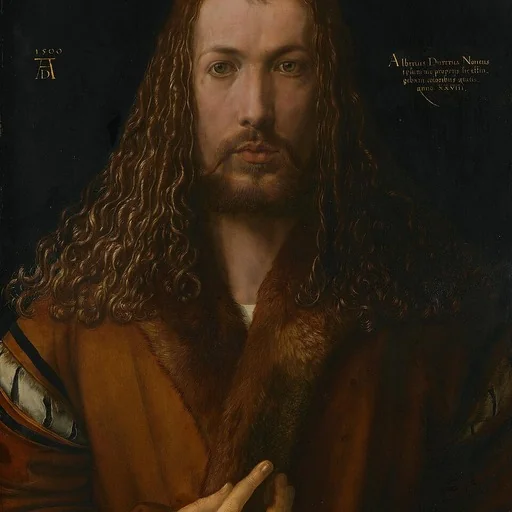
Albrecht Dürer spent his life in Nuremberg, a busy German city where artists traded prints like currency.

Museum
Cooper Hewitt, Smithsonian Design Museum
Continue through works from the same source collection.
![Madonna and Child [obverse], by Albrecht Dürer](https://artifactworldgallery.com/img/albrecht-durer--madonna-and-child-obverse--d7b8ebf05d22ebe5-w320.webp)
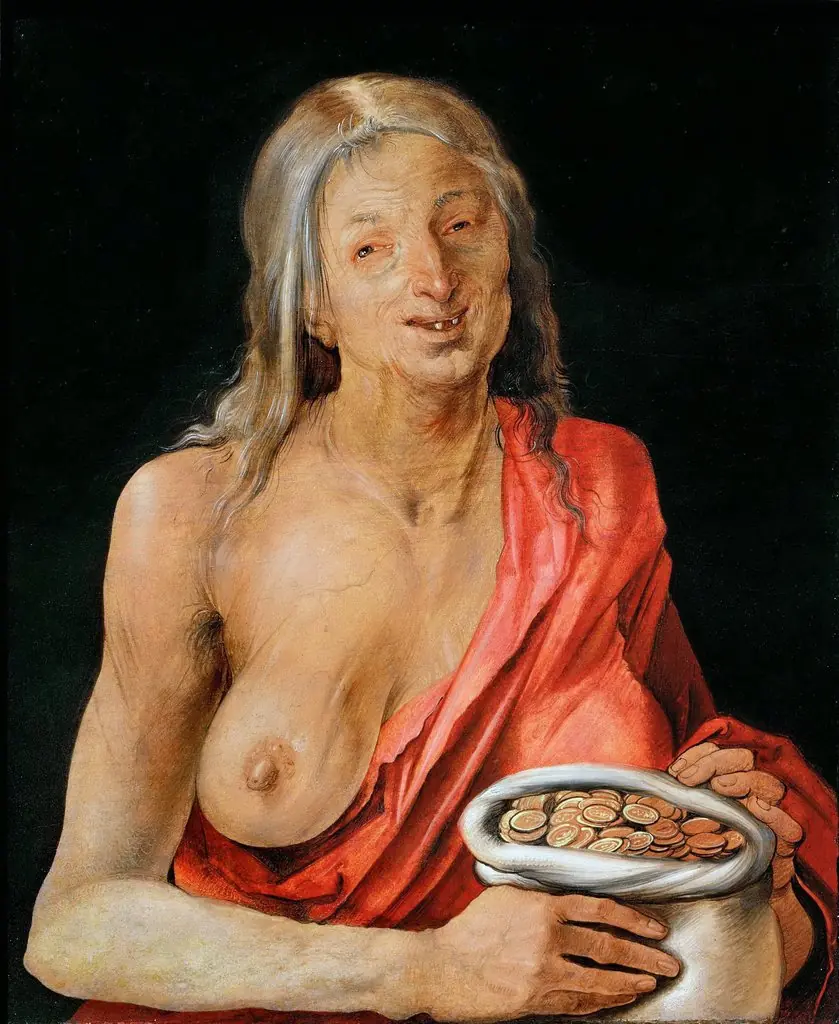
![Lot and His Daughters [reverse], by Albrecht Dürer](https://artifactworldgallery.com/img/albrecht-durer--lot-and-his-daughters-reverse--b4ebf9b282faa17a-w320.webp)
- The Promenade
 Three Oriental Figures
 Five Soldiers and a Turk on Horseback
 Adam and Eve after Their Expulsion from Paradise
 Dance of Death III
 Abraham Repudiating Hagar
 The Ill-Assorted Couple
 Adam and Eve at Work
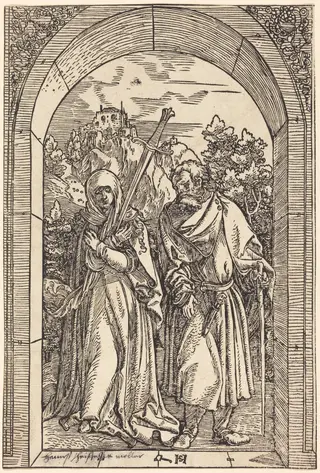 Mater Dolorosa and Saint Joseph
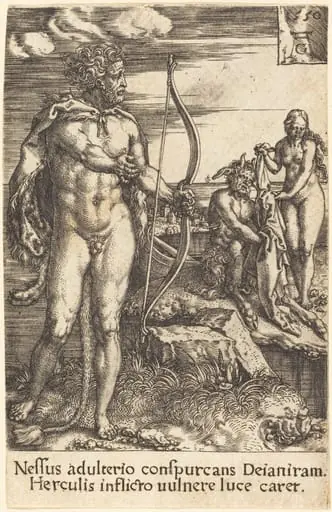 Hercules Killing Nessus
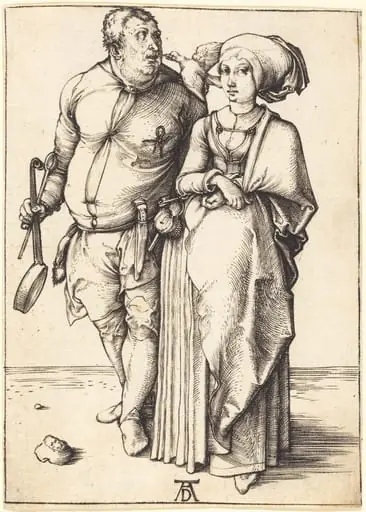 The Cook and His Wife
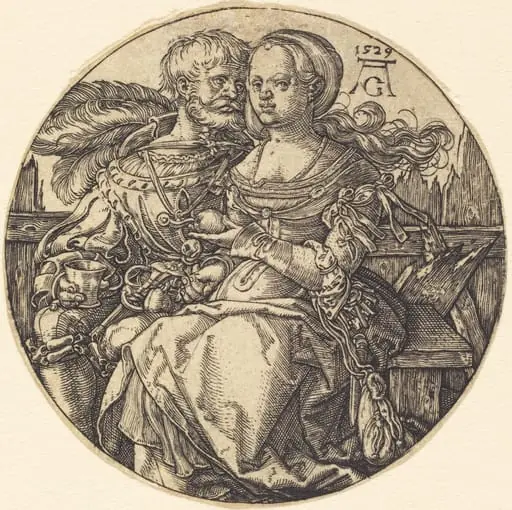 A Couple of Lovers Seated