Artwork
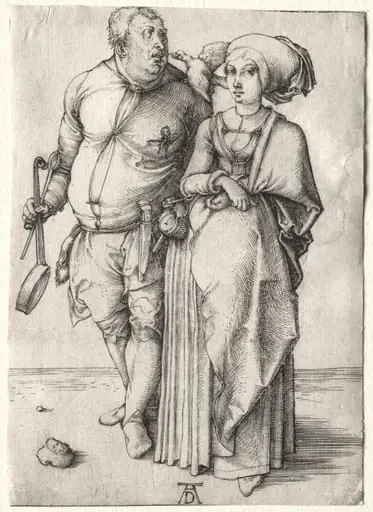
The Cook and His Wife
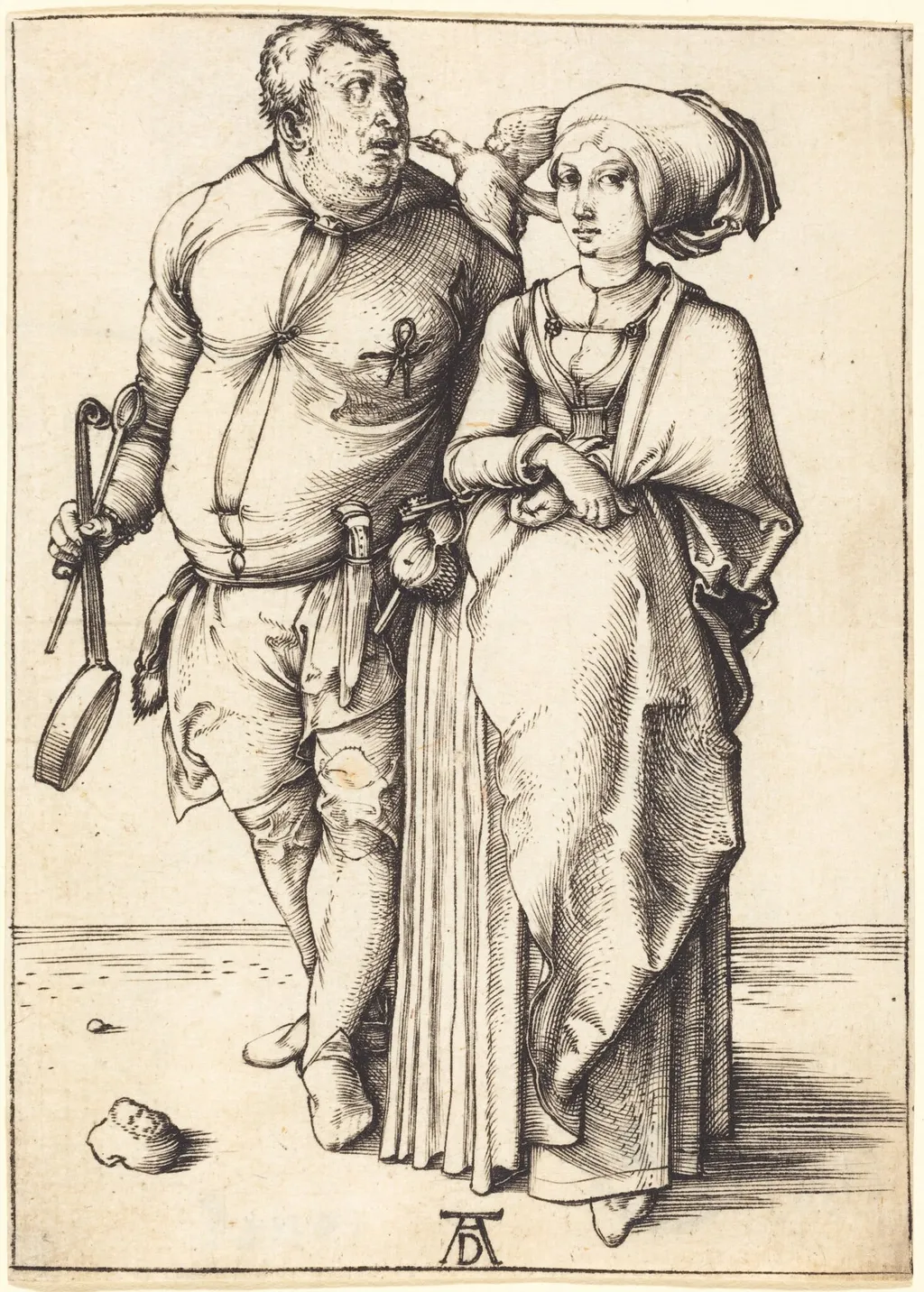
The Cook and His Wife is an ink print by the Northern Renaissance artist Albrecht Dürer. It dates from 1496 and is held in the collection of the National Gallery of Art.
- Inscription
- Inscribed:in plate, bottom center: AD [artist's monogram]; verso, lower left, in graphite by a later hand: B.84; verso, bottom right, in graphite by a later hand: 10116b [underlined]
About this work
Overview
The composition features a male cook and his wife standing side by side against a plain background, a format that emphasizes their individual forms and attire.
Albrecht Dürer's 'The Cook and His Wife' (1496) is a masterful engraving on laid paper that depicts a domestic scene with the precision characteristic of the German Renaissance. The composition features a male cook and his wife standing side by side against a plain background, a format that emphasizes their individual forms and attire. The man, positioned on the left, is portrayed with a muscular chest visible beneath a loose shirt; he holds a large wooden spoon in his right hand, while a knife is tucked into his belt, signifying his trade.
His expression is serious and direct. The woman stands to his right, dressed in a long gown and a white head covering, her posture demure yet dignified. Dürer employs his signature fine, sharp lines to render the textures of fabric, skin, and the wooden utensils with remarkable clarity.
Created early in Dürer's mature career, shortly after his return from Italy, this work demonstrates his ability to elevate a mundane genre subject into a study of character and form. It reflects the Northern Renaissance interest in detailed observation of everyday life, distinct from the idealized figures often found in contemporary Italian art.
Subject & Meaning
The work depicts a domestic scene: a cook holding a wooden spoon, his belt bearing a knife, and a woman in a long dress topped with a white cap. The juxtaposition of the two figures suggests a partnership within a household setting, highlighting everyday labor and the social roles of men and women in late‑15th‑century German life.
Technique & Style
Dürer employed fine parallel hatching to model shadows and texture, a hallmark of early engraving. The delicate cross‑hatching builds depth on the figures’ clothing and musculature, while the sharp line work defines facial expressions and the surrounding space. The use of laid paper provides a subtle tooth that interacts with the ink, enhancing tonal variation.
History & Provenance
The print is part of the collection of the National Gallery of Art in Washington, D.C. Its attribution to Dürer and its early date place it among the artist’s formative works, created shortly after his apprenticeship and before his later, more complex compositions. The piece has been documented in the museum’s holdings since the mid‑20th century.
Own this work as a print
Artist & collection
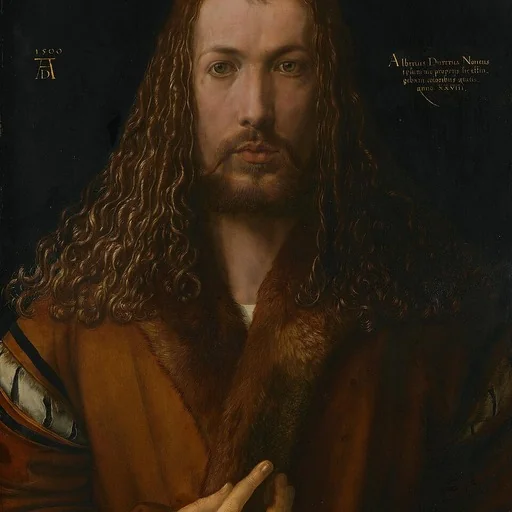
Artist
Albrecht Dürer spent his life in Nuremberg, a busy German city where artists traded prints like currency.

![Madonna and Child [obverse], by Albrecht Dürer](https://artifactworldgallery.com/img/albrecht-durer--madonna-and-child-obverse--d7b8ebf05d22ebe5-w320.webp)
![Lot and His Daughters [reverse], by Albrecht Dürer](https://artifactworldgallery.com/img/albrecht-durer--lot-and-his-daughters-reverse--b4ebf9b282faa17a-w320.webp)