Artwork
The Vision of the Seven Candlesticks
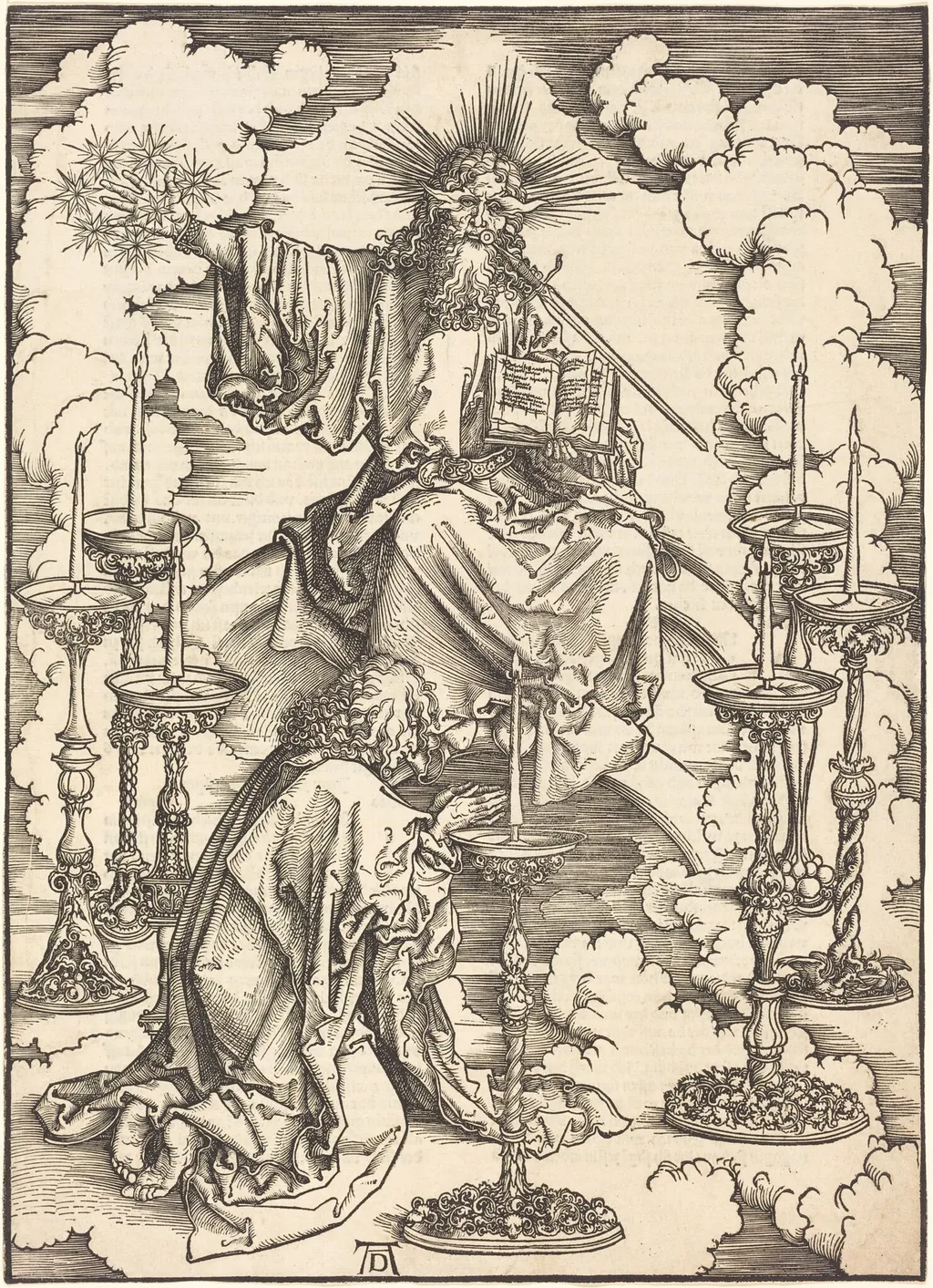
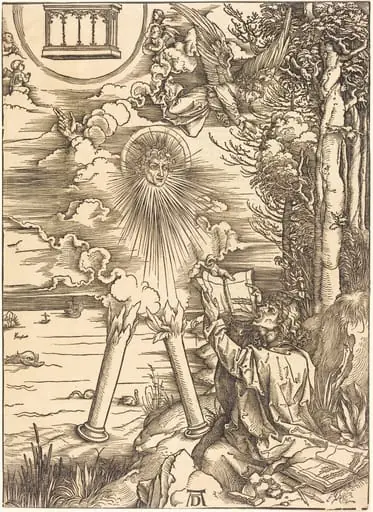
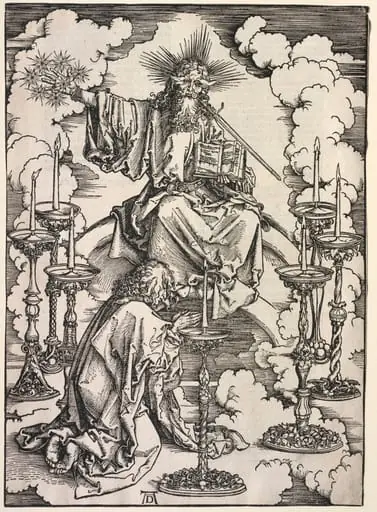
The Vision of the Seven Candlesticks is an ink print by the Northern Renaissance artist Albrecht Dürer. It dates from 1497 and is held in the collection of the British Museum.
About this work
Subject & Meaning
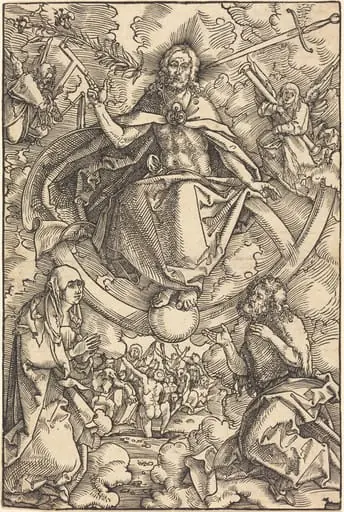
Christ appears robed in a long garment with a girdle, his right hand raised in blessing and his left holding a scroll, while his face radiates light.
The woodcut depicts the opening vision of the Book of Revelation, in which the figure of John the Evangelist kneels before the transfigured Christ amid seven golden candlesticks. Christ appears robed in a long garment with a girdle, his right hand raised in blessing and his left holding a scroll, while his face radiates light. The seven candlesticks, arranged in an arc, symbolize the seven churches of Asia to whom the vision is addressed.
The scene illustrates Revelation 1:12–16, where John records seeing the Son of Man among the lampstands, a sign of divine presence and the churches’ calling to bear witness.
Technique & Style
Created in 1496 in Nuremberg, this work is a woodcut printed on laid paper. As a print from the German Renaissance, it utilizes the high-contrast linear capabilities of the woodcut medium to render complex religious imagery. The composition depicts Jesus Christ and John the Evangelist, drawing its subject matter directly from the Book of Revelation.
Surviving impressions vary slightly in dimensions, with recorded sheet sizes reaching approximately 39.5 cm in height and 28.5 cm in width. The technique demonstrates the artist's mastery in translating intricate visionary details into the graphic language of black and white relief printing.
History & Provenance
Albrecht Dürer created The Vision of the Seven Candlesticks in 1496 as a woodcut on laid paper in Nuremberg. The work is part of the artist's Apocalypse series and is based on the biblical text of Revelation 1. While some records list an inception date of 1498, the authoritative date for this specific print is 1496. The piece depicts Jesus Christ and John the Evangelist within the context of the German Renaissance.
The print's ownership history includes significant holdings in major institutions such as the National Gallery of Art in Washington, D.C., where it resides in the Rosenwald Collection. Other known owners or repositories include the Chester Beatty Library, the Städel Museum, the Staatliche Kunsthalle Karlsruhe, and the British Museum, among others.
The Vision of the Seven Candlesticks is held by the National Gallery of Art in Washington, D.C., according to Wikidata records, which also list the print as part of the institution's holdings within the Prints in the National Gallery of Art and the Rosenwald Collection. The same source documents that impressions of the woodcut are present in numerous other collections, including the Chester Beatty Library, the Städel Museum, the Staatliche Kunsthalle Karlsruhe, the Clark Art Institute, the Saint Louis Art Museum, the Baltimore Museum of Art, the Metropolitan Museum of Art, the Cleveland Museum of Art, the British Museum, the Davison Art Center, the Kupferstichkabinett Berlin, and the Kupferstich-Kabinett Dresden. No specific accession number or detailed exhibition history is provided in the available sources.
Legacy
The Vision of the Seven Candlesticks shaped early modern interpretations of apocalyptic imagery, particularly through its vivid portrayal of John the Evangelist and Jesus Christ within a Revelation framework. Dürer’s emphasis on symbolic candlesticks resonated with subsequent religious printmakers who adopted similar compositional devices to convey theological urgency. The work’s technical precision and narrative intensity influenced print workshops across Germany and the Low Countries during the 16th century, as documented in contemporary treatises on engraving.
Its presence in major museum collections, including the National Gallery of Art and the British Museum, has ensured continued scholarly attention to Dürer’s role in visualizing biblical prophecy.
Overview
Albrecht Dürer’s woodcut, titled The Vision of the Seven Candlesticks, was produced around 1497. Executed on laid paper, the print presents a compact, narrative scene drawn from the apocalyptic visions of the Book of Revelation. The composition centers on a luminous figure of Christ holding a cluster of seven candlesticks, attended by a kneeling John the Evangelist.
Context
Created at the height of Dürer’s early career, the woodcut reflects the period’s growing interest in biblical exegesis and the use of print technology to reach a broader audience. Its emphasis on precise line and symbolic content aligns with contemporary humanist approaches to scripture, while the dramatic lighting anticipates later developments in Northern European religious art.
Own this work as a print
Artist & collection
Artist
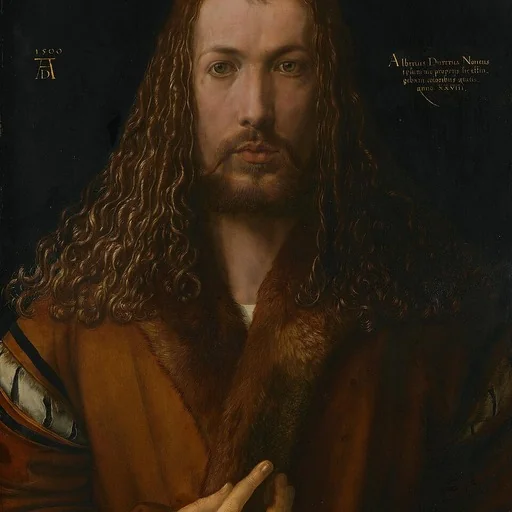
Albrecht Dürer spent his life in Nuremberg, a busy German city where artists traded prints like currency.

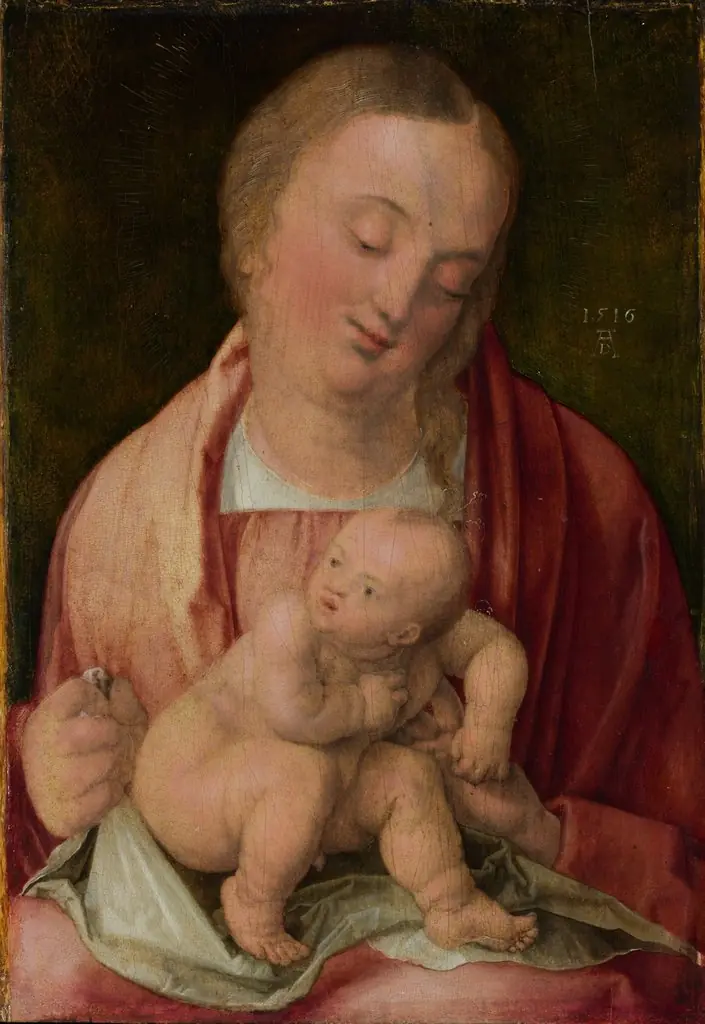
![Madonna and Child [obverse], by Albrecht Dürer](https://artifactworldgallery.com/img/albrecht-durer--madonna-and-child-obverse--d7b8ebf05d22ebe5-w320.webp)
![Lot and His Daughters [reverse], by Albrecht Dürer](https://artifactworldgallery.com/img/albrecht-durer--lot-and-his-daughters-reverse--b4ebf9b282faa17a-w320.webp)