Artwork
Saint John Devouring the Book
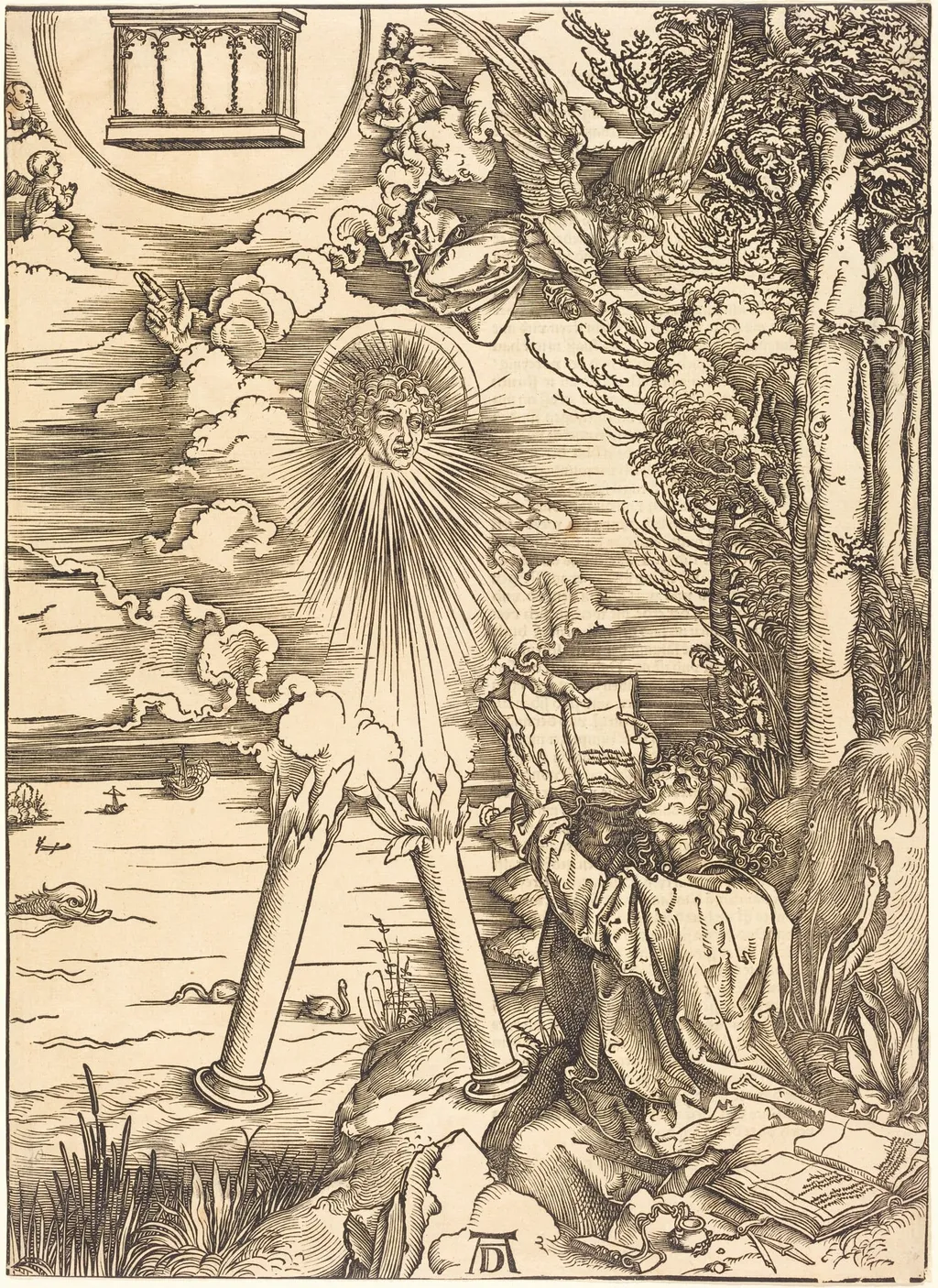
Saint John Devouring the Book is an ink print by the Northern Renaissance artist Albrecht Dürer. It dates from 1497 and is held in the collection of the Metropolitan Museum of Art.
About this work
Subject & Meaning
Albrecht Dürer's 1496 woodcut depicts the Apostle John the Evangelist in the act of consuming a scroll, a scene drawn directly from Revelation 10.
Albrecht Dürer's 1496 woodcut depicts the Apostle John the Evangelist in the act of consuming a scroll, a scene drawn directly from Revelation 10. This imagery illustrates the biblical narrative where the prophet is commanded to eat a little book that tastes sweet as honey in his mouth but turns bitter in his stomach. The work serves as a visual representation of the internalization of divine prophecy, symbolizing the dual nature of the prophetic message as both a source of spiritual sweetness and a burden of difficult truth.
As part of Dürer's larger Apocalypse series, the print captures the moment of prophetic initiation, grounding the theological concept of receiving God's word in a tangible, physical act.
Technique & Style
Albrecht Dürer created Saint John Devouring the Book as a woodcut print, a technique central to the German Renaissance movement. Executed between 1496 and 1498 in Nuremberg, the work was produced on laid paper. The print measures approximately 39.3 to 40 cm in height and 28.5 to 28.6 cm in width.
As part of the Apocalypse series, the image depicts John the Evangelist consuming a book, drawing its subject matter directly from Revelation 10. The formal qualities reflect the intricate line work and dramatic narrative style characteristic of Dürer's woodcut production during this period.
History & Provenance
The work titled Saint John Devouring the Book was created by Albrecht Dürer in 1496 as part of his Apocalypse series, inspired by Revelation 10. It was made in Nuremberg using woodcut on laid paper, measuring approximately 39.3 cm in height and 28.5 cm in width. The print entered various institutional collections, including the National Gallery of Art in Washington, D.C., Städel Museum, Germanisches Nationalmuseum, and others, reflecting its widespread preservation and scholarly interest.
The woodcut Saint John Devouring the Book by Albrecht Dürer, created in 1496, is part of the Apocalypse series and depicts John the Evangelist. It is held in several institutions, including the National Gallery of Art in Washington, D.C., the Städel Museum, and the Germanisches Nationalmuseum. The work measures 39.3 cm by 28.5 cm and was produced in Nuremberg.
The print has been exhibited in major art institutions, though specific exhibition venues are not detailed in the available records. Its inclusion in prominent museum collections underscores its significance within the German Renaissance and religious art traditions.
Context
Scholarship situates the work within Dürer's early print series exploring apocalyptic themes, reflecting his engagement with German Renaissance humanist currents and the Reformation's visual discourse. Critical reception highlights its intense psychological portrayal of John the Evangelist's prophetic act, drawing commentary on its technical mastery and theological symbolism in relation to contemporary religious upheaval.
Overview
Saint John Devouring the Book is a woodcut by the German Renaissance master Albrecht Dürer, created in 1497. The work illustrates a specific episode from the Apocalypse of John (Revelation 10:8–10), where the Evangelist is commanded by an angel to consume a small scroll. In the composition, John is depicted kneeling on a rocky outcrop, forcefully ingesting the book while displaying a complex expression of physical strain and spiritual awe.
The scene captures the dual nature of the prophecy described in the text: the book tastes sweet as honey in the mouth but turns bitter in the stomach. Dürer renders the figure with precise anatomical detail and dramatic chiaroscuro, characteristic of his early mature style. The surrounding landscape features rugged terrain and a distant city, grounding the visionary event in a tangible, albeit stylized, reality.
This piece is part of Dürer's early exploration of apocalyptic themes, preceding his more famous series of Apocalypse woodcuts published in 1498. The work demonstrates his mastery of the woodcut medium, utilizing fine lines and cross-hatching to create depth and texture. It stands as a significant example of Northern Renaissance religious art, blending theological narrative with intense psychological realism.
Legacy
Saint John Devouring the Book exemplifies Dürer’s mastery of woodcut and contributes to the broader tradition of religious prints that shaped visual culture in the Northern Renaissance.
Own this work as a print
Artist & collection
Artist
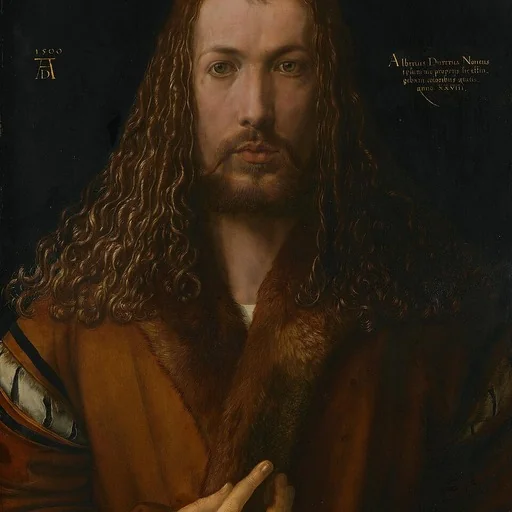
Albrecht Dürer spent his life in Nuremberg, a busy German city where artists traded prints like currency.

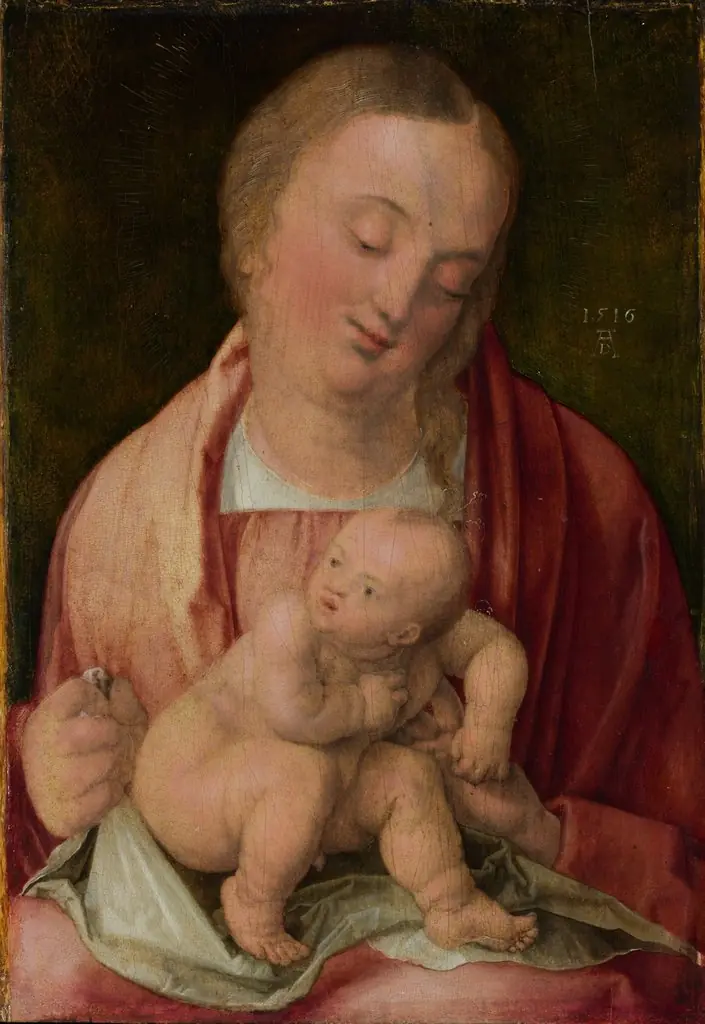
![Madonna and Child [obverse], by Albrecht Dürer](https://artifactworldgallery.com/img/albrecht-durer--madonna-and-child-obverse--d7b8ebf05d22ebe5-w320.webp)
![Lot and His Daughters [reverse], by Albrecht Dürer](https://artifactworldgallery.com/img/albrecht-durer--lot-and-his-daughters-reverse--b4ebf9b282faa17a-w320.webp)

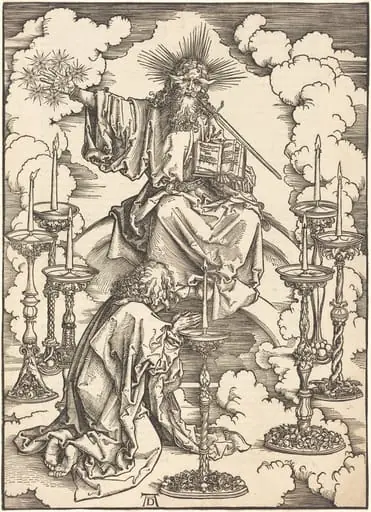 The Vision of the Seven Candlesticks
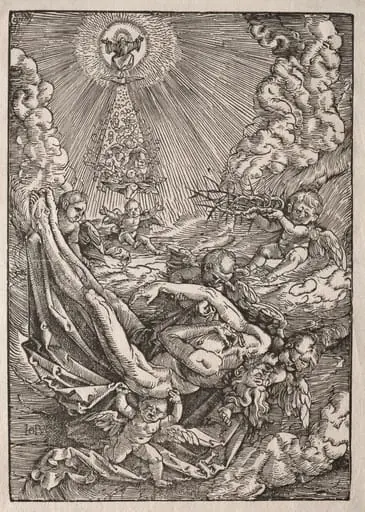 Christ Carried to Heaven by Angels
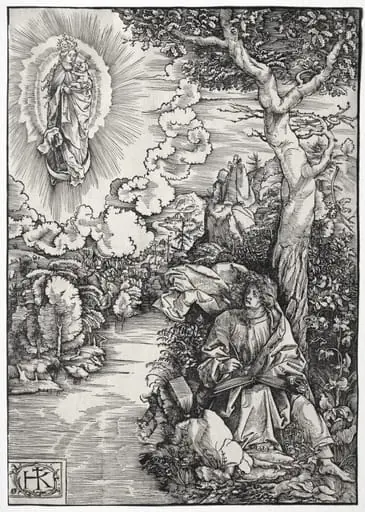 St. John on the Island of Patmos
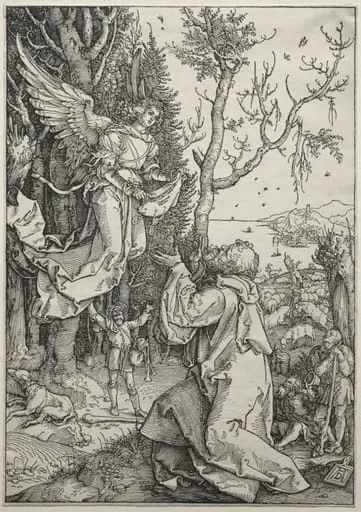 The Life of the Virgin: Joachim and the Angel
 The Four Horsemen of the Apocalypse
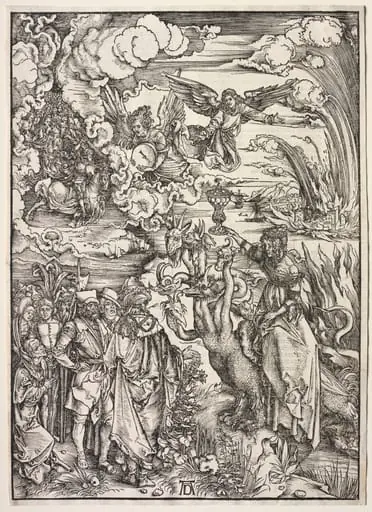 Revelation of St. John: The Woman of Babylon
 Saint Christopher
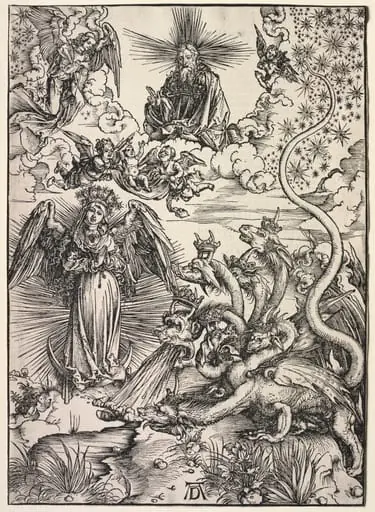 Revelation of St. John: The Woman Clothed with the Sun
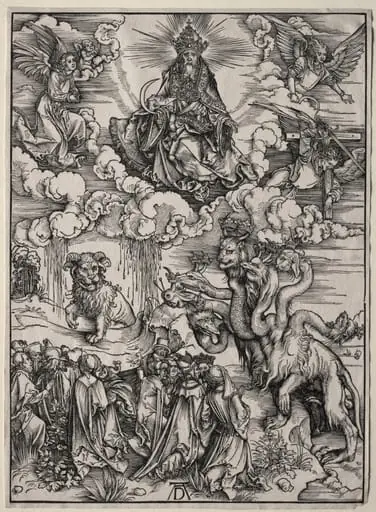 The Beast with Seven Heads and the Beast with Lamb's Horns
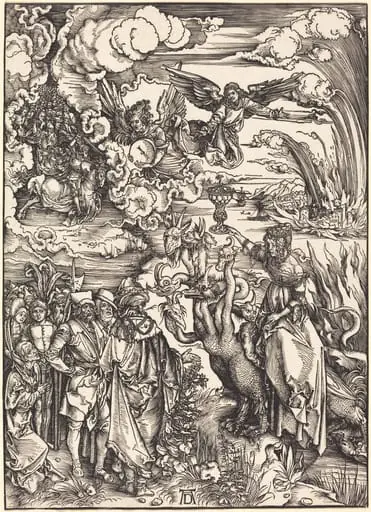 The Babylonian Whore
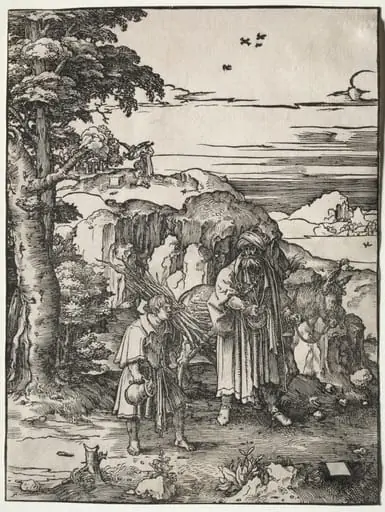 Abraham Going to Sacrifice Isaac
- Revelation of St. John: St. John Devouring the Books