Artwork
The Hermit Xu You Resting by a Stream
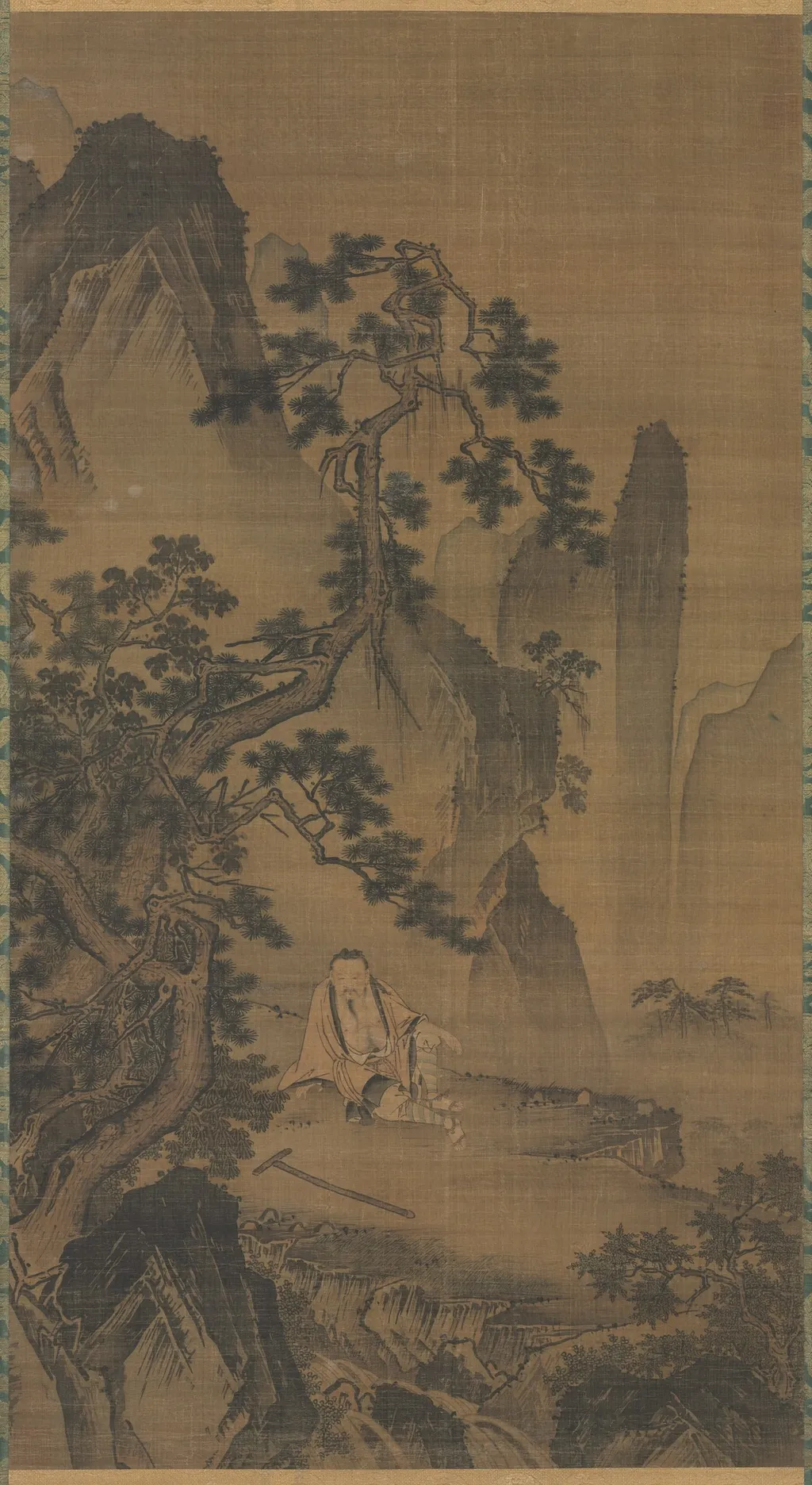
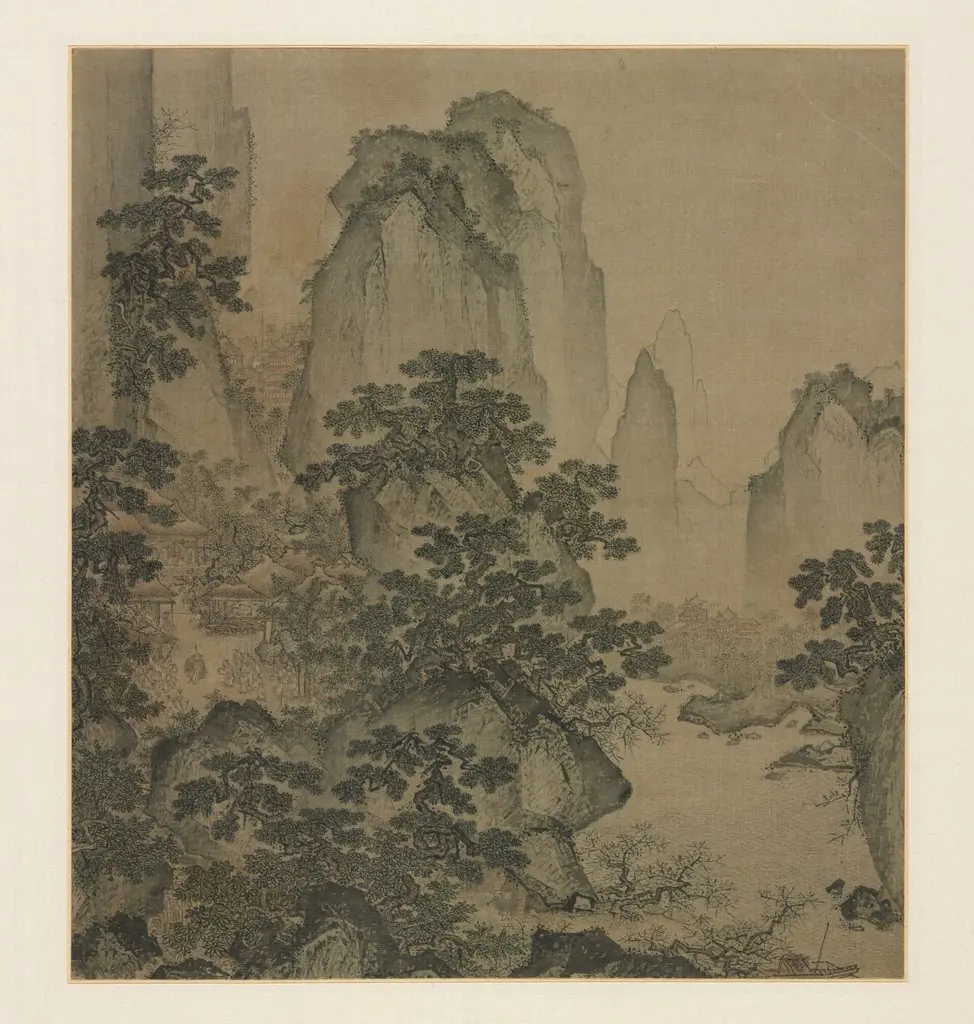
The Hermit Xu You Resting by a Stream is an unspecified painting by the Song dynasty landscape artist Dai Jin. It dates from 1431 and is held in the collection of the Cleveland Museum of Art.
About this work
Overview
The palette relies on earthy browns and muted greens, accented by subtle blue tones in the distant peaks, creating a serene yet dynamic atmosphere.
Painted in 1431, The Hermit Xu You Resting by a Stream is a seminal work by Dai Jin, the founder of the Zhe School during the early Ming Dynasty. The composition depicts the legendary recluse Xu You resting beneath a gnarled, leafless tree beside a rocky stream, embodying the Confucian ideal of withdrawal from public life. Dai Jin renders the figure in loose, flowing robes, holding a long staff, set against a backdrop of jagged, towering mountains and sparse vegetation clinging to steep slopes.
Executed in ink and light color on silk, the painting demonstrates the artist's mastery of the Southern Song academic tradition while introducing the vigorous, expressive brushwork characteristic of the Zhe School. The palette relies on earthy browns and muted greens, accented by subtle blue tones in the distant peaks, creating a serene yet dynamic atmosphere. This work solidified Dai Jin's reputation as a leading figure of his time, bridging the gap between the refined court style and the more energetic, individualistic approaches that would define later Ming landscape painting.
It stands as a definitive example of how Ming artists reinterpreted classical themes of hermitage through a distinctively robust visual language.
Subject & Meaning
The artwork portrays a single individual, presumably the hermit Xu You, seated beneath a stark, leafless tree beside a rocky stream. Dressed in loose, unadorned robes and holding a staff, the figure embodies a life detached from worldly concerns. The surrounding landscape, characterized by jagged mountains and sparse vegetation, reinforces a sense of isolation and tranquility, suggesting a deliberate withdrawal from societal complexities in favor of a contemplative existence.
Technique & Style
Dai Jin employed a palette dominated by earthy browns and greens, subtly accented with hints of blue-green, to depict the natural environment. The artist's brushwork renders the rocks and trees with a rough, organic texture, emphasizing the raw quality of the landscape. The application of chiaroscuro is evident in the interplay of light and shadow, which contributes to the perception of depth and volume within the scene, enhancing the overall atmospheric effect.
Artist & collection
Artist
Dai Jin lived in Hangzhou, where the old Southern Song court had once ruled. He spent his days sketching boats along the river and collecting Ming-era scrolls in the same tea houses where scholars argued about art. He…

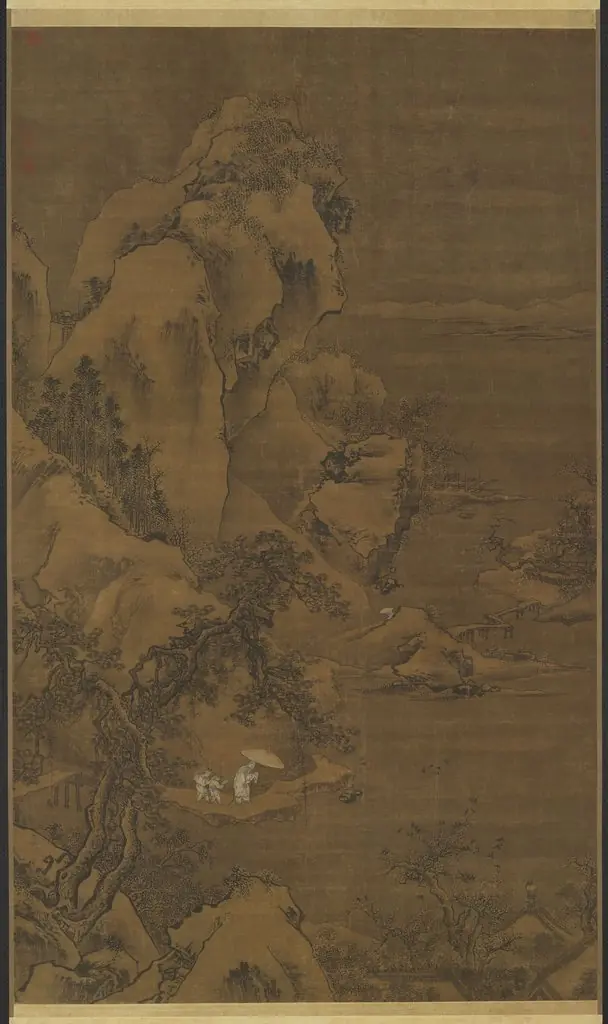
- Searching for Plum Blossoms
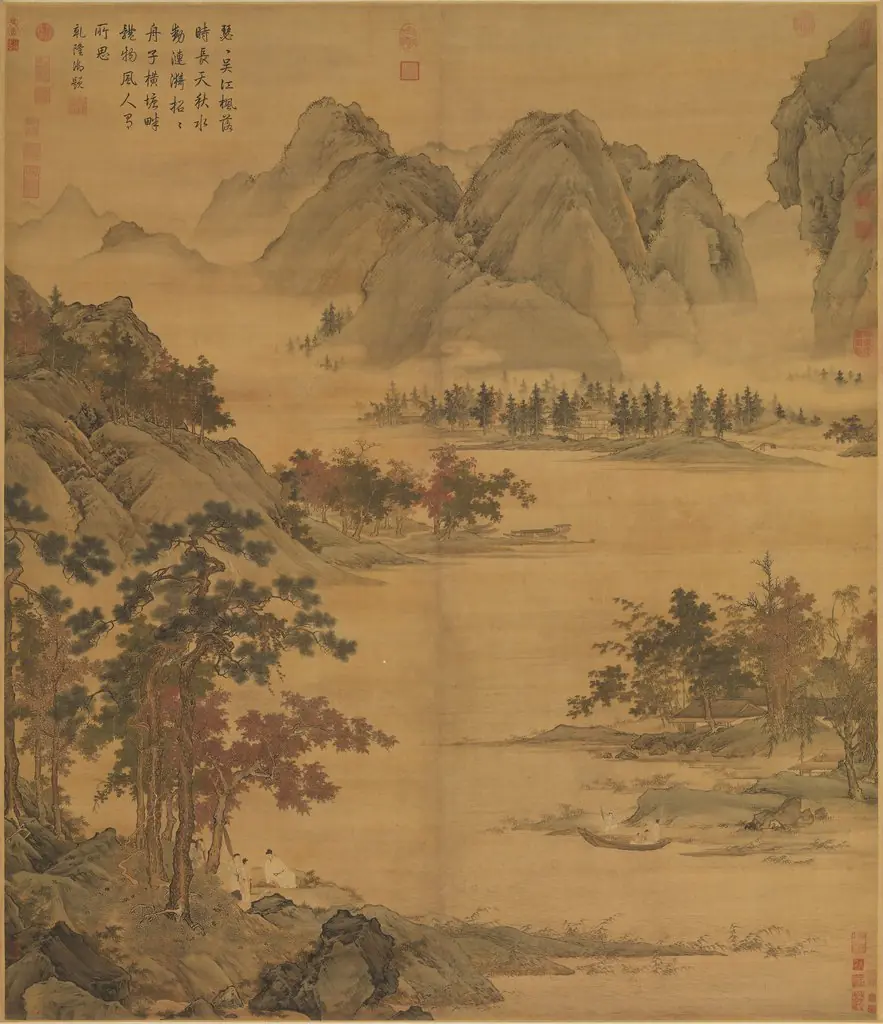 Waiting for the Ferry on an Autumn River
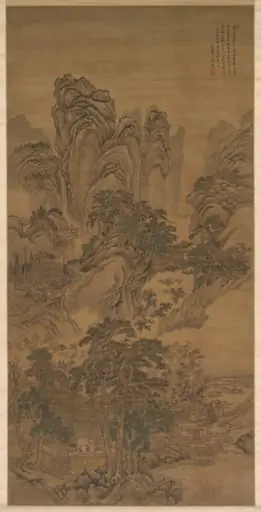 Landscape
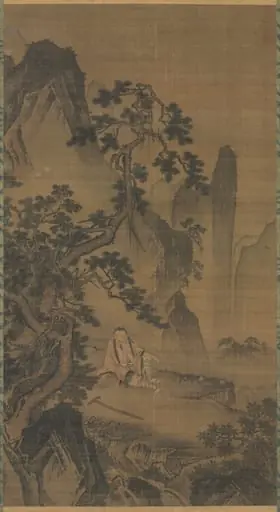 The Hermit Xu You Resting by a Stream
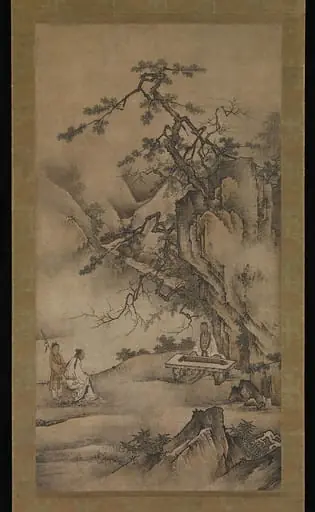 狩野元信周辺 伯牙鍾子期図|Bo Ya Plays the Qin as Zhong Ziqi Listens
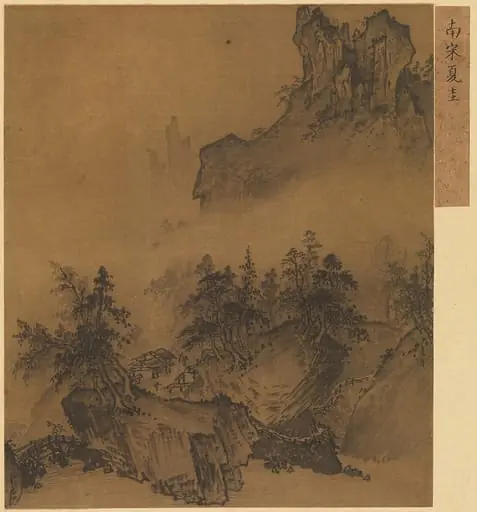 南宋 夏珪 山市晴嵐圖 冊頁|Mountain Market, Clearing Mist
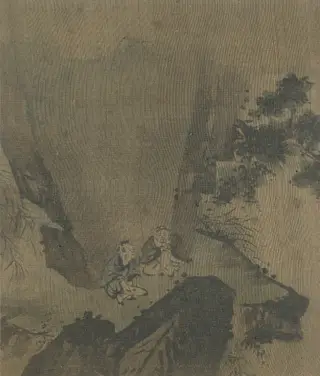 Figures in Landscape
 Landscape
 Summer Landscape
 Sunset Glow over a Fishing Village, from Eight Views of Xiao-Xiang
 Fishermen-Hermits in Stream and Mountain
 The Haven of the Peach-Blossom Spring