Artwork
C'est dangereux, la pêche à l'épervier
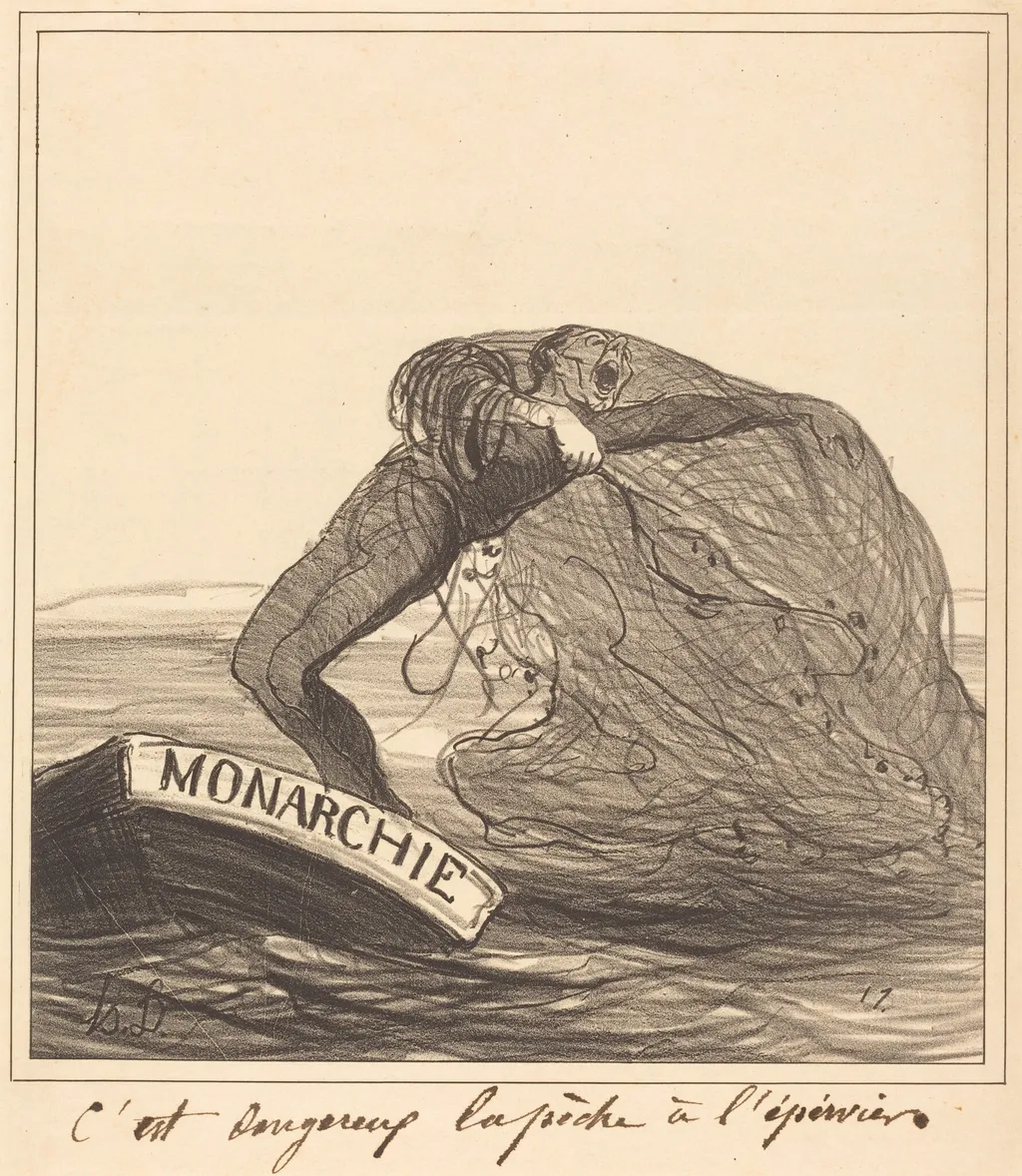
C'est dangereux, la pêche à l'épervier is an ink print by the Impressionist artist Honoré Daumier. It dates from 1872 and is held in the collection of the National Gallery of Art.
About this work
Overview
' The work’s stark tonal contrasts and simplified forms reflect Daumier’s signature style, rooted in journalistic illustration rather than fine art traditions.
Created in 1872, this lithograph by Honoré Daumier is part of a series of political prints responding to France’s turbulent post-monarchical era. Executed in grayscale, the image captures a solitary figure in a dark suit confronting a heavy stone marked 'MONARCHIE.' The work’s stark tonal contrasts and simplified forms reflect Daumier’s signature style, rooted in journalistic illustration rather than fine art traditions.
Subject & Meaning
The figure, gripping a submerged rock labeled 'MONARCHIE,' symbolizes the precarious effort to suppress or contain the remnants of monarchical power. His strained posture and gaze suggest vigilance or exhaustion, implying that the past is not easily buried. The title, translating to 'It's dangerous, fishing with a hawk,' alludes to a proverbial risk, here, the danger of reviving old regimes through nostalgia or political maneuvering.
Technique & Style
Daumier employed lithography for its capacity to convey rapid, expressive lines and rich tonal gradations. The image relies on minimal detail, using broad washes of gray to model form and depth. The rough texture of the stone and the figure’s crumpled clothing are rendered with economical strokes, enhancing the sense of urgency. The medium’s immediacy aligns with the print’s function as a timely political statement.
History & Provenance
Produced during the early Third Republic, the print emerged amid ongoing debates over France’s political identity after the fall of Napoleon III. Daumier, long associated with satirical journals like Le Charivari, continued to critique authority despite declining health and public censorship. This work likely circulated privately or in limited editions, avoiding direct publication due to its incendiary symbolism.
Context
In the 1870s, France grappled with lingering monarchist sympathies and fears of counter-revolution. Daumier’s imagery tapped into public anxiety over whether democratic institutions could endure. His use of metaphor, rather than literal caricature, allowed the message to resonate beyond immediate political events, framing monarchy as a weighty, submerged force that still demanded vigilance.
Legacy
Though less widely known than his earlier satires, this lithograph exemplifies Daumier’s mature approach: symbolic, restrained, and emotionally resonant. It influenced later generations of political artists who favored allegory over overt caricature. The work remains a quiet but potent testament to his lifelong commitment to exposing the persistence of power structures through visual metaphor.
Own this work as a print
Artist & collection
Artist
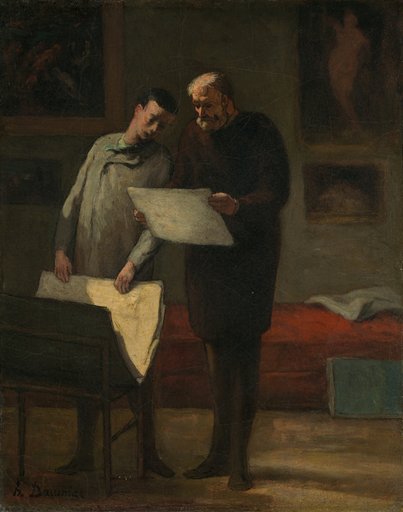
Honoré-Victorin Daumier (French: ; 26 February 1808 – 10 or 11 February 1879) was a French painter, sculptor, and printmaker, whose many works offer commentary on the social and political life in France, from the…









 Trop étroit pour deux
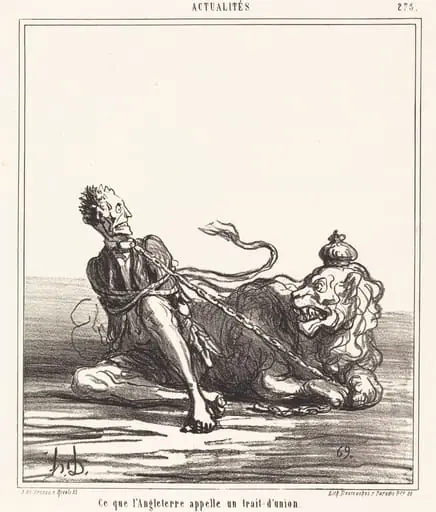 Ce que l'Angleterre appelle un trait-d'union
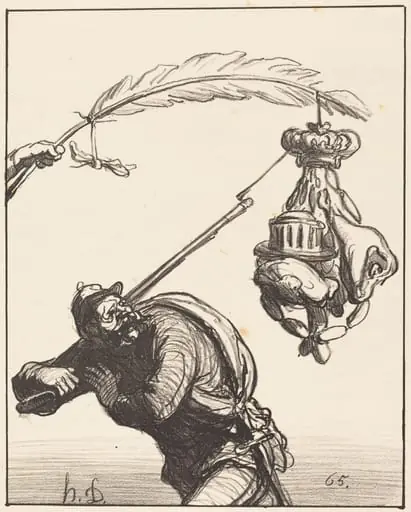 La paix a tout prix
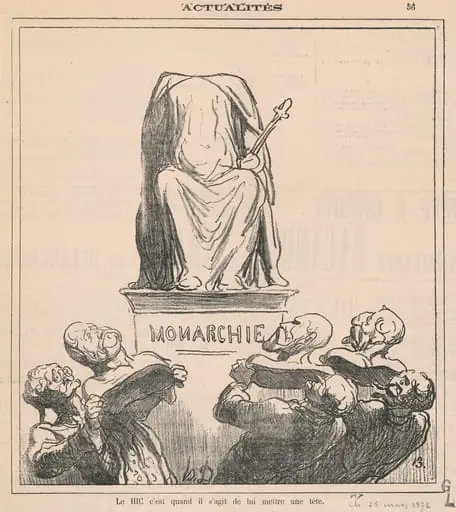 Le hic c'est quand il s'agit de lui mettre une tête
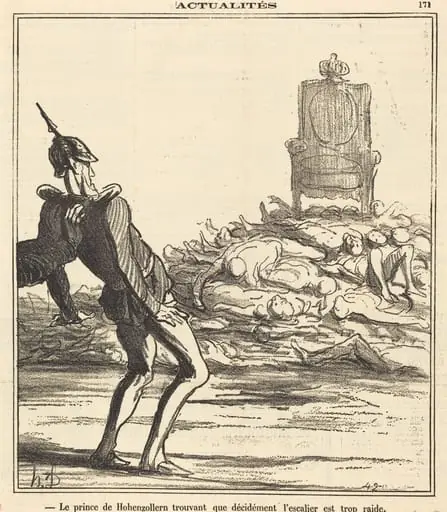 Le Prince de Hohenzollern...
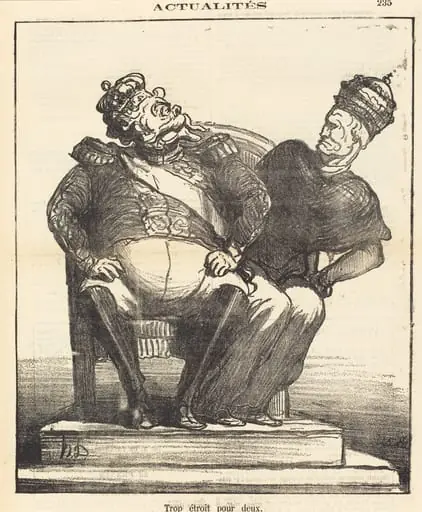 Trop étroit pour deux
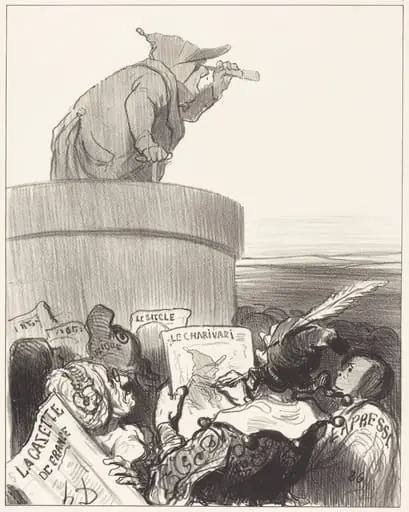 Le Constitutionnel contemplant l'horizon politique
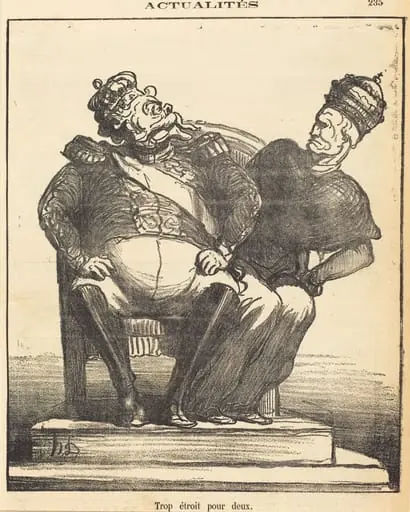 Trop étroit pour deux
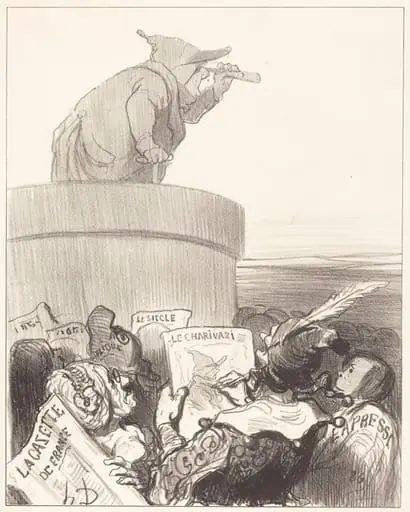 Le Constitutionnel contemplant l'horizon politique
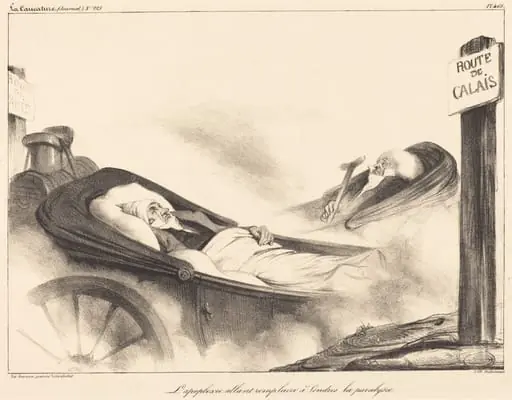 L'Apoplexie allant remplacer a Londres la paralysie
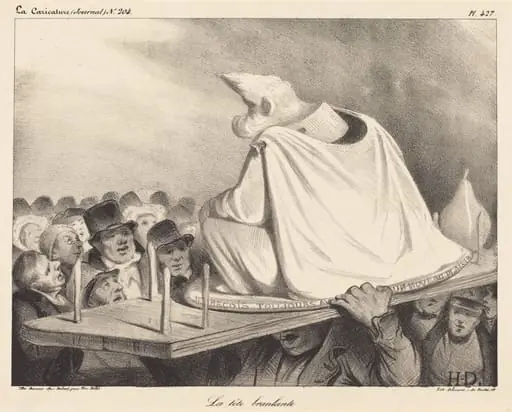 La tête branlante
- C'est dangereux, la pêche à l'épervier