Artwork
Ce qu'on appelle le Royaume-Uni
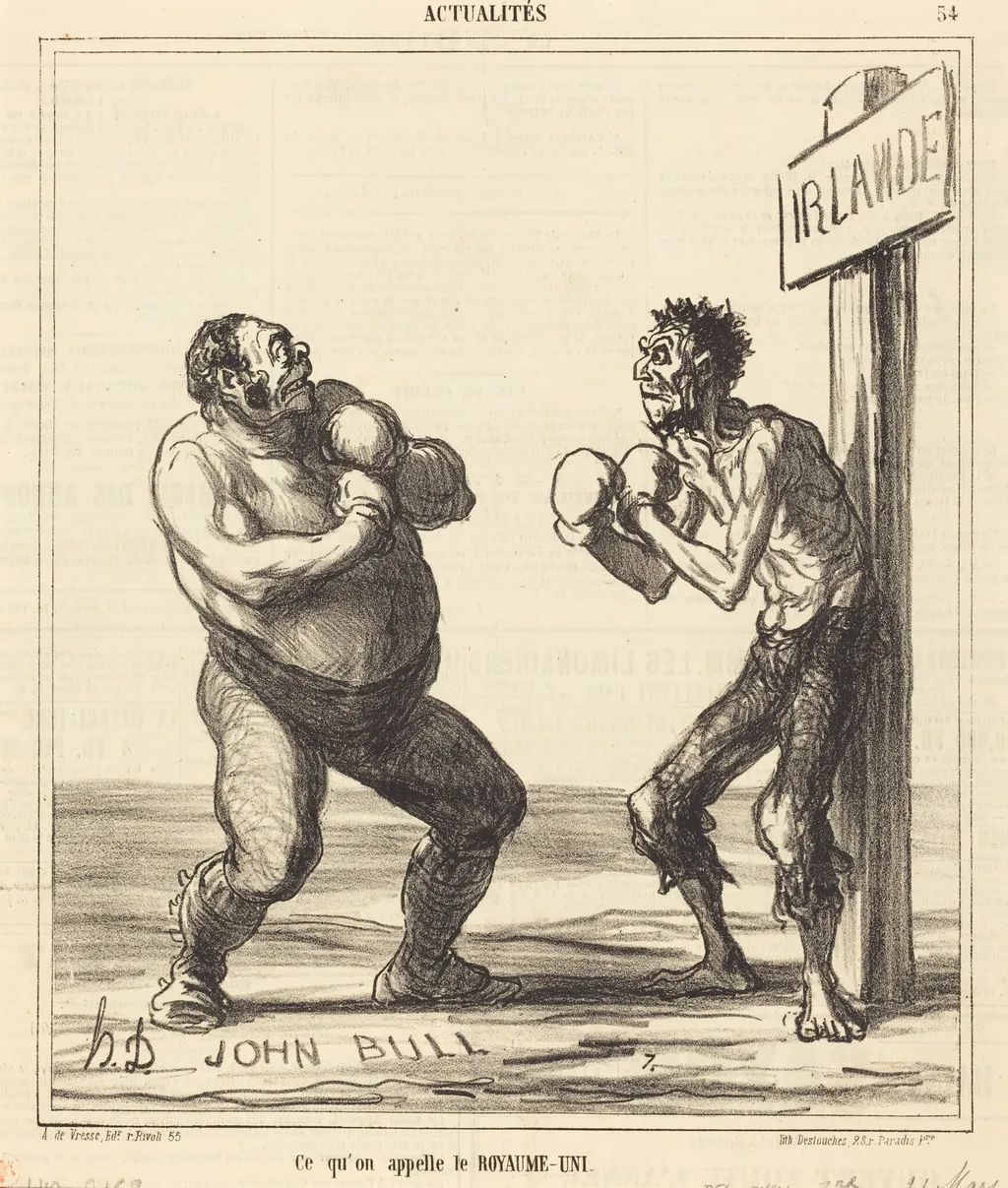
Ce qu'on appelle le Royaume-Uni is an ink print by the Impressionist artist Honoré Daumier. It dates from 1866 and is held in the collection of the National Gallery of Art.
About this work
Overview
It belongs to a body of work made for French satirical journals like Le Charivari, where Daumier regularly critiqued power structures through visual wit.
Created in 1866, this lithograph on newsprint by Honoré Daumier was produced as a political cartoon for mass circulation. It belongs to a body of work made for French satirical journals like Le Charivari, where Daumier regularly critiqued power structures through visual wit. The medium’s affordability and immediacy suited his intent: to reach a broad public with sharp commentary on contemporary affairs, particularly the strained relationship between Britain and Ireland.
Subject & Meaning
The image portrays two barefoot figures in a boxing stance, symbolizing Britain and Ireland. The heavier figure, clad in trousers, represents Britain, while the thinner, shirtless man stands for Ireland. The sign reading 'IRLANDE' anchors the allegory.
Their tense posture and exaggerated physiques suggest an unequal, volatile dynamic. Daumier frames their conflict not as sport but as systemic oppression, using physicality to expose political domination and resistance without literal depiction.
Technique & Style
Daumier employed bold, fluid lithographic lines to convey motion and emotion with minimal detail. The figures are rendered with stark contrasts and expressive distortions, musculature exaggerated, faces contorted, to heighten emotional impact. The background is sparse, focusing attention on the confrontation.
Newsprint, a humble material, reinforces the work’s journalistic urgency and accessibility, aligning form with function in his critique of elite power.
History & Provenance
The print emerged during a period of heightened Irish nationalist sentiment and British imperial policy debates. Daumier, long critical of authority, used such imagery to reflect public discourse in France, where sympathy for Irish resistance was common. Though originally published in a periodical, the work survived as part of collections preserving political prints. Its survival reflects its resonance beyond its initial context, valued for its unflinching social observation.
Context
In the 1860s, Ireland’s struggle for autonomy and the legacy of the Great Famine fueled tensions with Britain. French intellectuals and artists often viewed Ireland as a symbol of oppressed nations under imperial rule. Daumier’s print tapped into this sentiment, using boxing, a popular spectacle, as a metaphor for imperial coercion.
His work resonated in a France still recovering from revolution, where questions of justice and power remained urgent.
Legacy
This print exemplifies Daumier’s enduring contribution to political illustration: using visual shorthand to convey complex social dynamics. His approach influenced later generations of cartoonists and satirists who adopted similar methods to critique authority. Though created for ephemeral publication, its clarity and emotional force ensured its place in collections documenting the intersection of art, politics, and public opinion in the 19th century.
Own this work as a print
Artist & collection
Artist
Honoré-Victorin Daumier (French: ; 26 February 1808 – 10 or 11 February 1879) was a French painter, sculptor, and printmaker, whose many works offer commentary on the social and political life in France, from the…









- Quand en société vous voudrez bien recevoir un... coup...
 Le sire de Berryer ...Chevalier ...
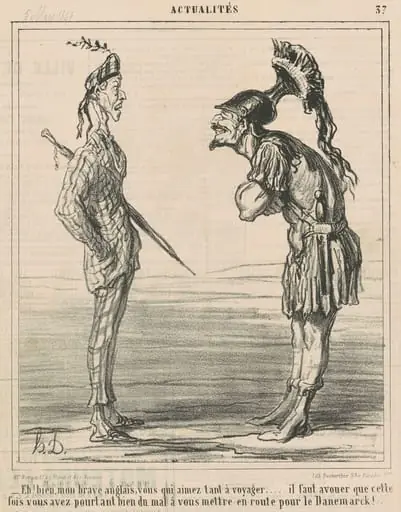 Eh bien! Mon brave anglais ...
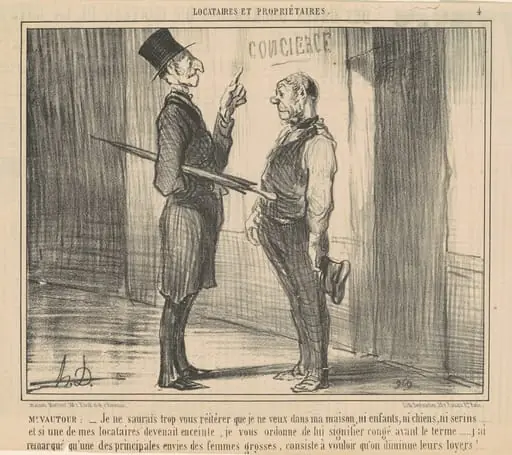 M. Vautour: Je ne saurais trop ...
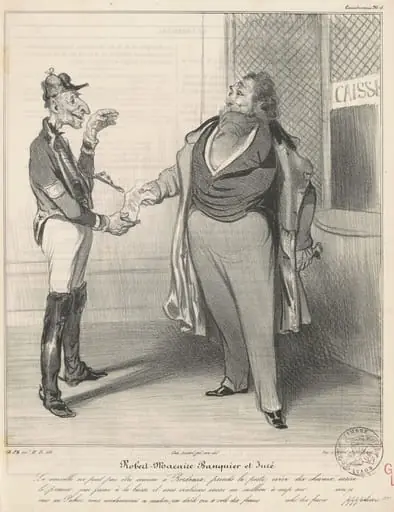 Robert Macaire banquier et juré
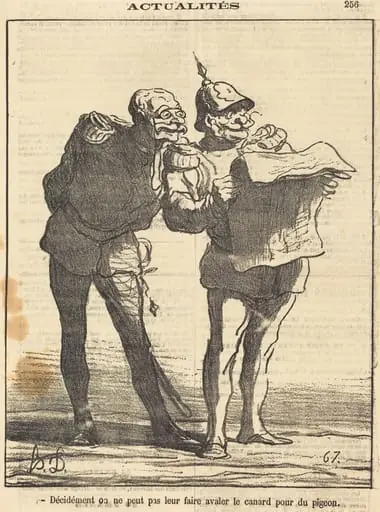 Décidément on ne peut pas...
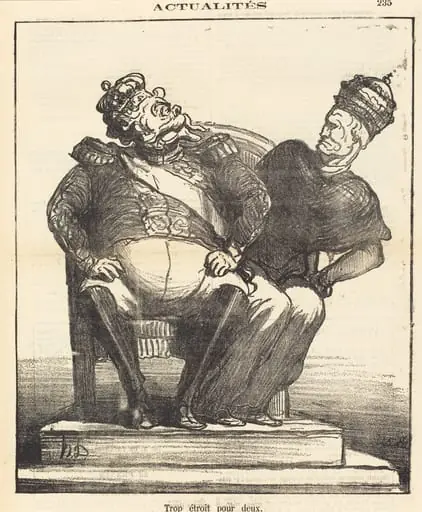 Trop étroit pour deux
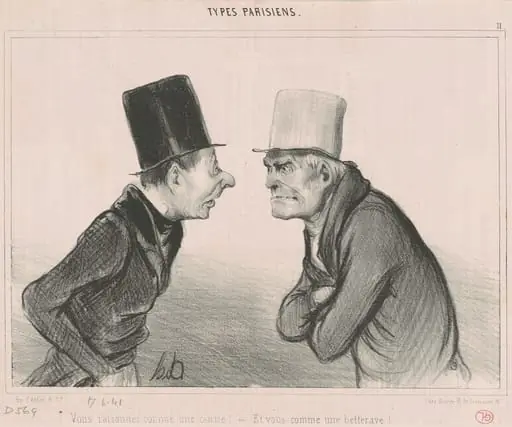 Vous raisonnez comme une canne!
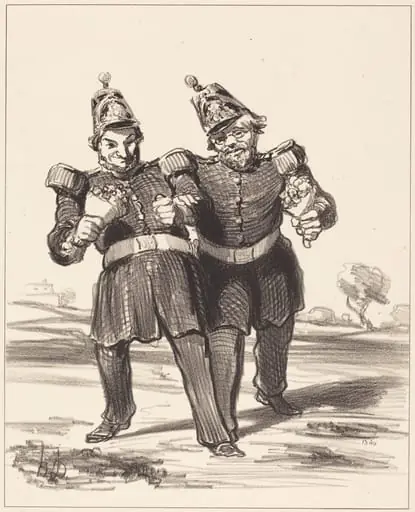 Les Deux banqueteurs en joie
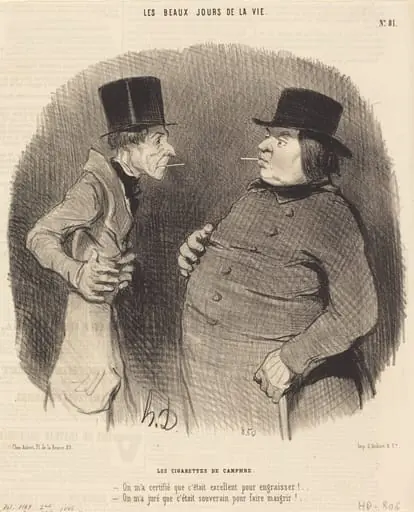 Les Cigarettes de camphre
 Embrassons nous
 Les amis de la paix ...