Artwork
Dernière élévation de soulouque
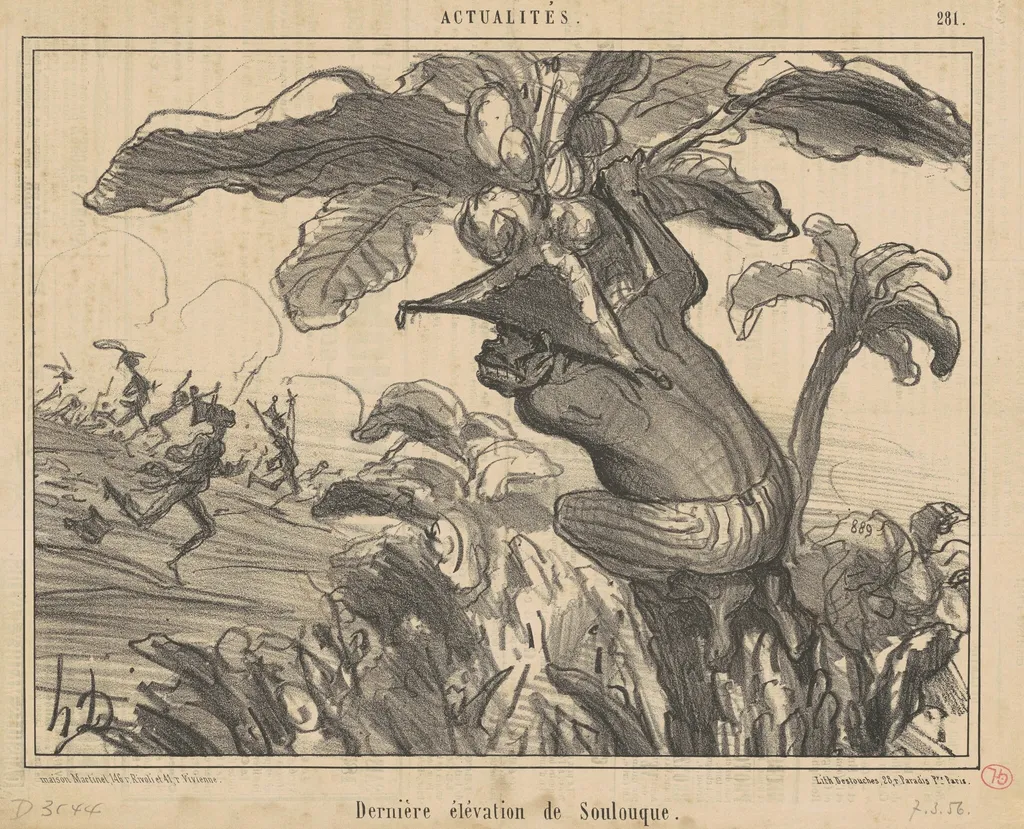
Dernière élévation de soulouque is an ink print by the Impressionist artist Honoré Daumier. It dates from 1856 and is held in the collection of the National Gallery of Art.
About this work
Overview
"Dernière élévation de Soulouque" is a lithographic print by Honoré Daumier that presents a surreal scene dominated by an oversized, anthropomorphic root vegetable. The figure, rendered with a human-like torso and leafy appendages that function as arms, looms over an ambiguous landscape, its presence both comic and disquieting.
Subject & Meaning
The work satirically references Faustin Soulouque, the 19th‑century president of Haiti, transforming his name into a visual pun. By casting the leader as a gigantic vegetable, Daumier merges political critique with the absurd, using the grotesque form to comment on power and its perceived excesses.
Technique & Style
Executed in lithography, the image relies on the medium’s capacity for fluid line and tonal variation. Daumier employs stylized foliage and swirling clouds to suggest motion, while the crisp outlines of the vegetable’s limbs emphasize its anthropomorphic qualities, creating a blend of realism and fantasy typical of his satirical prints.
History & Provenance
Created during Daumier’s prolific period of political caricature, the lithograph was circulated among his contemporaries as a commentary on international affairs. Its survival in museum collections reflects the broader interest in Daumier’s engagement with global politics, extending beyond his more familiar French subjects.
Own this work as a print
Artist & collection
Artist
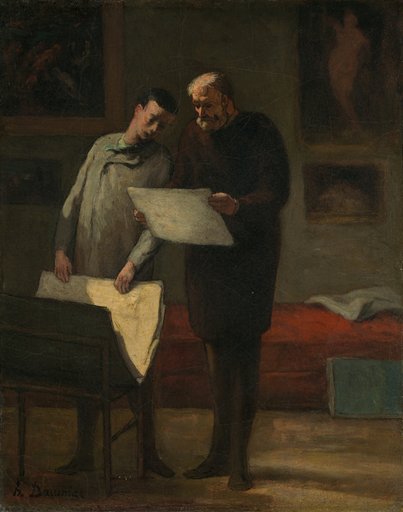
Honoré-Victorin Daumier (French: ; 26 February 1808 – 10 or 11 February 1879) was a French painter, sculptor, and printmaker, whose many works offer commentary on the social and political life in France, from the…

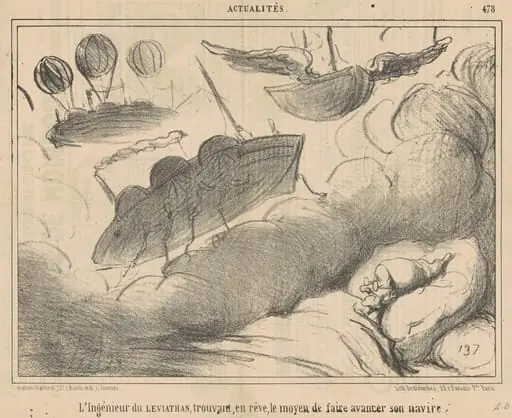 L'ingénieur du Leviathan trouvant, en rève ...
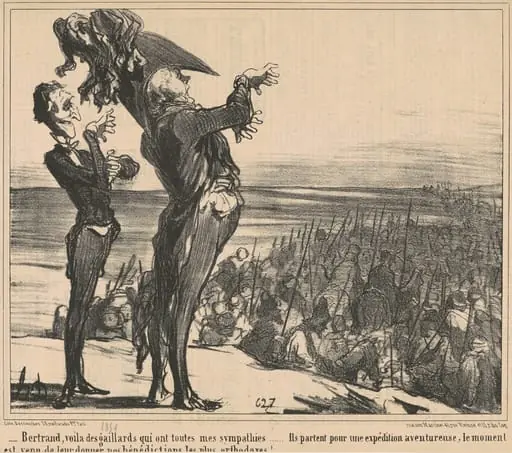 Bertrand, voila des gaillards ...
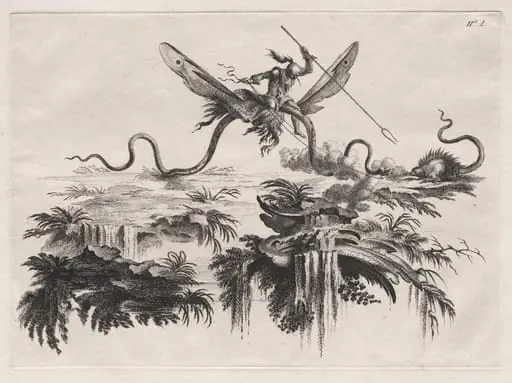 A Savage mounted on a winged Serpent battling with a wild beast resembling a Porcupine
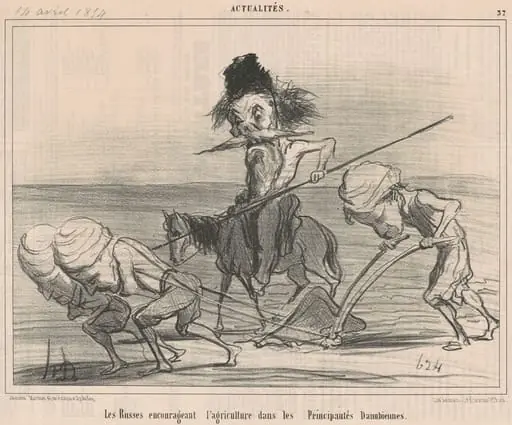 Les russes encourageant l'agriculture
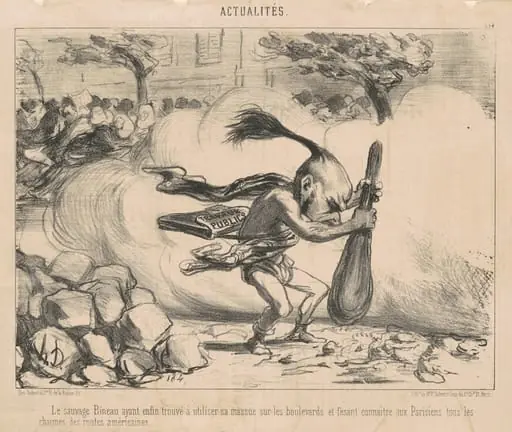 Le sauvage bineau ayant ...
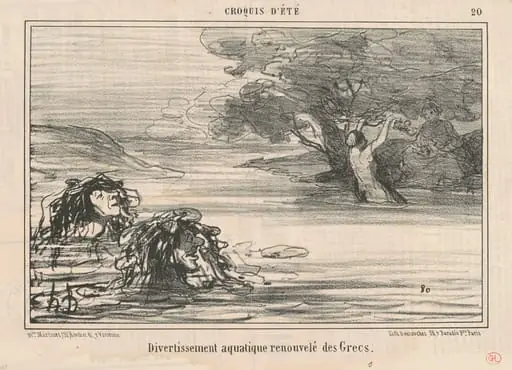 Divertissement ... renouvelé des Grecs
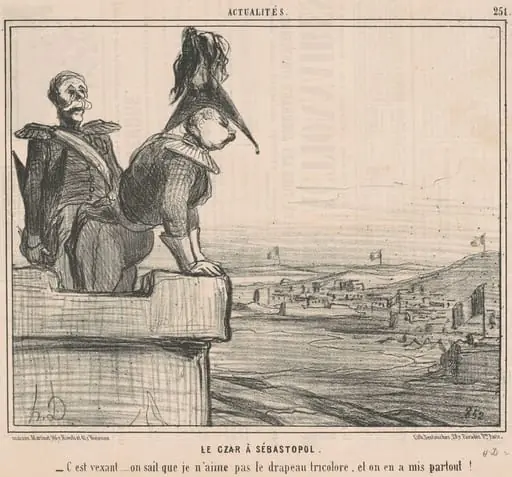 Le czar a Sébastopol
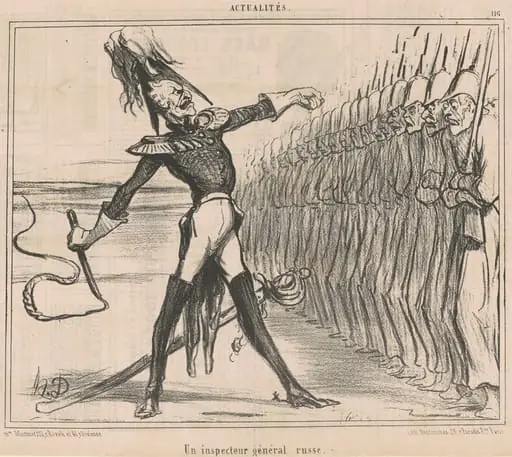 Un inspecteur général russe
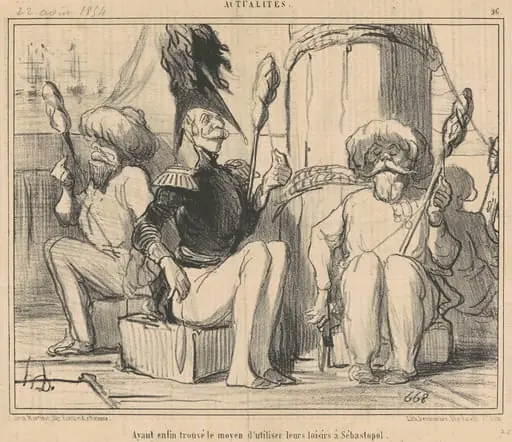 Ayant enfin trouvé le moyen d'utiliser leurs loisirs!
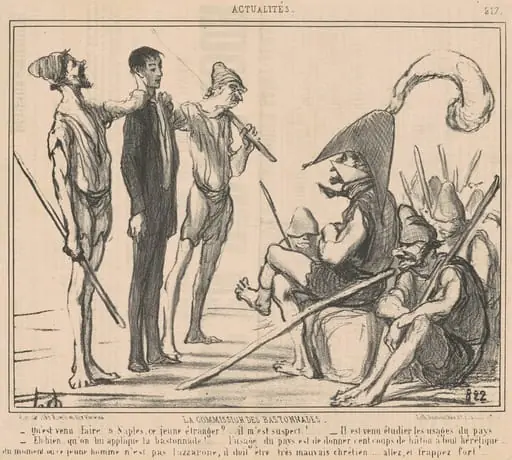 Commission des bastonnades
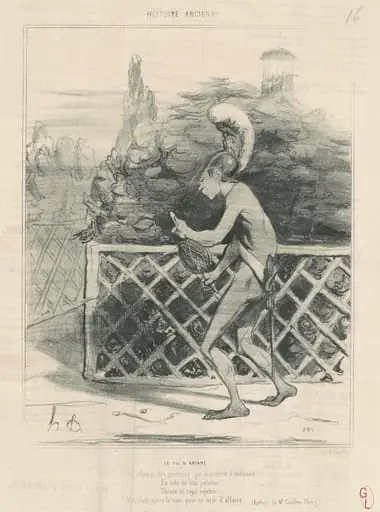
- Le fil d'Ariane
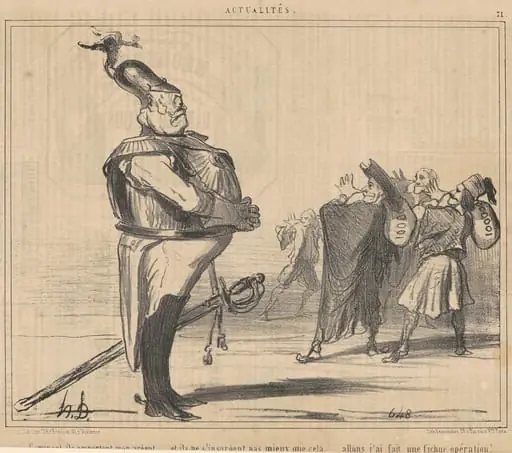 Comment, ils emportent mon argent ...