Artwork
L'Empereur Nicolas travaillant dans son cabinet
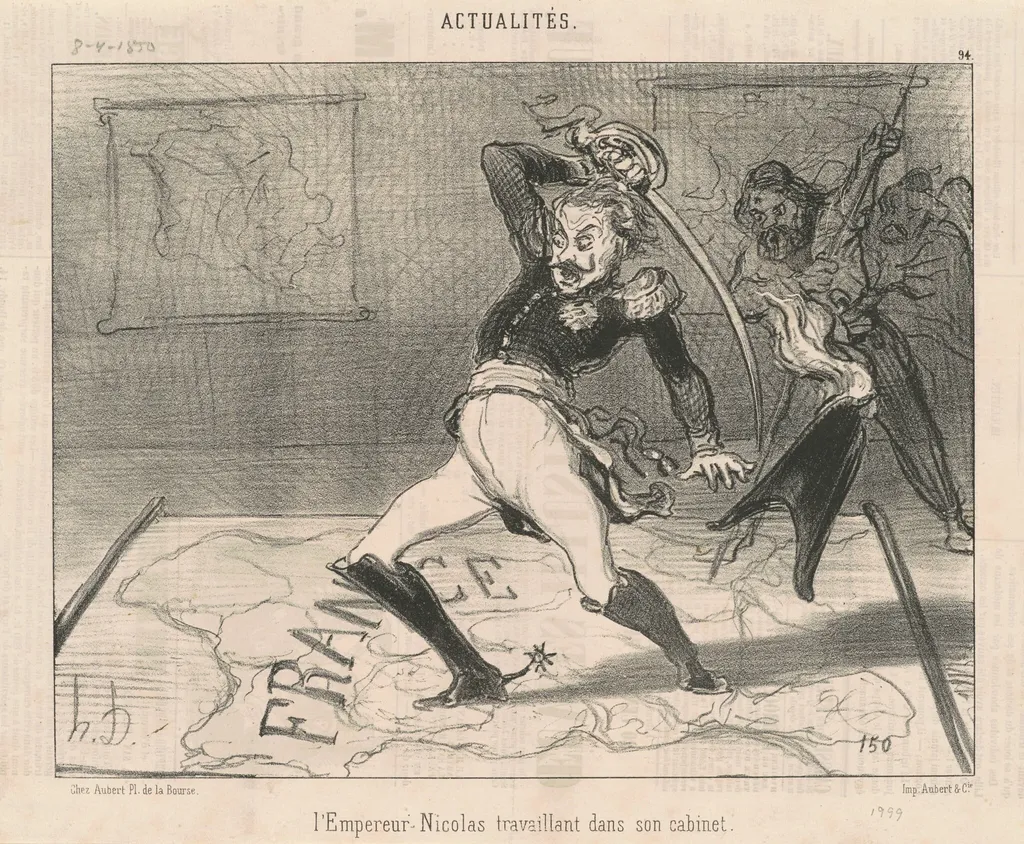
L'Empereur Nicolas travaillant dans son cabinet is an ink print by the Impressionist artist Honoré Daumier. It dates from 1850 and is held in the collection of the National Gallery of Art.
About this work
Overview
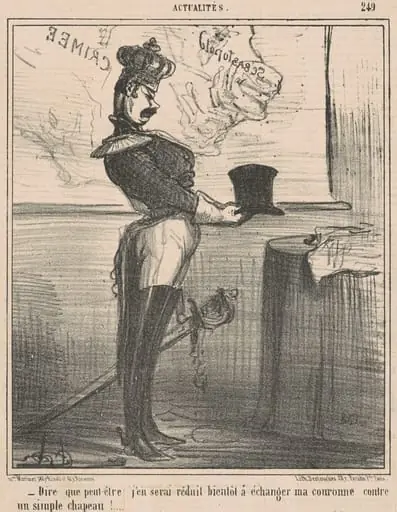
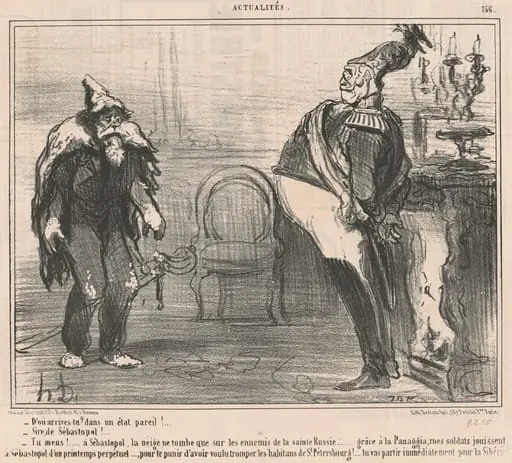
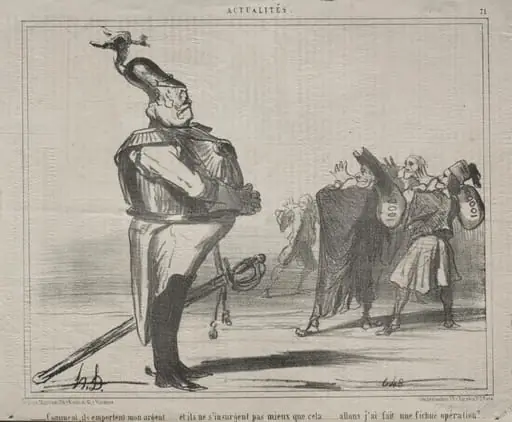
The lithograph titled L'Empereur Nicolas travaillant dans son cabinet presents a solitary figure in a formal uniform, brandishing a sword above an expansive map of France. Rendered entirely in black and white, the image captures a moment of concentrated planning, emphasizing the weight of authority through stark contrasts and a tightly focused composition.
Subject & Meaning
The central character, identifiable by his military attire, appears to be orchestrating a strategic operation, his raised sword suggesting decisive intent. The presence of the national map underscores a connection to governance or military command, inviting viewers to contemplate the relationship between individual power and the broader political landscape.
Technique & Style
Executed as a lithographic print, the work relies on bold line work and chiaroscuro to generate tension. The limited palette of black ink against white paper heightens the drama, while the simplified forms echo the caricatural approach associated with artists like Honoré Daumier, using exaggeration to critique authority.
Context
Created during a period when political satire flourished, the image reflects contemporary concerns about leadership and conflict. Its emphasis on a commanding figure aligns with 19th‑century French artistic trends that employed humor and stark visual language to comment on state power.
Legacy
The lithograph remains a notable example of how print media could convey political commentary through visual economy. Its blend of realistic detail and caricature continues to inform studies of how artists balance documentary observation with critical interpretation of authority.
Own this work as a print
Artist & collection
Artist
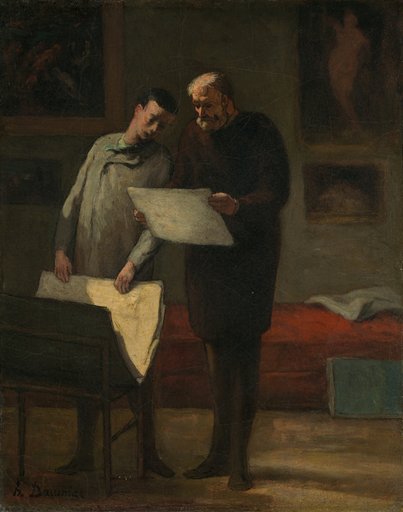
Honoré-Victorin Daumier (French: ; 26 February 1808 – 10 or 11 February 1879) was a French painter, sculptor, and printmaker, whose many works offer commentary on the social and political life in France, from the…