Artwork
Le nouvel étendard des blanchisseuses
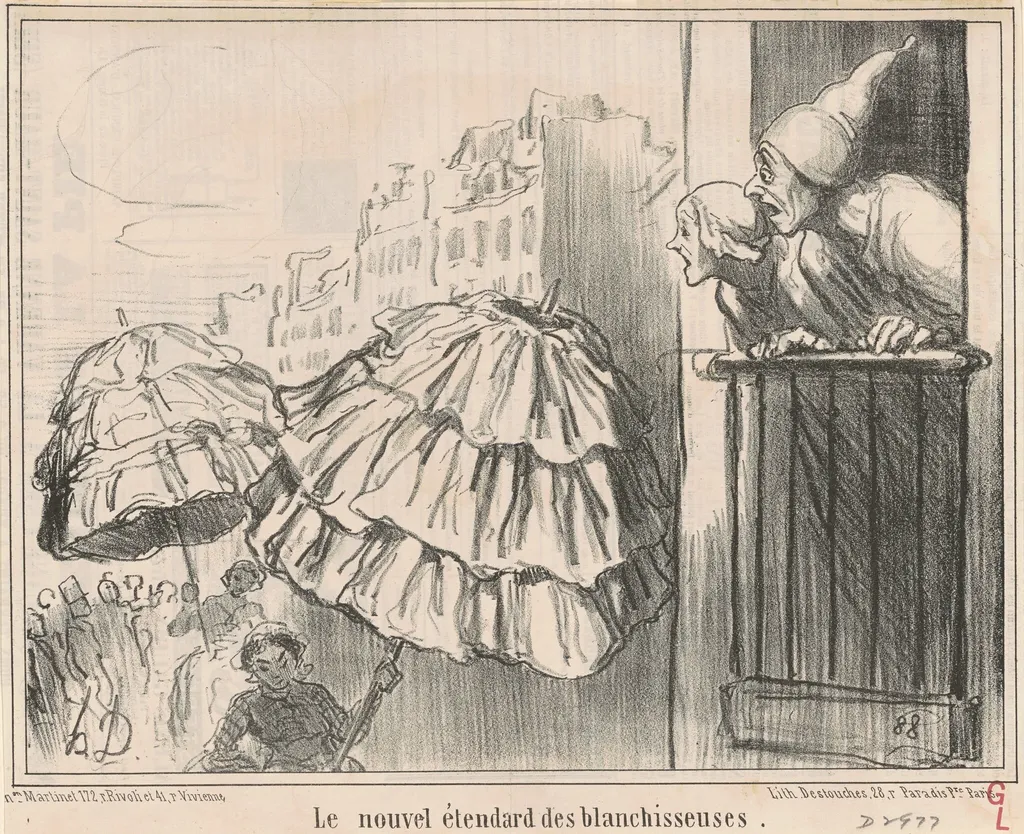
Le nouvel étendard des blanchisseuses is an ink print by the Impressionist artist Honoré Daumier. It dates from 1857 and is held in the collection of the National Gallery of Art.
About this work
Overview
Honoré Daumée r’s lithograph Le nouvel étendard des blanchisseuses captures a bustling street celebration. A procession of women draped in voluminous, multicolored skirts moves through a crowded thoroughfare, while a man in a tall, pointed hat peers down from a balcony above. The composition conveys a moment of lively urban disorder, rendered in the crisp, graphic quality of the print medium.
Subject & Meaning
The work stages a mock‑parade of laundry workers, their skirts exaggerated to resemble piles of freshly washed linen. By juxtaposing domestic labor with a festive march, Daumier injects a satirical comment on the visibility of working‑class women in Parisian life, turning a routine occupation into a theatrical spectacle that both amuses and critiques.
Technique & Style
Executed as a lithograph, the image relies on bold, decisive lines that delineate the swirling skirts and blurred crowd. Daumier’s handling of light and shadow suggests an impressionistic urban backdrop, while the rapid, gestural strokes convey movement. The print’s stark contrasts and simplified forms enhance the humorous, almost caricatural tone of the scene.
Context
Created during Daumier’s prolific period of social commentary, the lithograph reflects the artist’s fascination with Paris’s public spaces and everyday people. While not tied to a specific event, the piece resonates with mid‑19th‑century debates about labor, gender roles, and the spectacle of street life that populated contemporary newspapers and caricatures.
Own this work as a print
Artist & collection
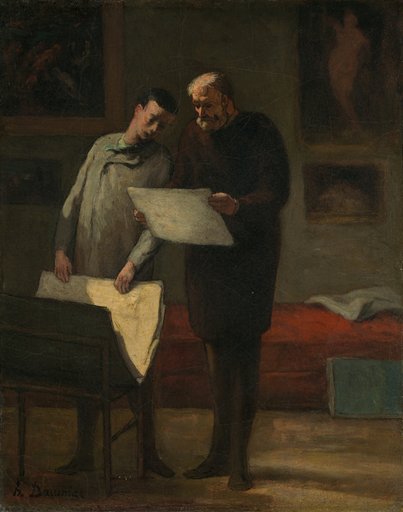
Artist
Honoré-Victorin Daumier (French: ; 26 February 1808 – 10 or 11 February 1879) was a French painter, sculptor, and printmaker, whose many works offer commentary on the social and political life in France, from the…









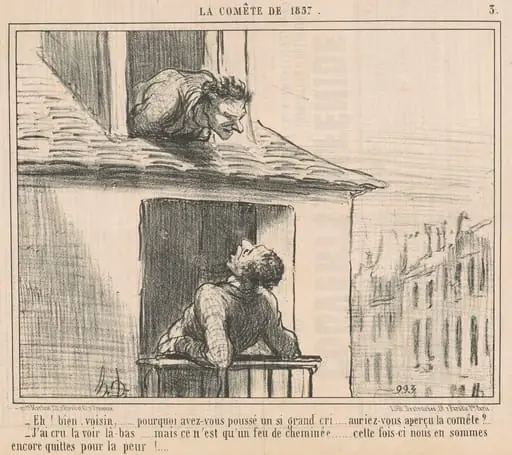 Eh! Bien, voisin ... pourquoi avez-vous poussé ...
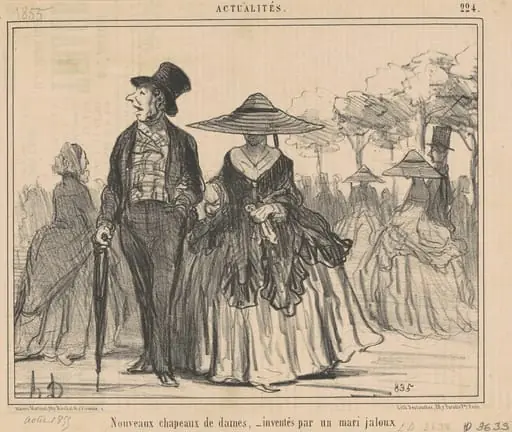 Nouveaux chapeaux de dames ...
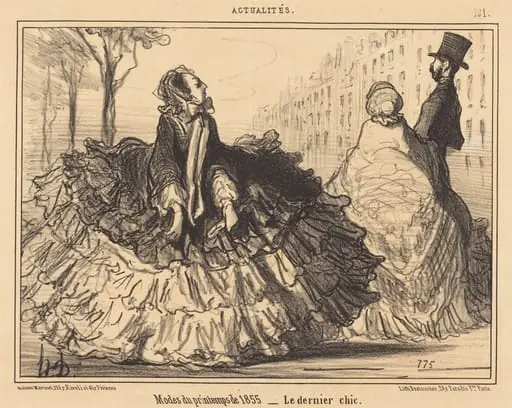 Modes du printemps de 1855
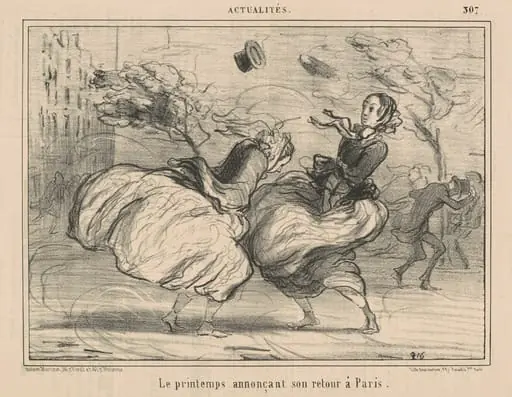 Le printemps annonçant son retour à Paris
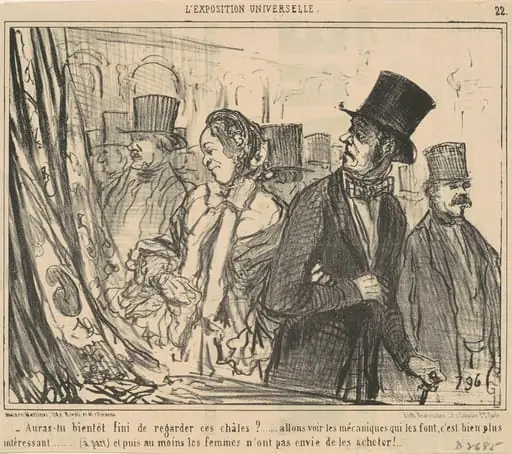 Auras-tu bientot fini de regarder ces chales?
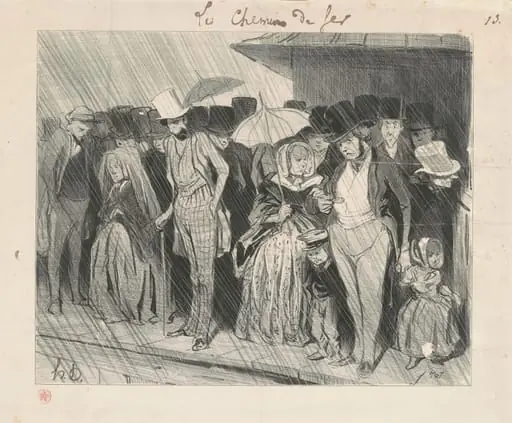 Une station infiniment trop prolongée
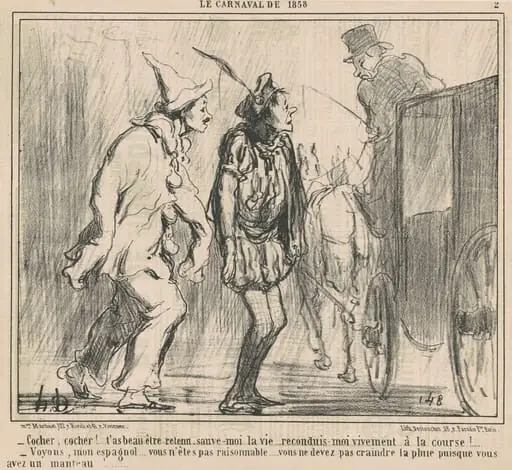 Cocher, Cocher! ...
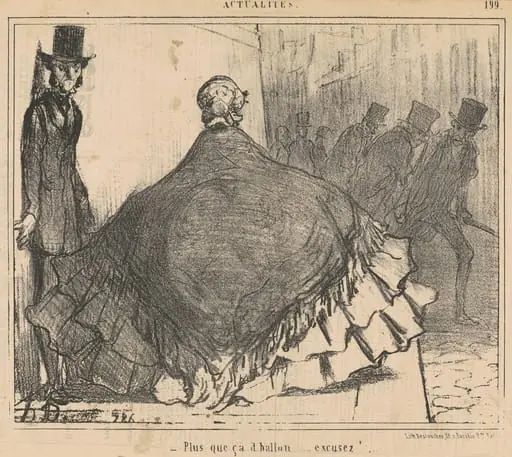 Plus que ca d'ballon ... Excusez! ...
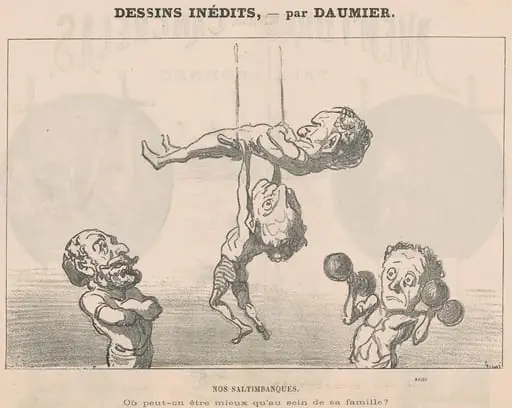 Nos saltimbanques