Artwork
Mon cher ami, je vous présent Monsieur...
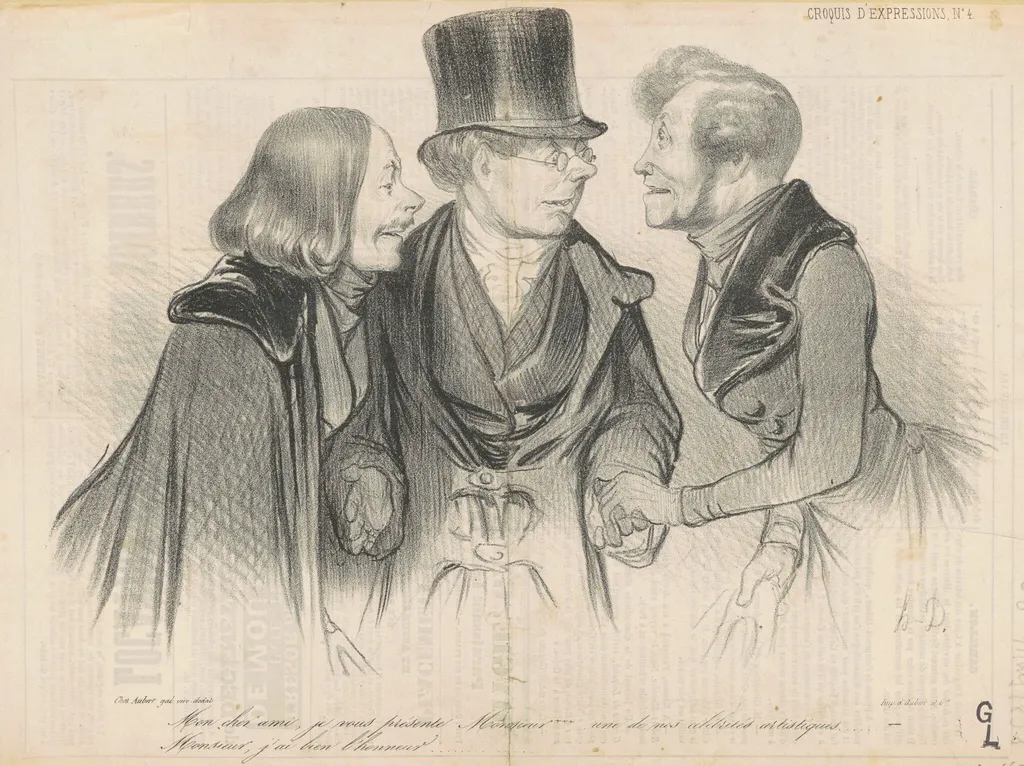
Mon cher ami, je vous présent Monsieur... is an ink print by the Romanticist artist Honoré Daumier. It dates from 1838 and is held in the collection of the National Gallery of Art.
About this work
Overview
Rendered in the lithographic technique, the image relies on the tonal range achievable through stone drawing and ink transfer.
Created in 1838, this lithograph by Honoré Daumier captures a fleeting moment of interpersonal exchange among three men. Rendered in the lithographic technique, the image relies on the tonal range achievable through stone drawing and ink transfer. Its informal composition and unpolished lines reflect Daumier’s preference for capturing everyday life rather than idealized subjects, aligning with his broader practice of social observation through print.
Subject & Meaning
The three figures, dressed in modest 19th-century attire, engage in a quiet, intimate conversation. Their expressions and postures suggest familiarity, perhaps colleagues or acquaintances in a mundane setting. Daumier avoids theatricality, instead emphasizing the quiet dignity of ordinary interactions.
The title, a mock-formal introduction, subtly satirizes social rituals, a recurring theme in his work that critiques class and pretense without overt mockery.
Technique & Style
Daumier employed lithography, drawing directly onto a limestone surface with greasy crayon or ink, then transferring the image to paper via press. The lines are loose, almost spontaneous, capturing gesture over detail. The tonal variations emerge from the stone’s texture and the artist’s pressure, not fine engraving. This method allowed rapid production and wide distribution, making his observations accessible to a broad public audience.
History & Provenance
This print was produced during Daumier’s early career, when he contributed regularly to satirical journals like La Caricature and Le Charivari. Though not signed or dated on the plate, its style and subject align with his 1830s output. It likely circulated as a single-sheet print or within a periodical, reaching readers beyond elite art circles. Its survival reflects its popularity and the durability of lithographic prints from that era.
Context
In post-revolutionary France, lithography became a vital medium for political and social commentary. Daumier, working amid censorship and rising literacy, used the press to document urban life with wit and empathy. This print fits within a broader body of work that portrayed the bourgeoisie, workers, and clerks, not as archetypes, but as individuals caught in the rhythms of daily existence, reflecting the era’s shifting social dynamics.
Legacy
Daumier’s lithographs, including this one, influenced later realist and modernist artists by demonstrating how everyday scenes could carry psychological depth and social critique. His use of spontaneous draftsmanship prefigured the expressive line of 20th-century printmakers. Though once dismissed as journalistic, his prints are now recognized for their quiet humanity and technical innovation in mass-produced art.
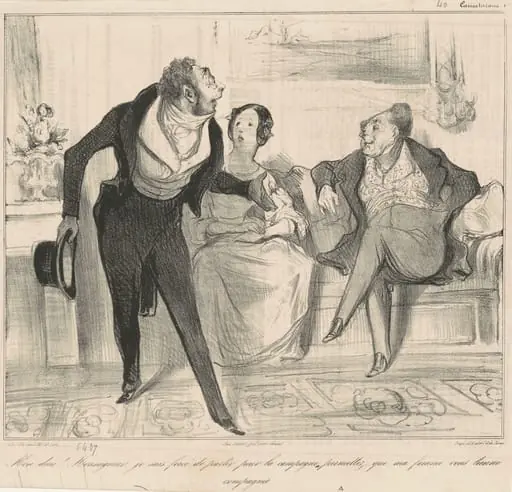
Own this work as a print
Artist & collection
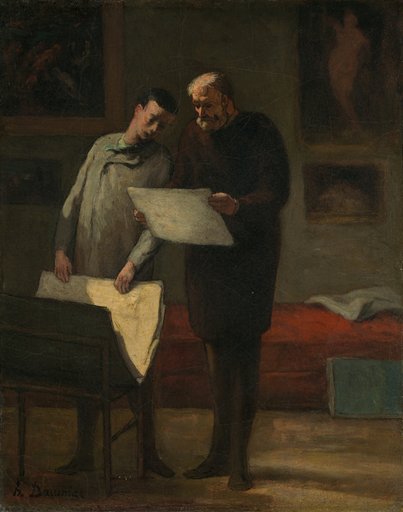
Artist
Honoré-Victorin Daumier (French: ; 26 February 1808 – 10 or 11 February 1879) was a French painter, sculptor, and printmaker, whose many works offer commentary on the social and political life in France, from the…

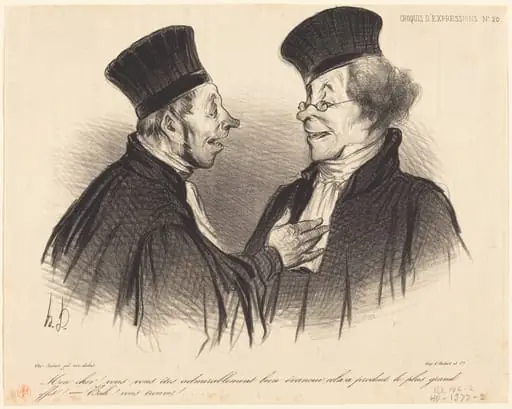 Mon cher! vous vous êtes admirablement... évanoui...
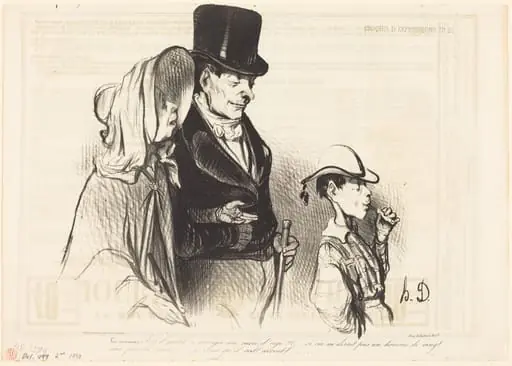 La Maman - Est-il gentil a manger son sucre d'orge!...
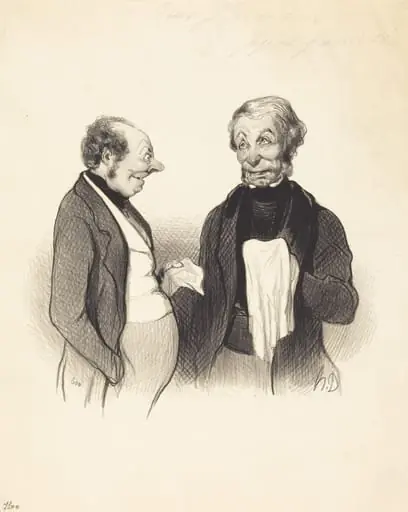 Une Heureuse nouvelle
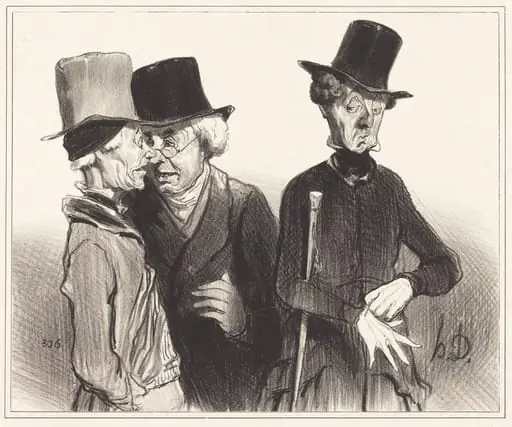 Voila! t'es devenu rentier, moi médecin, lui...
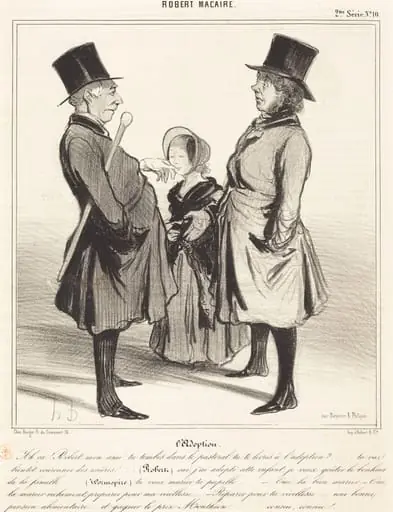 L'Adoption - Ah ça! Robert, mon ami...
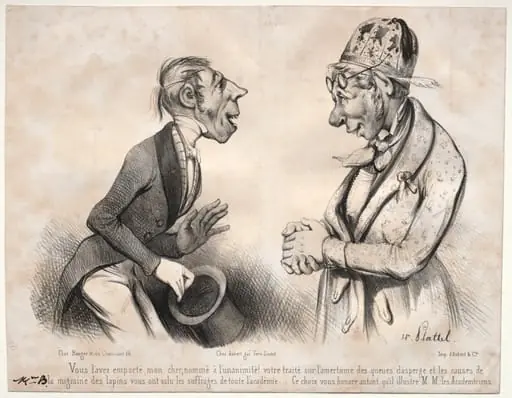 Vous l'avez emporté, mon cher, nommé à l'unanimite!
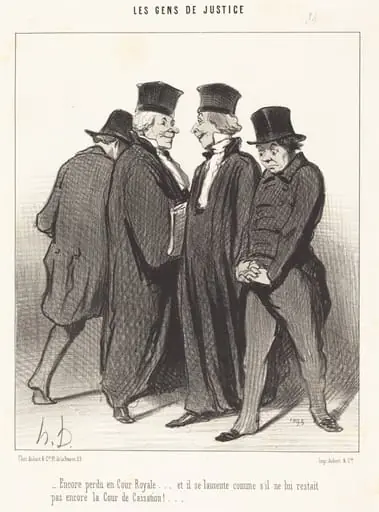 Encore perdu en Cour Royale... et il se lamente...
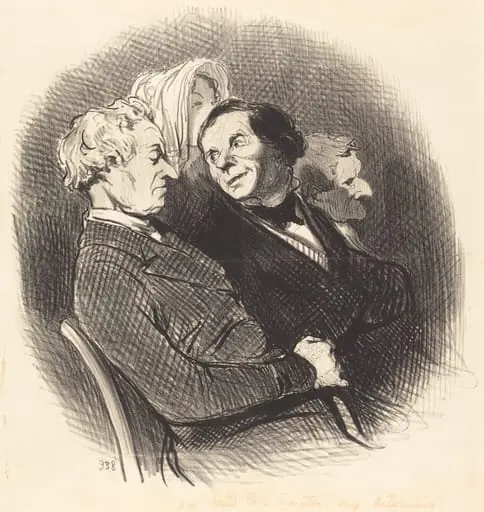 On rend des comptes aux actionnaires
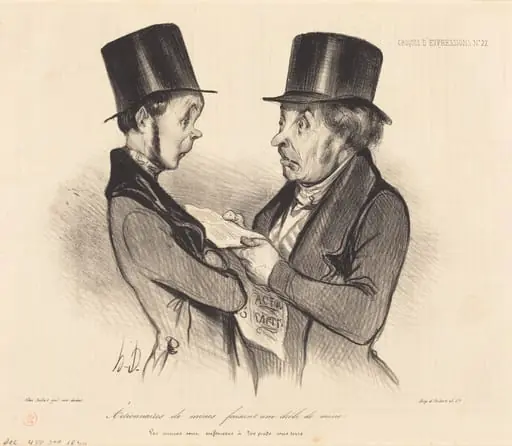 Actionnaires de mines...
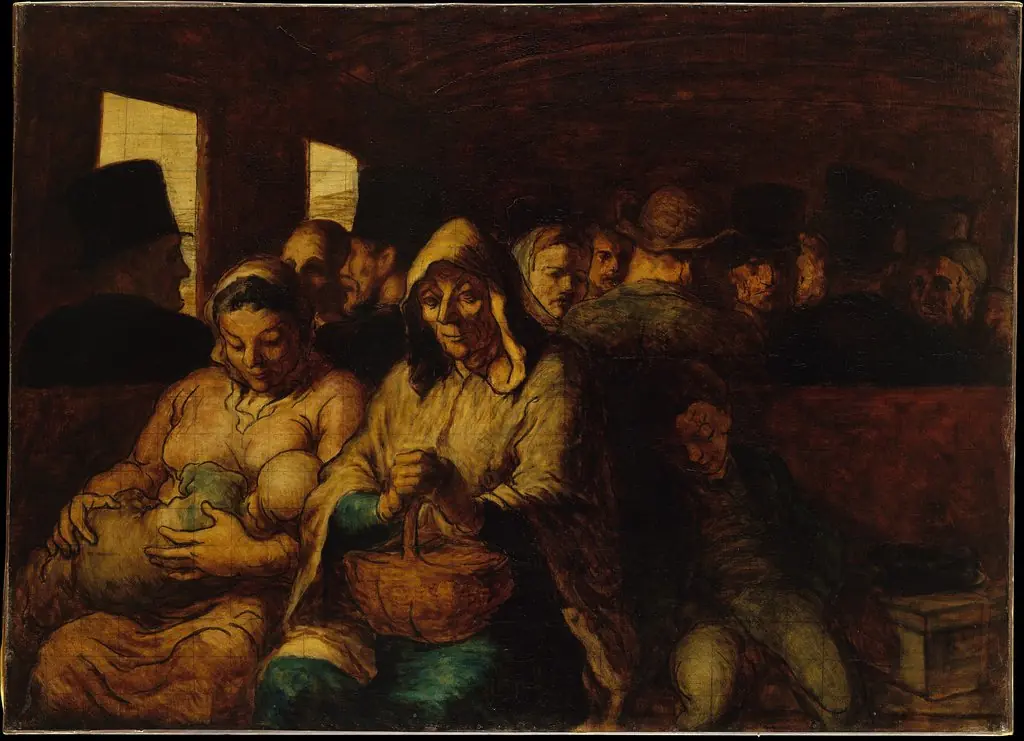
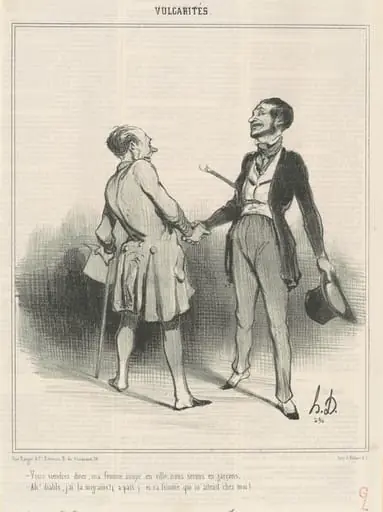 Vous viendrez diner, ma femme soupe en ville ...
- Mon Dieu! Monseigneur, je suis...
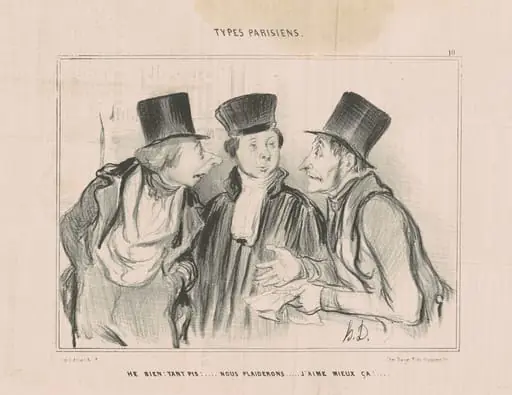 He bien! t'ant pis!...nous plaiderons. j'aime mieux ça...