Artwork
Mr. Prudhomme vouant son fils au ...
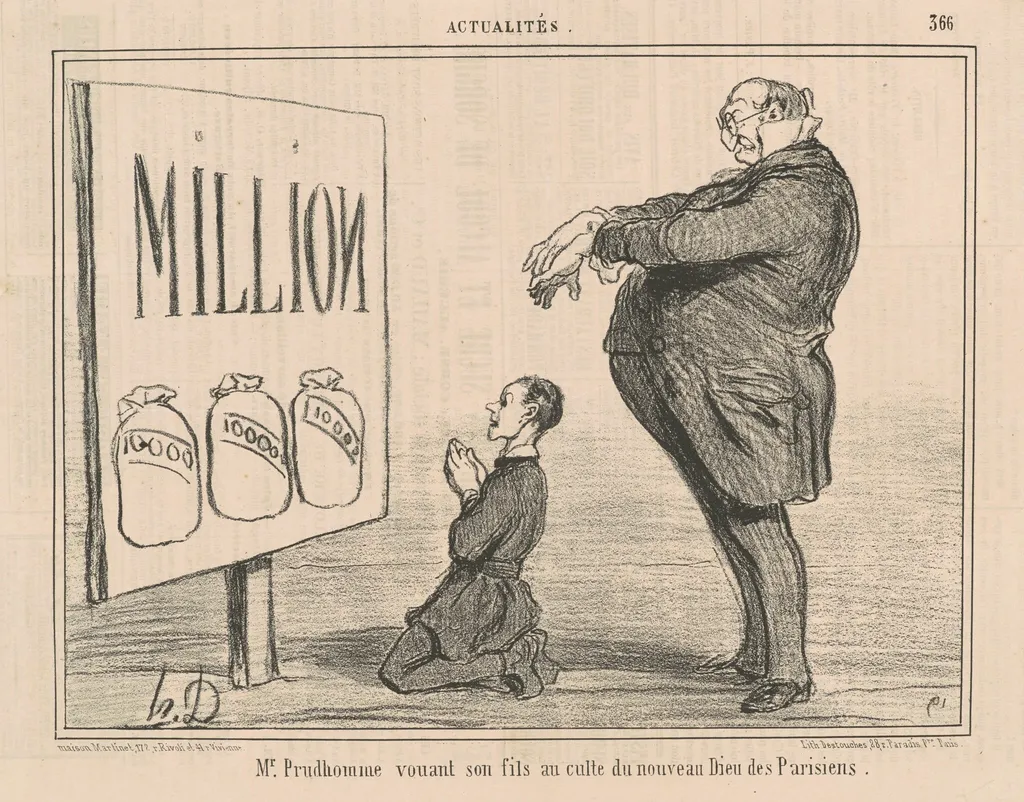
Mr. Prudhomme vouant son fils au ... is an ink print by the Impressionist artist Honoré Daumier. It dates from 1857 and is held in the collection of the National Gallery of Art.
About this work
Overview
' Executed in the lithographic medium, the work reflects Daumier’s signature approach: rapid, expressive lines that convey urgency and critique.
Created in 1857, this lithograph by Honoré Daumier captures a moment of social tension between two men beside a sign marked 'MILLION.' Executed in the lithographic medium, the work reflects Daumier’s signature approach: rapid, expressive lines that convey urgency and critique. As a print, it was intended for broad circulation, aligning with his role as a visual commentator on contemporary French society.
Subject & Meaning
The scene depicts a tall man reacting with visible dismay as a smaller figure kneels before a sign bearing images of money bags. The posture suggests submission or surrender, possibly to materialism. The labeled 'MILLION' underscores the central theme: the corrosive influence of wealth on personal values. Daumier frames this not as a literal transaction but as a moral reckoning within bourgeois culture.
Technique & Style
Daumier employed lithography to achieve a spontaneous, almost sketchlike quality. The ink was drawn directly onto stone, allowing for bold contrasts and loose, gestural marks. Figures are simplified yet emotionally charged, with exaggerated gestures and minimal detail.
The rough texture and uneven shading enhance the sense of immediacy, reinforcing the work’s critical tone without ornamental distraction.
History & Provenance
Produced during a period of political and economic upheaval in France, the print likely appeared in a periodical or as a standalone sheet distributed among urban readers. Daumier frequently published in satirical journals, and this piece aligns with his broader body of work critiquing the middle class. Its survival in museum collections reflects its recognition as a significant example of 19th-century social commentary in print.
Context
In mid-19th-century France, rising capitalism and the glorification of wealth unsettled traditional social hierarchies. Daumier, long critical of bourgeois pretensions, used visual satire to expose hypocrisy. This image responds to a culture where financial success was increasingly equated with moral worth, and where public displays of affluence masked deeper ethical compromises.
Legacy
Daumier’s lithographs, including this one, influenced later generations of satirical artists and social realists. His ability to distill complex societal tensions into a single, stark image set a precedent for visual journalism. Though created for ephemeral publication, the work endures as a clear-eyed record of how economic values reshaped personal and public behavior in modernizing France.
Own this work as a print
Artist & collection
Artist
Honoré-Victorin Daumier (French: ; 26 February 1808 – 10 or 11 February 1879) was a French painter, sculptor, and printmaker, whose many works offer commentary on the social and political life in France, from the…

 Je t'en avais comblé ...
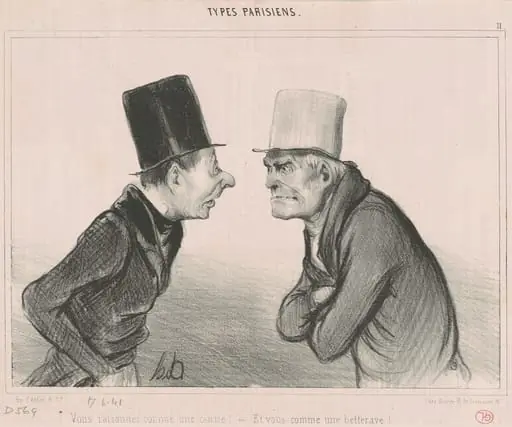 Vous raisonnez comme une canne!
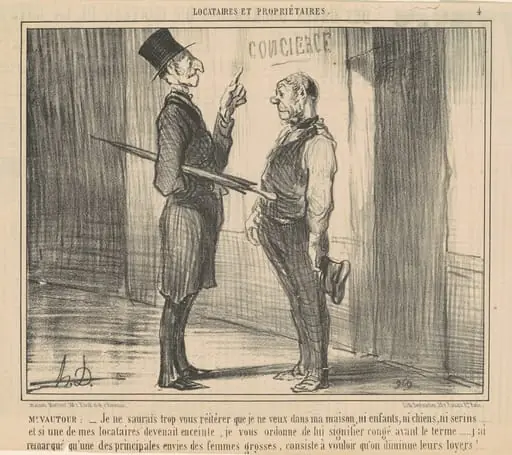 M. Vautour: Je ne saurais trop ...
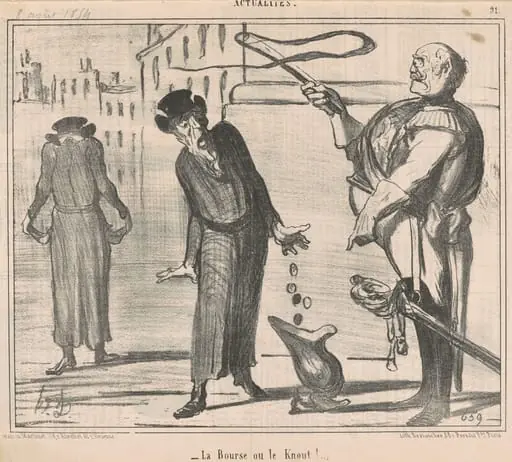 La bourse ou le knout!
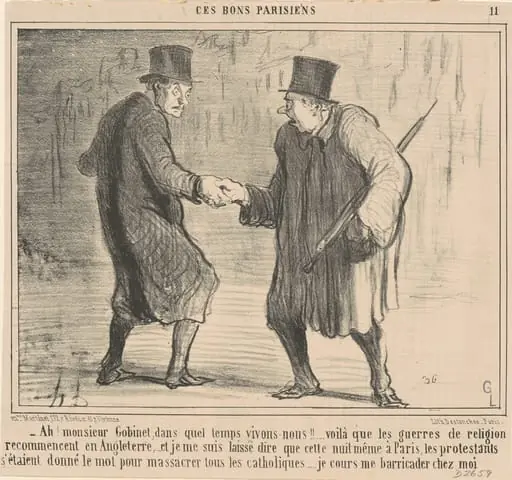 Ah! Monsieur Gobinet, dans quel temps ...
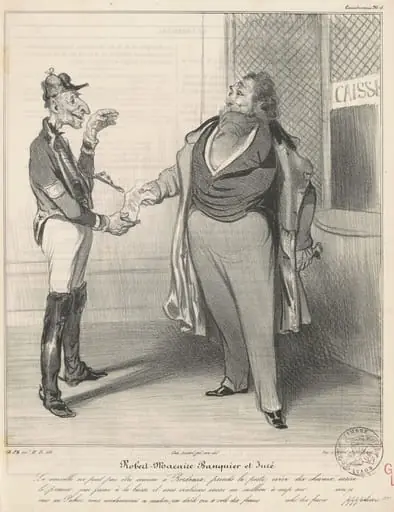 Robert Macaire banquier et juré
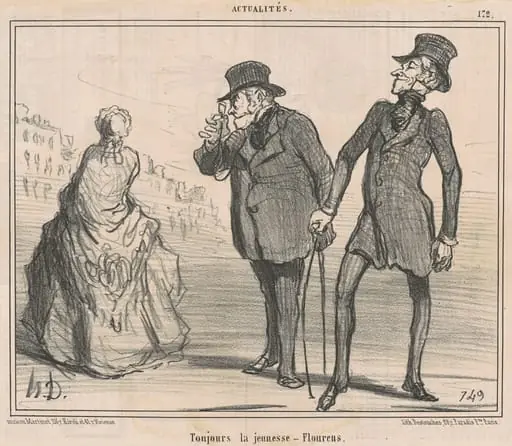 Toujours la heunesse-flourens
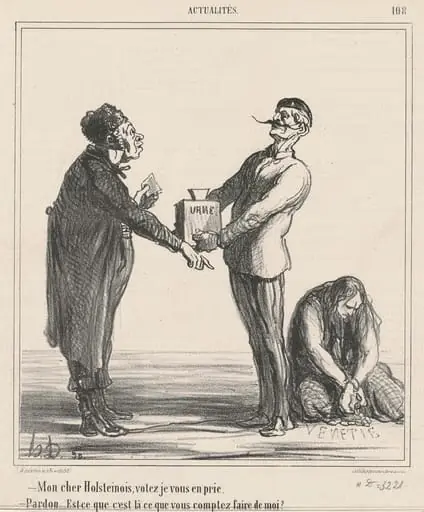 Mon cher Holsteinois, votez je vous en prie ...
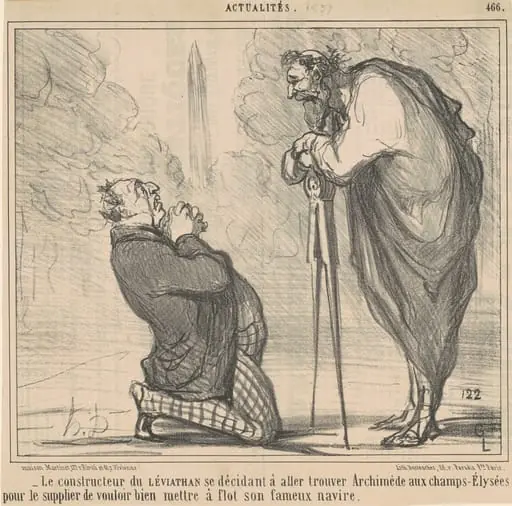 Le constructeur du Léviathan se décidant ...
 Are you not ordering anything?...