Artwork
Notre dernier gateau des rois
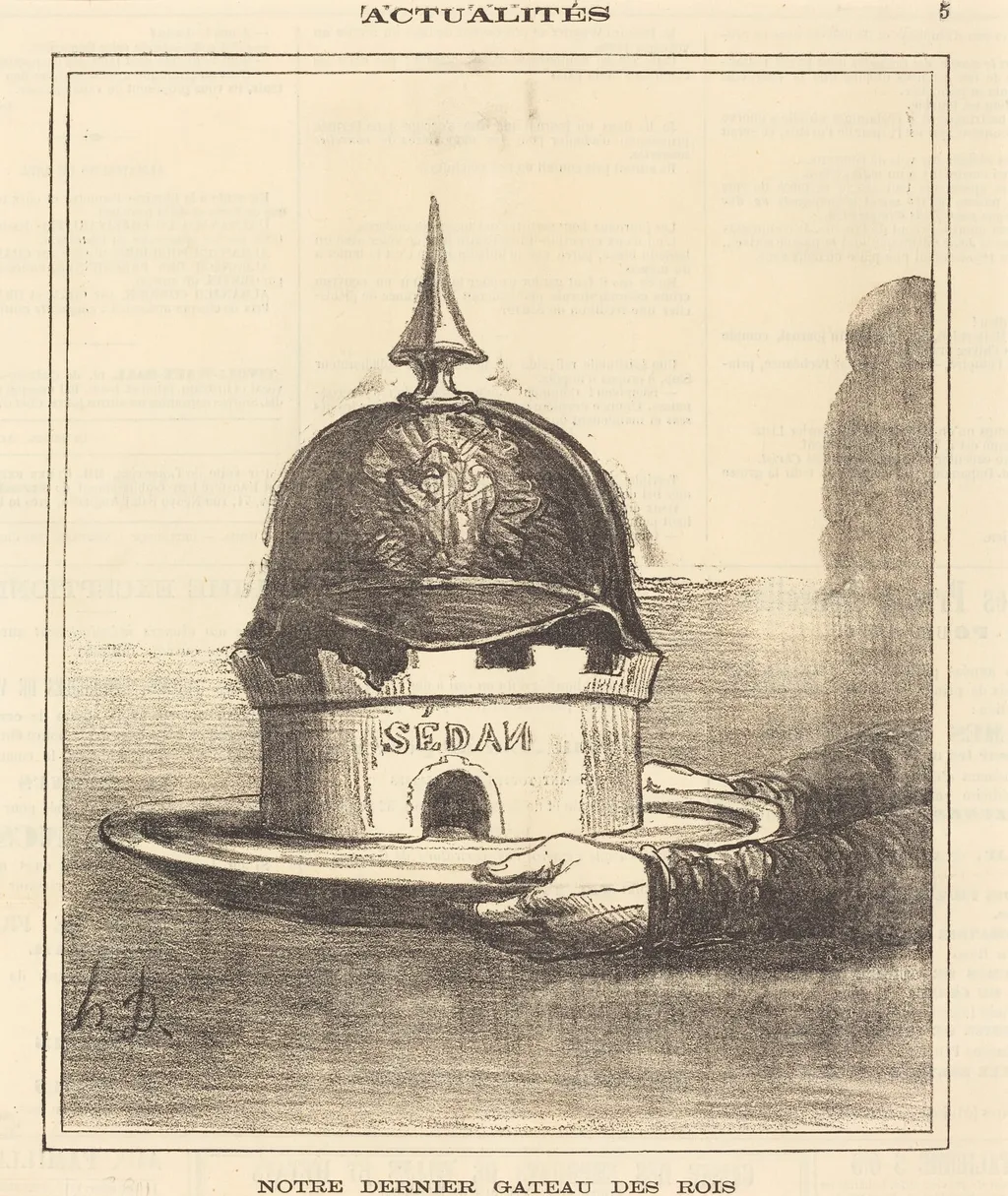
Notre dernier gateau des rois is a print by the Impressionist artist Honoré Daumier. It dates from 1872 and is held in the collection of the National Gallery of Art.
About this work
Overview
' Printed in black and white on inexpensive paper, the work reflects Daumier’s enduring commitment to political satire through accessible graphic media.
Created in 1872, this gillotype print on newsprint by Honoré Daumier captures a single, surreal object: an elaborate cake with a door labeled 'SEDAN.' Printed in black and white on inexpensive paper, the work reflects Daumier’s enduring commitment to political satire through accessible graphic media. Its stark composition and minimal background focus attention entirely on the symbolic object, characteristic of his late-period style.
Subject & Meaning
The cake, modeled like a monumental structure with a door marked 'SEDAN,' alludes to the fall of Emperor Napoleon III after the Battle of Sedan in 1870. Its ornate appearance mimics royal pomp, while the act of a hand reaching for it suggests the public’s hunger for the remnants of imperial power. The title, referencing a traditional Epiphany cake, ironically frames political collapse as a final, shared indulgence.
Technique & Style
Daumier employed gillotype, a photomechanical process, to reproduce his drawing on newsprint, a low-cost medium suited for mass circulation. His lines are bold and economical, reducing form to essential contours without shading or detail. This stripped-down aesthetic, honed over decades of newspaper illustration, prioritizes immediate legibility and symbolic impact over decorative richness.
History & Provenance
Produced during the early Third Republic, the print emerged as France grappled with the collapse of the Second Empire. Daumier, long associated with republican journals like Le Charivari, used such imagery to critique the lingering cult of monarchy. Though originally published in a periodical, surviving impressions are now held in major museum collections, valued for their historical testimony rather than artistic rarity.
Context
In post-1870 France, political satire thrived as public sentiment turned against imperial nostalgia. Daumier’s work tapped into widespread disillusionment, using familiar cultural symbols, like the king’s cake, to expose the absurdity of clinging to fallen regimes. His prints circulated widely among the urban middle class, functioning as visual commentary in an era before photography dominated news.
Legacy
Daumier’s use of everyday objects as political metaphors influenced later generations of satirical illustrators and cartoonists. While not aligned with Impressionism, his graphic economy and social critique prefigured modern visual journalism. This print endures not for its technical innovation, but as a concise, enduring emblem of how art can distill political rupture into a single, haunting image.
Own this work as a print
Artist & collection
Artist
Honoré-Victorin Daumier (French: ; 26 February 1808 – 10 or 11 February 1879) was a French painter, sculptor, and printmaker, whose many works offer commentary on the social and political life in France, from the…









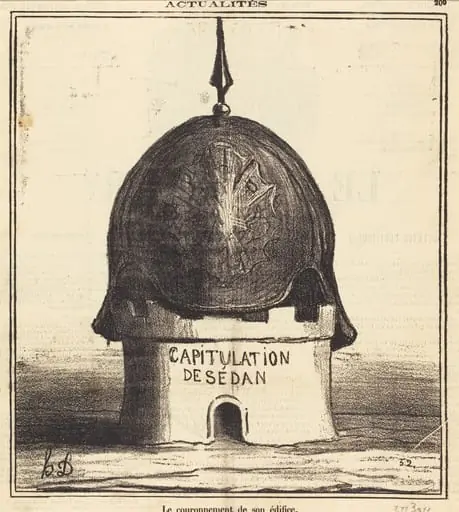
- Le couronnement de son édifice
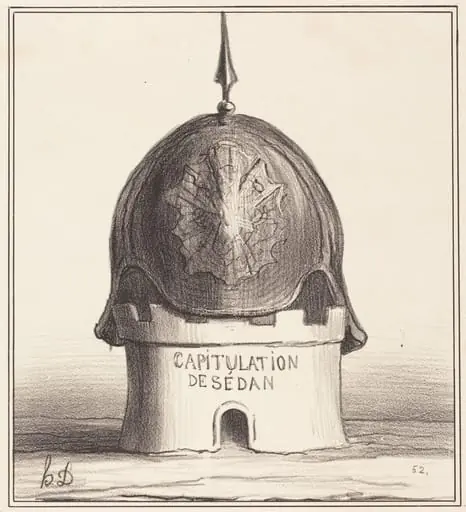 Le couronnement de son édifice
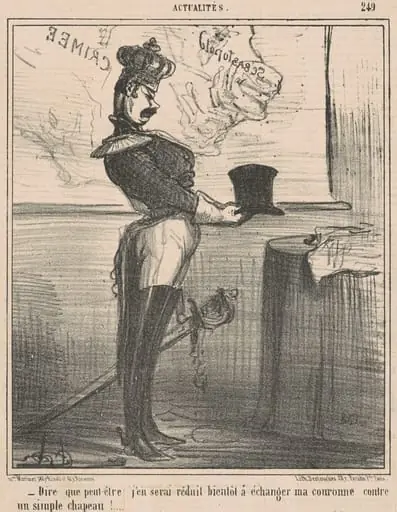 Dire que peut-être j'en serai réduit ...
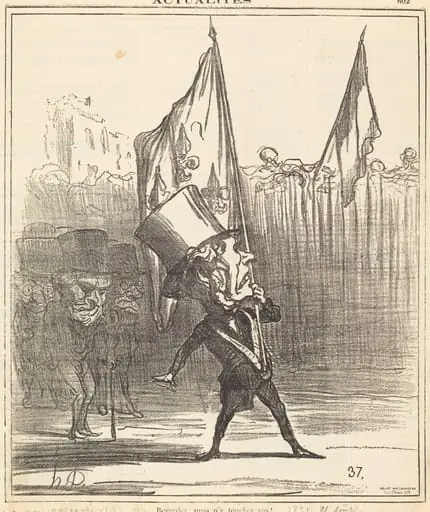 Regardez, mais n'y touchez pas!
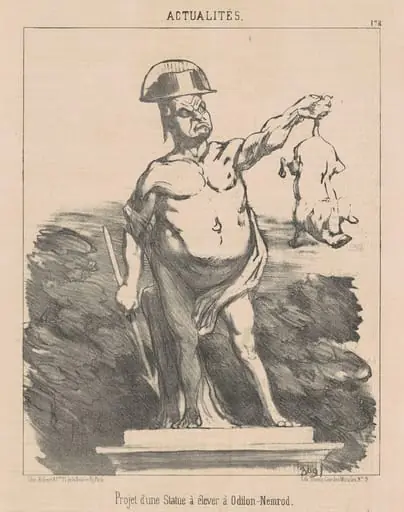 Projet d'une statue ... a Odilon-Nemrod
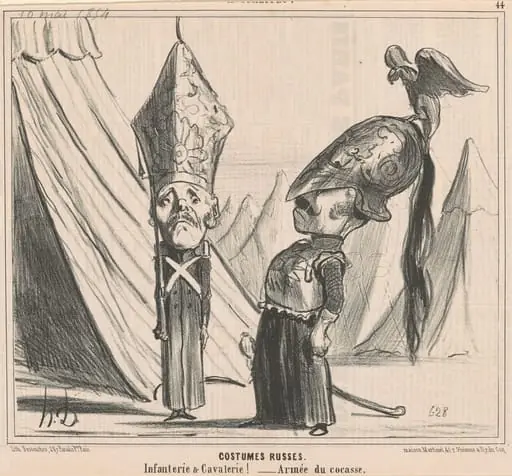 Costumes russes
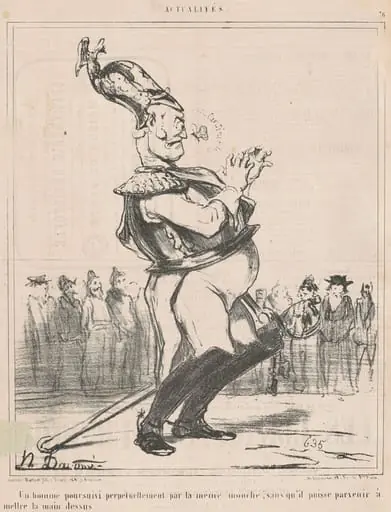 Un homme poursuivi ...
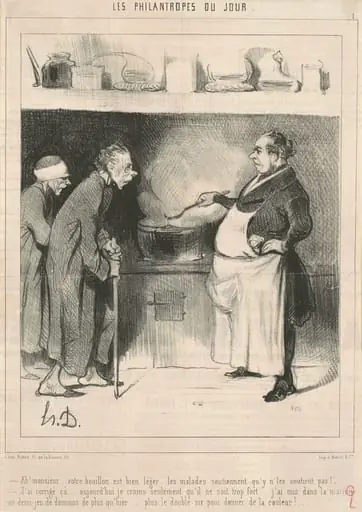 Ah! Monsieur ...votre bouillon est ...
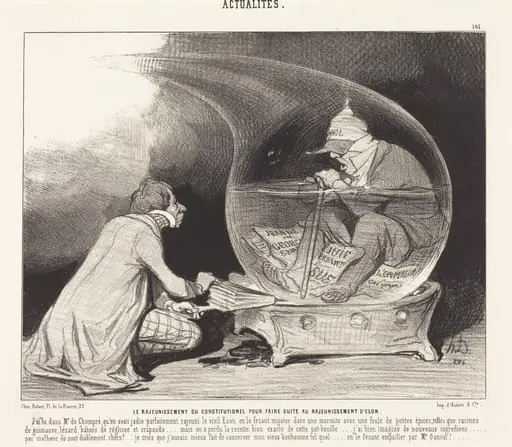 Le Rajeunissement du Constitutionnel
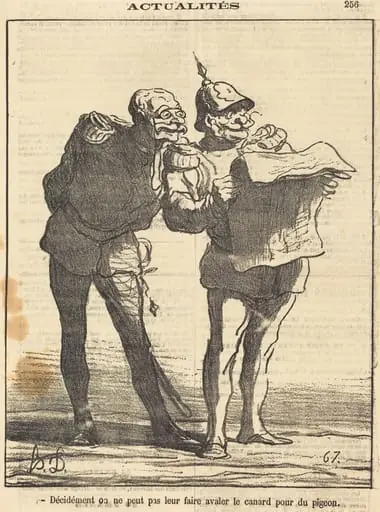 Décidément on ne peut pas...
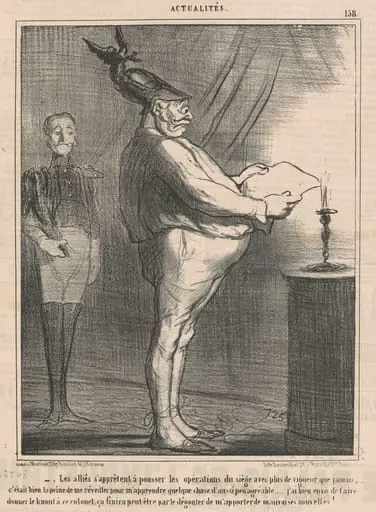 Les alliés s'appretent a pousser les opérations ...
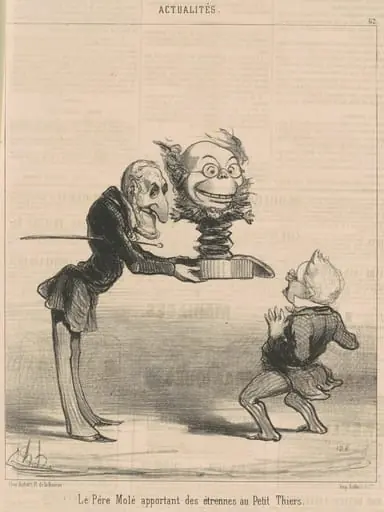 Molé apportant des étrennes au petit thiers