Artwork
Réception d'un franc-maçon
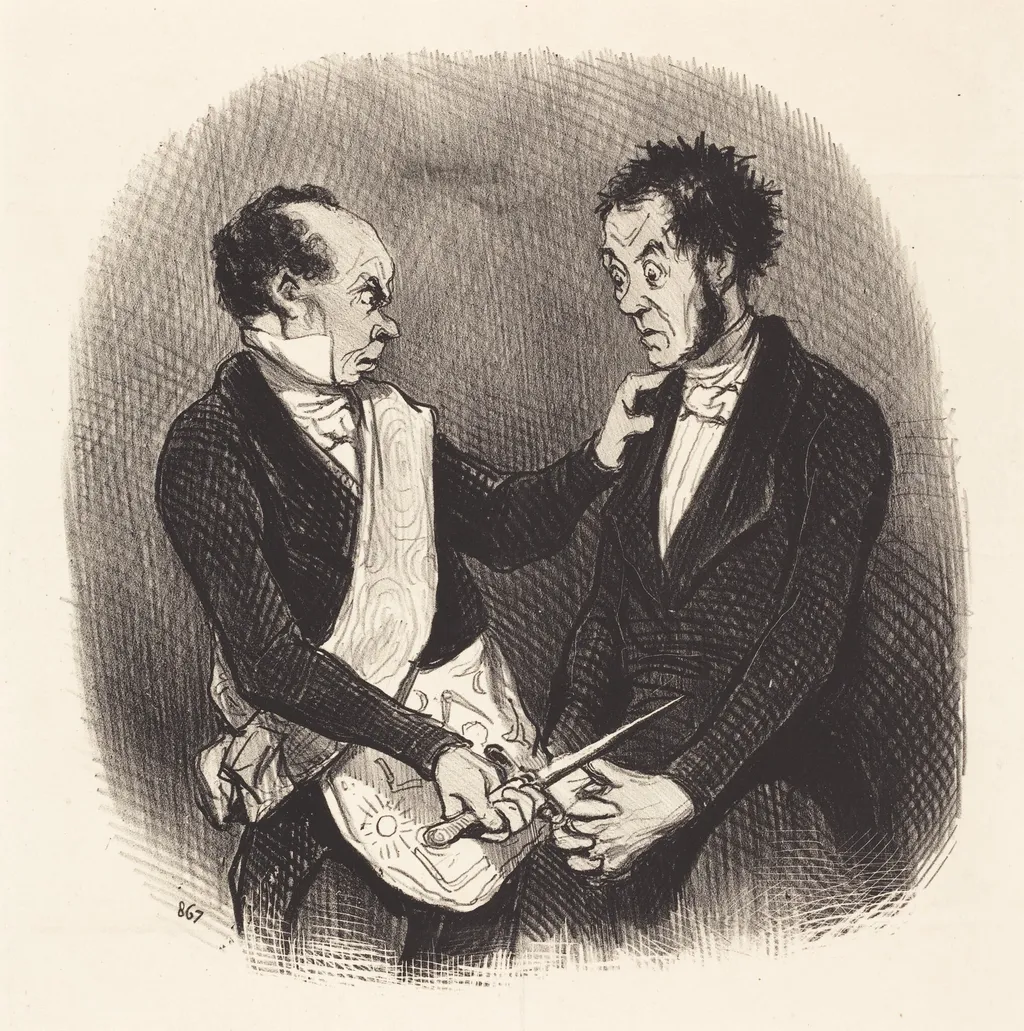
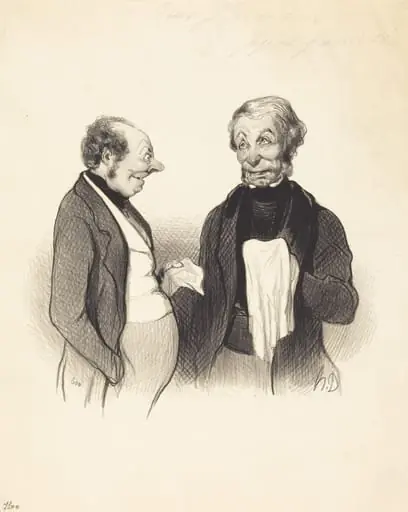
Réception d'un franc-maçon is an ink print by the Romanticist artist Honoré Daumier. It dates from 1846 and is held in the collection of the National Gallery of Art.
About this work
Overview
Honoré Daumier’s 1846 lithograph Réception d’un franc‑maçon captures a brief, staged encounter within a Masonic setting. Rendered in the artist’s familiar satirical tone, the image juxtaposes a composed seated figure with a restless, gesturing companion, highlighting the contrast between ritual solemnity and individual agitation.
Subject & Meaning
The print portrays a moment of initiation or reception in a Freemason lodge, using exaggerated posture and expression to question the secrecy and performative aspects of such societies. By emphasizing the nervous gestures of one participant against the calm demeanor of the other, Daumier subtly critiques the pretensions of fraternal orders within mid‑nineteenth‑century French civic life.
Technique & Style
Executed as a lithograph, the work relies on bold, sketch‑like lines and a limited tonal range to convey atmosphere. Daumier’s characteristic use of loose, energetic strokes imparts immediacy, while the dim, indistinct background suggests a smoky interior, reinforcing the clandestine mood of the scene.
History & Provenance
Created during Daumier’s prolific period of political and social caricature, the lithograph was likely circulated among the satirical journals that featured his work, such as La Caricature and Le Charivari. Its survival in museum collections reflects the broader interest in Daumier’s commentary on French institutions and the role of print media in disseminating dissent.
Own this work as a print
Artist & collection
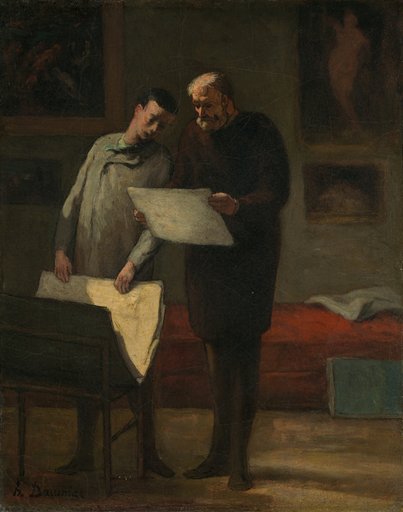
Artist
Honoré-Victorin Daumier (French: ; 26 February 1808 – 10 or 11 February 1879) was a French painter, sculptor, and printmaker, whose many works offer commentary on the social and political life in France, from the…









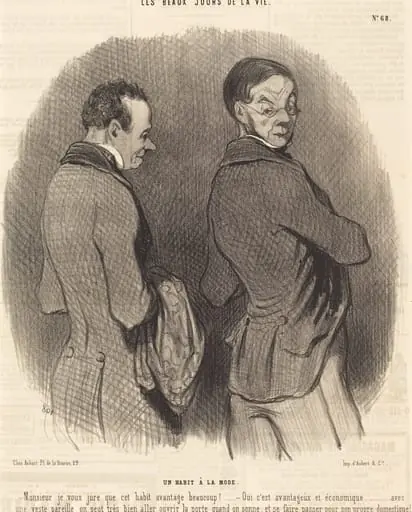
- Un Habit a la mode
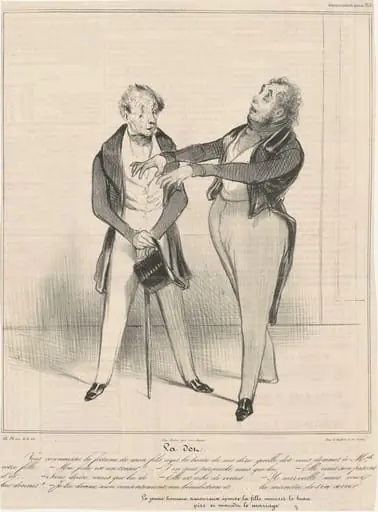 La Dot...vous connaissez la fortune...
 Une Heureuse nouvelle
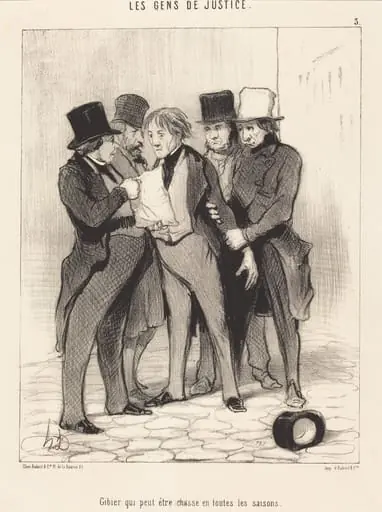 Gibier qui peut être chassé en toutes les saisons
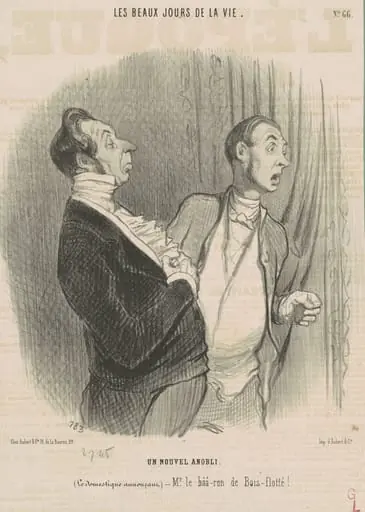 Un nouvel anobli
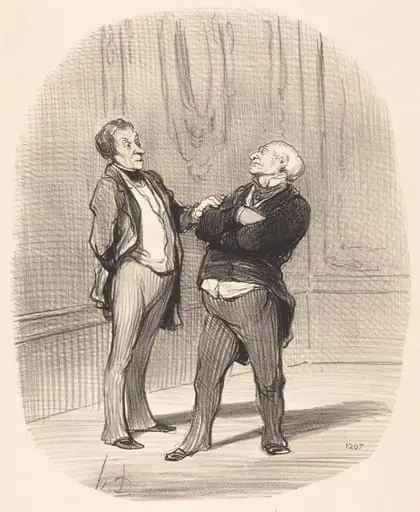 Il y a la guerre... les loyers vont... diminuer...
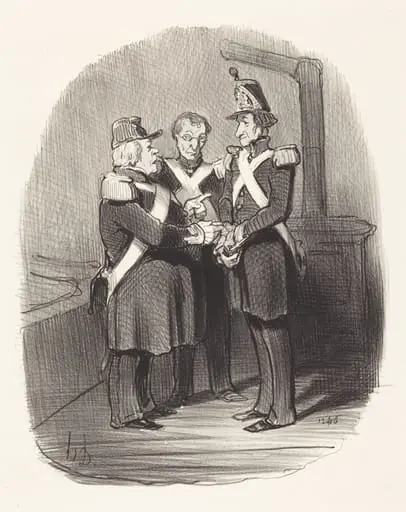 Expliquez-moi donc, monsieur Badoulard...
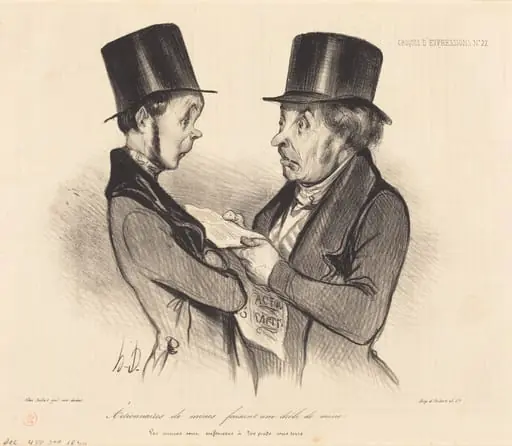 Actionnaires de mines...
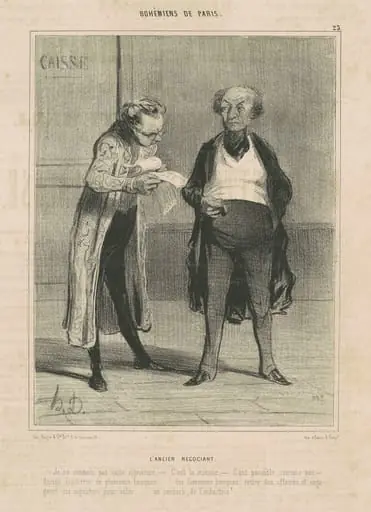 L'ancien négociant
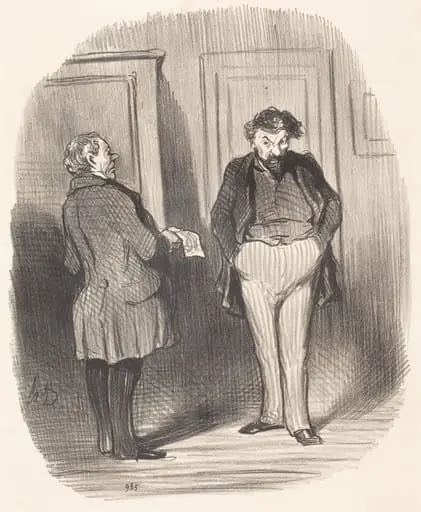 Pourriez-vous me dire...? J'ai la grippe!...