Artwork
Un autodafé au XIXe siècle
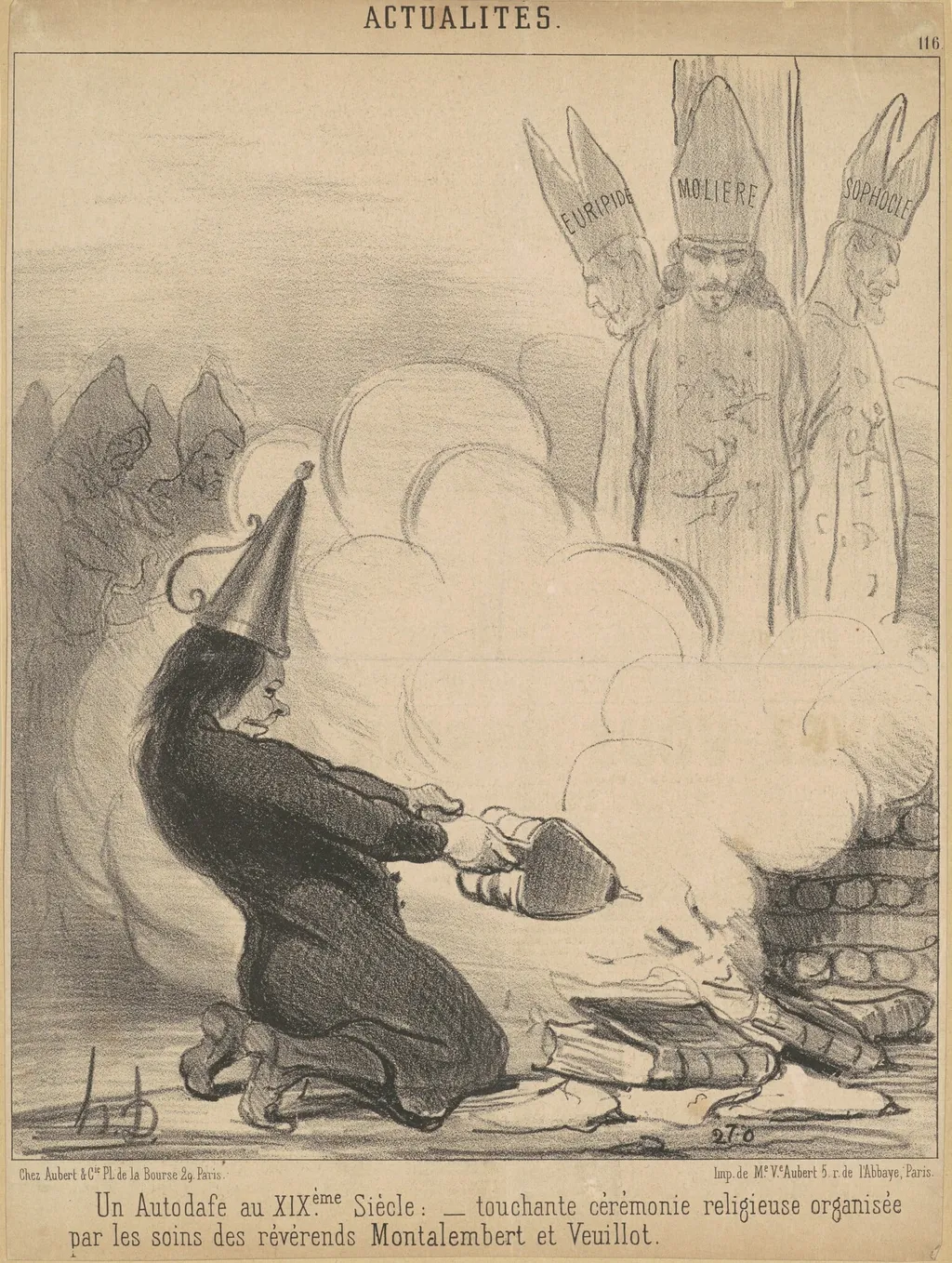
Un autodafé au XIXe siècle is an ink print by the Impressionist artist Honoré Daumier. It dates from 1851 and is held in the collection of the National Gallery of Art.
About this work
Overview
Honoré Daumier’s lithograph Un autodafé au XIXe siècle presents a solitary, robed figure kneeling before a blaze of ignited books. The scene is illuminated by the fire’s glow, which casts stark shadows across the composition and highlights the tension inherent in the act of destruction.
Subject & Meaning
The central figure, identifiable by a conical hat traditionally associated with 19th‑century censors, embodies the forces of repression. Behind him, statues of renowned playwrights stand as mute witnesses, suggesting the broader cultural loss incurred when authority suppresses literary expression.
Technique & Style
Daumier employs crisp, expressive lines and a strong chiaroscuro of black ink to convey urgency. The contrast between the bright fire and the surrounding darkness accentuates the drama, while the detailed rendering of the statues underscores his meticulous approach to printmaking.
History & Provenance
Created as part of Daumier’s series of socially charged prints, the lithograph reflects his ongoing critique of censorship in post‑revolutionary France. It was produced in the mid‑19th century and has since circulated among collections that focus on political satire and French print culture.
Context
The work emerges from a period when the French press and literary scene faced frequent governmental crackdowns. By depicting the burning of books, Daumier comments on contemporary debates over freedom of the press and the role of the artist in confronting state power.
Own this work as a print
Artist & collection
Artist
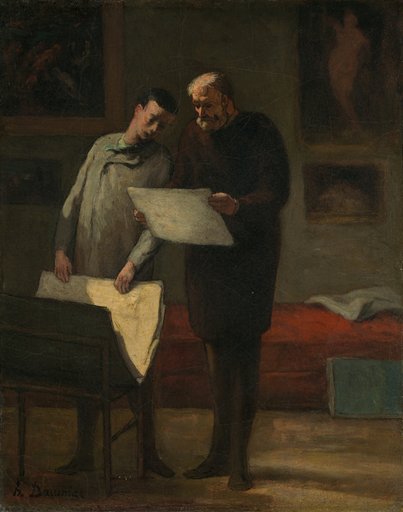
Honoré-Victorin Daumier (French: ; 26 February 1808 – 10 or 11 February 1879) was a French painter, sculptor, and printmaker, whose many works offer commentary on the social and political life in France, from the…