Artwork
Un Bouquiniste dans l'ivresse
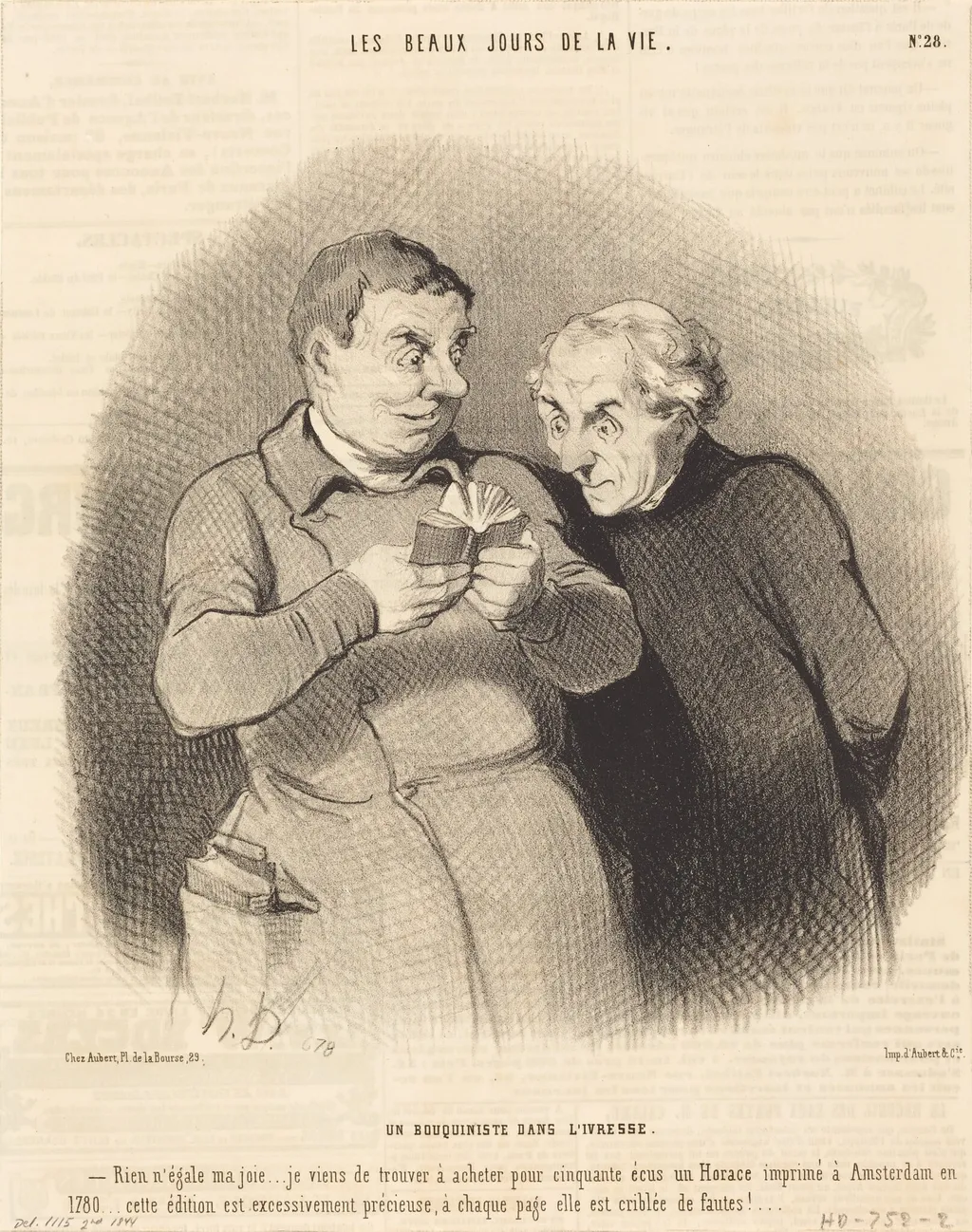
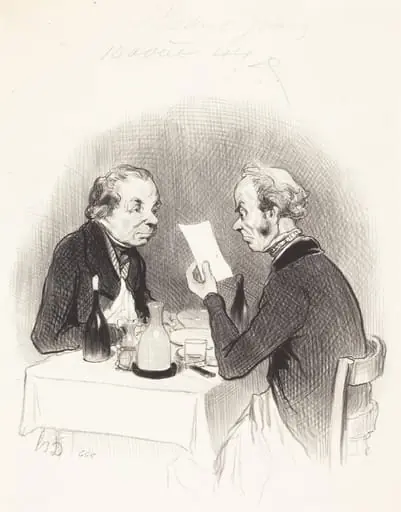
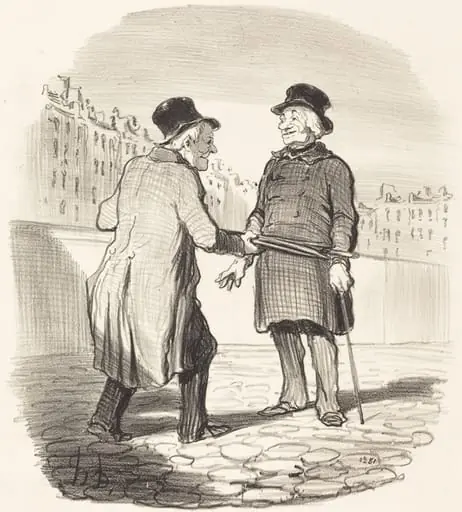
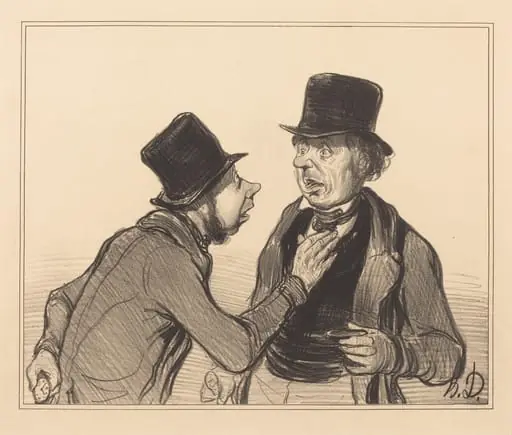
Un Bouquiniste dans l'ivresse is an ink print by the Romanticist artist Honoré Daumier. It dates from 1844 and is held in the collection of the National Gallery of Art.
About this work
Overview
Unlike his sharper political satires, this piece observes human connection amid hardship, using the medium’s immediacy to convey warmth and spontaneity.
Created in 1844, this lithograph on newsprint by Honoré Daumier captures a fleeting, intimate scene of two working-class men engrossed in a book. Executed with rapid, expressive lines, it reflects Daumier’s commitment to documenting everyday life among Paris’s marginalized. Unlike his sharper political satires, this piece observes human connection amid hardship, using the medium’s immediacy to convey warmth and spontaneity.
Subject & Meaning
The image portrays two elderly bouquinistes, street booksellers, engaged in lively debate over a poorly printed volume. Their joy, though tinged with poverty, centers on the shared pleasure of literature. The text beneath their exchange notes the book’s numerous errors, framing their enthusiasm as ironic yet genuine. Daumier elevates their moment, suggesting intellectual curiosity thrives even in obscurity, beyond societal judgment.
Technique & Style
Daumier employed lithography on inexpensive newsprint to achieve a spontaneous, sketch-like quality. Bold, fluid lines define the figures’ postures and expressions, while minimal shading suggests texture and depth without detail. The rough paper and hurried execution amplify the sense of a moment caught in passing. This approach aligns with his journalistic sensibility, prioritizing emotional truth over polished finish.
History & Provenance
Produced during Daumier’s most active period as a caricaturist for Le Charivari, the print was likely distributed as a broadsheet or inserted in periodicals. Its survival on fragile newsprint is rare; most such works were discarded after reading. This example endures as a testament to Daumier’s commitment to accessible art, made for the public rather than collectors.
Context
In 1840s France, censorship and political repression followed the July Monarchy’s tightening grip. Daumier’s prints often skirted legal boundaries by focusing on social types rather than direct figures. Here, the bouquinistes represent a class overlooked by elites, illiterate in official records, yet literate in spirit. Their quiet revelry contrasts with the era’s rigid hierarchies.
Legacy
This work exemplifies Daumier’s influence on modern printmaking and social realism. By treating ordinary people with dignity and humor, he expanded the scope of artistic subject matter. Later artists, from the Impressionists to 20th-century illustrators, drew from his ability to capture fleeting humanity with minimal means, cementing his role in redefining the visual language of everyday life.
Own this work as a print
Artist & collection
Artist
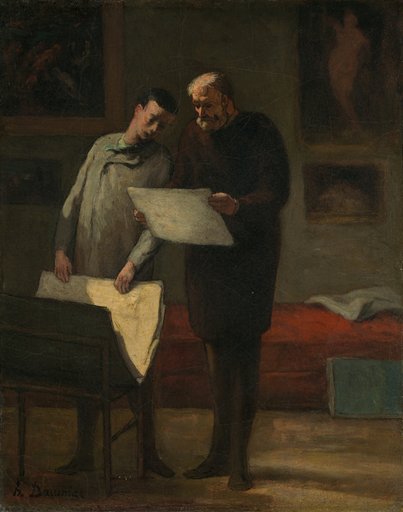
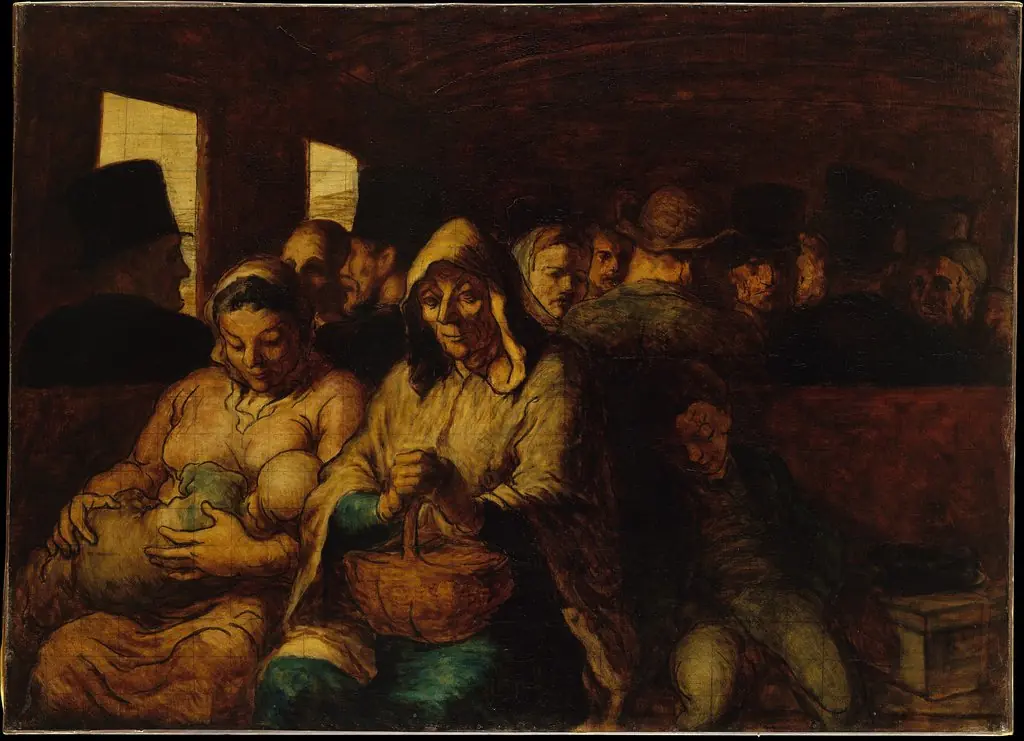
Honoré-Victorin Daumier (French: ; 26 February 1808 – 10 or 11 February 1879) was a French painter, sculptor, and printmaker, whose many works offer commentary on the social and political life in France, from the…

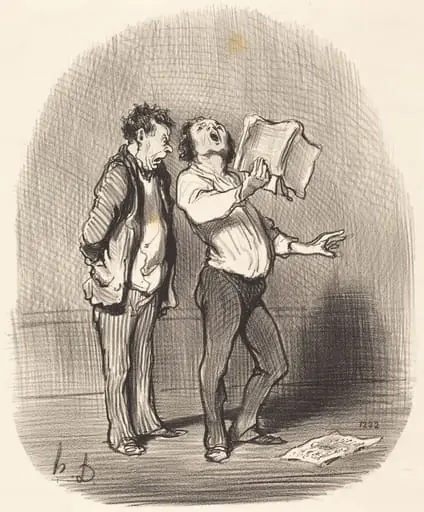
- L'Inconvénient d'avoir un ami mélomane
 Actionnaires de mines...
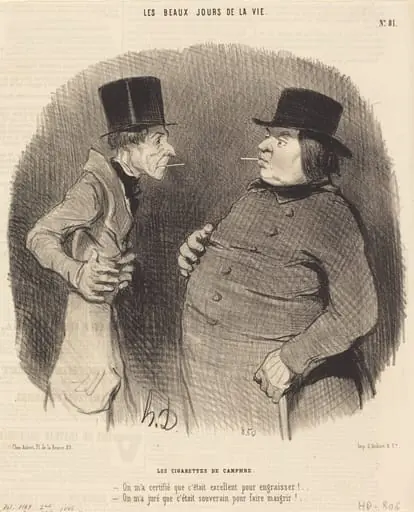 Les Cigarettes de camphre
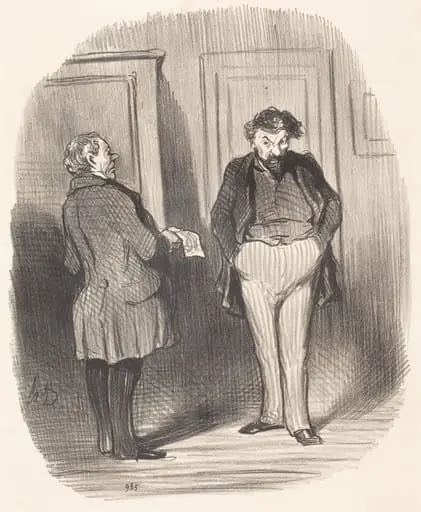 Pourriez-vous me dire...? J'ai la grippe!...
 Un Diner maigre
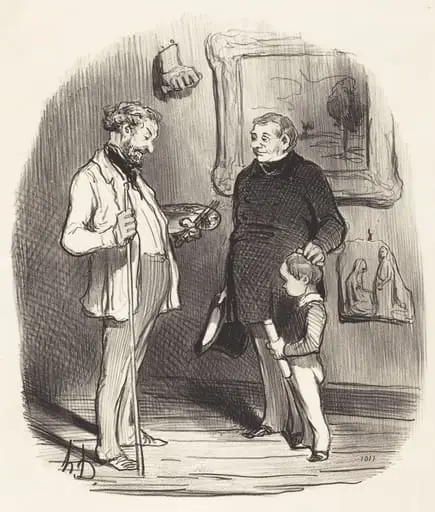 V'la mon petit... s'il n'a pas assez de moyens...
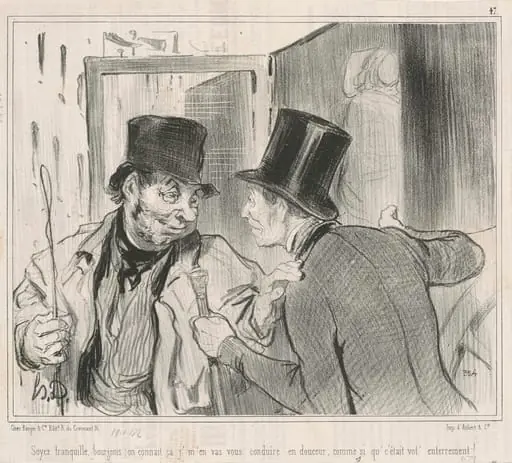 Soyez tranquille bourgeois, on connait
 Je vous arrête, mauvais sujet...
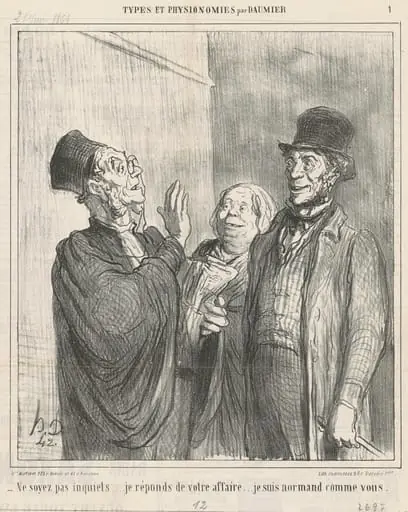 Ne soyez pas inquiets ...
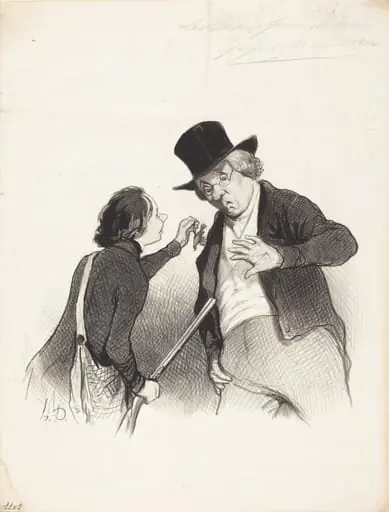 Un Début a la chasse
 Oui Monsieur vous n'êtes pas de Paris...
 Ayant faitartie des muscadins sous le directoire