Artwork
Un monsieur en bonne fortune aux Champs-Elysées
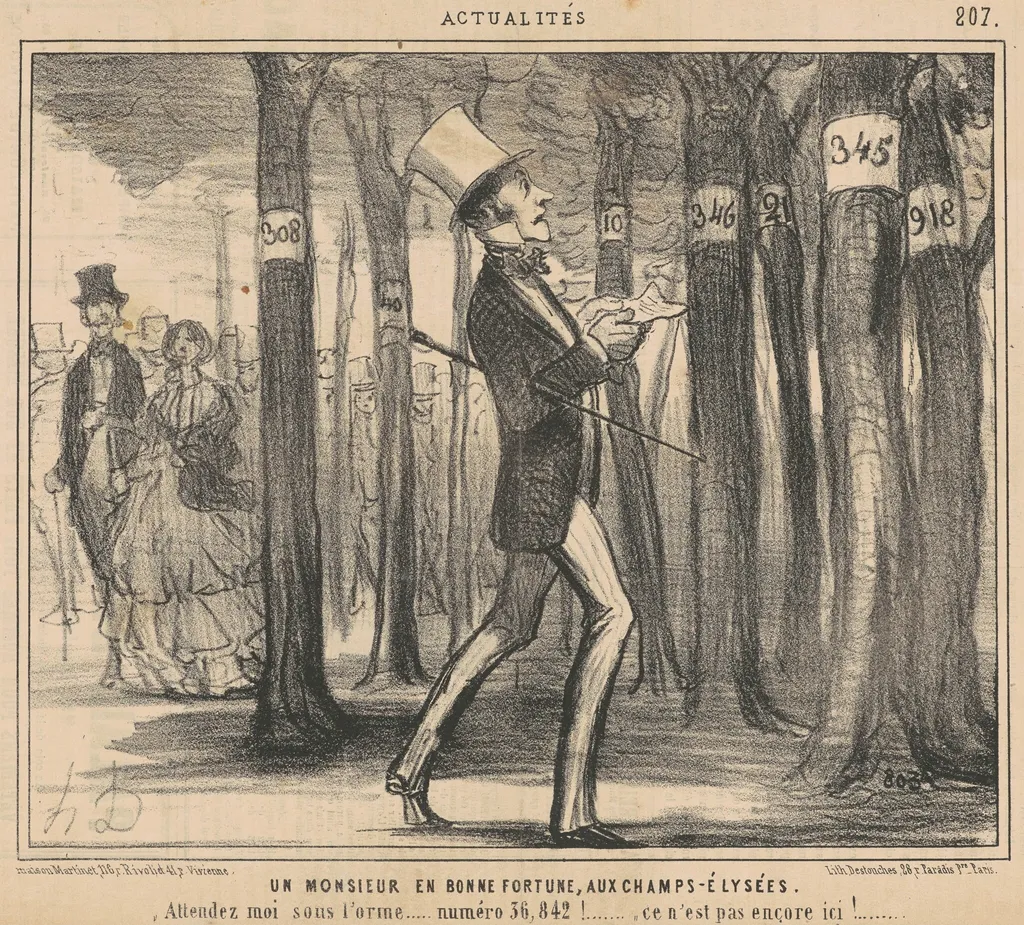
Un monsieur en bonne fortune aux Champs-Elysées is an ink print by the Impressionist artist Honoré Daumier. It dates from 1855 and is held in the collection of the National Gallery of Art.
About this work
Overview
This lithograph by Honoré Daumier portrays a man in formal dress, top hat in place, wandering through an orderly yet surreal grove of numbered trees. He holds a document, seemingly searching for a specific marker. The scene transforms a mundane urban errand into a symbolic journey, using the forest as a metaphor for the bureaucratic and impersonal structures of modern city life.
Subject & Meaning
The figure represents an ordinary citizen caught in the mechanics of urban administration.
The figure represents an ordinary citizen caught in the mechanics of urban administration. The numbered trees suggest an artificial, rigid system, perhaps property records, tax listings, or civic directories, where personal agency is reduced to following arbitrary labels. The man’s focused yet futile search critiques the illusion of order in institutional processes, highlighting the alienation inherent in navigating modern society.
Technique & Style
Daumier employed lithography to achieve sharp, expressive lines with minimal tonal variation. The man is rendered with precise, almost caricatured detail, while the trees recede into a flat, repetitive pattern, emphasizing their mechanical uniformity. The absence of background detail isolates the figure, intensifying the psychological tension and reinforcing the work’s satirical tone through stark visual contrast.
History & Provenance
Created in the mid-19th century, this print was likely published in a periodical or as part of Daumier’s series commenting on Parisian bureaucracy. It circulated among middle-class audiences familiar with the growing complexity of urban governance. Though its exact publication date and original context are undocumented, its style aligns with Daumier’s broader body of social commentary produced during the July Monarchy and Second Republic.
Context
Paris during Daumier’s time experienced rapid urbanization and administrative expansion. New systems for land registration, taxation, and public services created a labyrinthine bureaucracy that ordinary citizens struggled to navigate. This print reflects the widespread frustration with impersonal institutions, mirroring contemporary literary and journalistic critiques of modernity’s dehumanizing effects.
Legacy
Daumier’s lithograph contributed to the tradition of visual satire that exposed institutional absurdities through everyday scenarios. Its influence extends to later cartoonists and illustrators who used similar visual metaphors to critique bureaucracy. The work remains a quiet but enduring example of how art can distill complex social conditions into a single, resonant image.
Own this work as a print
Artist & collection
Artist
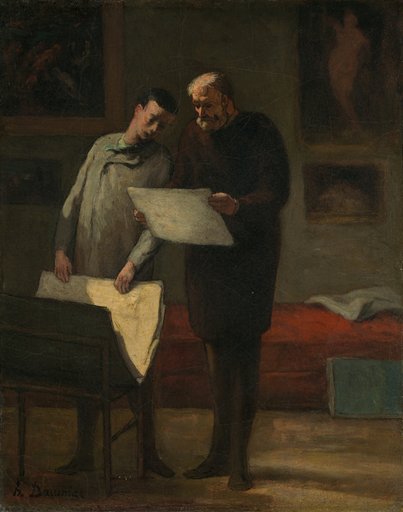
Honoré-Victorin Daumier (French: ; 26 February 1808 – 10 or 11 February 1879) was a French painter, sculptor, and printmaker, whose many works offer commentary on the social and political life in France, from the…









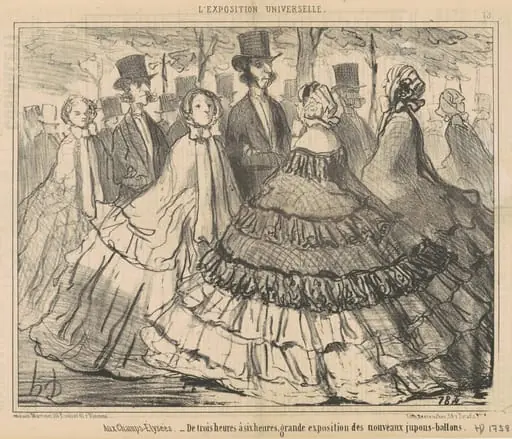 Aux Champs-Elysées...De trois a six heures
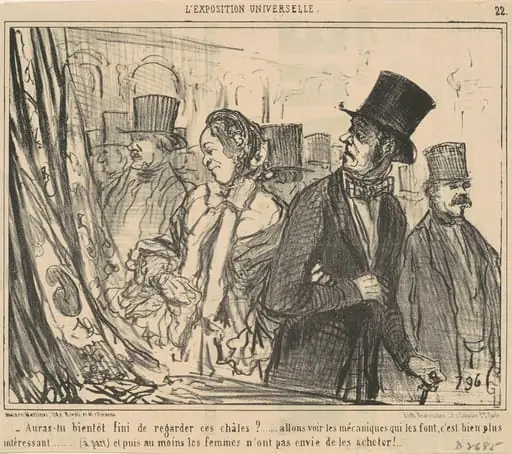 Auras-tu bientot fini de regarder ces chales?
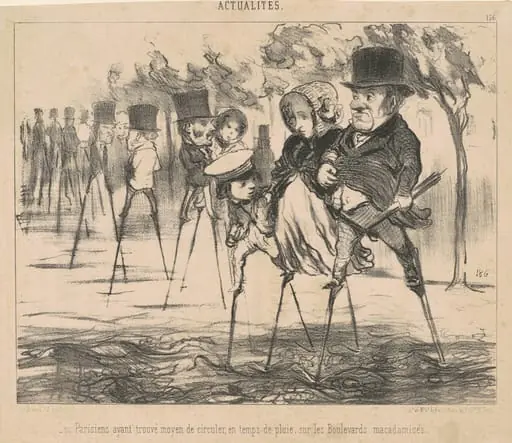 Les Parisiens ayant trouvé le moyen de circuler ...
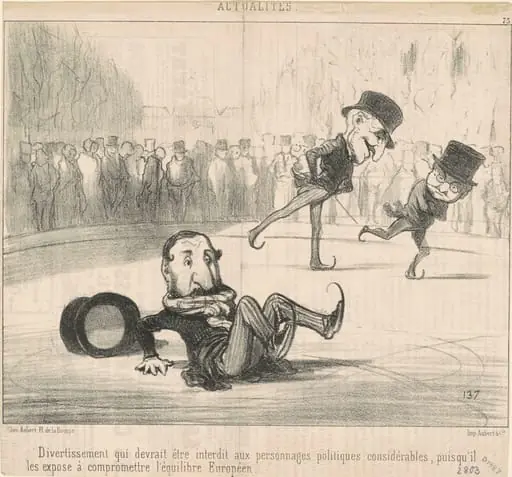 Divertissement qui devrait être interdit ...
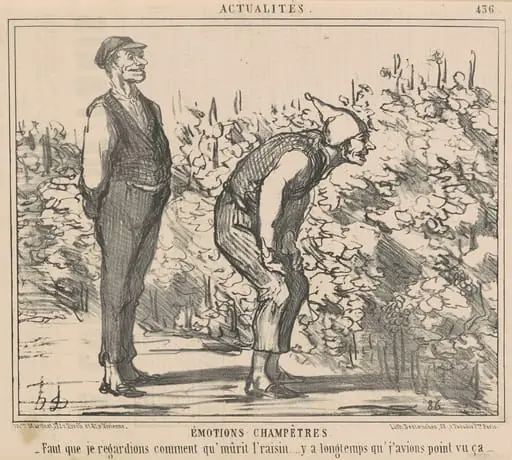 Faut que je egardions comment qu'murit l'raisin ...
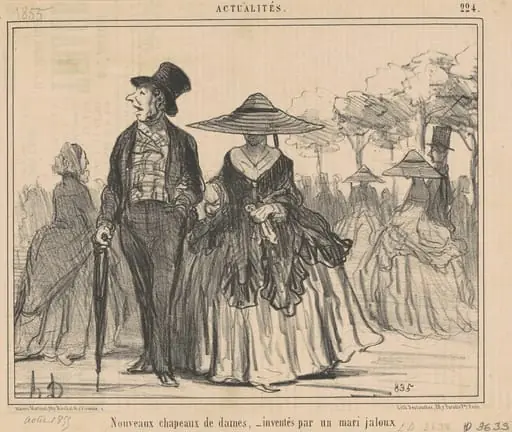 Nouveaux chapeaux de dames ...
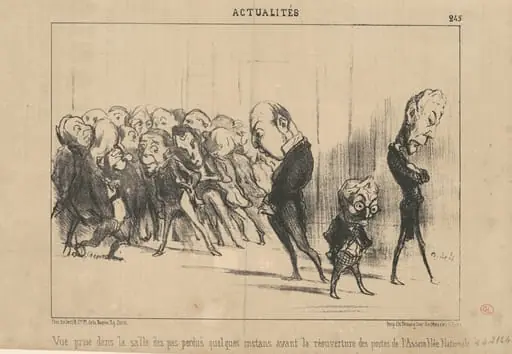 Vue prise dans la salle des pas perdus ...
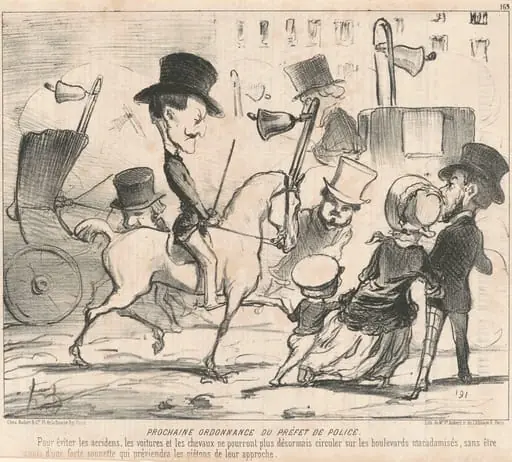 Prochaine ordannace du préfet de police
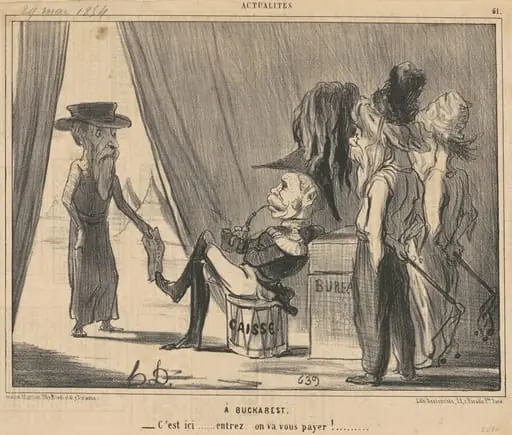 A Bucharest