Artwork
El jardín de Armida
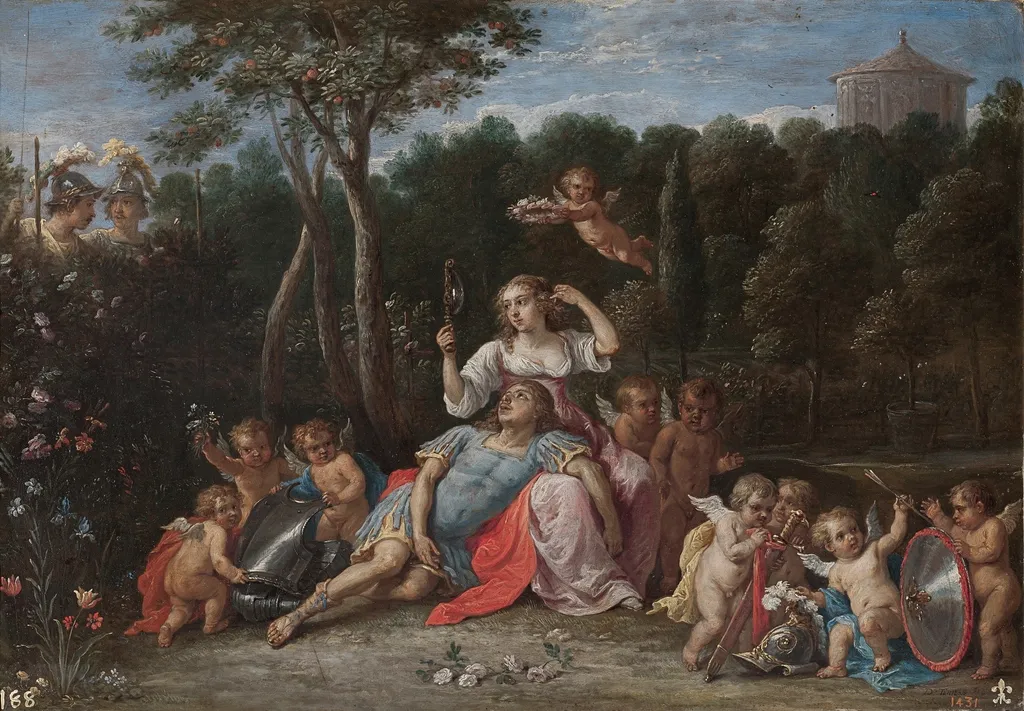
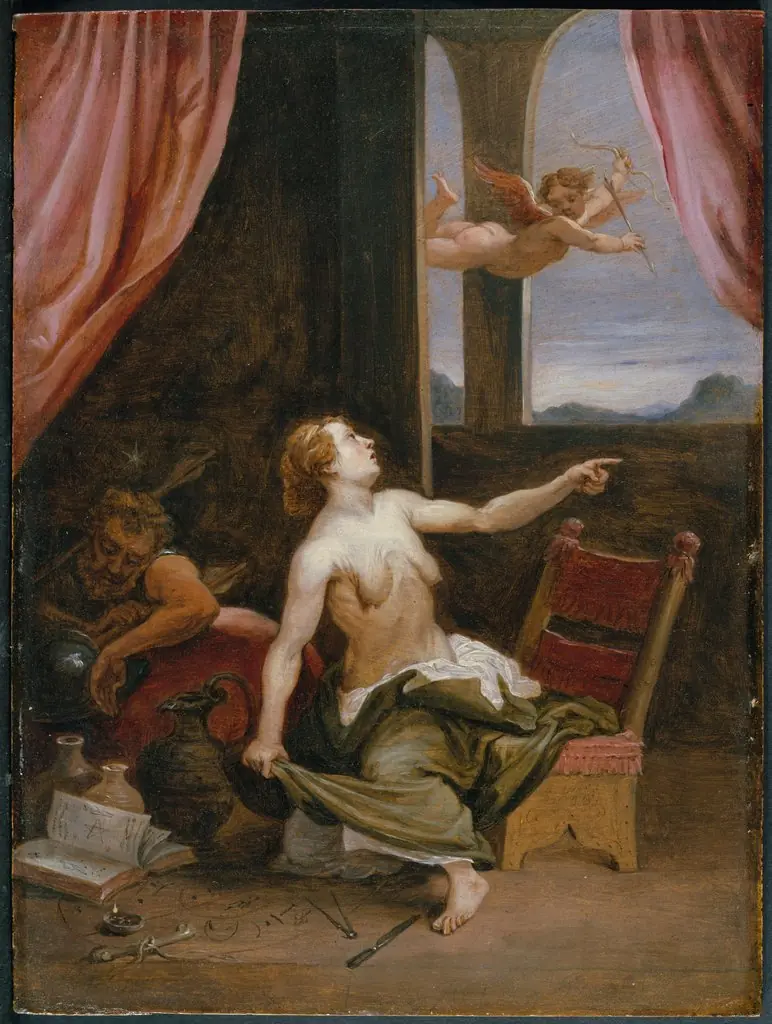
El jardín de Armida is an oil painting by the Flemish Baroque painting artist David Teniers the Younger. It dates from 1628 and is held in the collection of the Museo del Prado.
About this work
Subject & Meaning
The armor and weapons signal her role as a combatant, while the mirror introduces themes of vanity and self-examination typical of Baroque symbolism.
The painting El jardín de Armida (1628) by David Teniers the Younger portrays its titular figure in a martial guise, dressed in body armor and a combat helmet and bearing a shield, sword, and a hand mirror. This iconography draws on the representation of Armida in Torquato Tasso's epic Jerusalem Delivered. The armor and weapons signal her role as a combatant, while the mirror introduces themes of vanity and self-examination typical of Baroque symbolism.
The work's small oil-on-copper format and its presence in the Spanish royal collections of Philip V, Charles III, and Ferdinand VII reflect contemporary interest in crusading narratives and courtly imagery.
Technique & Style
The work titled El jardín de Armida is an oil painting created by David Teniers the Younger in 1628. It is executed in oil on a copper support, a technique common in early Baroque cabinet painting, and measures approximately 27 centimeters in height by 39 centimeters in width. The composition portrays the legendary enchantress Armida armed with body armor, a combat helmet, a shield, a sword, and a hand mirror, a scene drawn from the epic Jerusalem Delivered.
Teniers renders the figure with delicate brushwork and a rich palette, reflecting the stylistic traits of Flemish Baroque painting.
History & Provenance
El jardín de Armida is recorded as having been created in 1628, with one source also noting an inception date of 1629. The provenance of the work traces back to Philip V of Spain, from whom ownership passed to Elisabeth Farnese. The painting subsequently entered the collection of Charles III of Spain and later Ferdinand VII of Spain, before being held by the Museo del Prado.
The work is associated with multiple royal residences, including the Royal Palace of Aranjuez and the Royal Palace of La Granja de San Ildefonso, reflecting its history within the Spanish royal collections.
Context
David Teniers the Younger created El jardín de Armida in 1628, situating the work within the broader Flemish tradition of narrative painting. The piece is a visual adaptation of Torquato Tasso's epic poem Jerusalem Delivered, reflecting engagement with literary sources popular among 17th-century European courts. Executed in oil on copper, the small-scale painting depicts the sorceress Armida surrounded by elements of chivalry and vanity, including body armor and a hand mirror.
The work entered the Spanish royal collection, passing through the holdings of Philip V, Elisabeth Farnese, Charles III, and Ferdinand VII, before reaching its current location at the Museo del Prado. This provenance underscores its history as a courtly object within the Spanish monarchy's artistic patrimony.
Overview
Painted in 1628, El jardín de Armida is an early oil on canvas work by David Teniers the Younger, depicting a scene from Torquato Tasso's epic poem Gerusalemme liberata. The composition centers on the enchantress Armida, seated in a lush garden setting, wearing a blue dress and holding a hand mirror. She is surrounded by small, winged putti who actively engage with discarded armor, including swords, shields, and a helmet, symbolizing the disarming of knights by her beauty.
A second female figure in white stands nearby, also holding a mirror, reinforcing the theme of vanity and enchantment. Executed when Teniers was approximately eighteen, this work demonstrates the artist's early engagement with history painting and literary subjects, distinct from the genre scenes and peasant festivities for which he later became renowned. The piece reflects the Flemish Baroque interest in combining detailed naturalism with narrative complexity, showcasing Teniers' developing skill in rendering figures and textures within a mythological context before his style shifted toward the intimate domestic scenes of his mature career.
Own this work as a print
Artist & collection
Artist
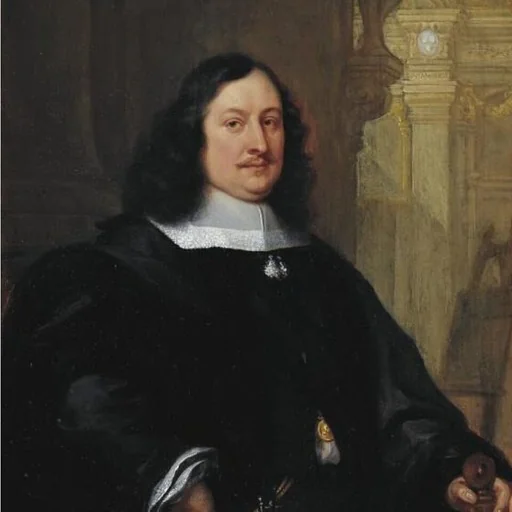
David Teniers the Younger or David Teniers II was a Flemish Baroque painter, printmaker, and artist.

- Reconciliación de Reinaldo y Armida
 Bacchus and Ariadne on the Island of Naxos
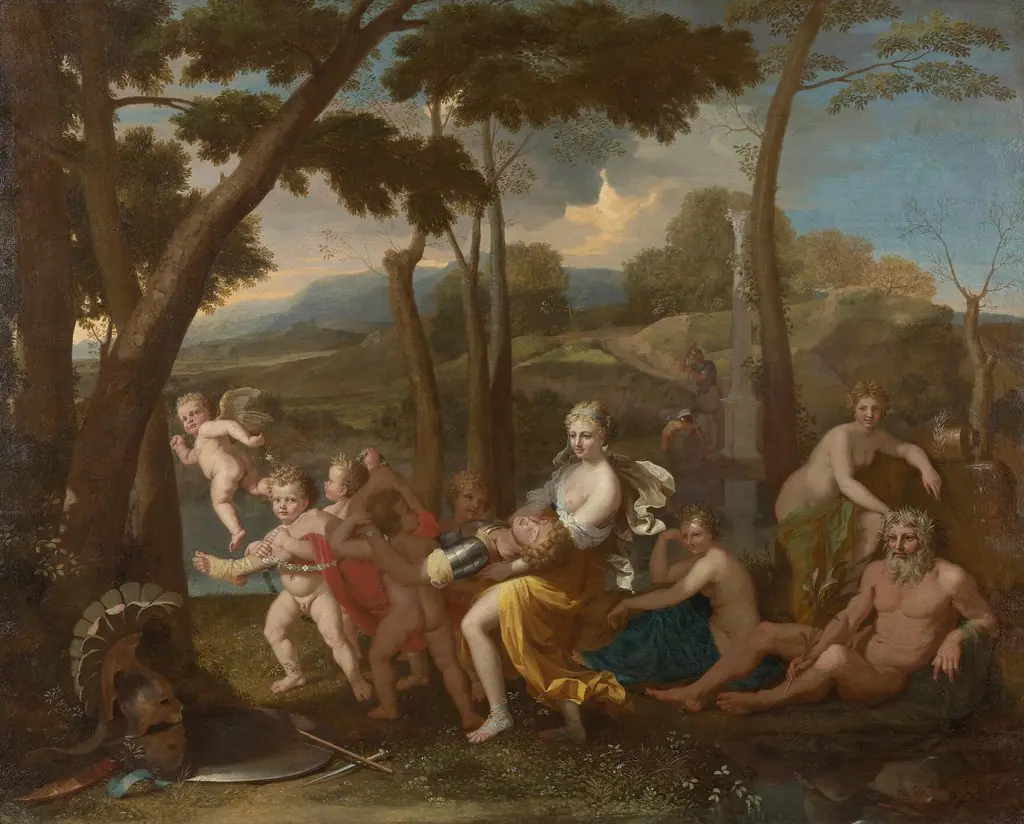 The Abduction of the Euthanized Rinaldo
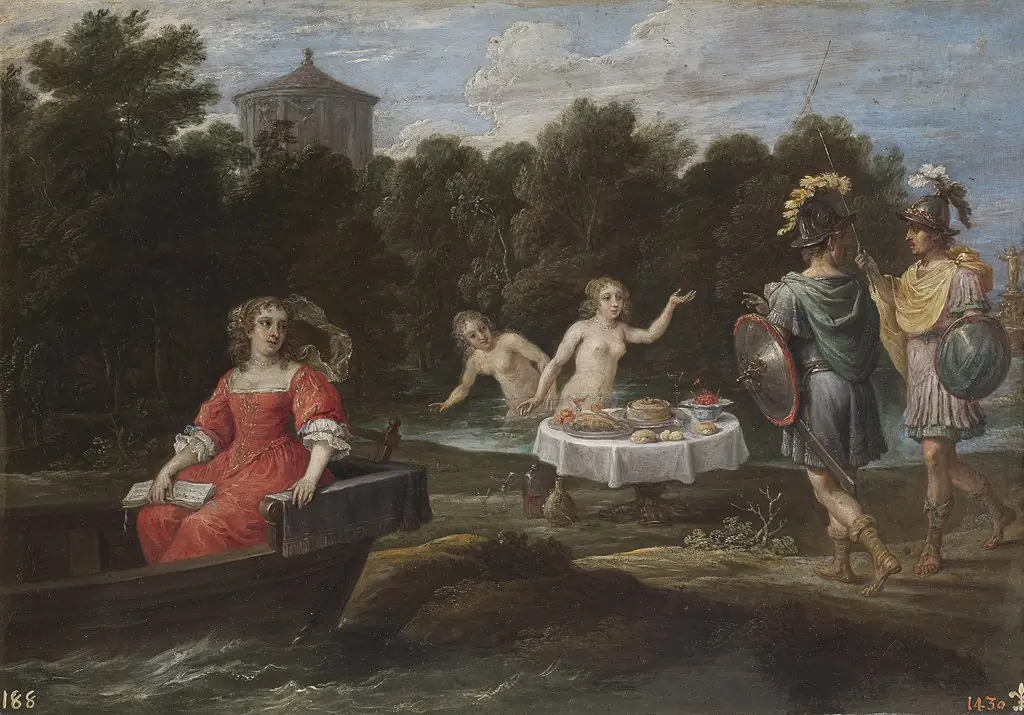 Carlos y Ubaldo en las islas Afortunadas
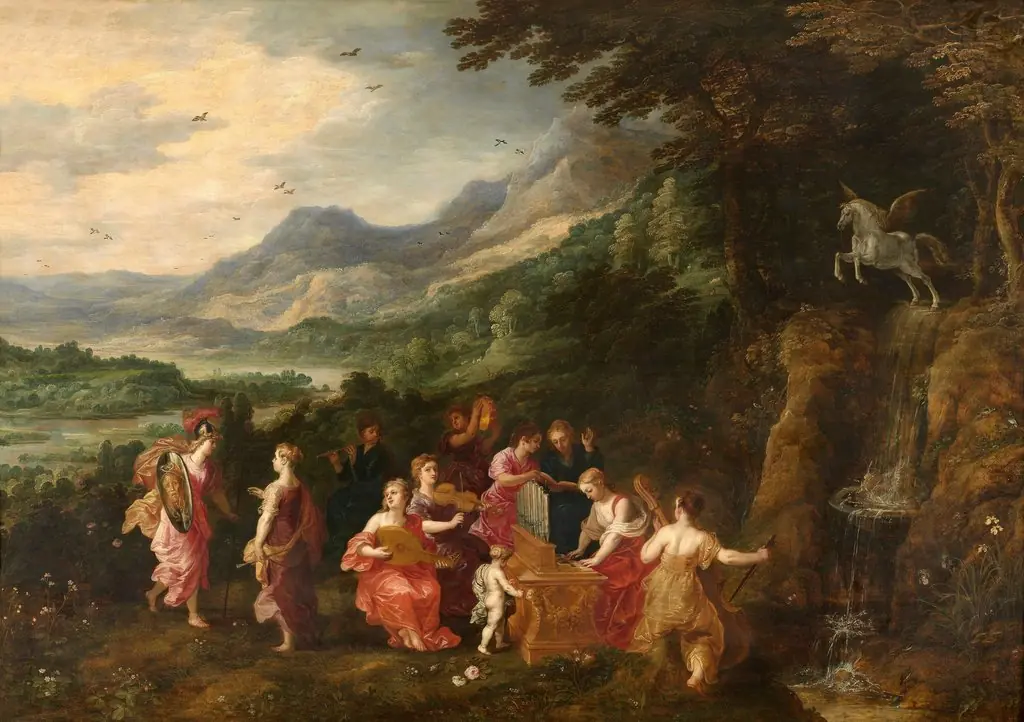 Minerva Visits the Muses
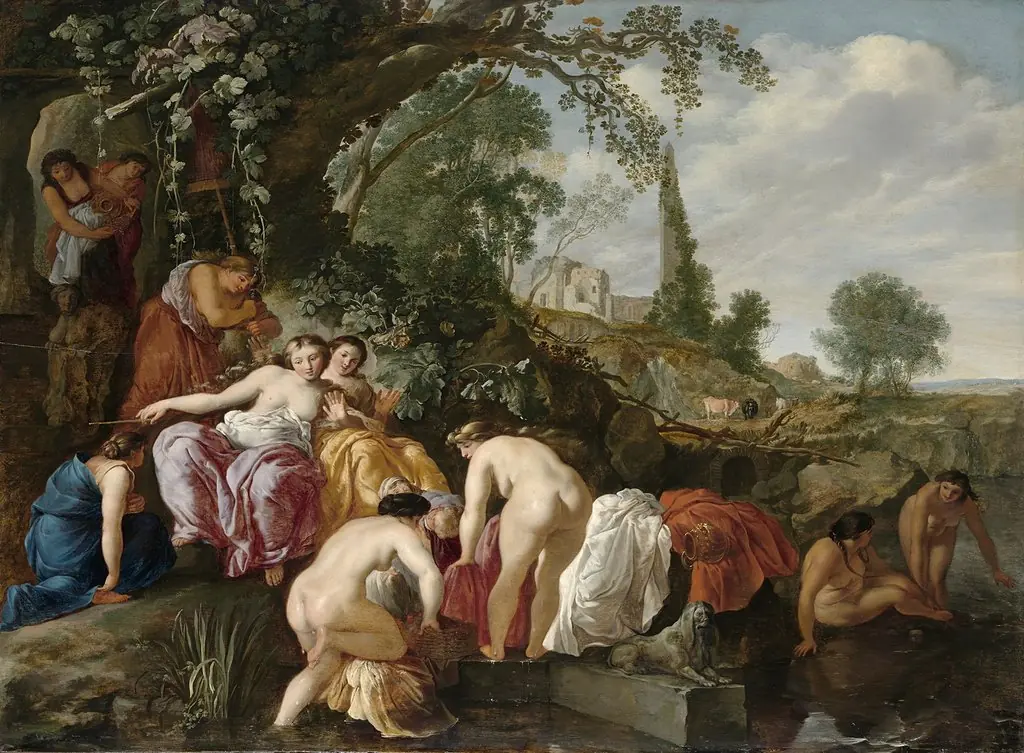 The Finding of Moses
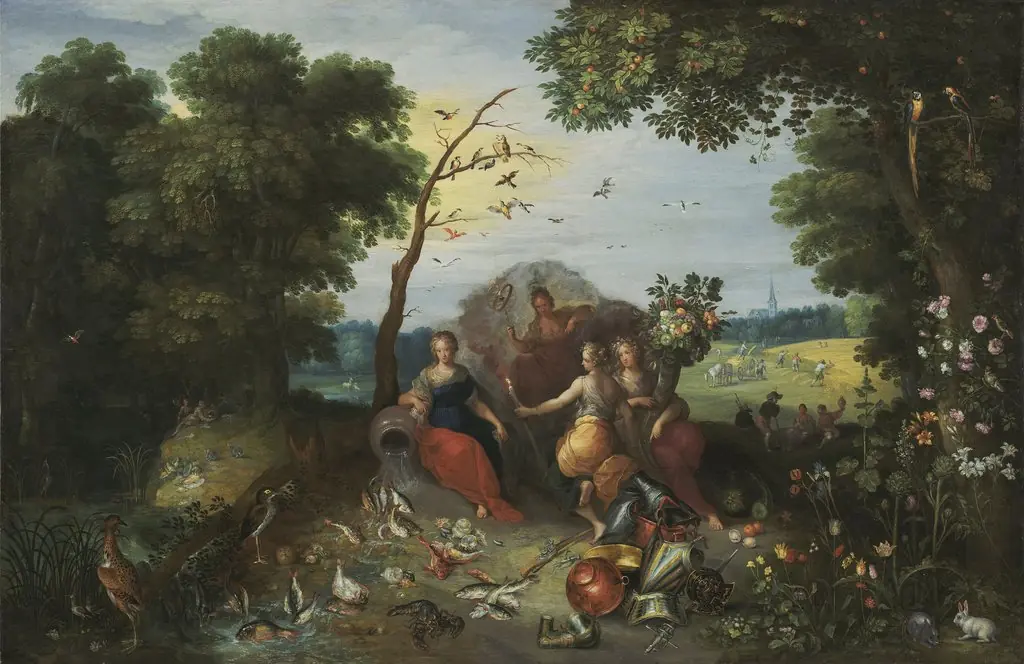 Landscape with Allegories of the Four Elements
 The Rape of Europa
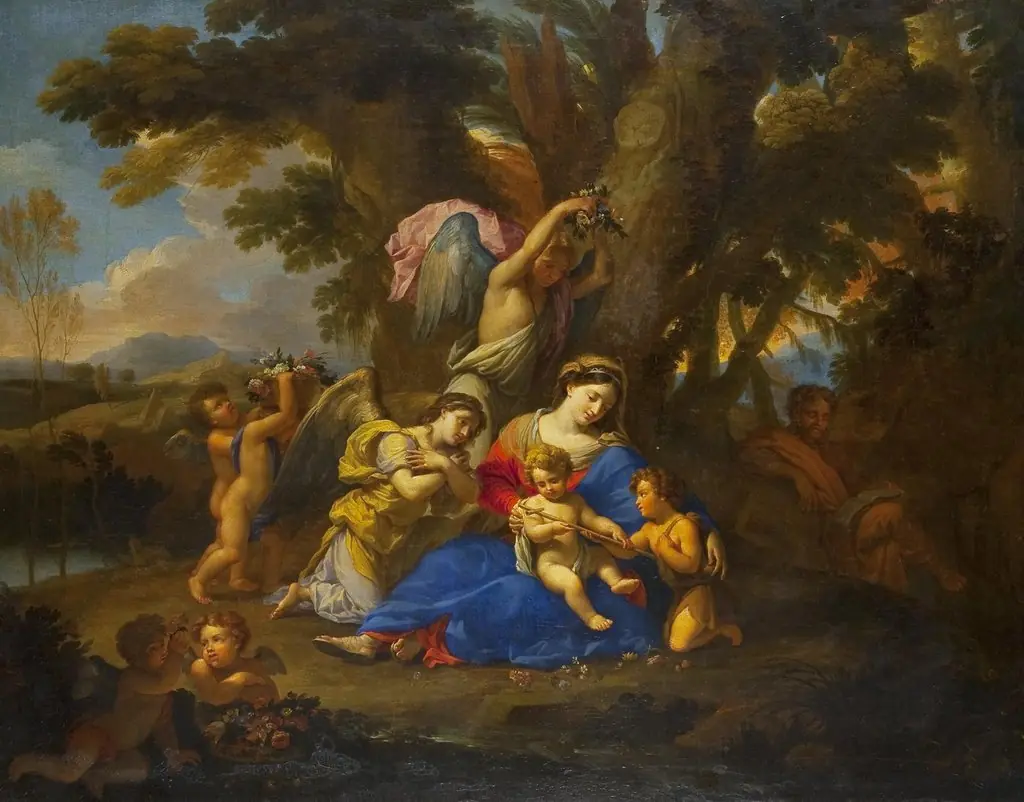 Madonna and Christ Child, with St John the Baptist and Angels
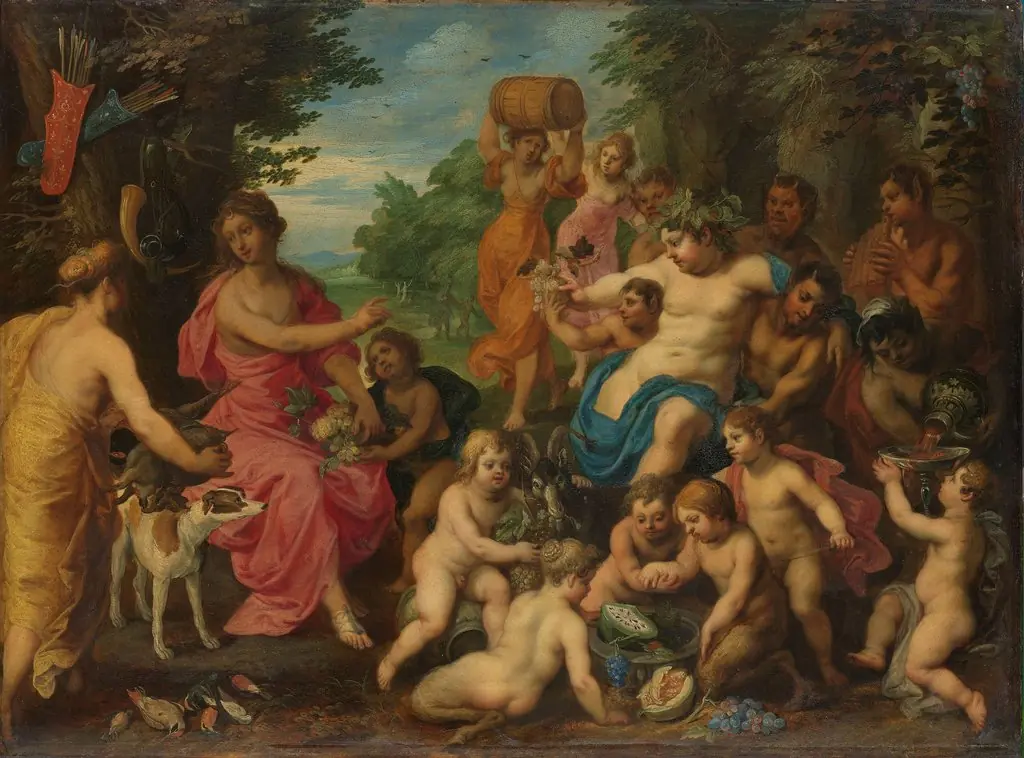 Diana Offered Wine and Fruit by the Young Bacchus and his Retinue
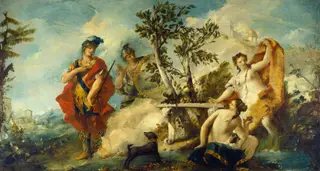 Carlo and Ubaldo Resisting the Enchantments of Armida's Nymphs
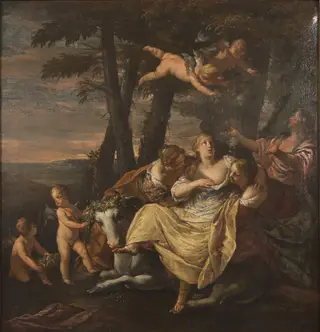 The Rape of Europa