Artwork
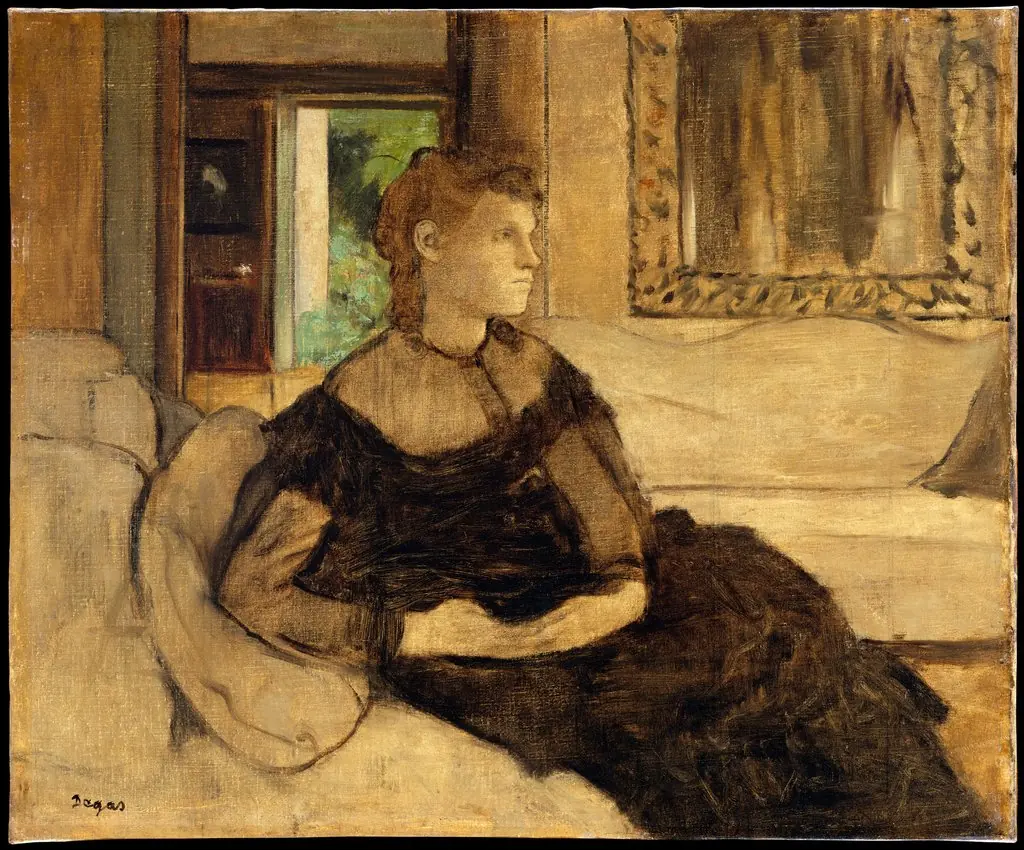
Madame Camus
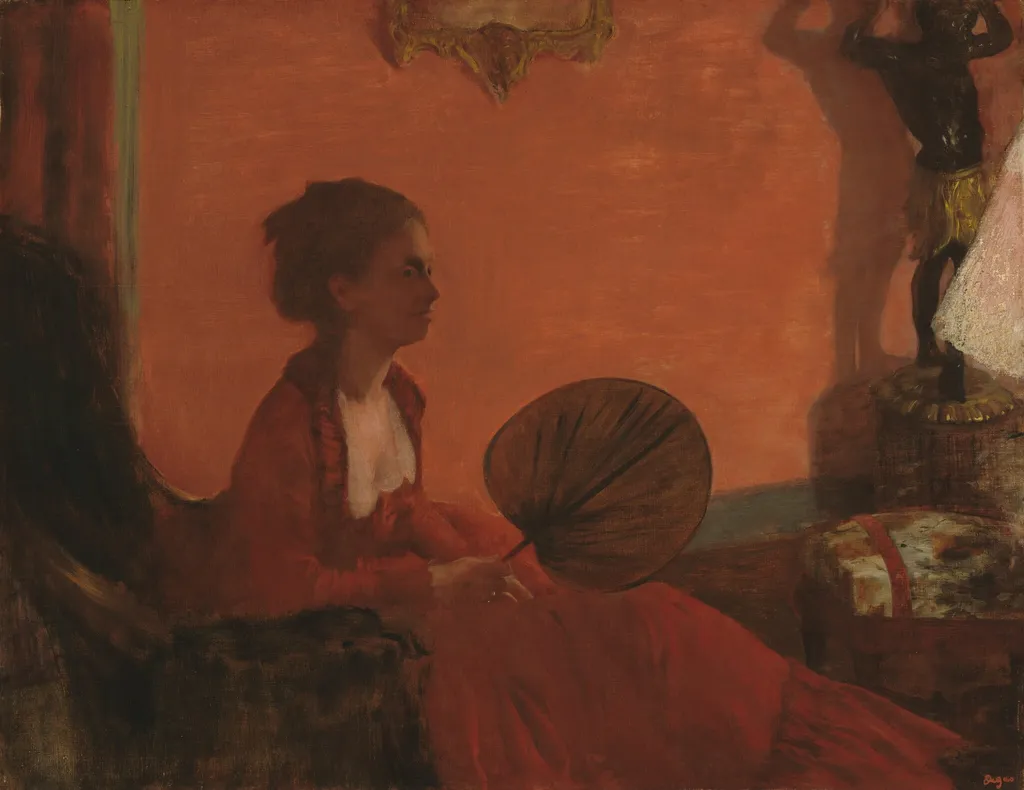
Madame Camus is an oil painting by the Impressionist artist Edgar Degas. It dates from 1870 and is held in the collection of the National Gallery of Art.
- Inscription
- Inscribed:lower right with atelier stamp: Degas
About this work
Technique & Style
The visible canvas weave and pentimenti around the sitter’s hands indicate a deliberately open, exploratory process rather than a fully resolved finish.
Executed in oil on canvas in 1869, the work displays Degas’s characteristic handling of fluid, layered brushwork that modulates from fine hatching to broader, directional strokes to define form and atmosphere.
The composition’s restricted palette, dominated by muted ochres, soft blacks, and subtle greens, supports the portrait’s quiet introspection, while the seated figure’s posture, angled placement, and softly blurred contours reflect the artist’s study of contemporary modernity. The visible canvas weave and pentimenti around the sitter’s hands indicate a deliberately open, exploratory process rather than a fully resolved finish.
History & Provenance
Painted in 1869, Edgar Degas’s Madame Camus entered the market at the artist’s posthumous sale in Paris in May 1918, where it was lot 96. The picture was bought by the Parisian dealer Paul Rosenberg et Cie, who by 1931 sold it through Goupil & Cie in London to Herbert C. Coleman, a Manchester cotton dealer based in London and Manchester.
After Coleman’s retirement, the work returned to Paul Rosenberg et Cie, which sold it to Chester Dale in New York in March 1938. Dale later donated Madame Camus to the National Gallery of Art, Washington, D.C., in 1963.
Madame Camus is held in the collection of the National Gallery of Art in Washington, D.C., where it was accessioned in 1963 as a gift from Chester Dale. The work's provenance traces back to the artist, Edgar Degas, before being sold at the Galerie Georges Petit in Paris in May 1918. It subsequently passed through the hands of Paul Rosenberg et Cie and Herbert C. Coleman before Dale acquired it in March 1938. The painting remains part of the National Gallery of Art's permanent holdings.
Overview
Created in 1870, Madame Camus is an oil painting on canvas by Edgar Degas. Though often linked to Impressionism, Degas identified himself with Realist principles, emphasizing truthful representation of contemporary figures. The portrait presents a solitary woman in a subdued setting, exemplifying his focus on everyday subjects.
Subject & Meaning
The sitter is depicted in profile, turned to the right, dressed in a dark gown trimmed with a white collar. Her hair is gathered back, and she holds a fan in her right hand while her left hand rests calmly on her lap. The composition conveys a sense of quiet introspection, inviting viewers to consider the private moment captured.

Own this work as a print
Artist & collection

Artist
Born Hilaire-Germain-Edgar De Gas on 19 July 1834 in Paris, Edgar Degas came from an affluent banking family with aristocratic roots and spent his childhood among the cultivated circles of the French capital.



 The Lady with Fan
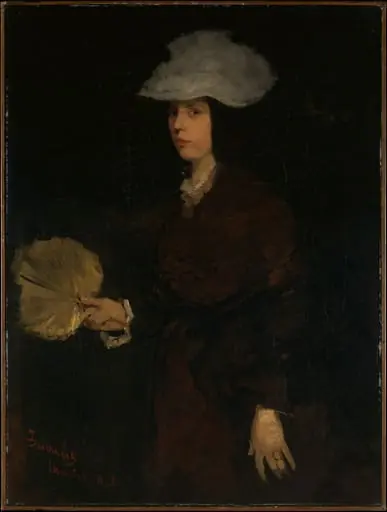 Lady with Fan
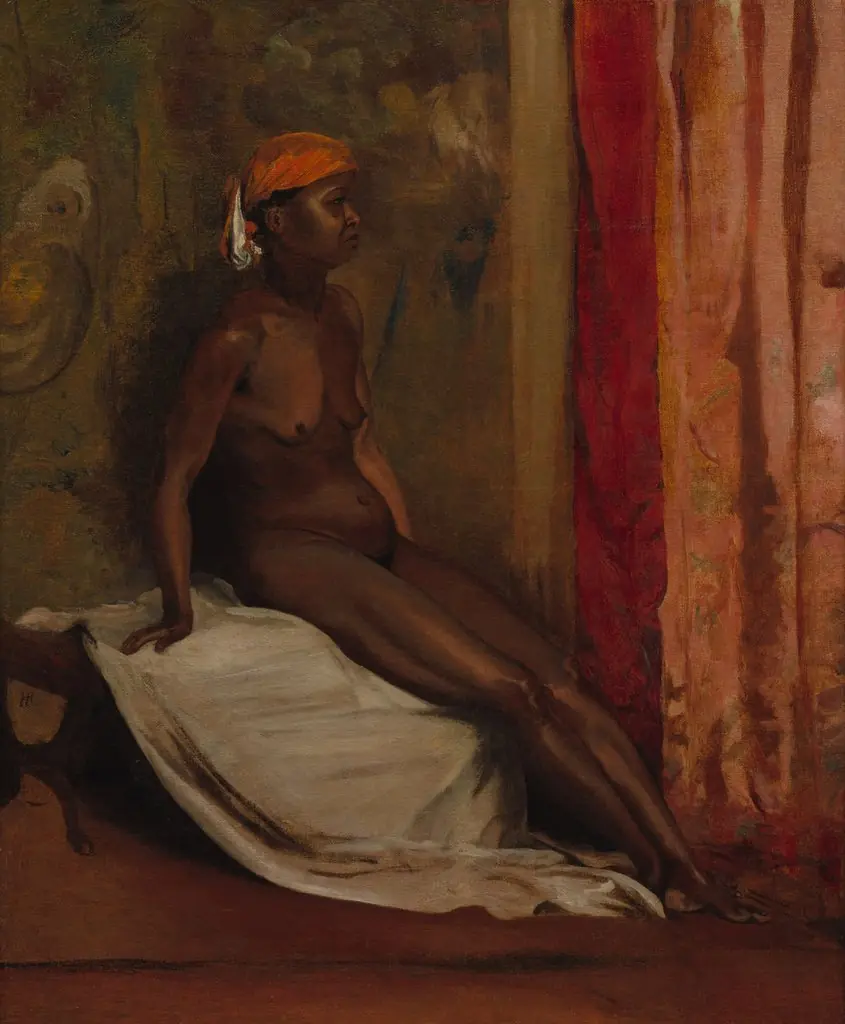 Seated African Woman
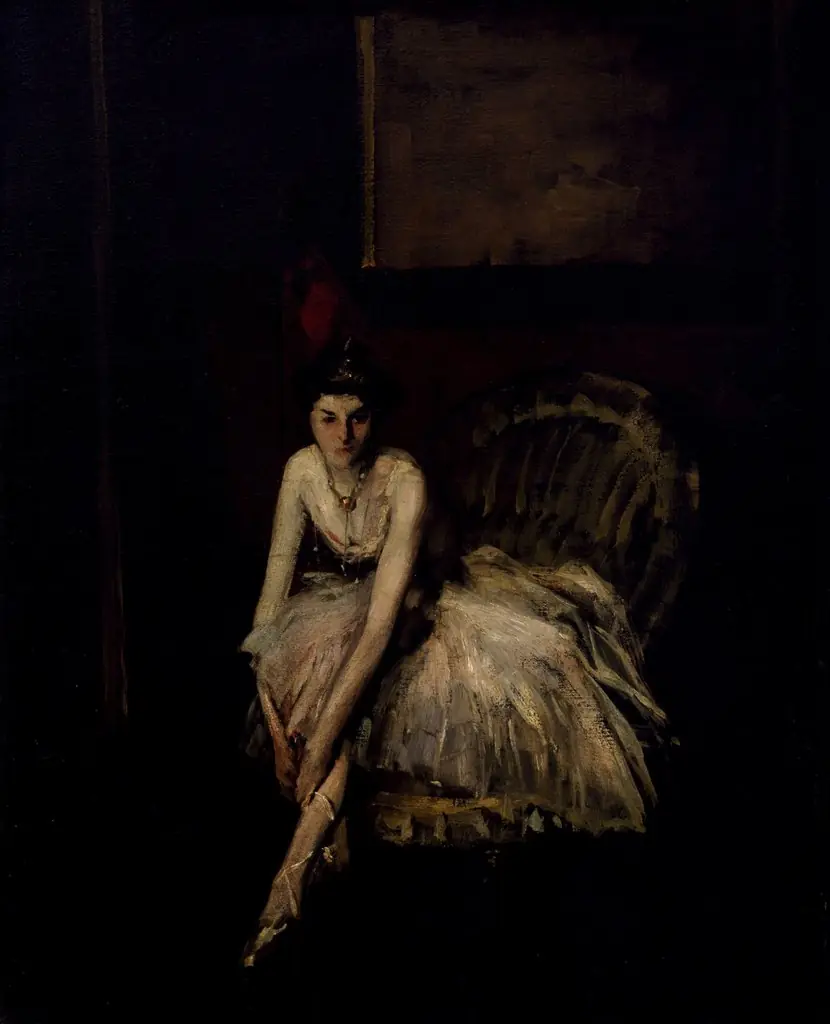 Ballet Dancer
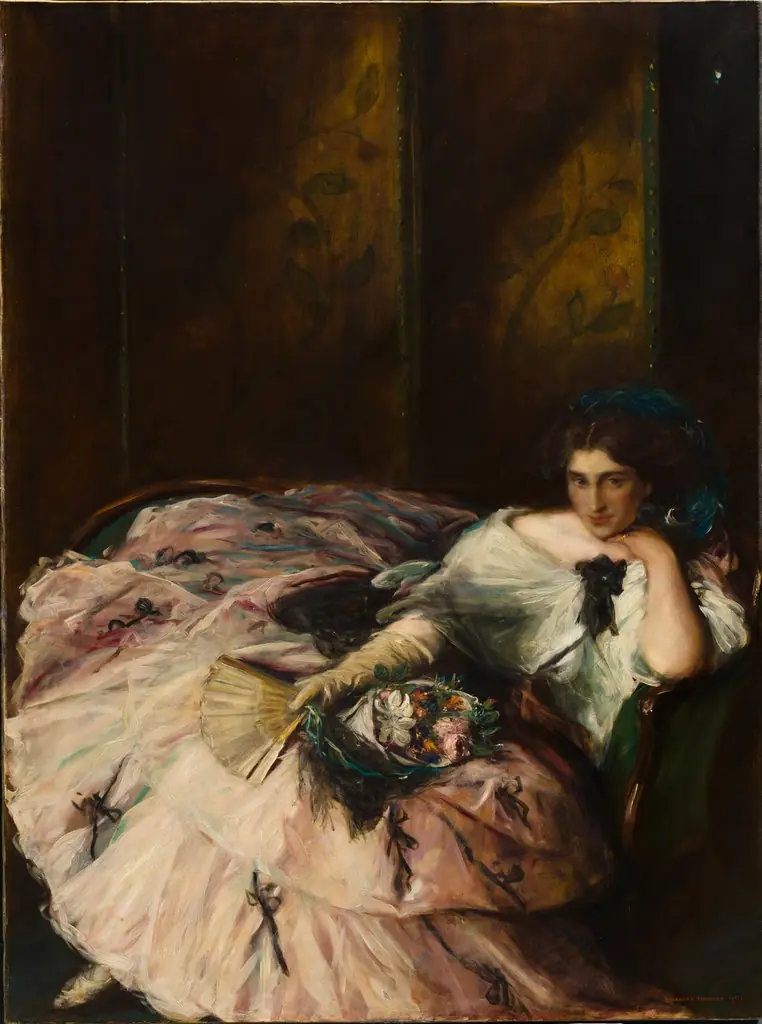 Souvenir of an "International Ball" (Portrait of Miss Kathleen Bruce)
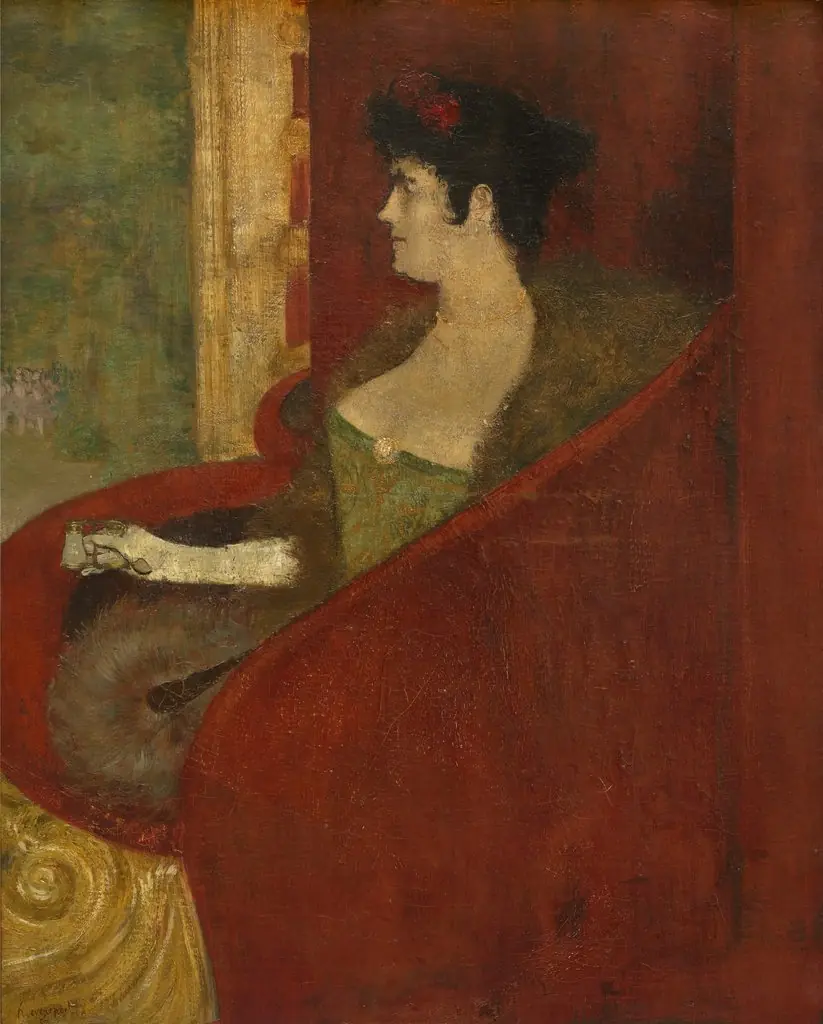 The Box
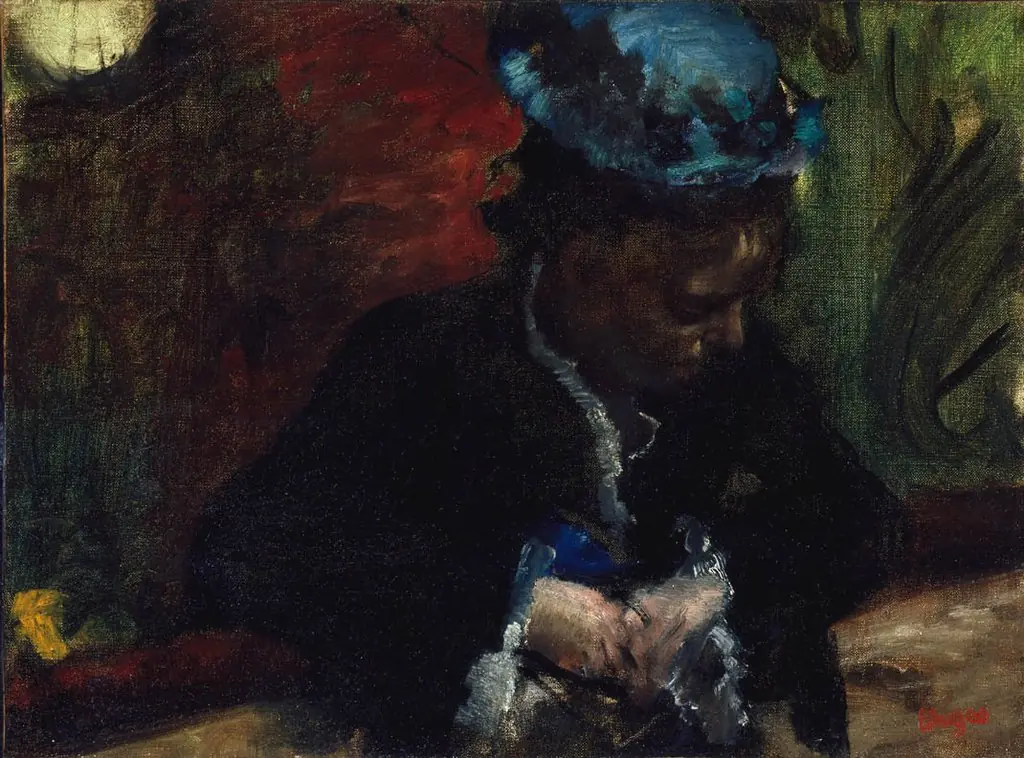 Au théâtre : femme assise au balcon
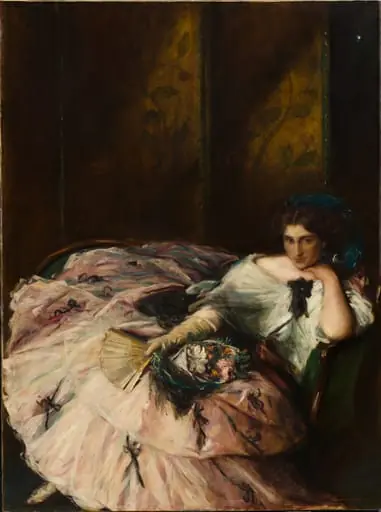 Souvenir of an "International Ball" (Portrait of Miss Kathleen Bruce)
 Study after the Model (Geesje Kwak?)
 The actress Kitty Fisher as Danae
- Seated African Woman