Artwork
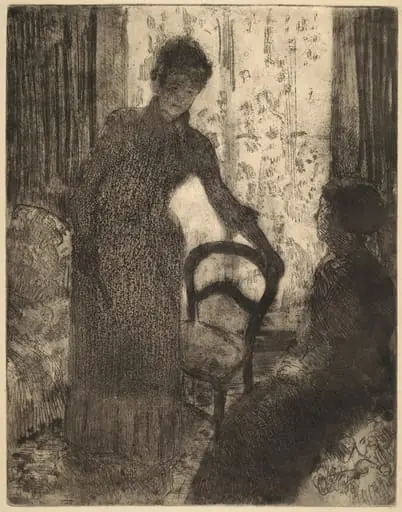
Mary Cassatt at the Louvre: The Etruscan Gallery
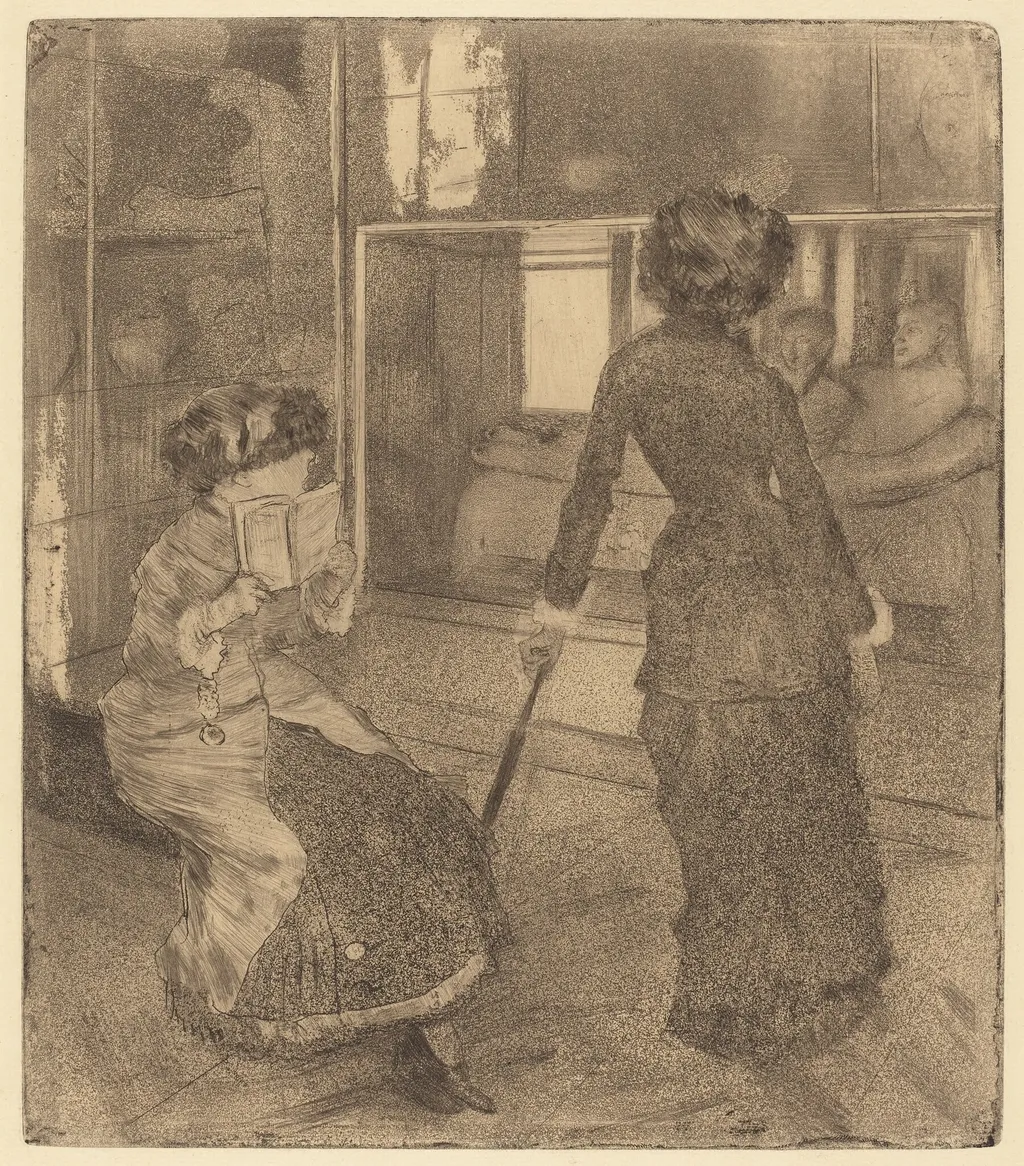
Mary Cassatt at the Louvre: The Etruscan Gallery is an ink print by the Impressionist artist Edgar Degas. It dates from 1880 and is held in the collection of the National Gallery of Art.
- Inscription
- Inscribed:recto: in graphite, in later hand, along bottom: D30 D30 / K827 Au Louvre: Musée des Antiques 207 A53; verso: in graphite, in later hand, at lower center: S [circled] / G; in graphite, in later hand, at lower right: HCO
- Markings
- Marked:recto: none; verso: at lower right, stamped in red: ATELIER / ED. DEGAS (Lugt 657); at lower left, stamped in black: George M. La Monte (Lugt L.1181c)
About this work
Overview
Mary Cassatt at the Louvre: The Etruscan Gallery is a print created by Edgar Degas in 1880 using multiple techniques on laid paper. It showcases Degas's skill in printmaking and his interest in capturing figures in interior settings.
Subject & Meaning
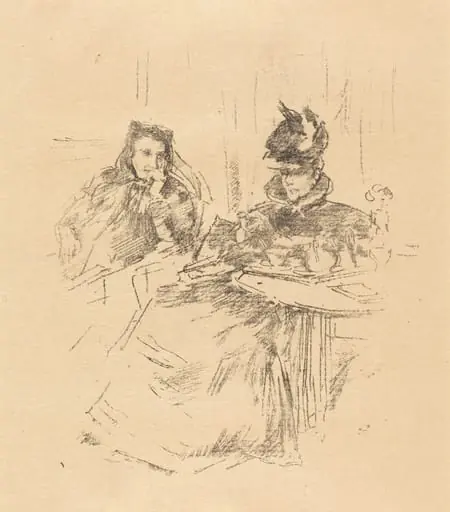
The print depicts Mary Cassatt and another woman seated on a stone bench in the Louvre's Etruscan Gallery, surrounded by indistinct artworks. The scene reflects Degas's focus on cultural settings and social observation.
Technique & Style
The work combines soft-ground etching, drypoint, aquatint, and etching, resulting in a textured, grainy effect. Shading is used to convey fabric folds and the women's poses, demonstrating Degas's draftsmanship and versatility with different media.
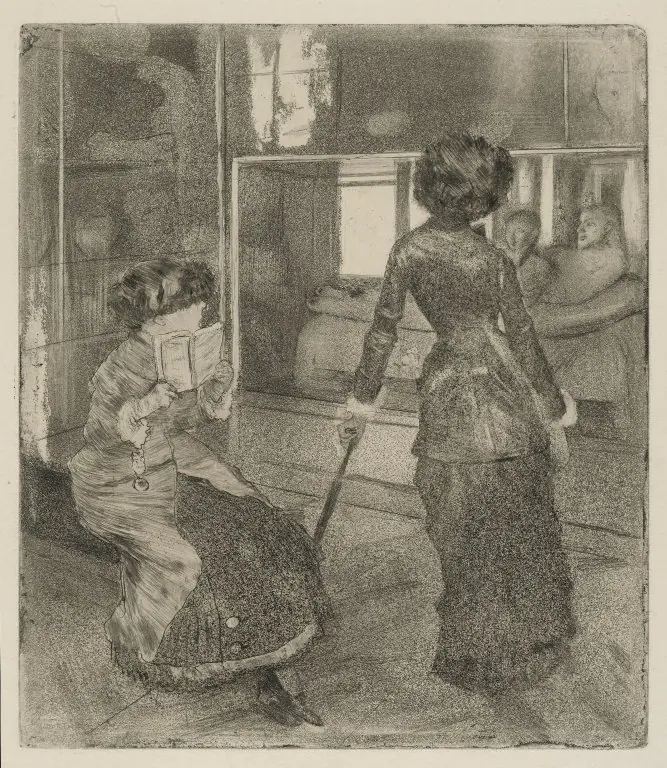
Own this work as a print
Artist & collection
Artist
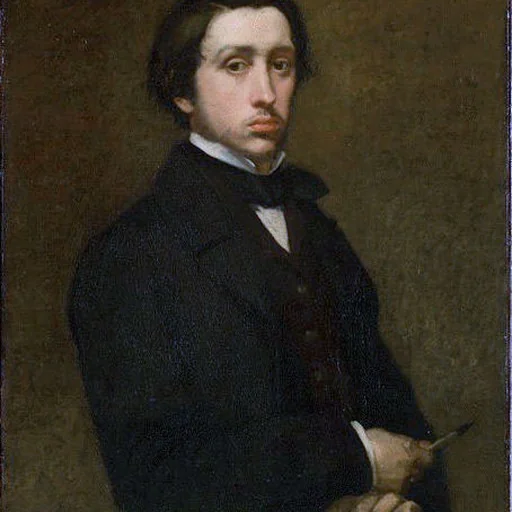
Born Hilaire-Germain-Edgar De Gas on 19 July 1834 in Paris, Edgar Degas came from an affluent banking family with aristocratic roots and spent his childhood among the cultivated circles of the French capital.