Artwork
Doña Antonia de Ipeñarrieta y Galdós and Her Son Don Luis
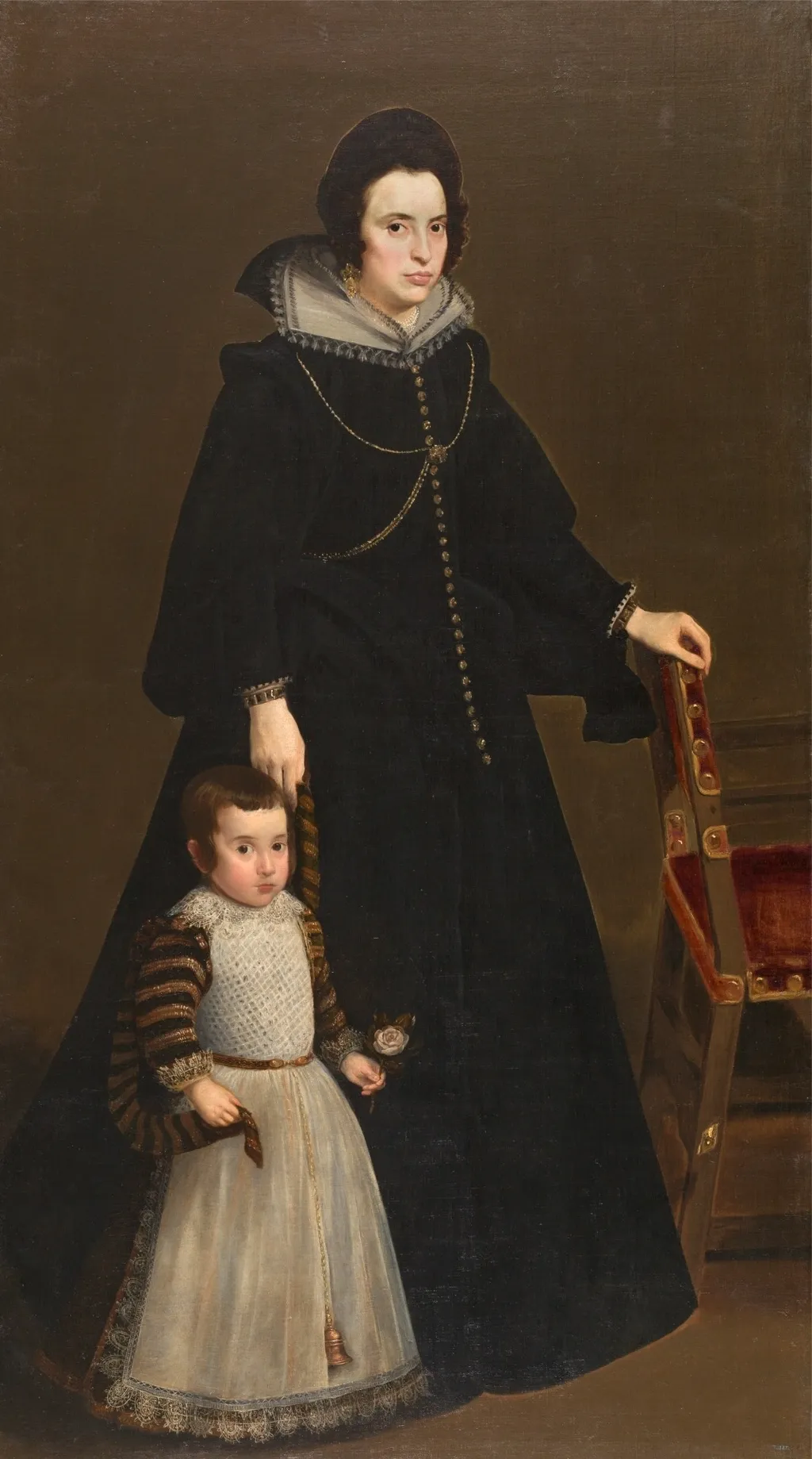
Doña Antonia de Ipeñarrieta y Galdós and Her Son Don Luis is an oil painting by the Baroque artist Diego Velázquez. It dates from 1632 and is held in the collection of the Museo del Prado.
About this work
Subject & Meaning
Technical analysis reveals the child's figure was likely painted simultaneously with the mother, despite earlier theories suggesting a later addition.
The painting depicts Doña Antonia de Ipeñarrieta and her son, Don Luis, standing in an atmosphere of elegant melancholy. Antonia, a noblewoman and lady-in-waiting, leans her left hand on the back of a chair, a gesture signifying her courtly privilege to sit, a rare honor for a woman in the Spanish court. Her son, Luis, stands beside her wearing a striped tunic and holding a rose in his left hand while clutching his mother's sash with his right.
Technical analysis reveals the child's figure was likely painted simultaneously with the mother, despite earlier theories suggesting a later addition. The composition emphasizes their social status and the somber reality of the family's situation, as the portrait was executed around 1632, shortly after the death of Antonia's second husband, Don Diego del Corral y Arellano.
Technique & Style
Created in 1632, this Baroque portrait is executed in oil paint on canvas, measuring 215 cm by 110 cm. Technical analysis by the Museo del Prado reveals a white ground preparation that is notably lighter in the areas of the heads, where a fine white contour line was applied to create relief. The background consists of a grey-earth layer painted over the figures using a thin application of pigment directly onto the grey-steel base, with a distinct light line separating the subjects from the backdrop. Radiographs indicate significant pentimenti, particularly in the child's hand position holding a flower, and show the figure of the son partially superimposed over the mother's form.
Velázquez employed rapid, brief brushstrokes for the ornamental details of the lace and the child's striped tunic, contrasting with the economical rendering of the mother's rigid collar and dark, greenish-black dress.
History & Provenance
The specific circumstances of the commission and the exact execution date remain undocumented, though a payment of 800 reales made by the sitter in December 1624 establishes an early professional relationship with Diego Velázquez. Technical analysis of pigments and materials suggests the work was created between 1631 and 1632, coinciding with the death of the sitter's second husband and the creation of his portrait. While some critics previously hypothesized the child's figure was a later addition, radiographic evidence reveals pentimenti and continuous technique across both figures, indicating a unified execution.
The painting remained in the family until 1668, appearing in an inventory of the Corral family at the Palacio de Narros in Zarautz. It later passed to the Marquises of Narros before reaching Madrid in the mid-nineteenth century. In 1905, the XV Duchess of Villahermosa, a seventh-generation descendant of the sitter, bequeathed the work to the Museo del Prado alongside its pendant portrait of Don Diego del Corral y Arellano.
The work is held at the Museo del Prado, Madrid, where it entered the collection in 1905 as a bequest from María del Pilar Azlor de Aragón y Guillamas, XV Duchess of Villahermosa, a seventh-generation descendant of the sitters. It is inventoried as accession number P001170 within the museum’s holdings.
The painting was exhibited in 1989 as part of the Velázquez retrospective at The Metropolitan Museum of Art, New York.
Context
Scholarship on Doña Antonia de Ipeñarrieta y Galdós and Her Son Don Luis often centers on debates regarding the painting's execution date and the involvement of Velázquez's workshop. While technical studies at the Museo del Prado reject the theory that the child was a later addition, critics like José Camón Aznar have noted a perceived monotony in the woman's dress compared to the virtuosity of the faces, suggesting the garment may have been painted by another hand before Velázquez retouched it. Jonathan Brown has similarly pointed to the child's stiffness as evidence of workshop participation, despite radiographic evidence showing complex pentimenti and unified brushwork in the background and lace.
The work is situated within Velázquez's early Madrid period, where he began reinterpreting the long strokes of Juan Pantoja de la Cruz to achieve greater expression and a distinctive golden light. Art historians also analyze the composition's social symbolism, particularly the gesture of offering the chair, which signifies the sitter's courtly privilege to sit in the presence of the Prince of Asturias.
Overview
Diego Velázquez’s 1634 oil portrait depicts Doña Antonia de Ipeñarrieta y Galdós together with her young son, Don Luis. The canvas, now part of the Prado Museum’s collection, presents the pair in a composed, restrained pose that reflects the conventions of Spanish court portraiture of the early seventeenth century.
Artist & collection
Artist
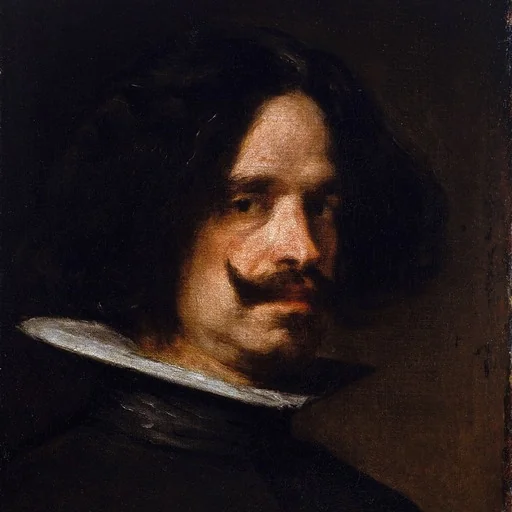
Diego Rodríguez de Silva y Velázquez was a Spanish Baroque painter, the leading artist in the court of King Philip IV of Spain and Portugal, and of the Spanish Golden Age.

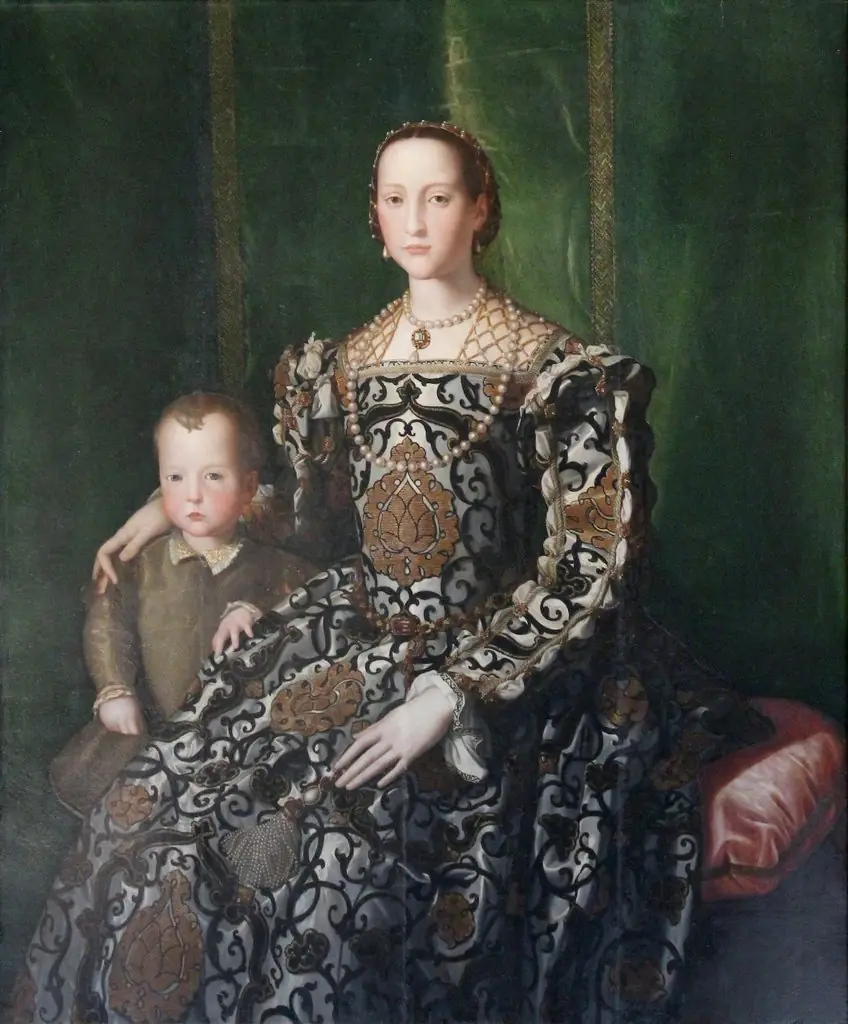
- Portrait of Eleanor of Toledo and her son Garzia de' Medici
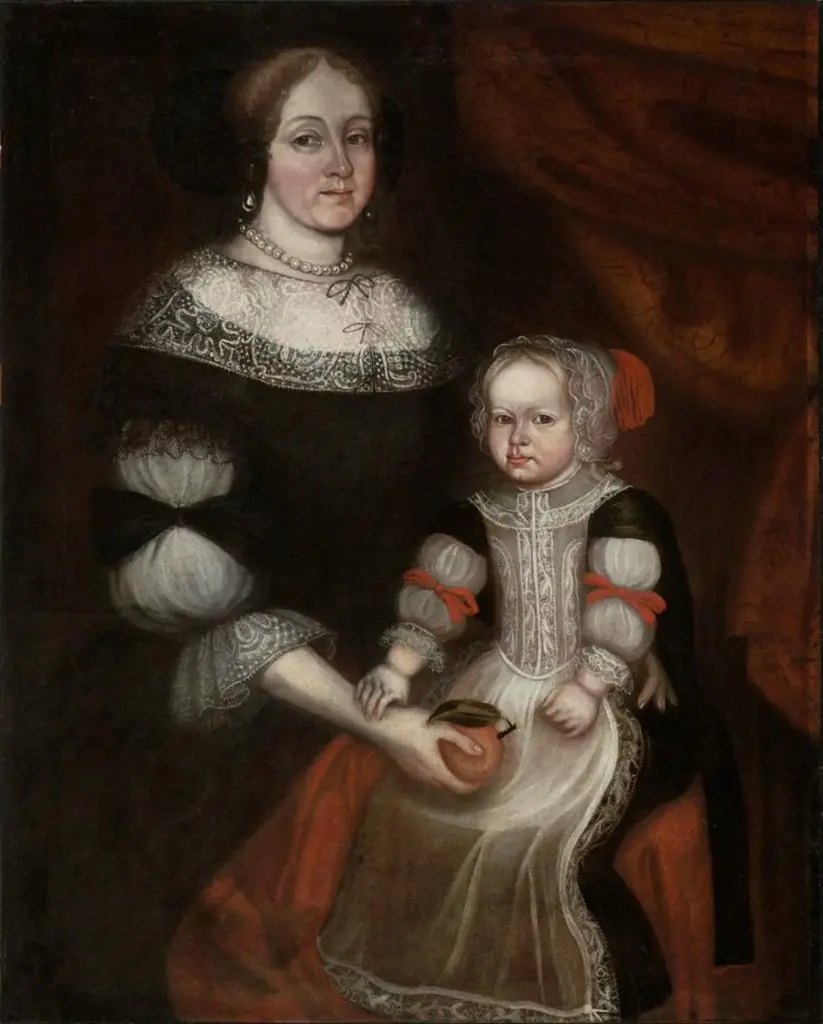 Mrs. Richard Patteshall (Martha Woody) and Child
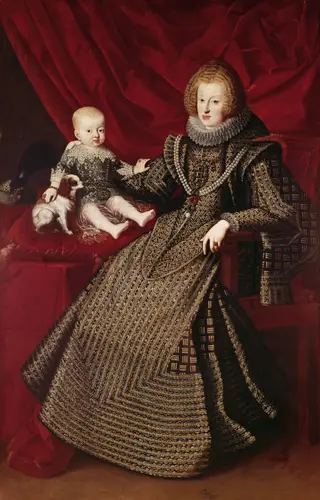 Infantin Maria Anna (1606-1646), Kaiserin, in ganzer Figur mit ihrem erstgeborenen Sohn Ferdinand (1633-1654)
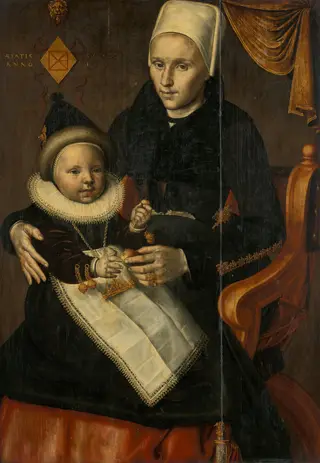 Mother and Child in Noord-Holland Costume
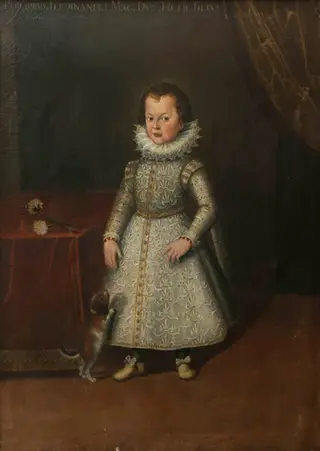 Kinderbildnis des Philipp, Sohn des Großherzogs Ferdinand I. von Toskana
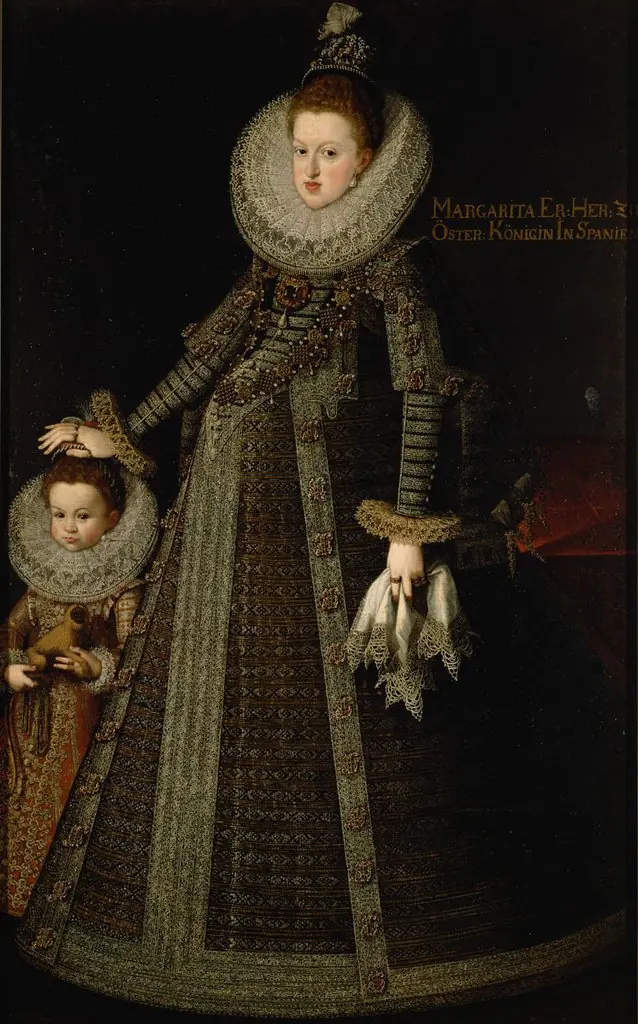 Erzherzogin Margarete (1584-1611), Königin von Spanien mit einem Kind, das ein Löwenäffchen hält
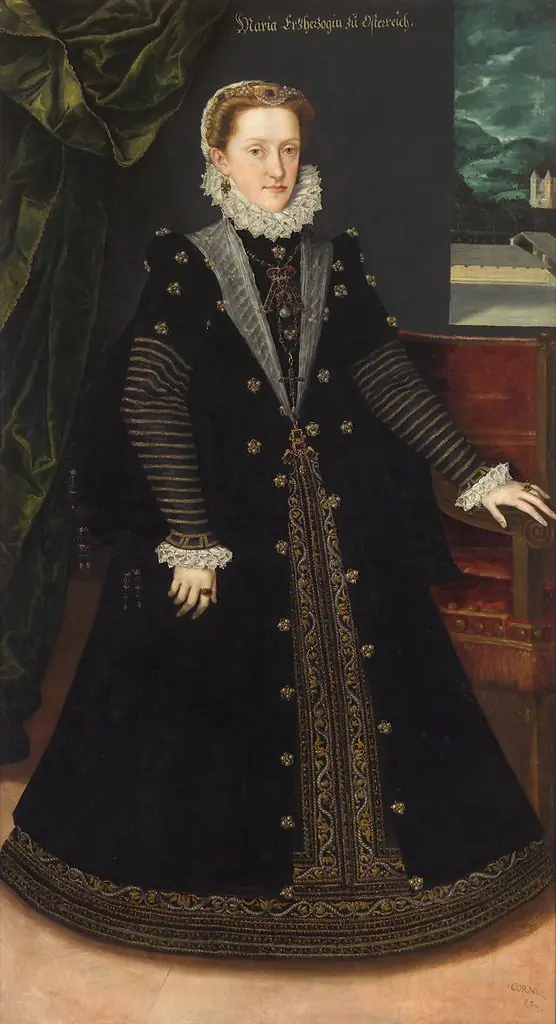 Portrait of Archduchess Mary Anna of Bavaria
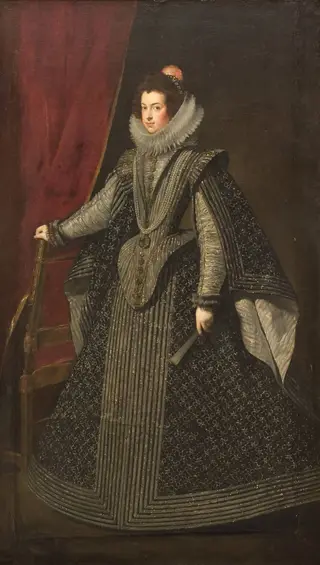 Isabella of Bourbon. First Queen of King Philip IV
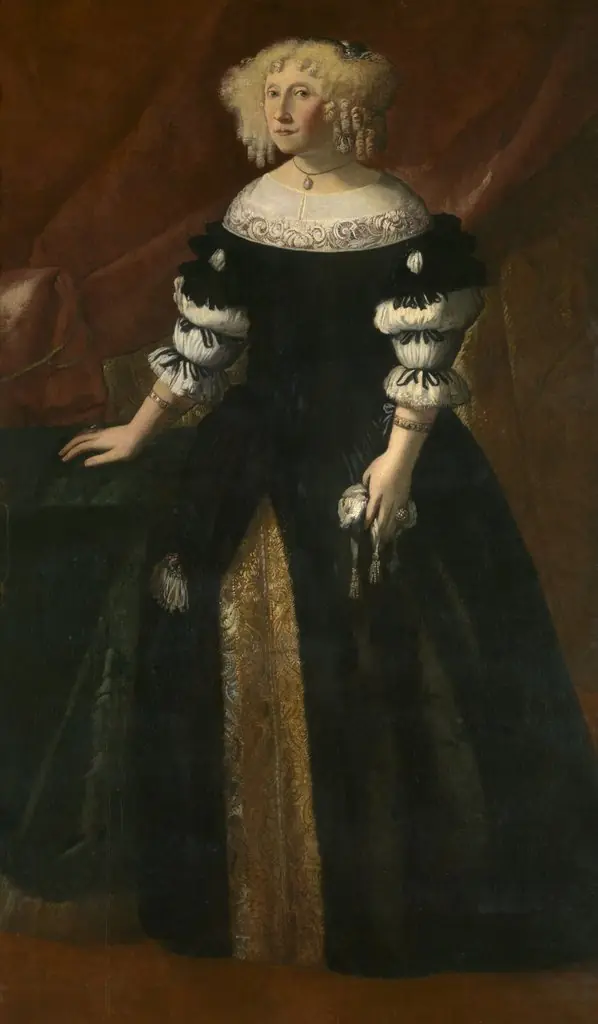 Portrait of a Woman
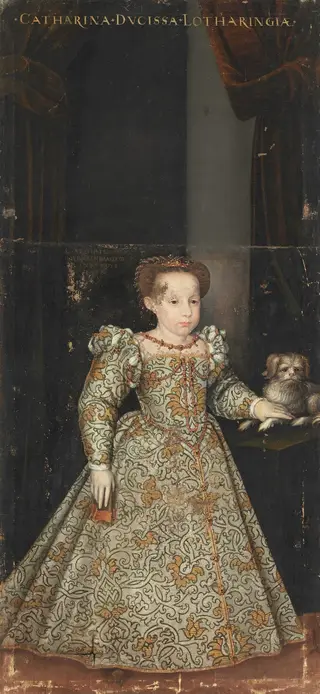 Katharina, Tochter Karls III. von Lothringen (1573-1648)
 Catarina de' Medici (1593-1629)
 Duchess Sibylle (1557-1627) von Jülich-Cleve-Berg