Artwork
Het bestuur van het Brugse chirurgijnsambacht
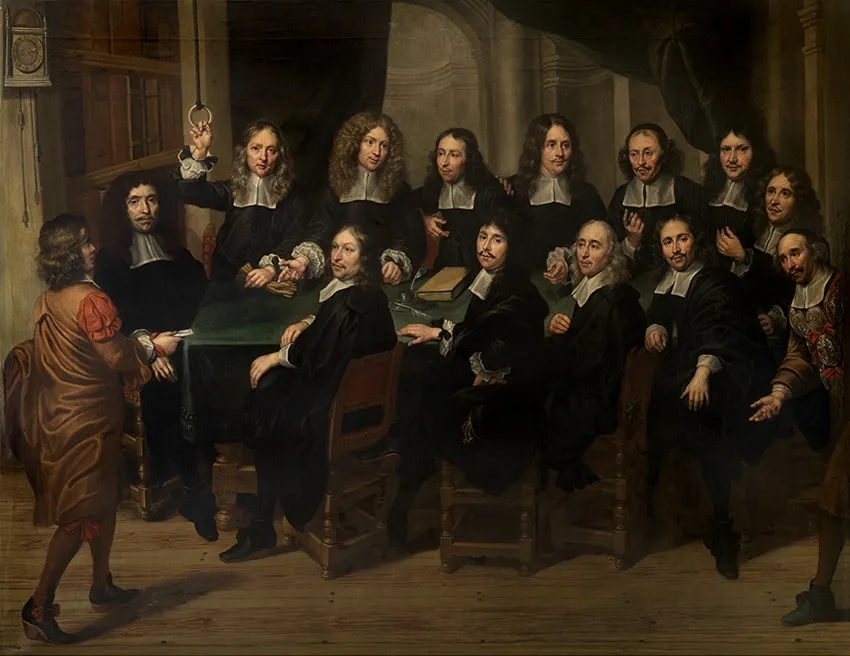
Het bestuur van het Brugse chirurgijnsambacht is an oil painting by the French Classical Baroque artist Philippe Bernard. It dates from 1689 and is held in the collection of the Groeningemuseum.
About this work
Overview
The work is a significant example of seventeenth-century Flemish group portraiture and serves as a key document of the city's medical and social history.
Het bestuur van het Brugse chirurgijnsambacht is a large oil painting by the Flemish artist Philippe Bernaerdt, dated 1677. Measuring 238 by 310 centimetres, it depicts the governing board of the Bruges barber-surgeons' guild and is held in the collection of the Groeningemuseum in Bruges, with the inventory number 0000.GRO0441.I. The work is a significant example of seventeenth-century Flemish group portraiture and serves as a key document of the city's medical and social history. Bernaerdt, also known by variants including Philips Bernaert and Beernaerts, was active in Bruges from approximately 1660 until his death in 1683, and this painting represents one of his most important surviving commissions.
Subject & Meaning
The painting portrays twelve members of the guild council, comprising deans and past deans of the barber-surgeons' craft, gathered around a long table covered with green drapery. At the head of the table sits Thomas Montanus, identified as the most prominent physician in Bruges at that time. The composition includes a clerk standing at the far right, distinguished by ornate patterned clothing, and a younger man entering from the left who may represent a candidate seeking admission to the guild. The scene is rich with symbolic and professional objects: a book and small purse rest on the table, a wall clock hangs at upper left, and one standing figure holds aloft a metal ring, possibly a surgical instrument or emblem of office. The nineteenth-century addition of names on the frame or a list has aided identification of the sitters. The arrangement conveys both the collective authority of the guild and the individual status of its members, with gazes directed variously toward the viewer and one another in conversational groupings that suggest active deliberation rather than static posing.
Technique & Style
Executed in oil on canvas, the painting demonstrates a smooth finish in the rendering of faces and hands, contrasting with more textured brushwork in the depiction of fabrics, wood, and architectural elements. Light enters from the left, illuminating the figures' faces and hands while leaving much of the background in shadow, a treatment that focuses attention on the human subjects and creates dramatic depth. The palette is dominated by browns, blacks, and whites, with strategic touches of red and green in the drapery and garments. The composition is set within an interior featuring wooden plank flooring, a column, arched structures, and dark draped fabric. This combination of precise facial modelling with looser handling of secondary elements is characteristic of Flemish group portraiture of the period, balancing individual likeness with collective representation.
History & Provenance
The painting was commissioned in 1677, a pivotal year in Bernaerdt's career, as it was also the year he was accepted as a free master in the Bruges painters' guild. The work is dated and signed by the artist as Philips Bernaert. It has remained in Bruges and is now part of the collection of Musea Brugge, housed at the Groeningemuseum. The painting has been documented in scholarly literature including studies by A. Janssens de Bisthoven (1964), Jean-Luc Meulemeester (1984), and Robert A. C. Pannier (2008), and has been photographed by Hugo Maertens for artinflanders.be. Its public domain status allows for broad scholarly and public access.
Context
Bernaerdt's oeuvre, though not extensive, reveals a painter working within the traditions of Flemish Baroque portraiture while responding to local Bruges patronage. Born circa 1620, possibly in Ghent, he worked in both Ghent and Bruges before establishing himself firmly in the latter city. The year 1677 was particularly significant: besides this group portrait, he also painted De Raad van de Brugse chirurgijnen, another collective portrait of the dozen Bruges surgeons under Thomas Montanus's chairmanship. The following years saw further medical commissions, including De anatomische les (1679), which depicted the first anatomy lesson held in Bruges and was executed in what has been described as the Dutch manner. The stylistic differences between these works suggest Bernaerdt's adaptability to varying commission requirements. The painting has served as a crucial reference point for identifying figures in related works, notably providing the basis for identifying physicians in an anatomical lesson painting that was once attributed to Bernaerdt but is now considered by another hand due to stylistic discrepancies.
Legacy
Het bestuur van het Brugse chirurgijnsambacht endures as a primary visual document of seventeenth-century Bruges medical organisation and civic governance. Its value extends beyond art history into the history of medicine, providing identifiable portraits of the city's leading practitioners at a moment when surgical and medical knowledge was undergoing significant development. The painting's influence on subsequent attribution and identification of related works, particularly the anatomical lesson once wrongly assigned to Bernaerdt, demonstrates its continued utility as a scholarly benchmark. Held in the Groeningemuseum, it remains accessible to researchers and the public, its public domain status facilitating reproduction and study. The work exemplifies how guild portraits functioned simultaneously as records of corporate identity, assertions of professional status, and vehicles for artistic ambition in the Flemish Baroque period.
Artist & collection
Artist
A French still-life painter from the late 1600s, Philippe Bernard filled dark backgrounds with gleaming objects.

- Members of the civic guard company of Captain Dirck Tholinx and Lieutenant Pieter Adriaenszn Raep
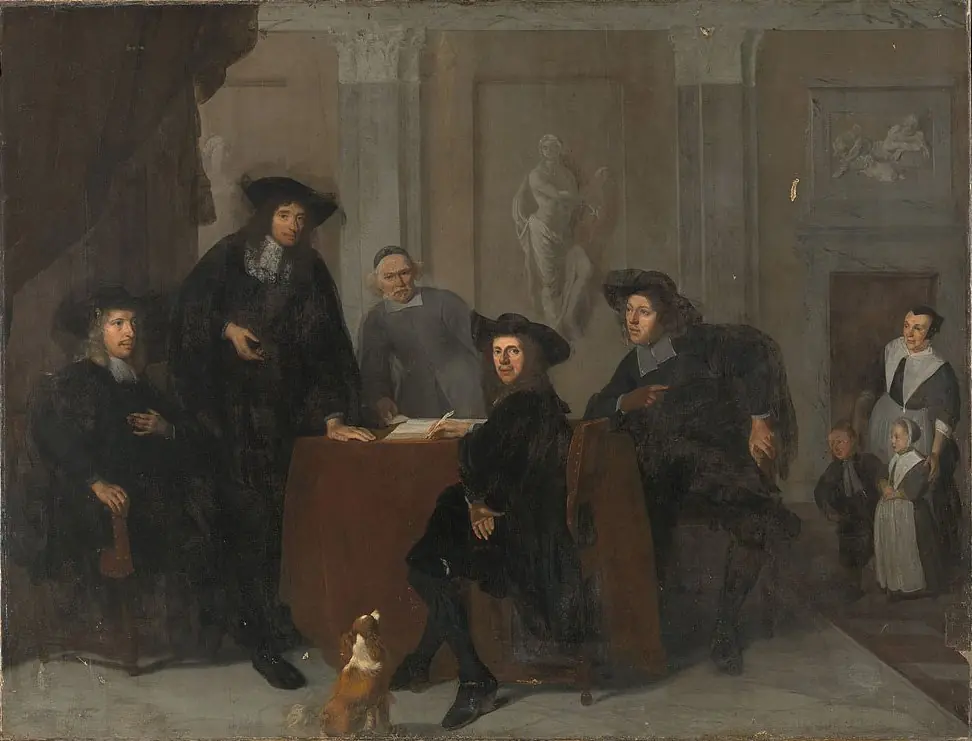 Regents of the Leper's house in Amsterdam
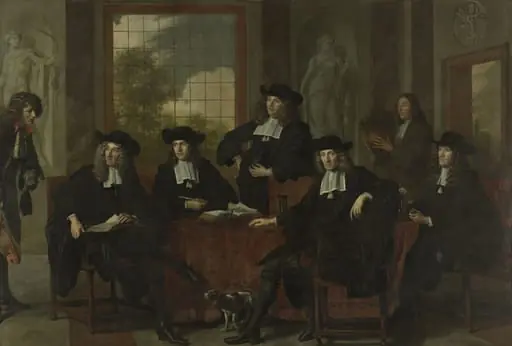 The Superintendents of the Collegium Medicum in Amsterdam, 1683
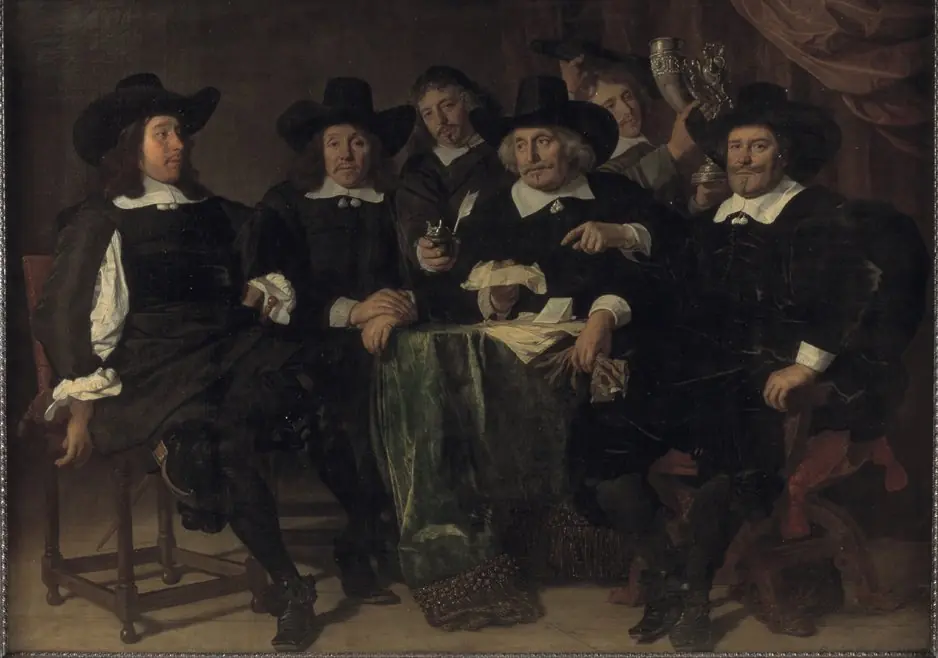 The directors of the Amsterdam civic guard of St. George in 1656
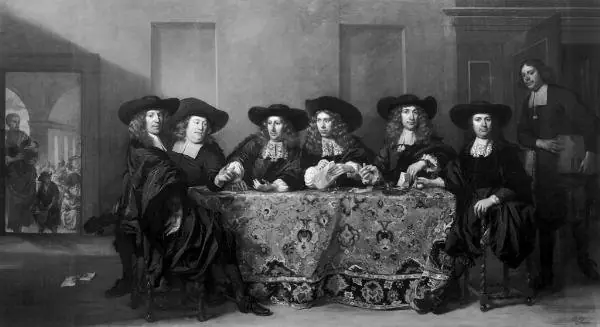 Six regents and the housemaster of the Oude Zijds Almshouse for the outdoor relief of the poor, Amsterdam, 1675
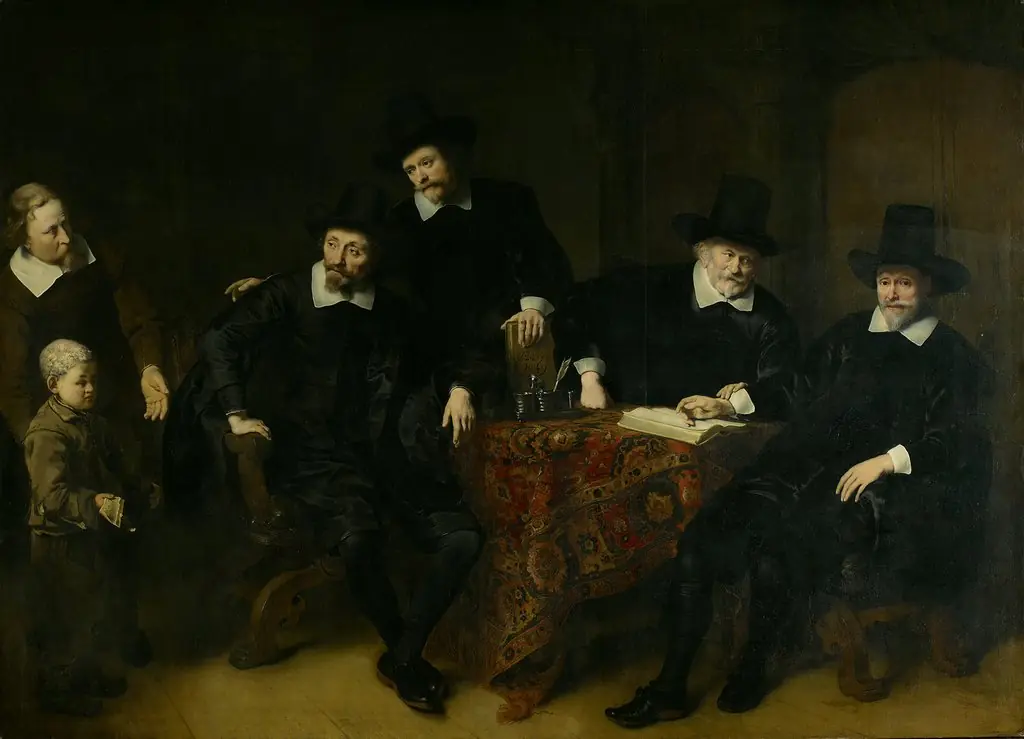 The Regents of the Leper's house in Amsterdam in 1649
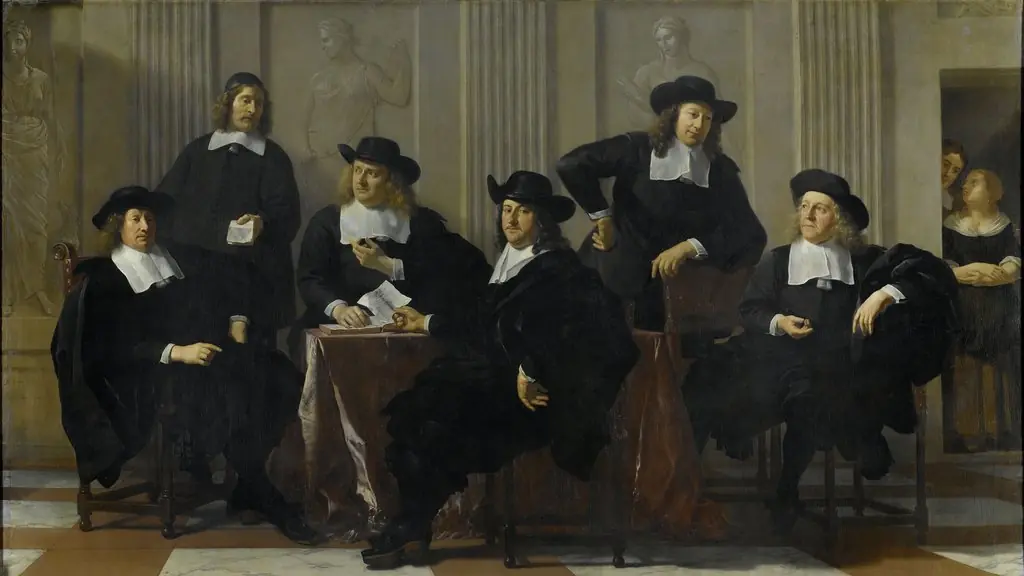 The Regents of the Spinhuis and Nieuwe Werkhuis, Amsterdam
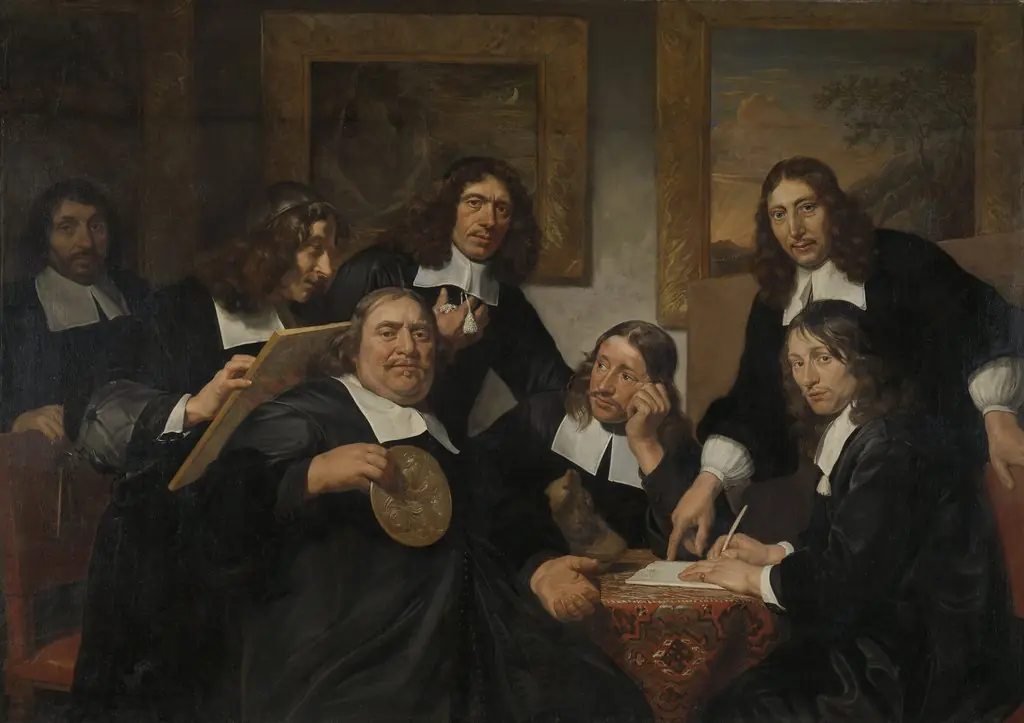 The governors of the guild of St. Luke, Haarlem, 1675
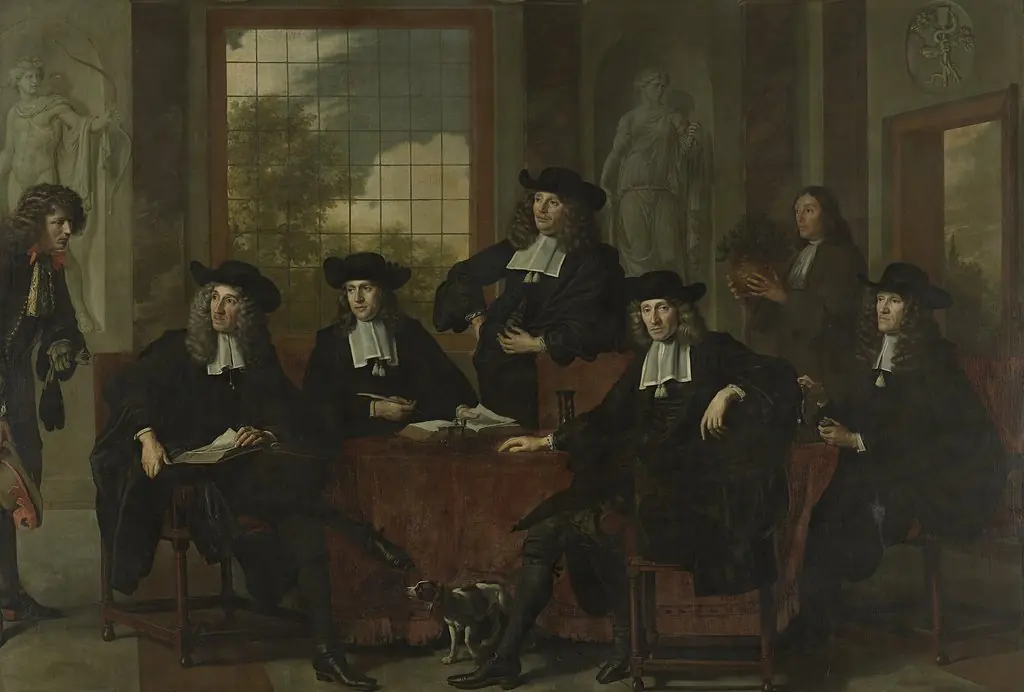 The superintendents of the Collegium Medicum in Amsterdam
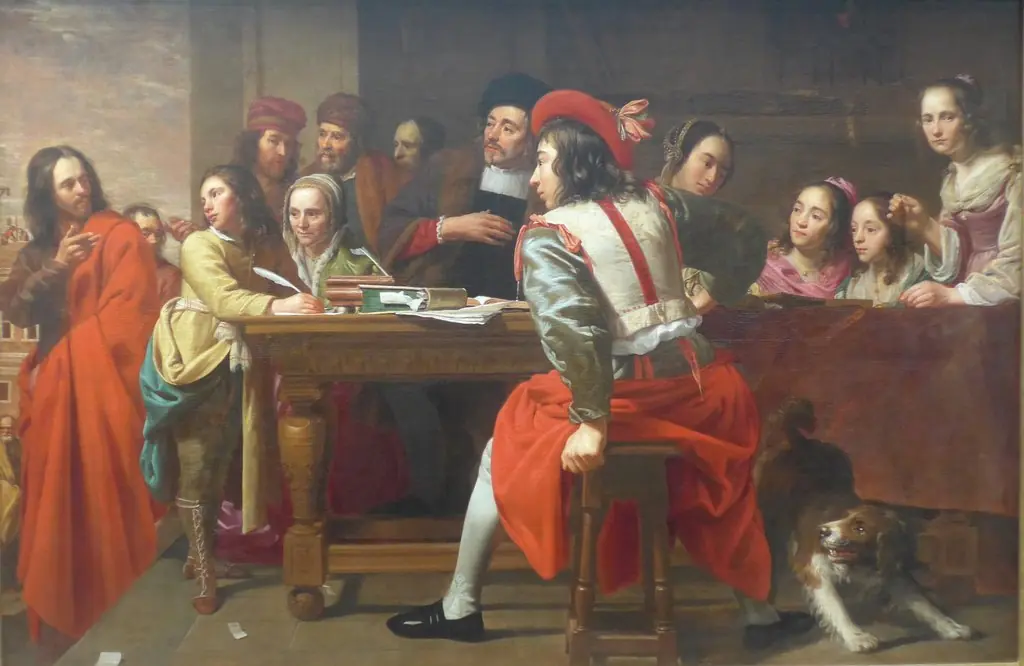 The calling of Matthew
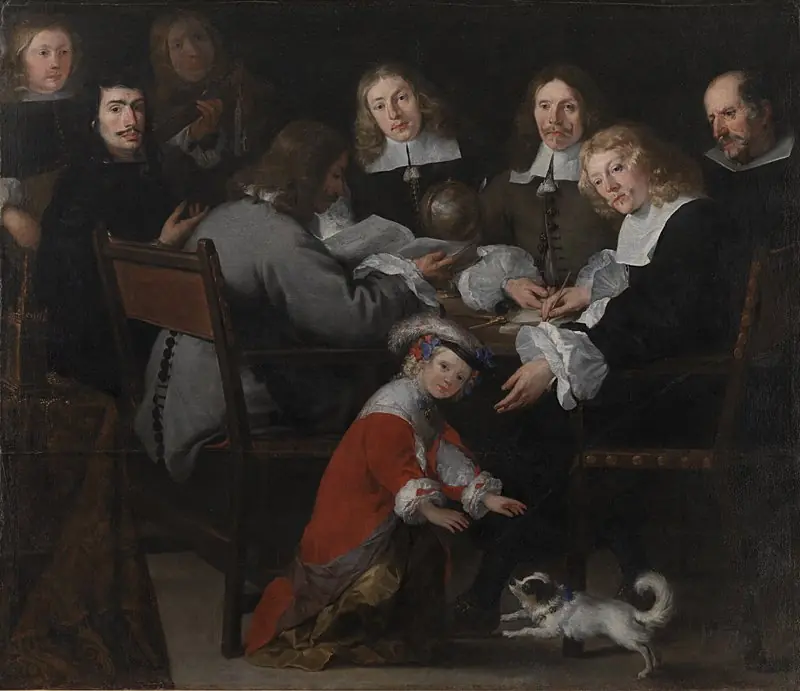 Ambassador C. Pedersen Lerche with his Staff
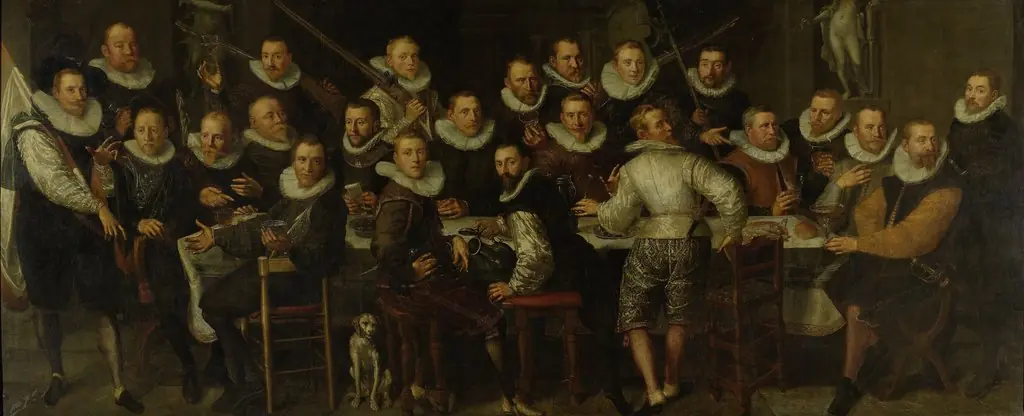 The Company of Captain Gillis Jansz Valckenier and Lieutenant Pieter Jacobsz Bas, Amsterdam, 1599