Artwork
Still Life with Dead Hare and Partridges
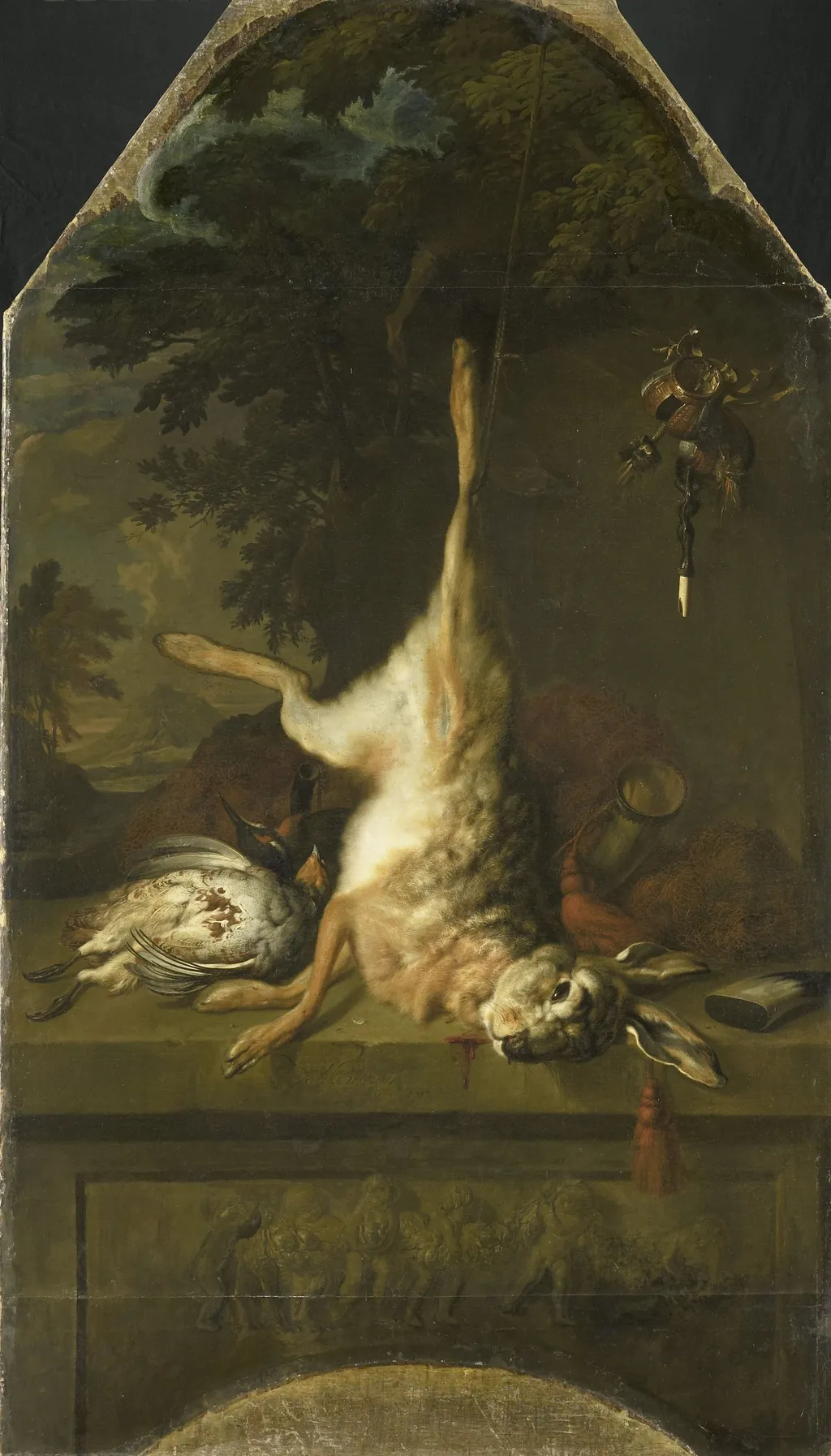
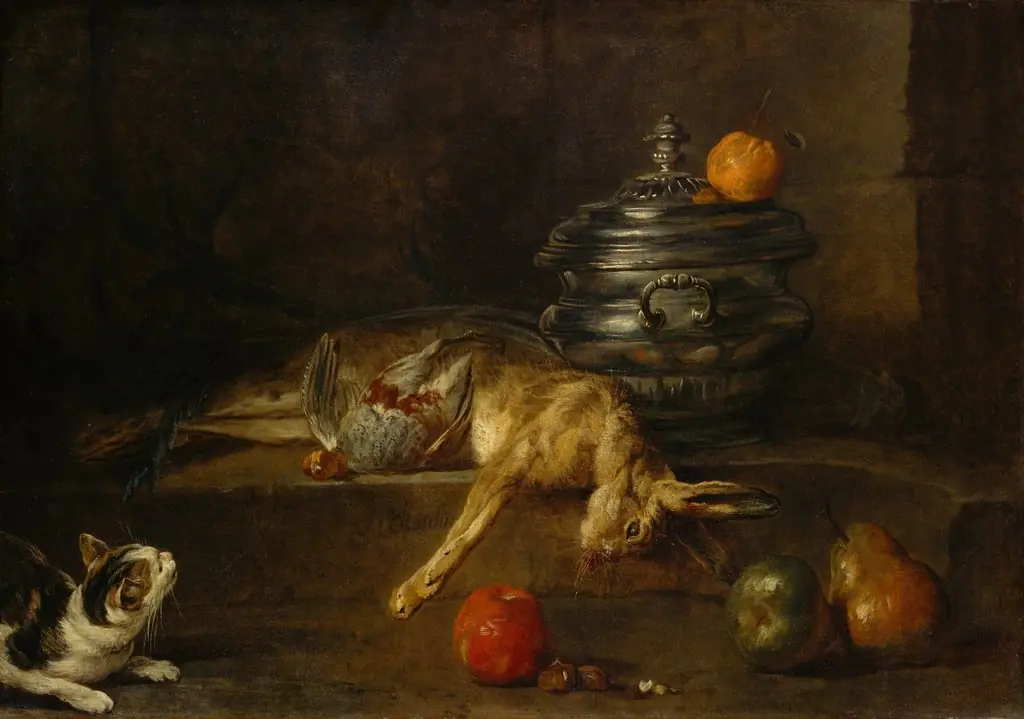
Still Life with Dead Hare and Partridges is an oil painting by the Rococo painting artist Dirk Valkenburg. It dates from 1717 and is held in the collection of the Rijksmuseum. Created in 1717, this oil painting presents a quiet, somber tableau of game.
About this work
Subject & Meaning
Dirk Valkenburg's 1717 oil painting presents a still life composition featuring a dead hare alongside partridges, specifically identified as grey partridges.
Dirk Valkenburg's 1717 oil painting presents a still life composition featuring a dead hare alongside partridges, specifically identified as grey partridges. The work focuses on the depiction of these hunted game birds and mammals, arranged as the central subjects of the canvas. While the piece serves as a representation of the hunt and its spoils, the available records describe the physical presence of the rabbits, hares, and birds without detailing specific allegorical symbols or deeper iconographic meanings often associated with such imagery in Dutch art.
History & Provenance
Dirk Valkenburg created the oil painting Still Life with Dead Hare and Partridges in 1717. Executed on canvas, the work depicts a grey partridge alongside hares. The painting entered the collection of Arnoldus Andries des Tombe at some point in its history. It is currently held by the Rijksmuseum.
Still Life with Dead Hare and Partridges is held in the collection of the Rijksmuseum. The work, created by Dirk Valkenburg in 1717, is executed in oil paint on canvas and measures 100 cm in height by 80 cm in width. Historical records indicate that the painting was previously owned by Arnoldus Andries des Tombe before entering the museum's holdings. The piece depicts rabbits, hares, and grey partridges, consistent with the still life genre.
Legacy
The painting has been recognised as an early example of Dutch still-life painting that influenced later animal painters in the 18th and 19th centuries, and it is frequently cited in art history as a representative work of the Dutch Golden Age still-life genre. Its presence in the Rijksmuseum collection and inclusion in scholarly inventories have contributed to its reputation as a notable piece within the museum's holdings.
Overview
Created in 1717, this oil painting presents a quiet, somber tableau of game. A hare hangs limp from a branch, its fur still appearing soft, while two partridges lie on a dark ledge, one with its head tucked beneath a wing. Hunting implements, a knife, a small pouch, and a birdcage, are scattered nearby, and a muted forest backdrop suggests a distant sky.
Technique & Style
Valkenburg employs a restrained palette and subtle chiaroscuro to model the fur and feathers, allowing light to caress the textures while deep shadows give volume. The brushwork is precise, especially in rendering the delicate plumage and the tautness of the hare’s limbs, reflecting the Rococo’s taste for elegant detail without excessive ornamentation.
Context
The piece belongs to a broader tradition of Dutch still-life that documented hunting trophies, a genre popular among the affluent classes of the early eighteenth century. Valkenburg’s focus on game aligns with his known interest in birds and fauna, reflecting both the scientific curiosity and the decorative tastes of his patrons.
Artist & collection
Artist
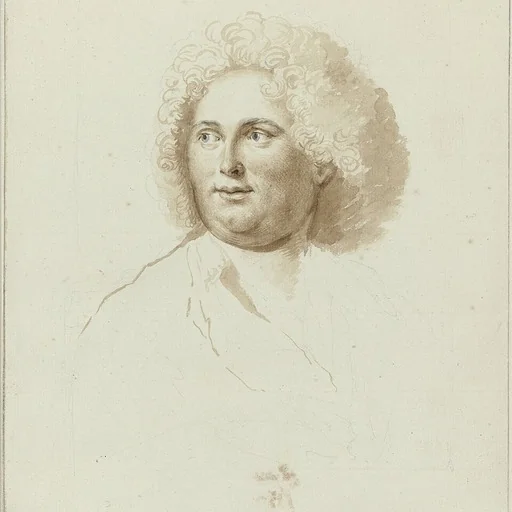
Dirk Valkenburg (1675, in Amsterdam – 1721, in Amsterdam) was a painter of the Dutch Golden Age.

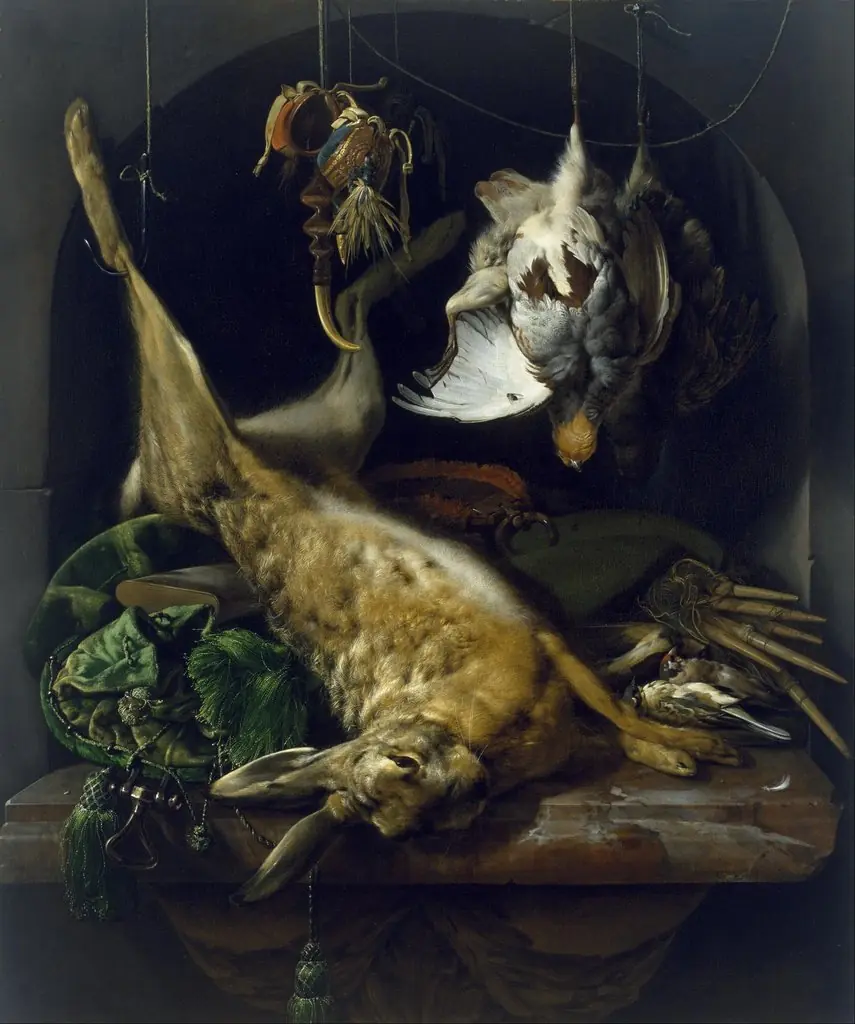
- Still Life of a Dead Hare, Partridges, and Other Birds in a Niche
 Still Life with a Hare
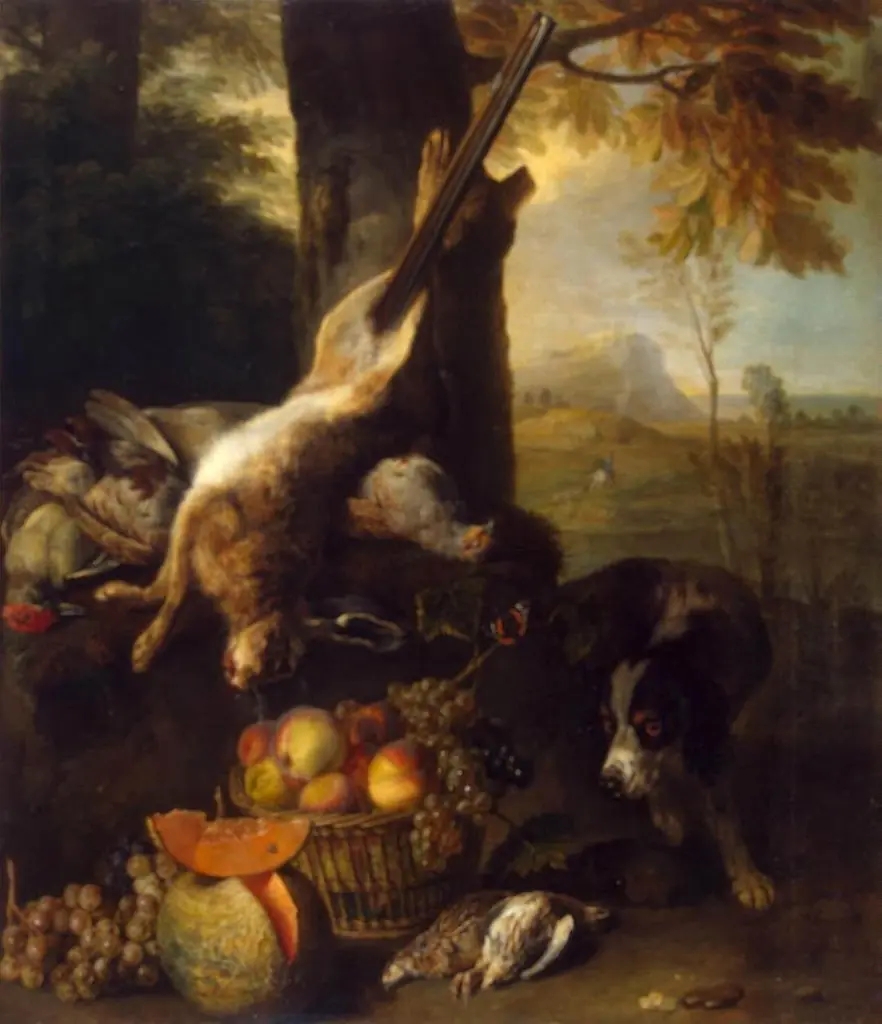 Still Life with a Dead Hare and Fruit
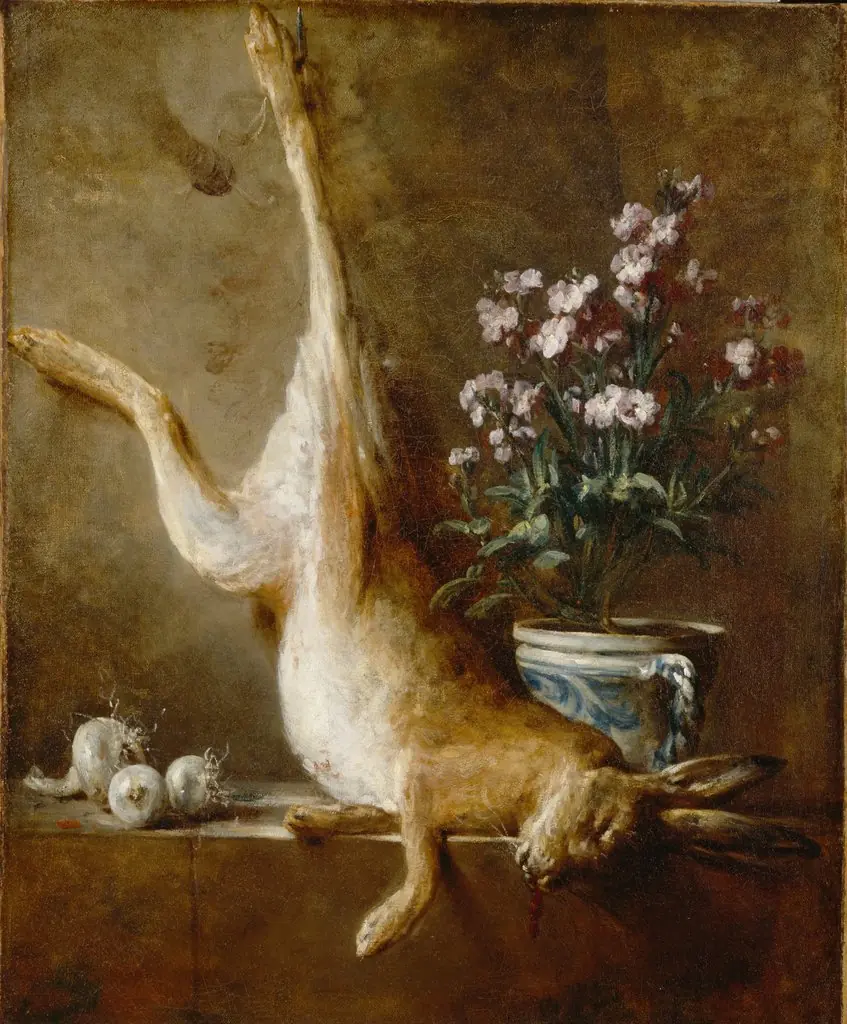 Still Life with Dead Hare
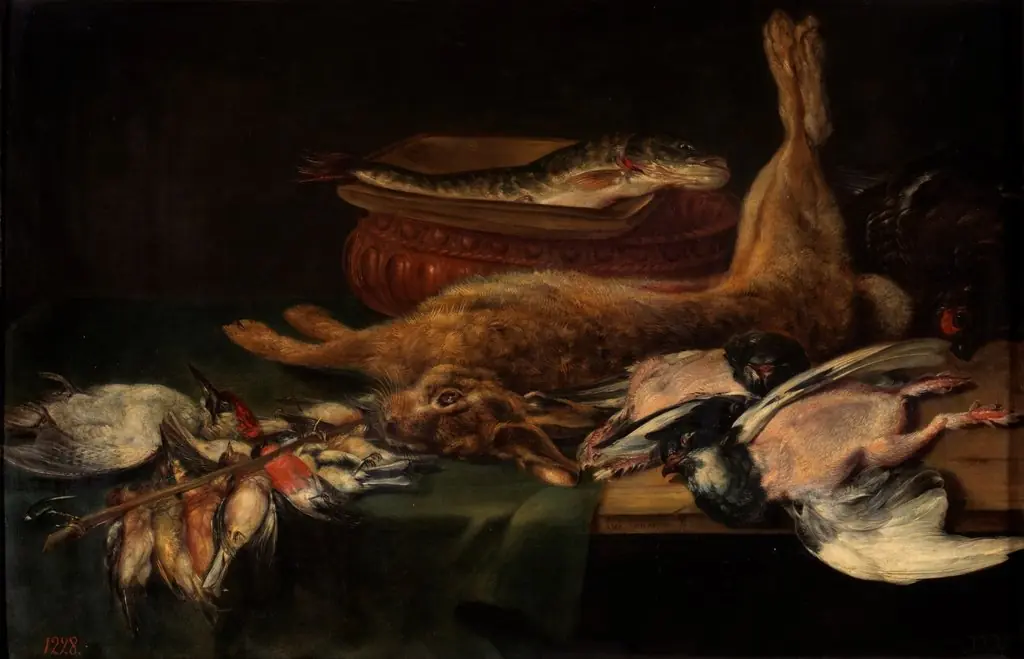 Still life with a hare, dead birds and fish
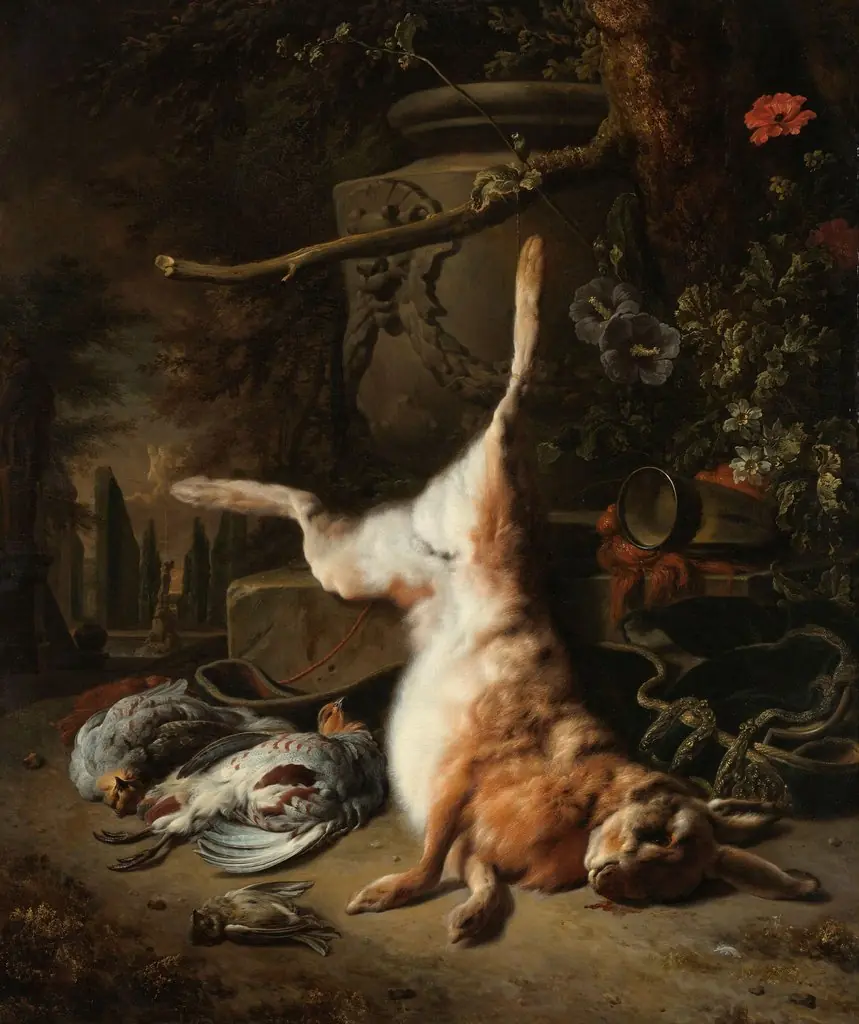 Still life with a Hare and Other Game
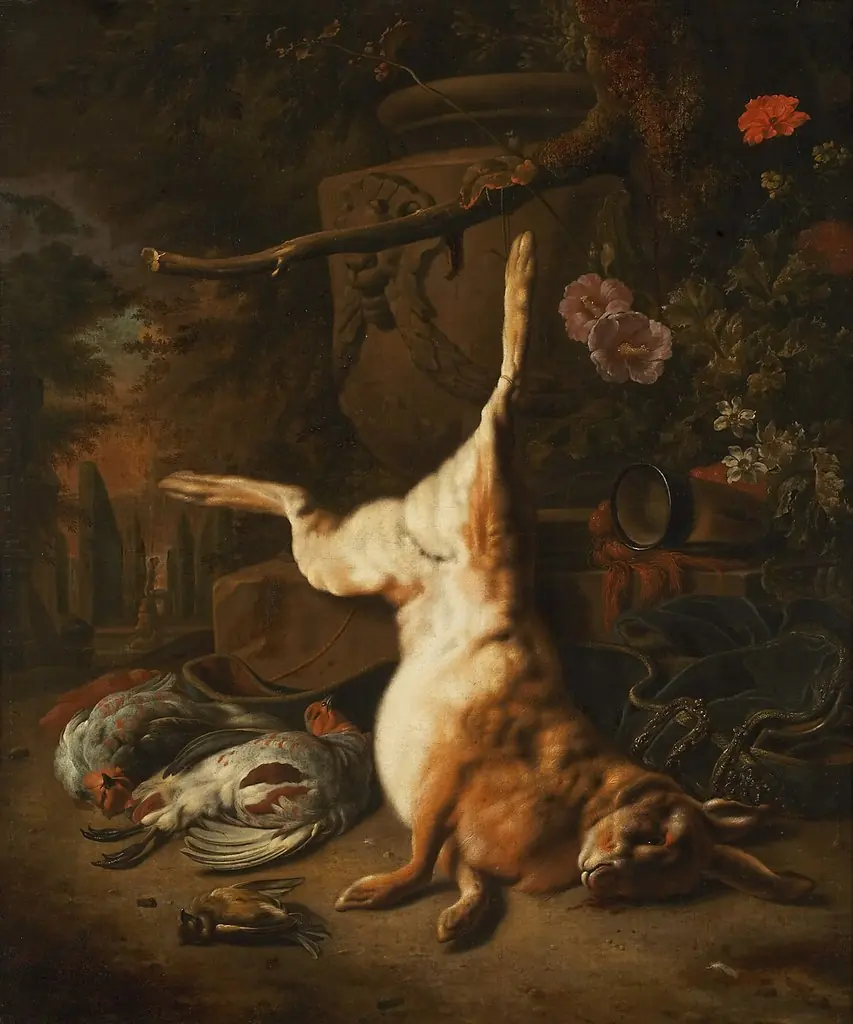 Still-life with dead hare in a park
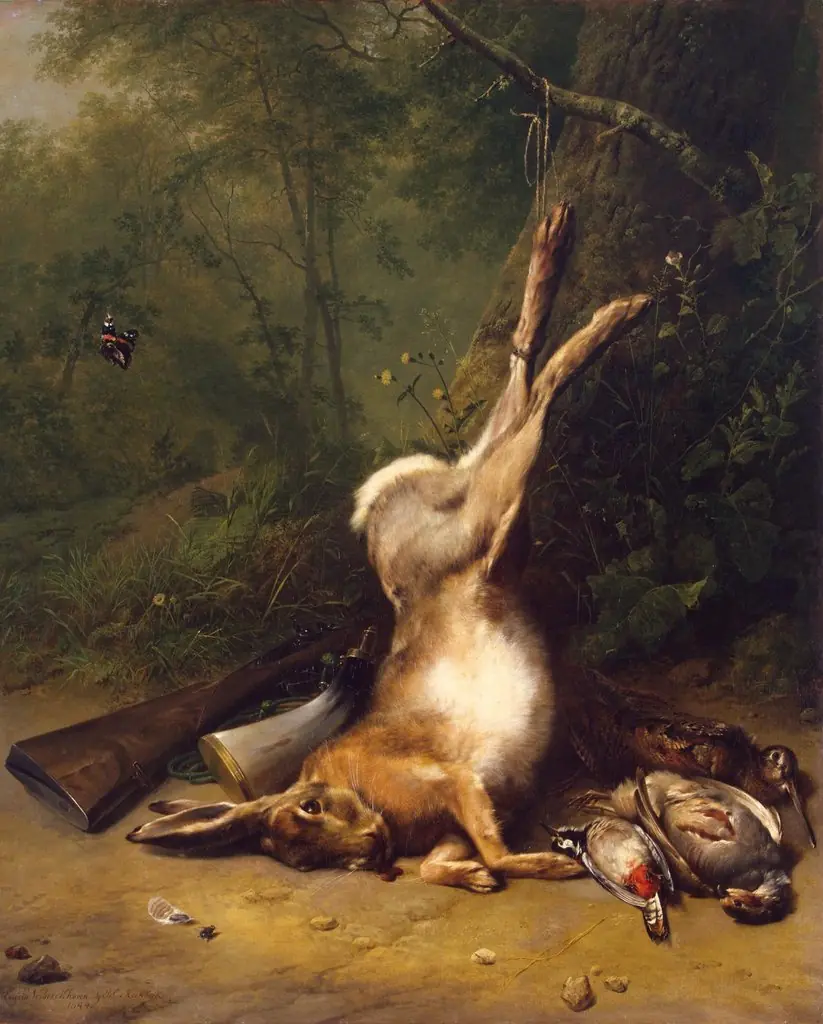 Still Life with a Hare
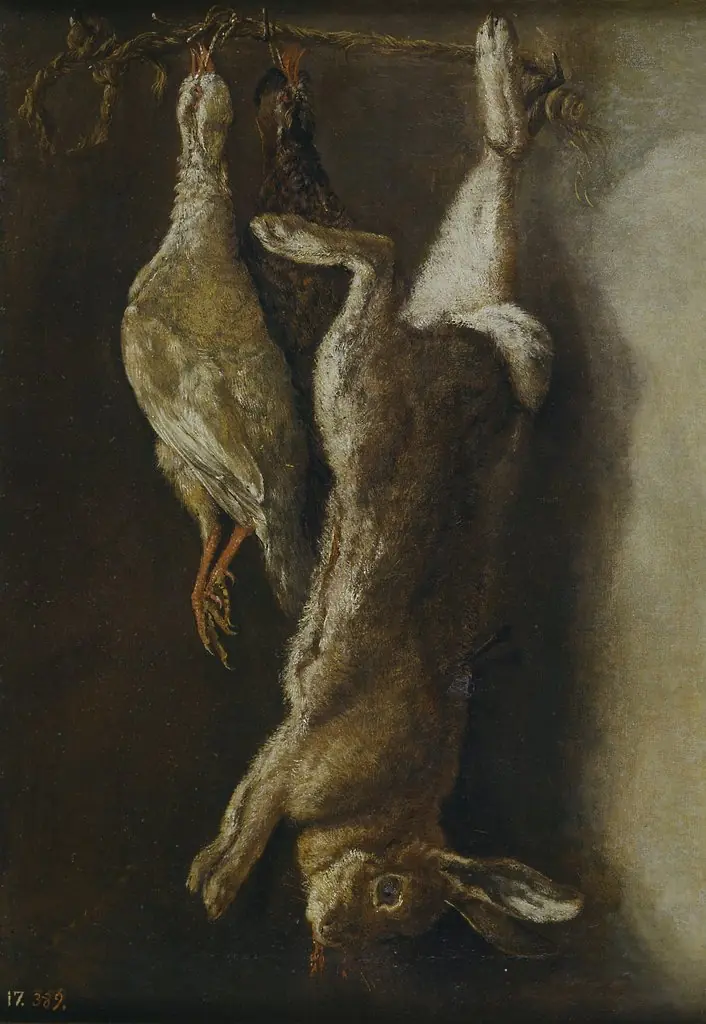 Kitchen still life with a hare and two partridges
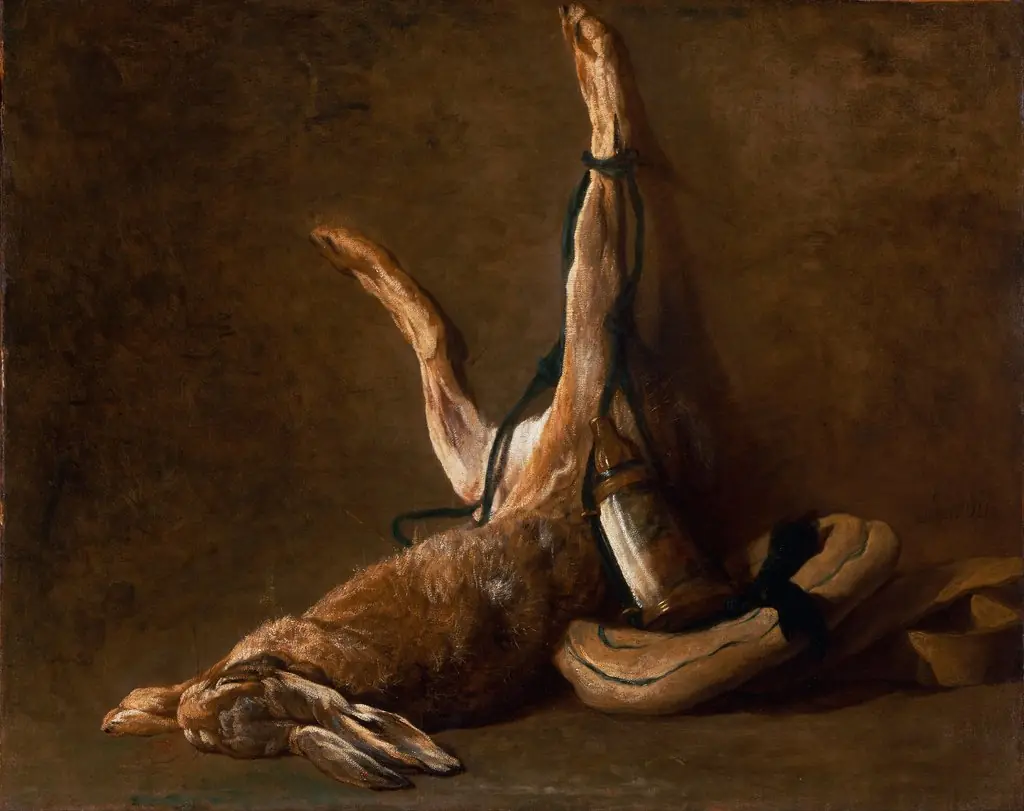 Still Life with a Hare
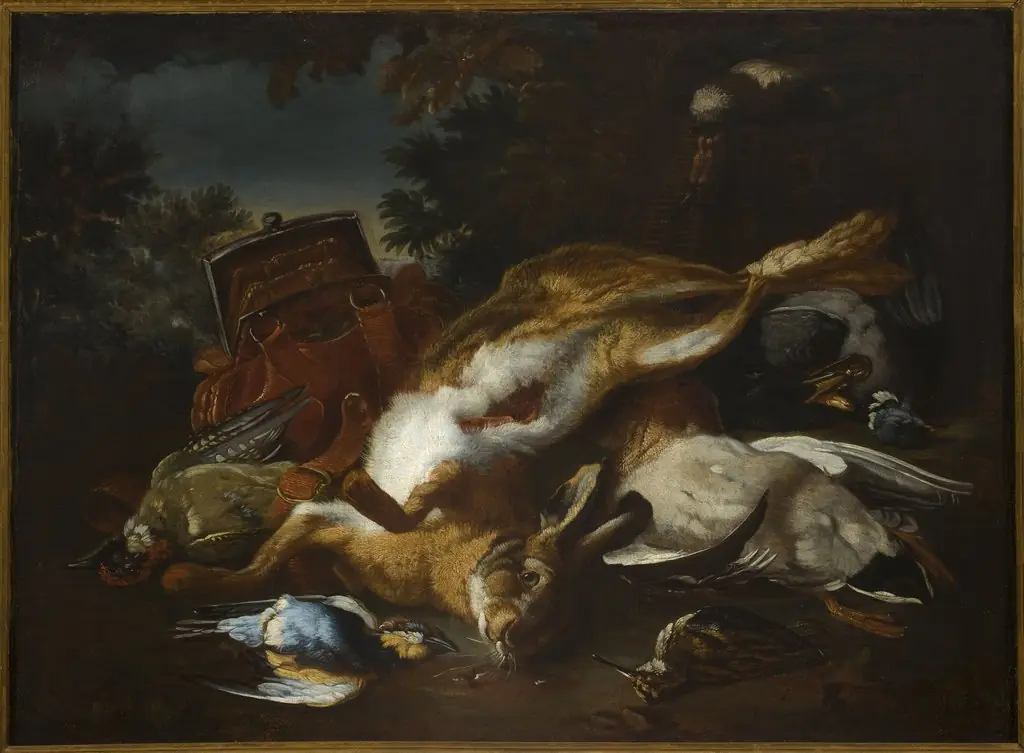 Still Life with a Hare, Wild Fowl and a Hunter's Bag
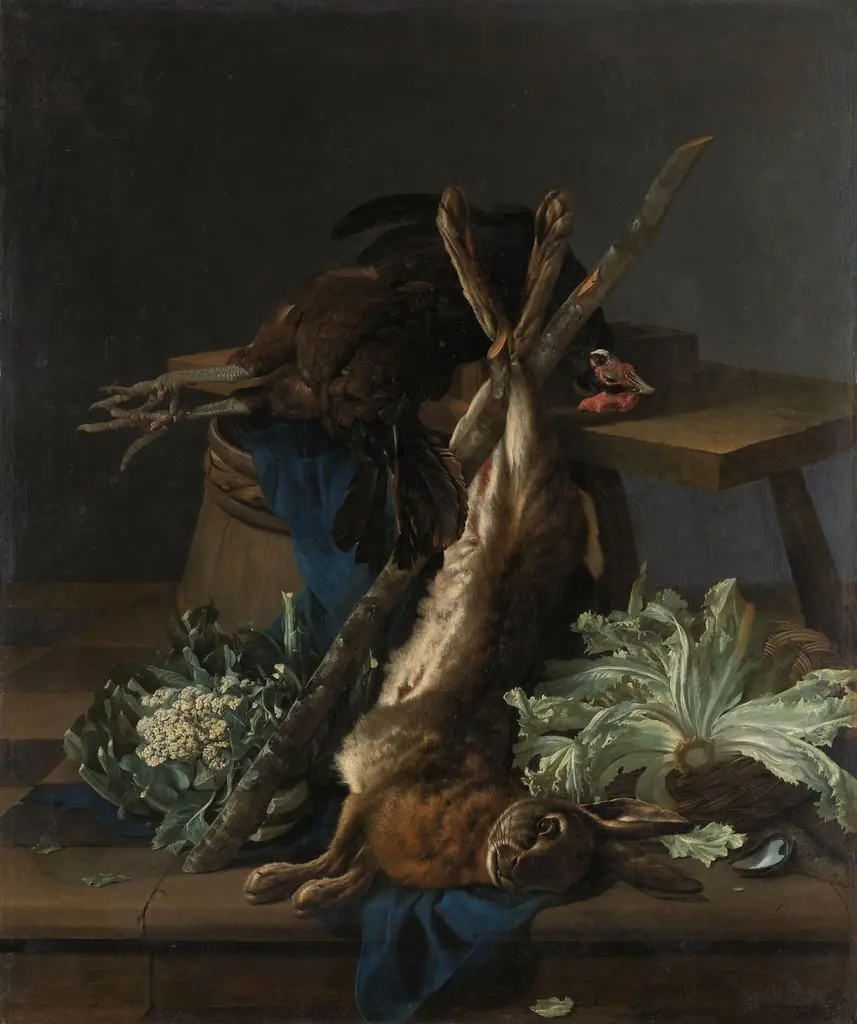 Still life with hare and black rooster
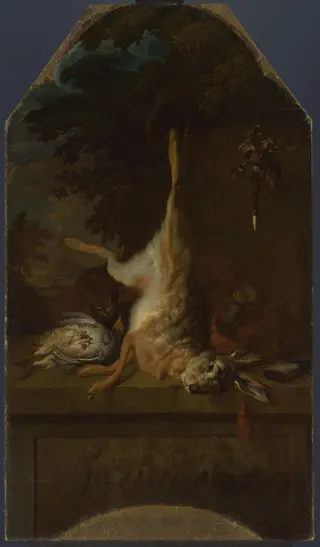 Still Life with Dead Hare and Partridges
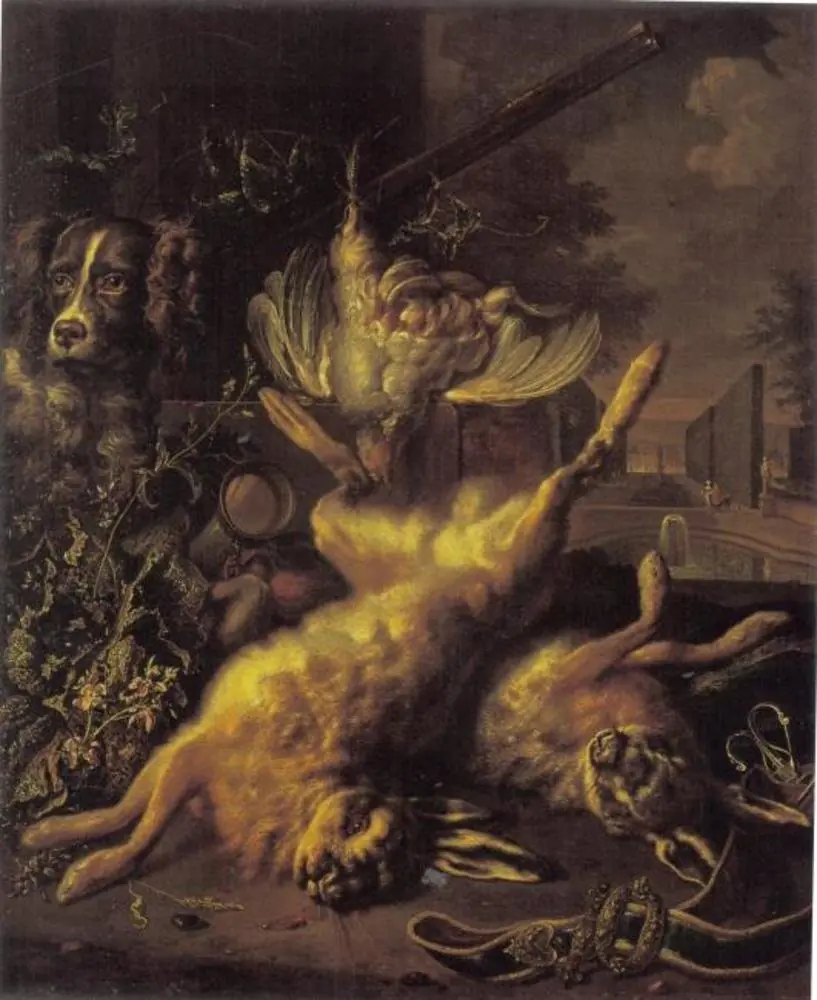 Hunting Trophies
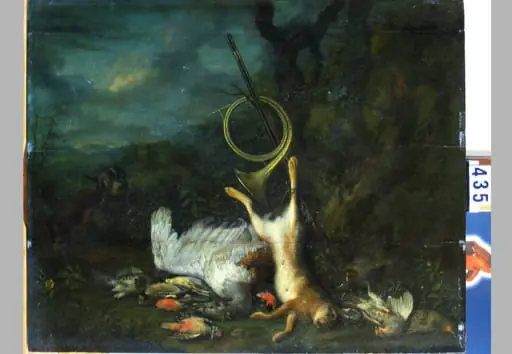 Vânat cu corn de vânătoare. Pandant: Vânat la malul apei (în Reg. Inv.: Vânat la apă)
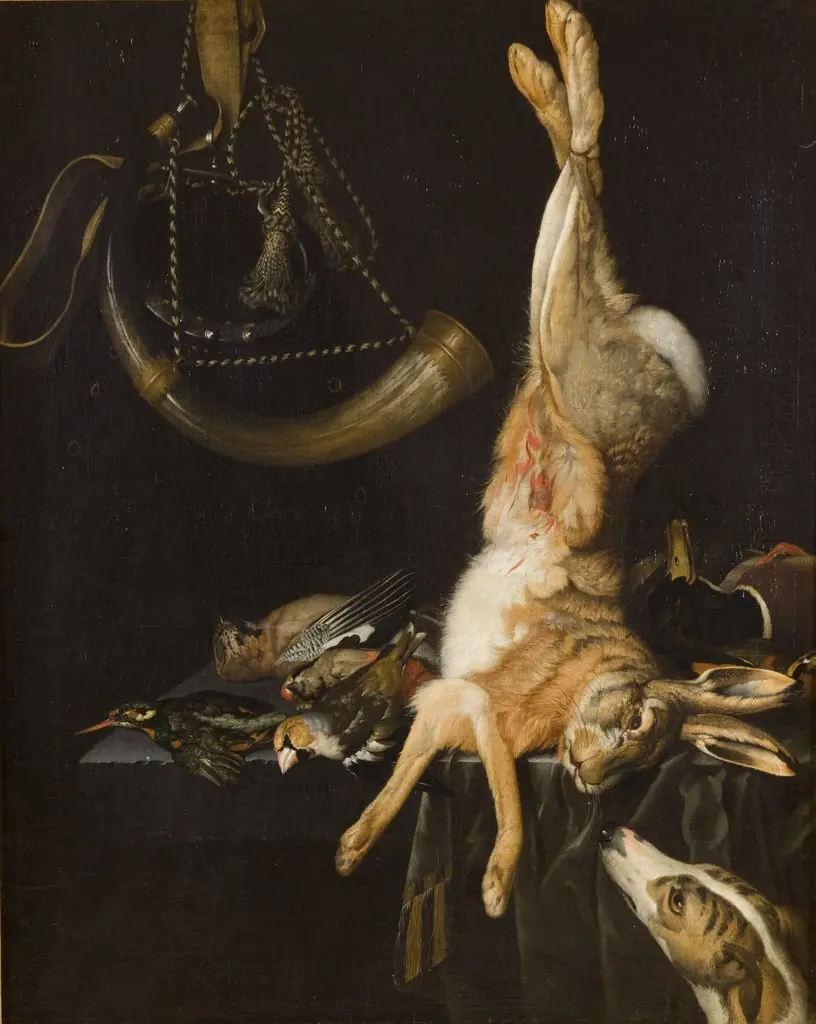
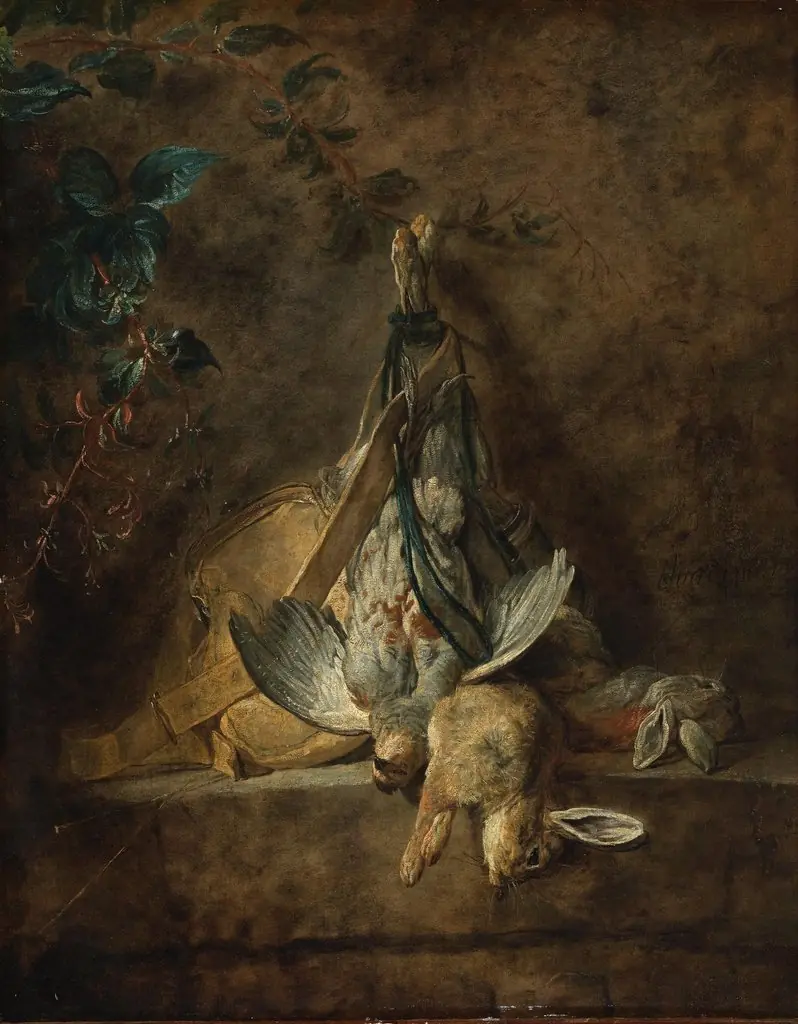 A Still Life Two Rabbits, a Grey Partridge, Game Bag and a Powder Flask
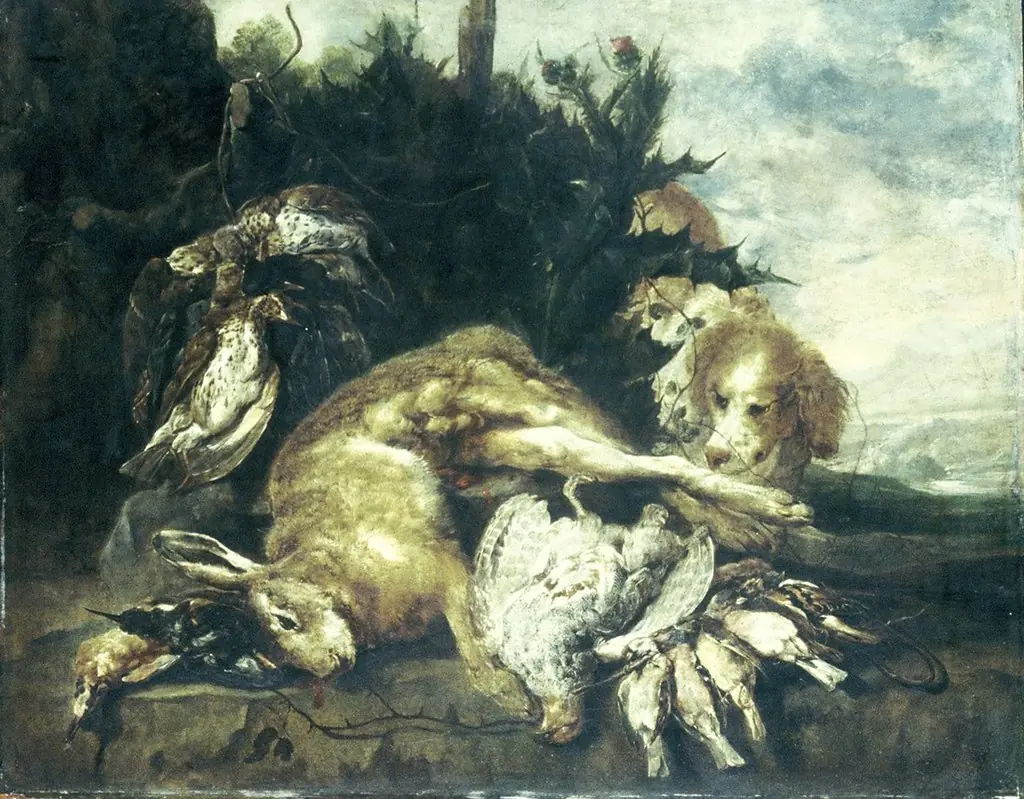 Naturaleza muerta
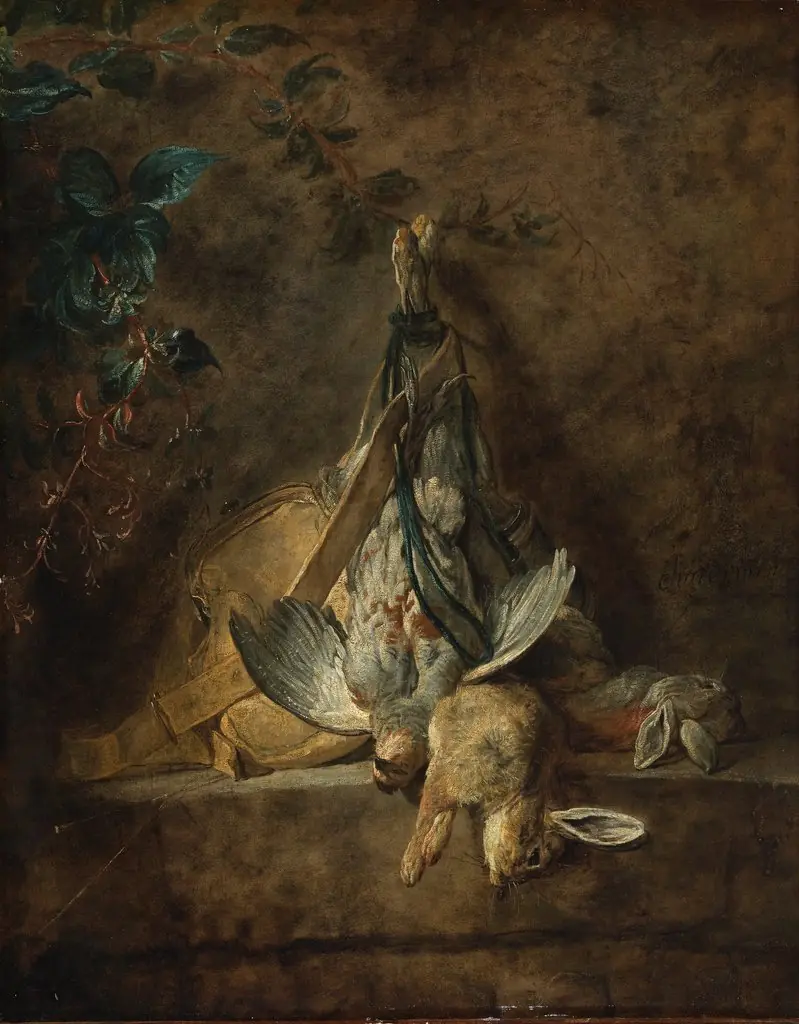 A Still Life: Two Rabbits, a Grey Partridge, Game Bag and a Powder Flask
 The Silver Tureen