
Subject
Hunting Dog
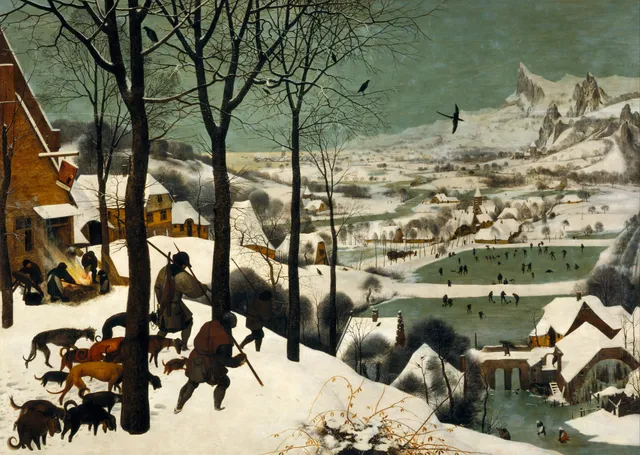
Hunting Dog is a subject in art. The gallery holds 27 works in this subject in art, including works by Titian, Paolo Veronese and Ferdinand Bol.
A hunting dog is a dog that hunts with or for hunters. There are several different types of hunting dog developed for various tasks and purposes.
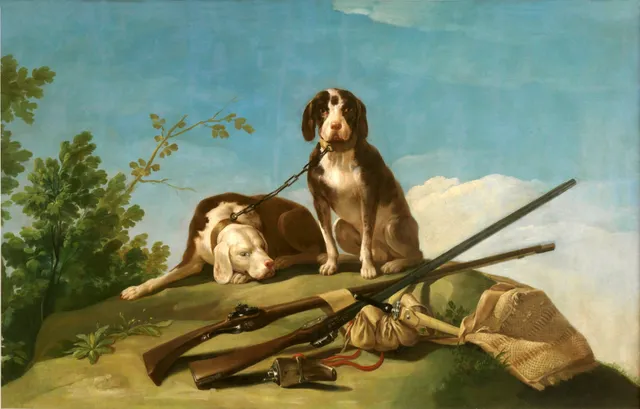
Key artists

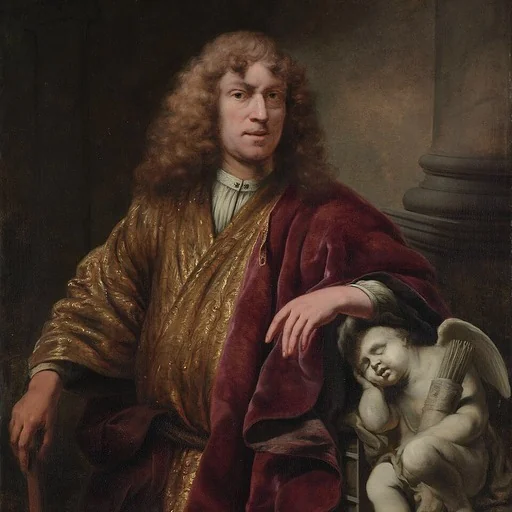
Overview
The hunting dog is a canine bred and trained to assist humans in the pursuit and capture of game, representing one of the earliest domestic functions of the dog. In art, the motif appears across multiple genres and periods, often serving as an attribute of hunting scenes, mythological narratives, and aristocratic portraiture. The collection holds 27 works that feature hunting dogs, indicating the subject's persistent visual presence from mythological tableaux to landscape and genre painting. These depictions range from incidental details in larger compositions to carefully observed canine figures that carry narrative or symbolic weight.
Iconography & meaning
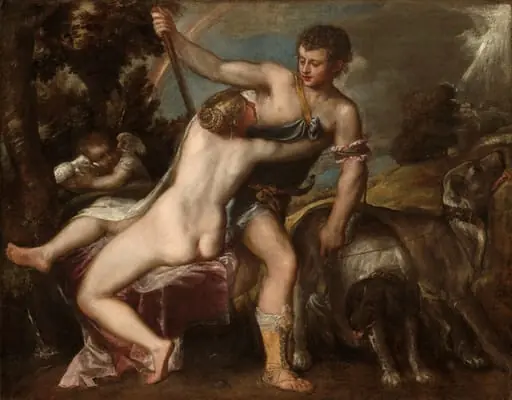
In visual art, the hunting dog carries layered significations tied to its practical roles in the hunt. Functionally, dogs are distinguished by specialized tasks: hounds track by scent, terriers flush quarry from earths, pointers and setters indicate game location, and retrievers recover shot animals. This functional diversity translates into iconographic variety. The presence of a hunting dog can signal aristocratic status, as hunting remained a privilege and pastime of the elite across European history. In mythological contexts, particularly in the numerous depictions of Venus and Adonis in the collection, the hunting dog accompanies Adonis to his fatal boar hunt, becoming an emblem of masculine pursuit and tragic destiny. The dog's loyalty and trained obedience also make it a symbol of faithful service and disciplined nature. In Northern European tradition, hunting dogs in winter landscapes or farm scenes could denote the seasonal cycle of rural labor and the harmony between human and animal in managed nature.
Across movements & periods
The treatment of hunting dogs in art evolved with changing attitudes toward nature, class, and representation. In Renaissance and Baroque painting, exemplified by Rubens's 1614 Venus and Adonis, dogs appear with naturalistic detail that affirms the artist's empirical observation and the patron's aristocratic interests. The Northern European tradition, visible in The Hunters in the Snow, integrates dogs into panoramic landscapes where human and animal figures are subordinated to atmospheric and seasonal effects. This approach contrasts with the more emblematic or decorative use of hunting dogs in earlier medieval and early Renaissance imagery, where animals often carried heraldic or symbolic rather than naturalistic significance. The proliferation of Venus and Adonis subjects across the collection suggests a particular period taste, likely seventeenth-century Baroque, for this mythological narrative with its embedded hunting motif. Later movements would increasingly sentimentalize or anthropomorphize the hunting dog, though the collection's works do not extend into these later developments. Across these variations, the hunting dog consistently marks the boundary between cultivated human society and the wild, domesticated nature that remains subject to human mastery.
Legacy
The hunting dog as artistic subject derives its lasting significance from the deep historical entanglement of canine and human societies. The functional categories established for hunting dogs, scent hounds, sight hounds, terriers, gun dogs, and retrievers, developed over centuries of selective breeding and training, created a repertoire of canine types that artists could deploy with immediate recognition. The collection's concentration of Venus and Adonis subjects speaks to the enduring fascination with Ovid's narrative and its potential for erotic and tragic visual elaboration, with the hunting dog as necessary attribute. More broadly, the hunting dog in art preserves a record of changing human-animal relationships, from the aristocratic privilege of the hunt to the romanticization of rural life, even if the collection's works do not themselves extend into modern or contemporary treatments. The motif's persistence across 27 works affirms its utility as a narrative device and social signifier, one that requires no textual explanation to convey its associations of pursuit, status, and the managed natural world.
Works
 Venus and Adonis
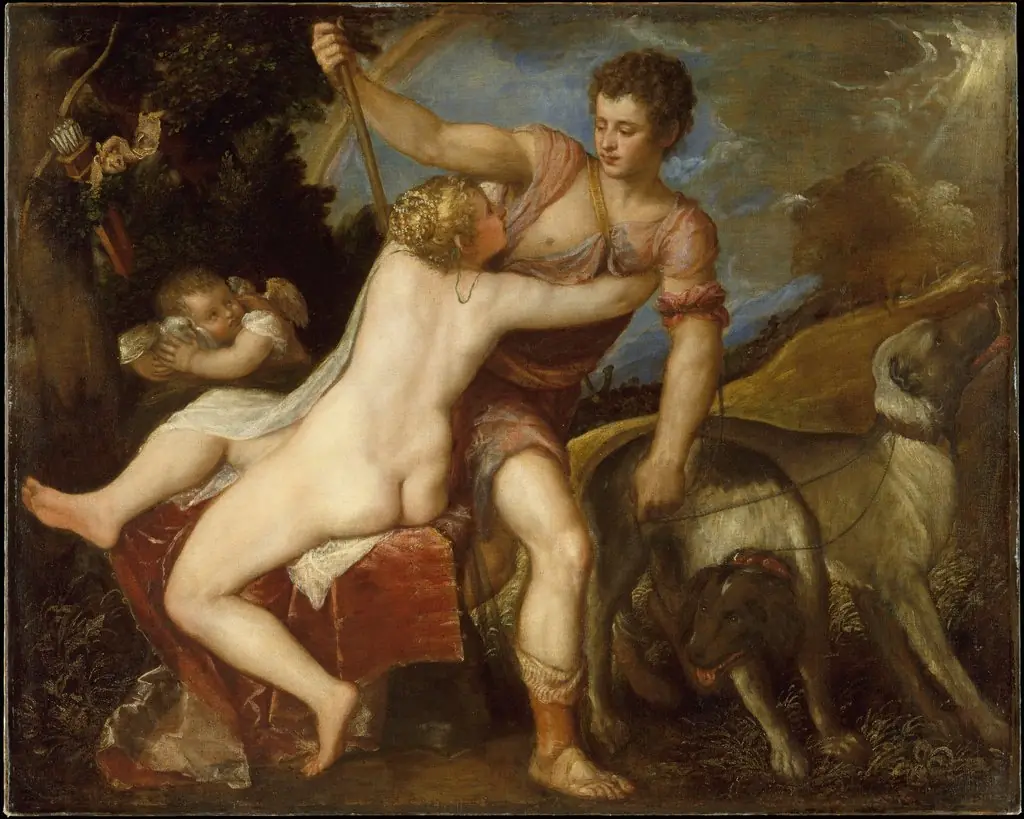 Venus and Adonis
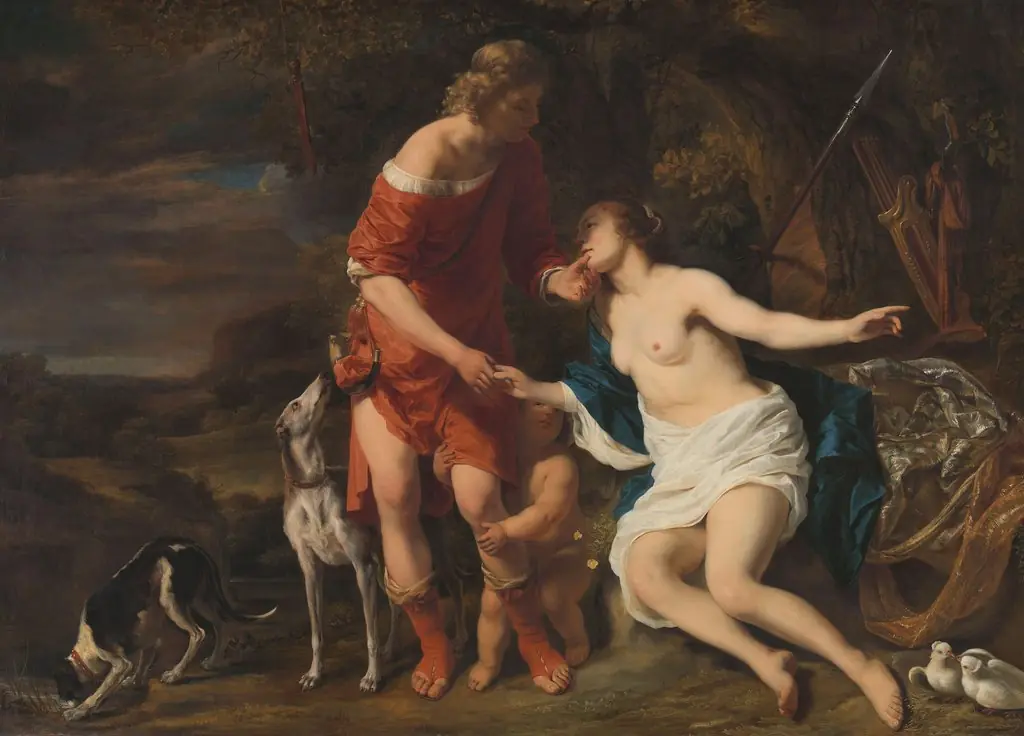 Venus and Adonis
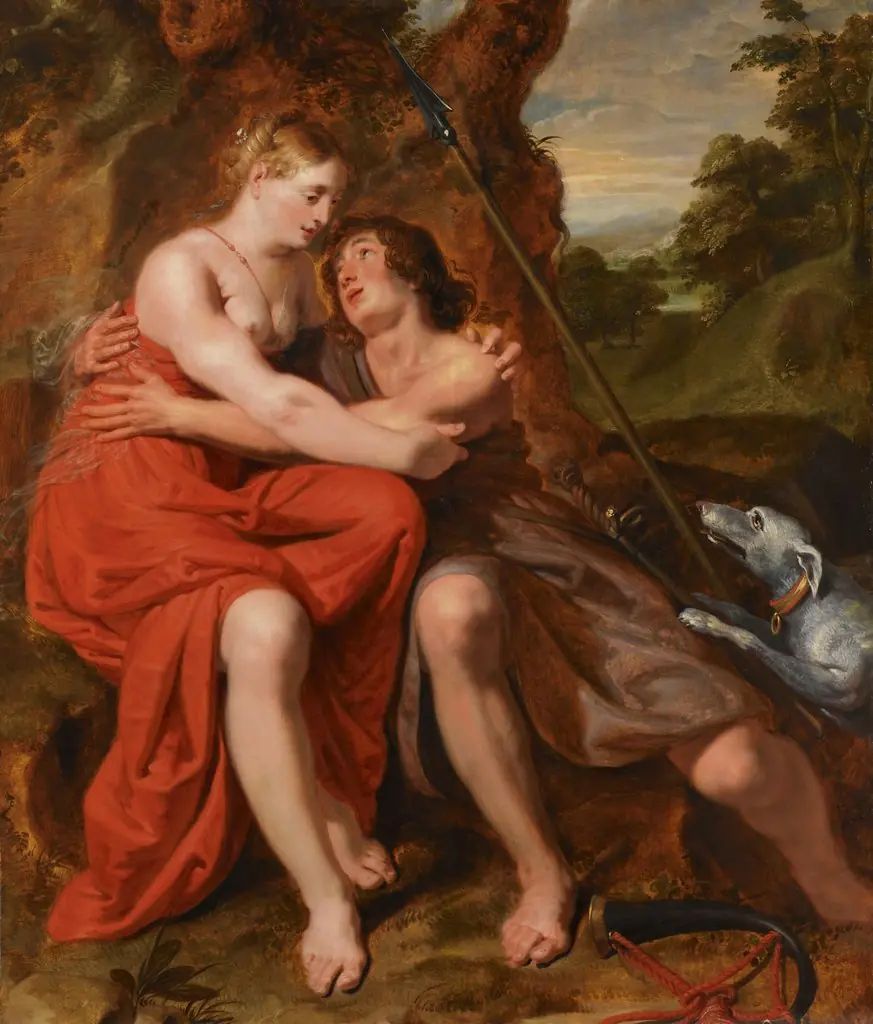 Venus and Adonis
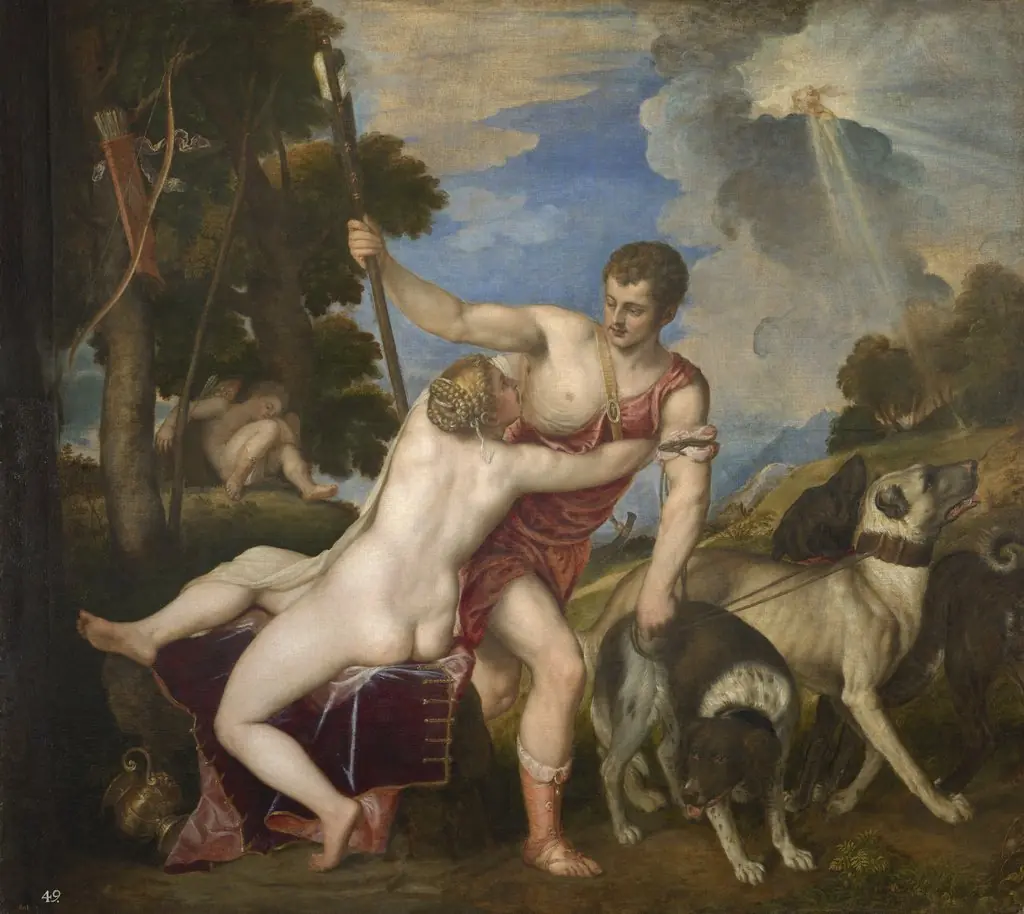 Venus and Adonis
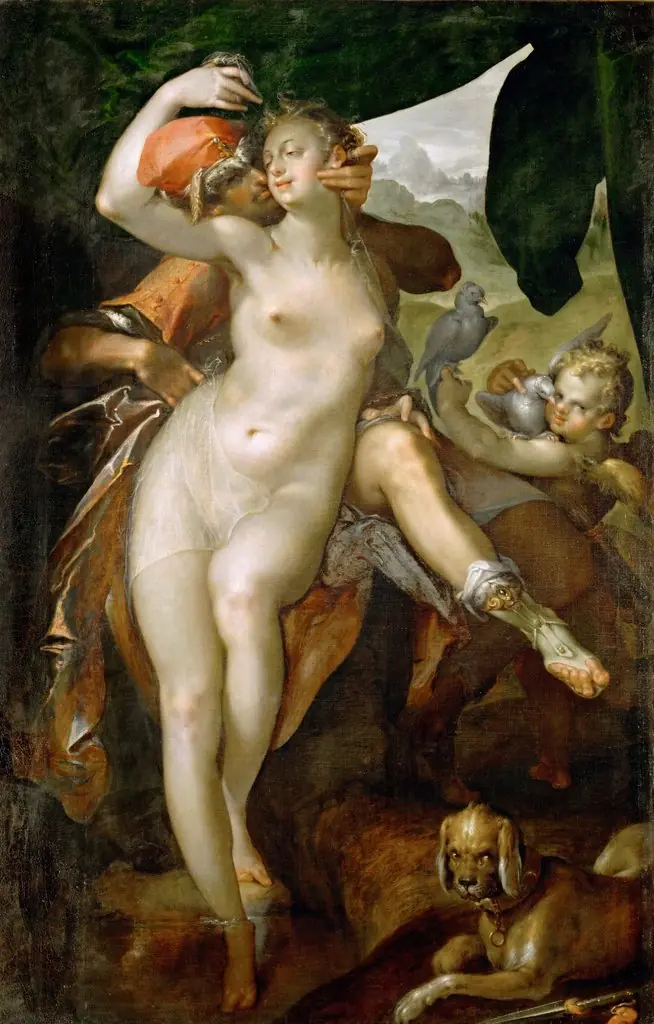 Venus and Adonis
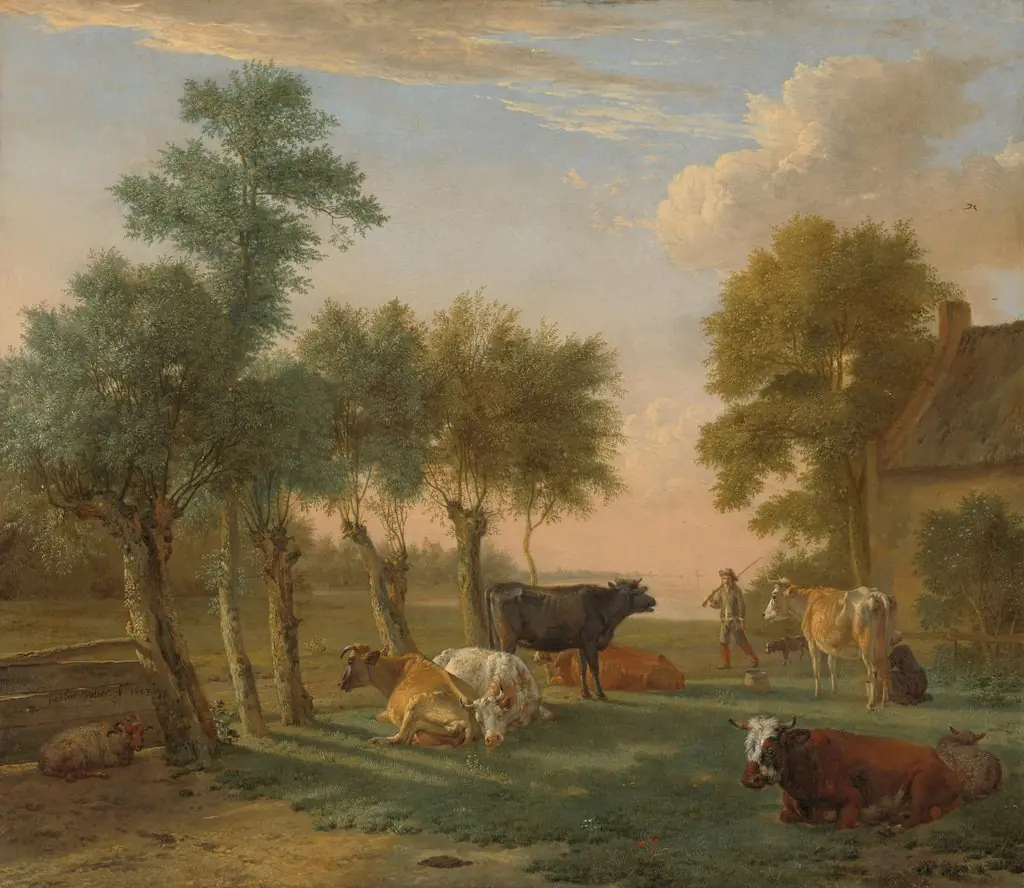 Cows in a Meadow near a Farm
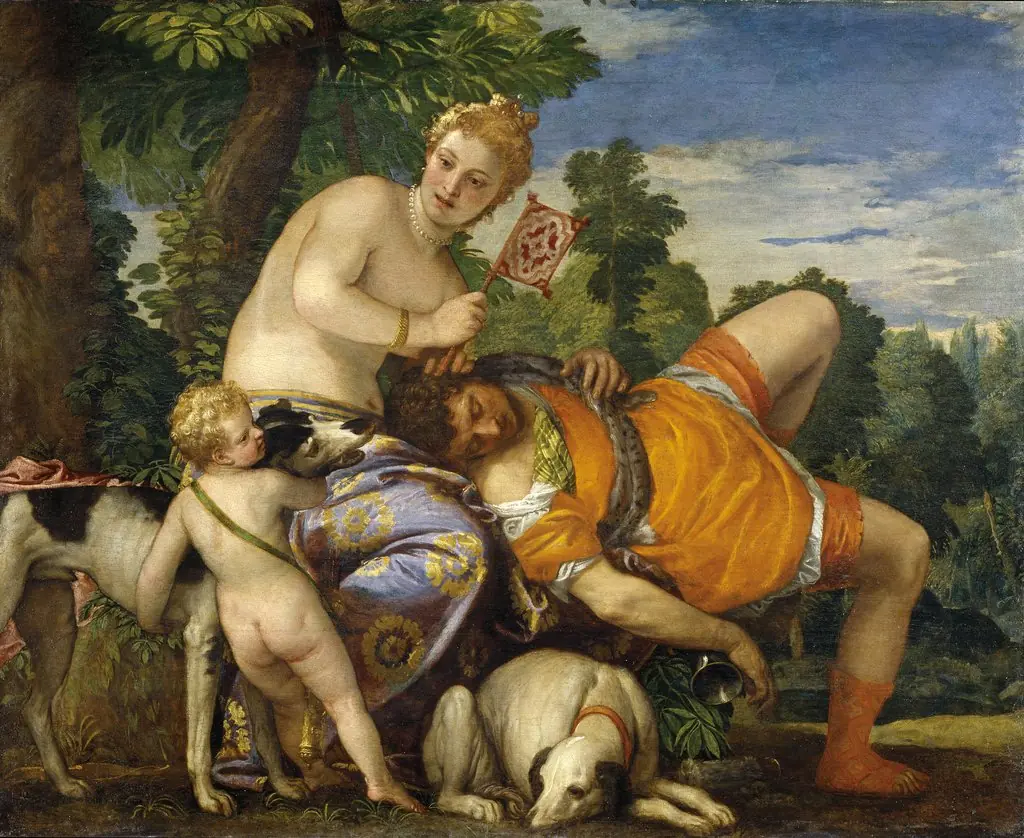 Venus and Adonis
 The Hunters in the Snow
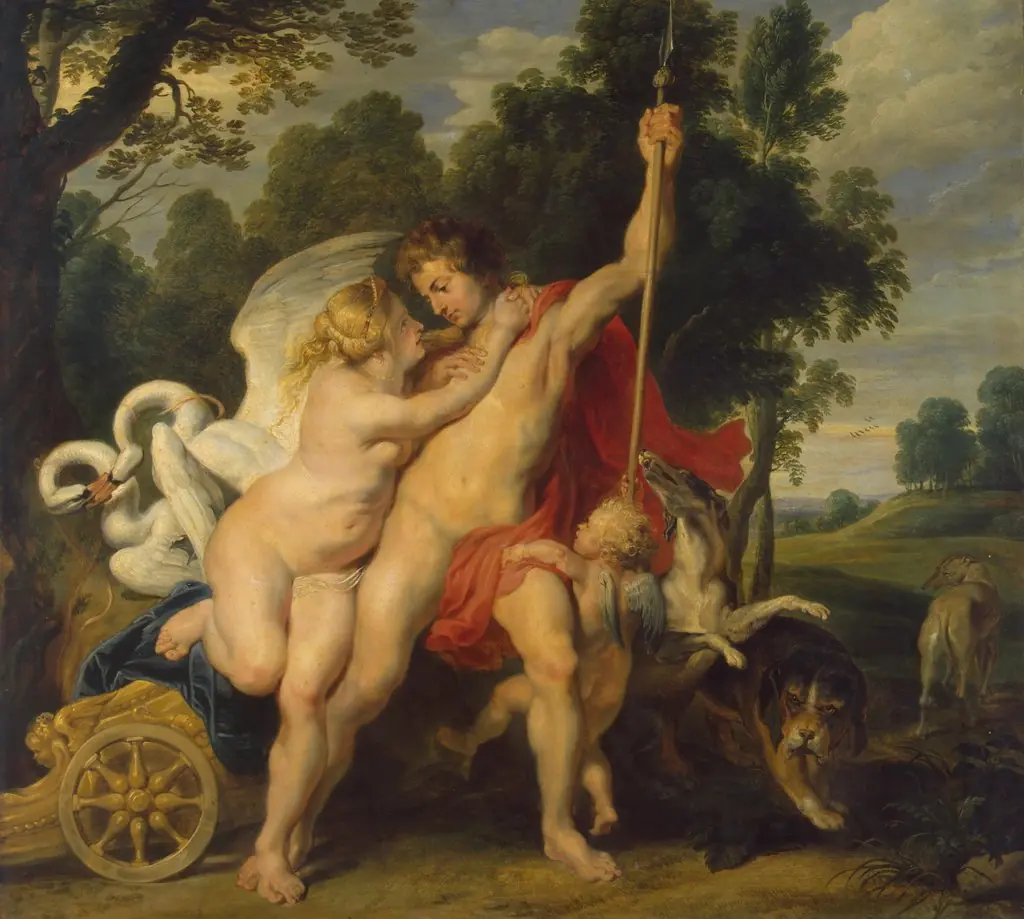 Venus and Adonis (Rubens, 1614)
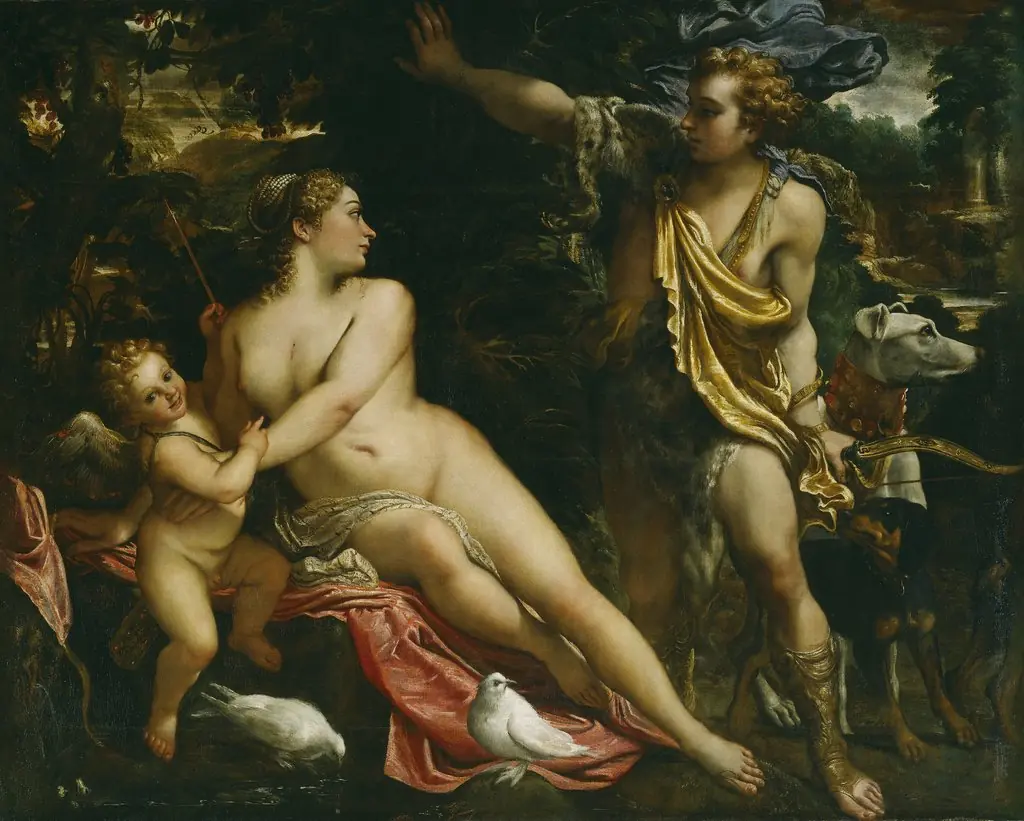 Venus, Adonis and Cupid
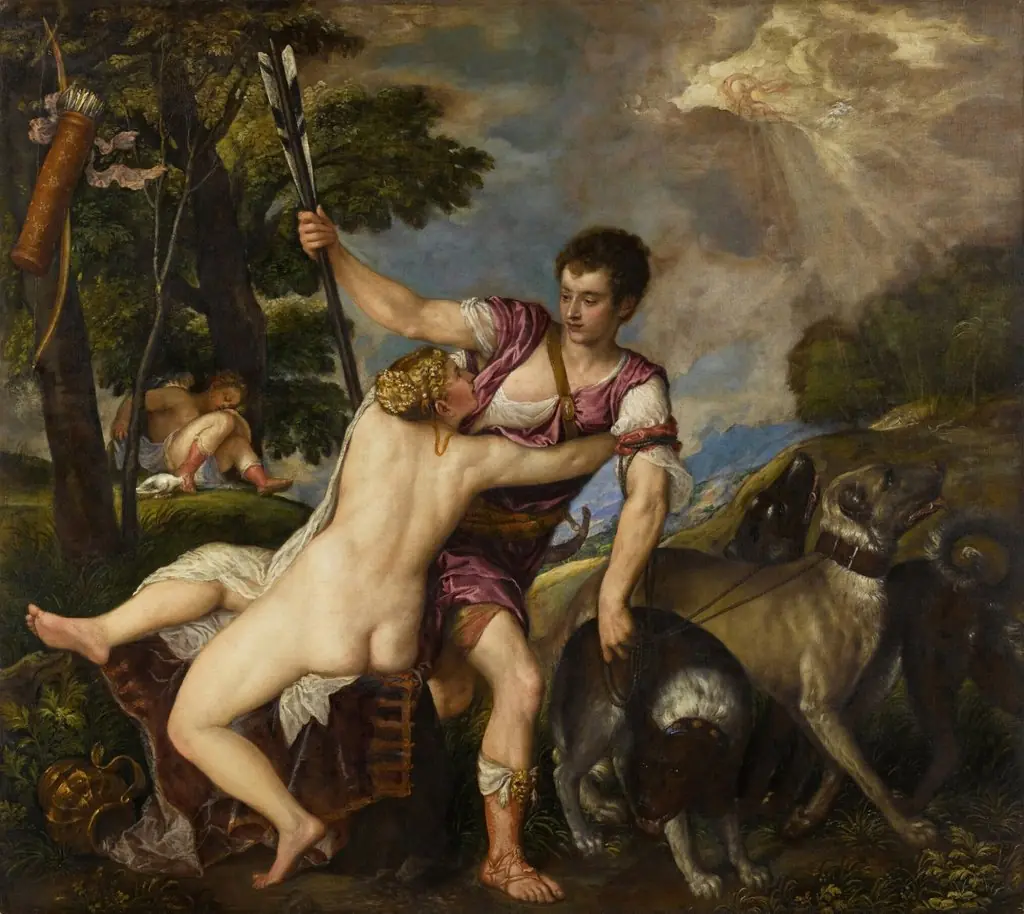 Venus and Adonis
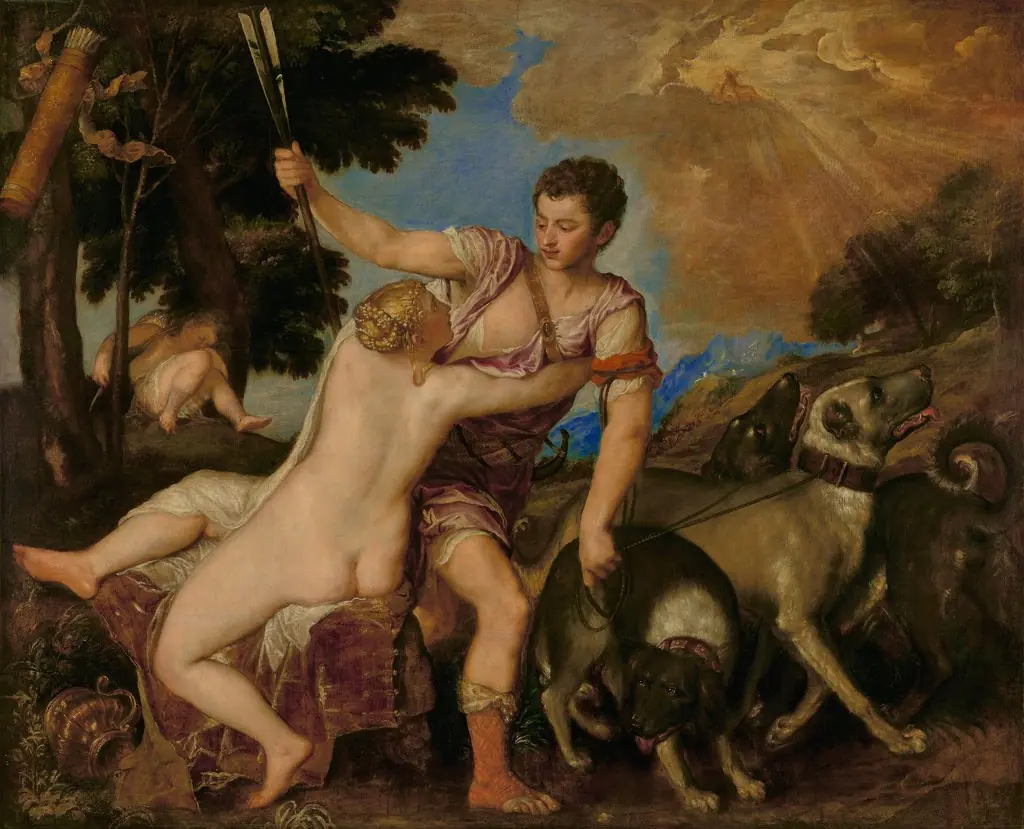 Venus and Adonis
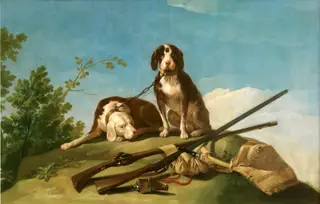 Dogs and hunting gear
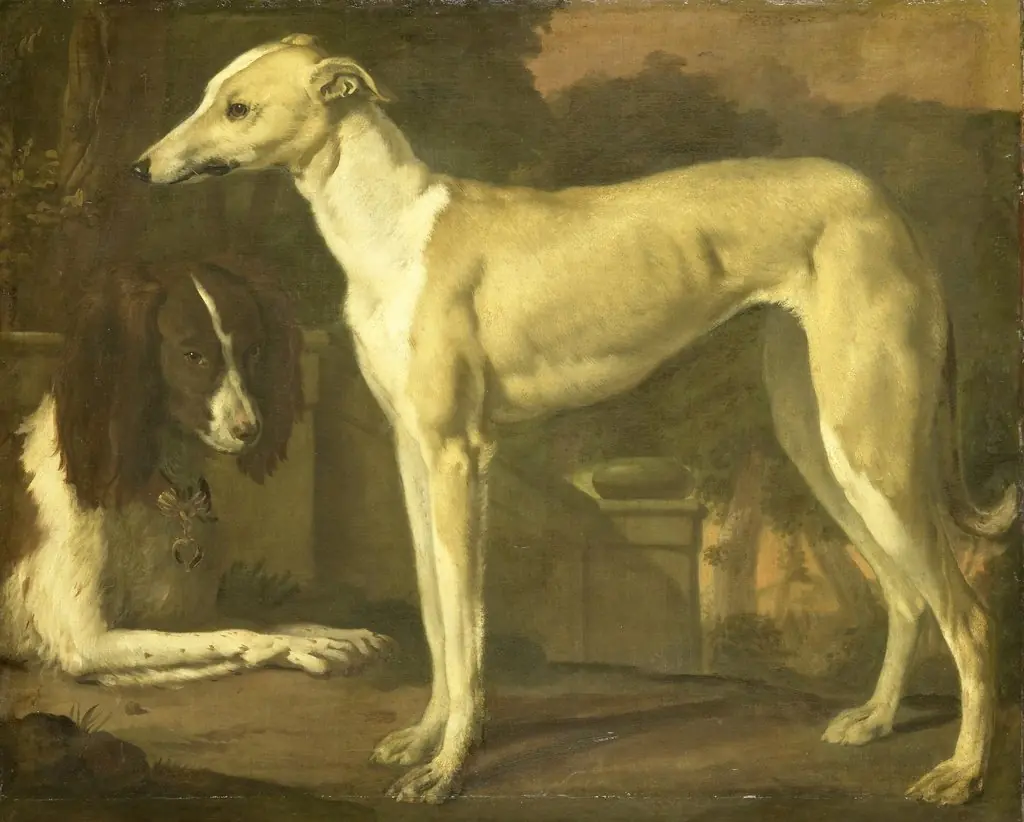 Portrait of a greyhound and a spaniel
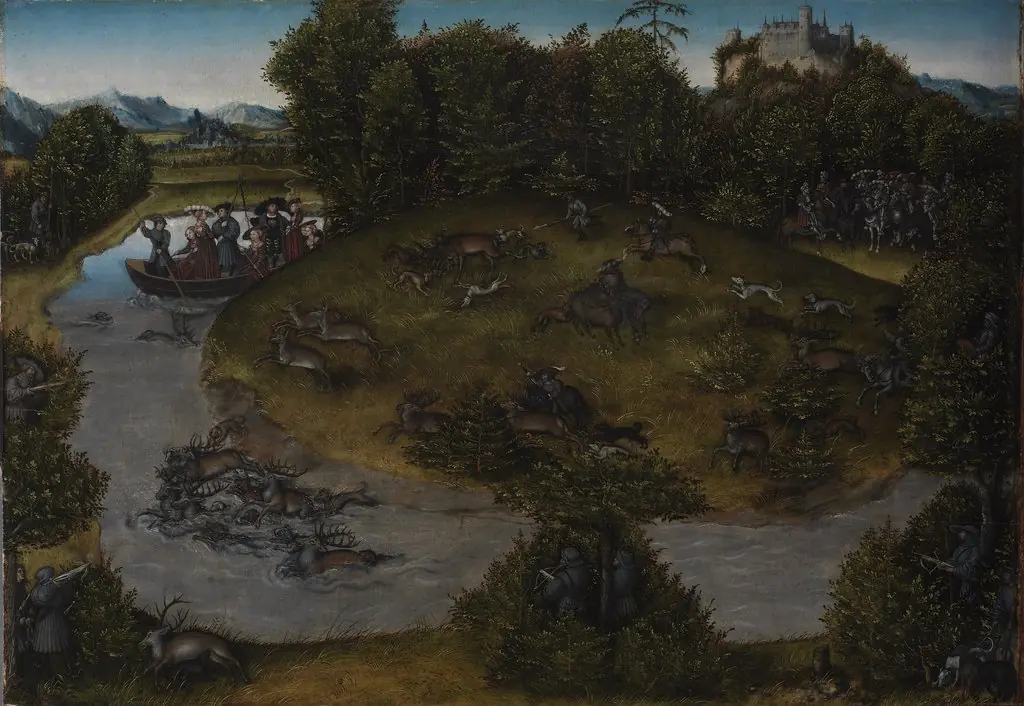 The Stag Hunt of the Elector Frederic the Wise (1463-1525) of Saxony
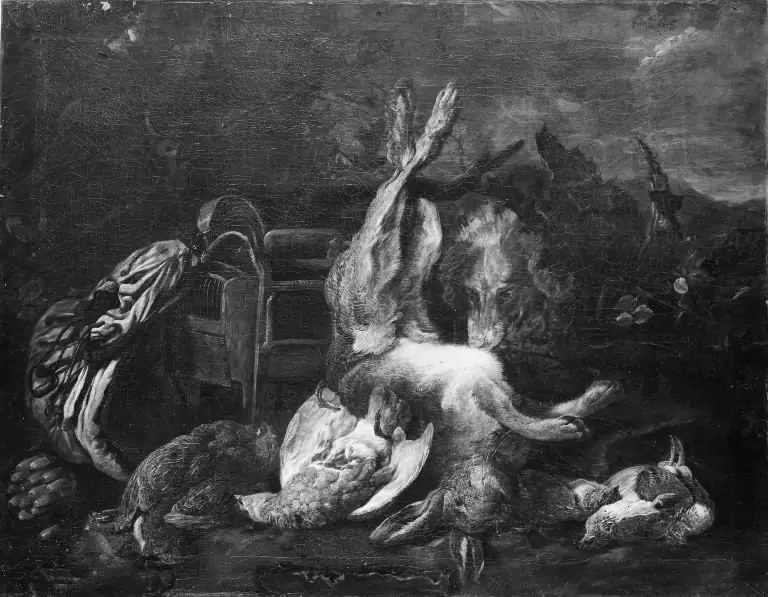 The Spoils of the Chase
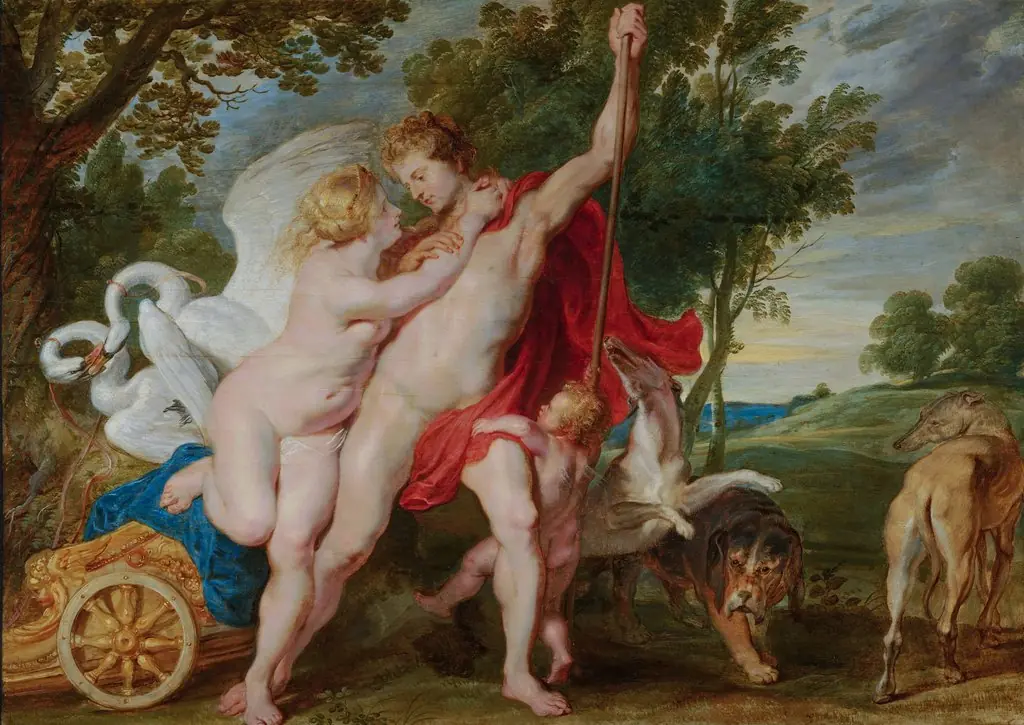 Venus trying to prevent Adonis from going hunting
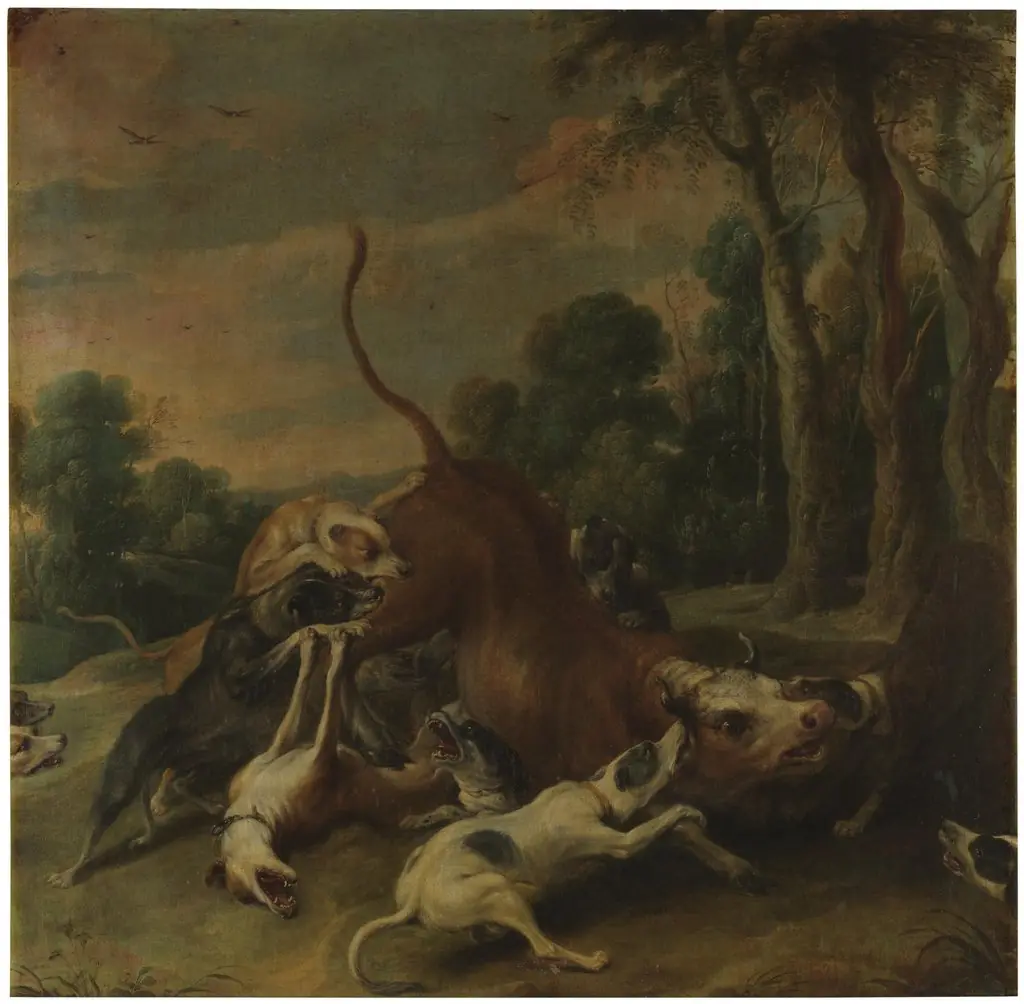 A bull overpowered by dogs
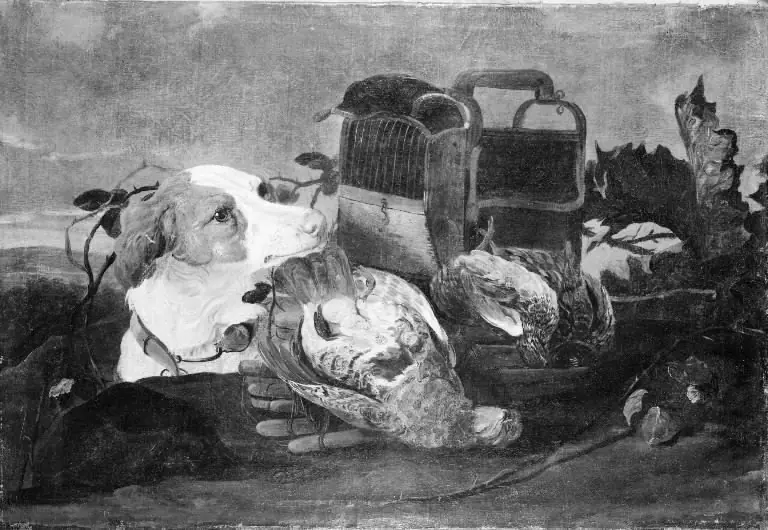 Dead Wildfowl and a Game Dog
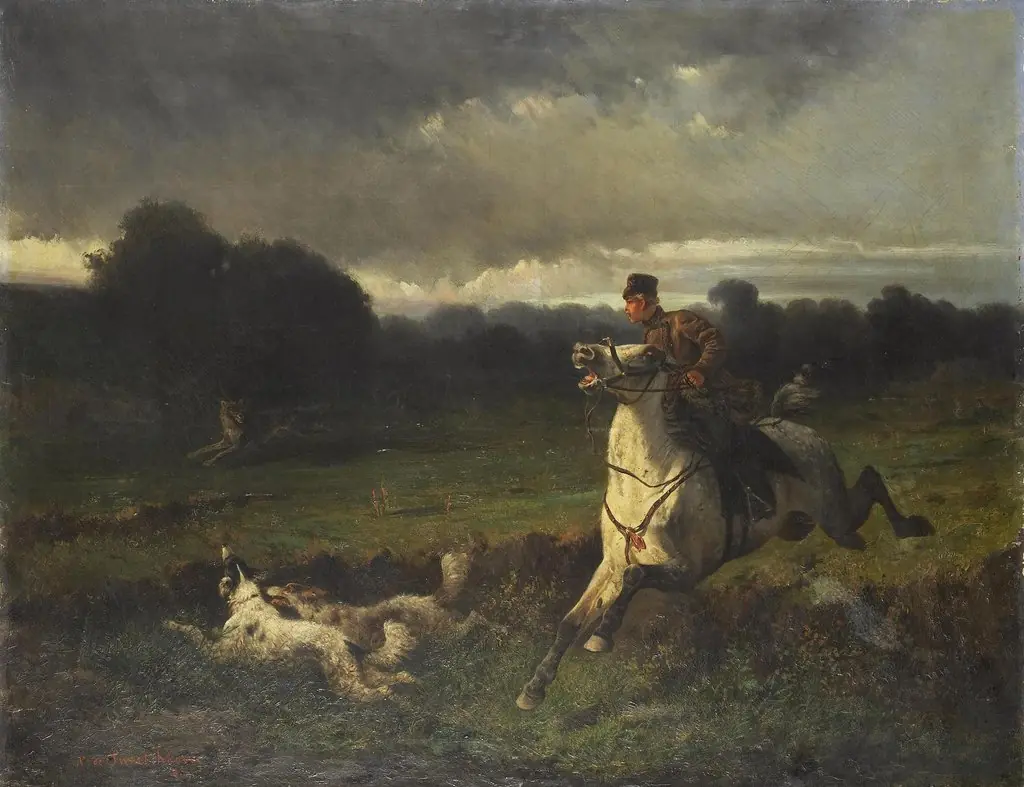 Wolf Hunting
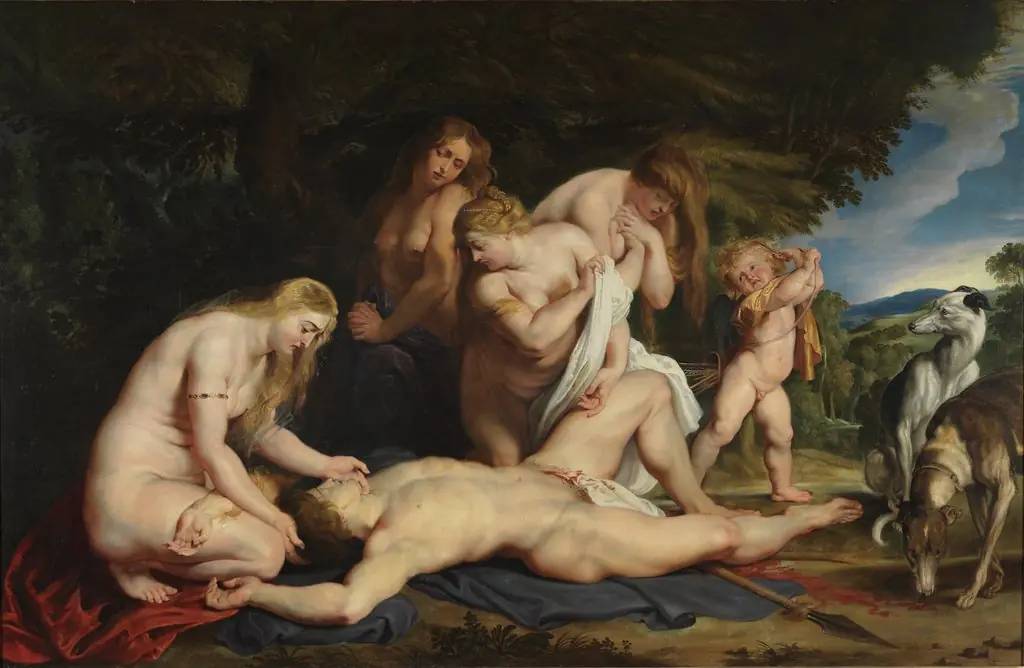 The Death of Adonis
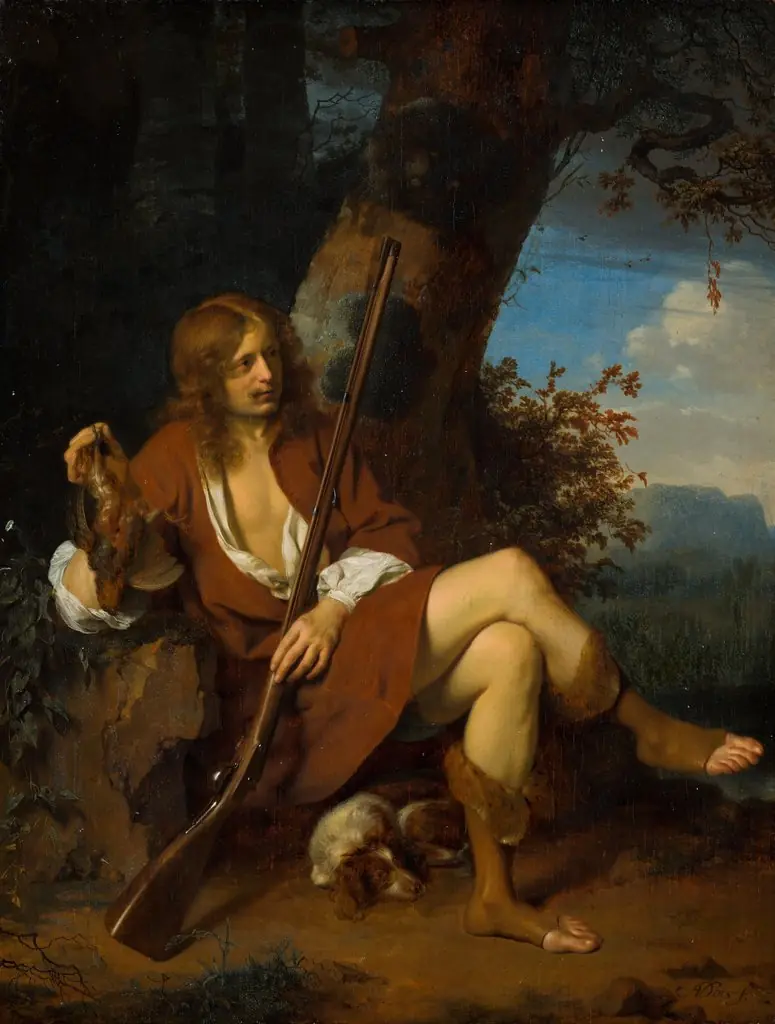 Self-Portrait as a Hunter
 Hunting horse and dog in stable interior
 Stable interior
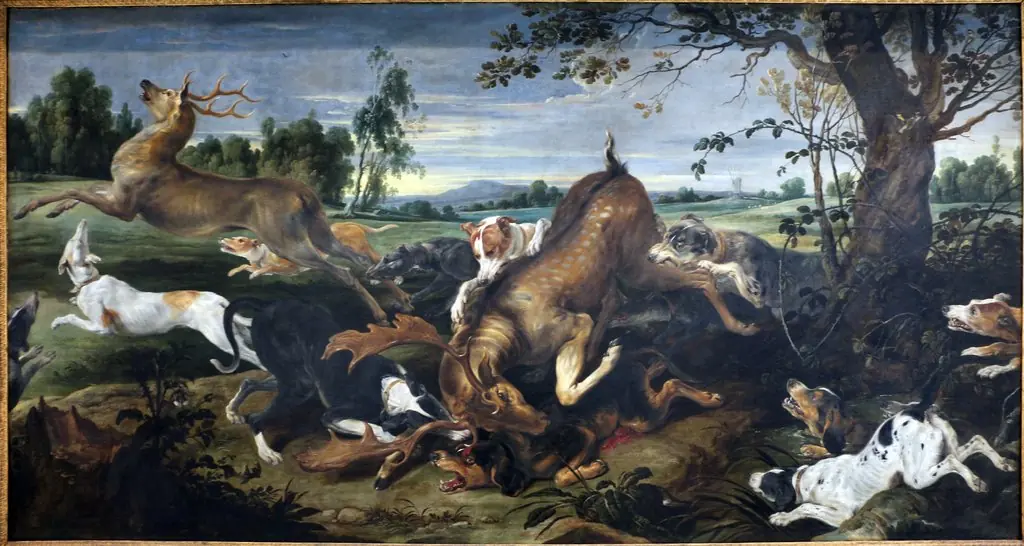 Deer Hunt
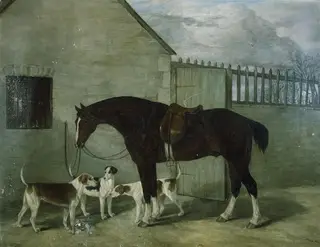 Portrait of hunter Magpie & dogs
Frequently asked questions
What is Hunting Dog?
Hunting Dog is a subject in art. A hunting dog is a dog that hunts with or for hunters.
How many Hunting Dog works does Artifact World Gallery have?
Artifact World Gallery holds 27 public-domain Hunting Dog works, all free to view and download.
Who are the key Hunting Dog artists?
Key Hunting Dog artists in the collection include Titian, Paolo Veronese and Ferdinand Bol.
Where can I see Hunting Dog works?
Hunting Dog works in the collection are held by Museo del Prado, Rijksmuseum and Statens Museum for Kunst.