Artwork
The Lemon
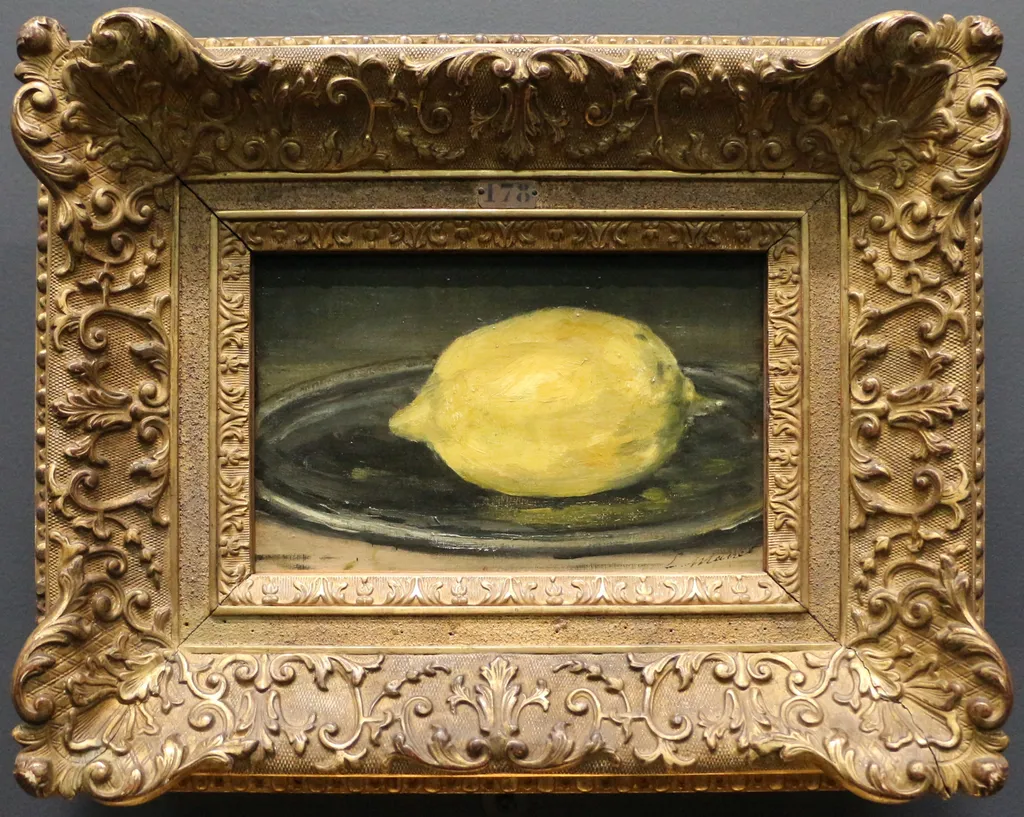
The Lemon is an oil painting by the Impressionist artist Édouard Manet. It is held in the collection of the Musée d'Orsay.
About this work
The top edge has the number "1786" written on it, which might be a clue about something, but it’s not the year of the painting.
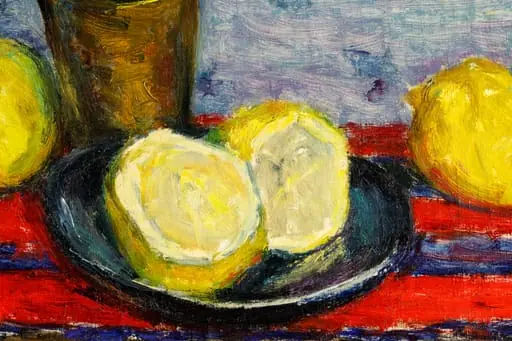
This painting shows a single bright yellow lemon floating in dark, murky water. The lemon looks almost too real, with a smooth, glossy surface. The background is mostly shadowy green and gray, making the lemon stand out even more.
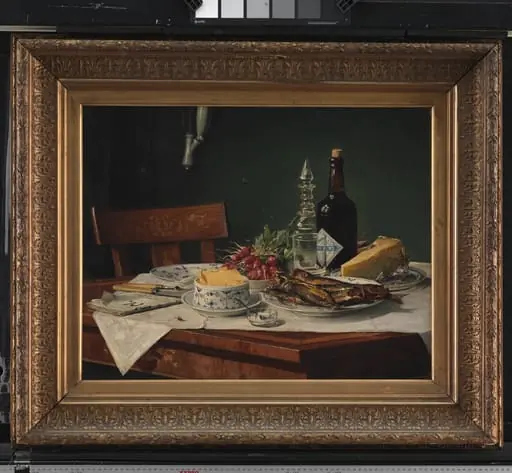
The frame is fancy, with carved gold details that look like swirls and leaves. The top edge has the number "1786" written on it, which might be a clue about something, but it’s not the year of the painting.
If you like simple but striking paintings, check out Édouard Manet.
Subject & Meaning
The painting depicts a single lemon lying horizontally on a dark, metallic-looking platter, rendered in varying shades of yellow against an indeterminate brown background. While the composition echoes the tradition of 17th-century Dutch and Spanish Baroque still lifes, particularly the works of Willem Claesz. Heda, the artwork lacks the explicit vanitas symbolism regarding mortality often found in those predecessors. Scholars suggest the piece may function primarily as a decorative study of color and texture, described as an "harmony of grey and yellow," rather than a narrative about food consumption or transience. Unlike Manet's earlier depictions where lemons appeared peeled or sliced within meal settings to signify use, this isolated fruit emphasizes the painterly qualities of the object itself, serving as a late-career exploration of the still life genre.
Technique & Style
The Lemon is a small-format oil on canvas still life measuring 14 by 22 cm, painted around 1880. The composition presents a single lemon, shown in close-up and roughly at natural size, lying on its side across a dark, metallic-grey plate. The fruit's tips point toward the lateral edges of the canvas, with an imaginary line between them rising slightly from left to right. The lemon is rendered in varied yellow tones, described by Françoise Cachin as a "harmony of grey and yellow," with paint applied in a partially impasto manner where individual brushstrokes remain clearly visible. The plate's bulging rim shimmers silver, and the lemon's yellow tone reflects on its smooth surface; Alfred Stevens called it a "Japanese plate," while Carol Armstrong identified it as a pewter dish.
The plate rests on a surface occupying roughly the lower two-thirds of the picture, light brown in the foreground and darkening toward the back, with a few dark strokes near the lower edge suggesting wood grain. A monochrome dark brown field forms the upper background. An off-canvas light source illuminates the fruit from the front. The loose brushwork corresponds to the painterly manner of Impressionism, and the canvas is signed "E. Manet" at the lower right, a signature added by Suzanne Manet after the painter's death.
History & Provenance
Created around 1880, *The Lemon* is a late work by Édouard Manet, painted in oil on canvas. The piece measures 14 cm in height and 22 cm in width. The painting was owned by Isaac de Camondo before entering the collection of the Musée d'Orsay in Paris. Manet signed the work in the lower right corner with "E. Manet"; however, this signature was added posthumously by his wife, Suzanne, after the artist's death. The work belongs to a series of still lifes Manet produced in his final years, drawing inspiration from Baroque Dutch and Spanish traditions while focusing on individual objects.
Context
Created around 1880, The Lemon belongs to Édouard Manet's late period, a phase characterized by still lifes executed in an Impressionist style that frequently isolated individual objects as motifs. Although the work lacks a direct model, art historians situate it within the broader traditions of Dutch and Spanish Baroque painting. Manet himself described still life as the "touchstone of the painter," a genre comprising approximately one-fifth of his total output. While seventeenth-century Dutch precedents often utilized such imagery to illustrate themes of transience or vanitas, no such specific intention is documented for Manet; scholars suggest his focus may have been purely decorative, emphasizing surface splendor and color nuances over moralizing content. Painted just three years before his death, the small-scale work is noted for its singular power, serving as a laboratory where the artist reduced composition to essential elements of color, texture, and simplicity.
Own this work as a print
Artist & collection
Artist
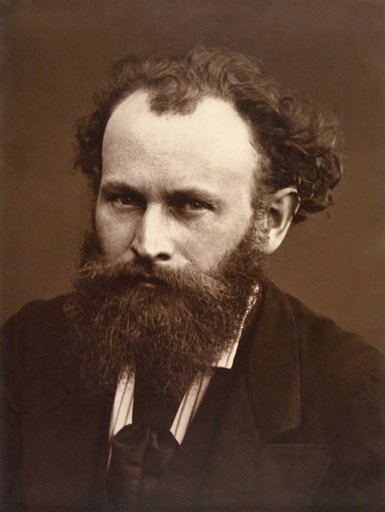
Édouard Manet was a French modernist painter. He was one of the first 19th-century artists to paint modern life, as well as a pivotal figure in the transition from Realism to Impressionism.