Artwork
Rear Admiral George W. Melville
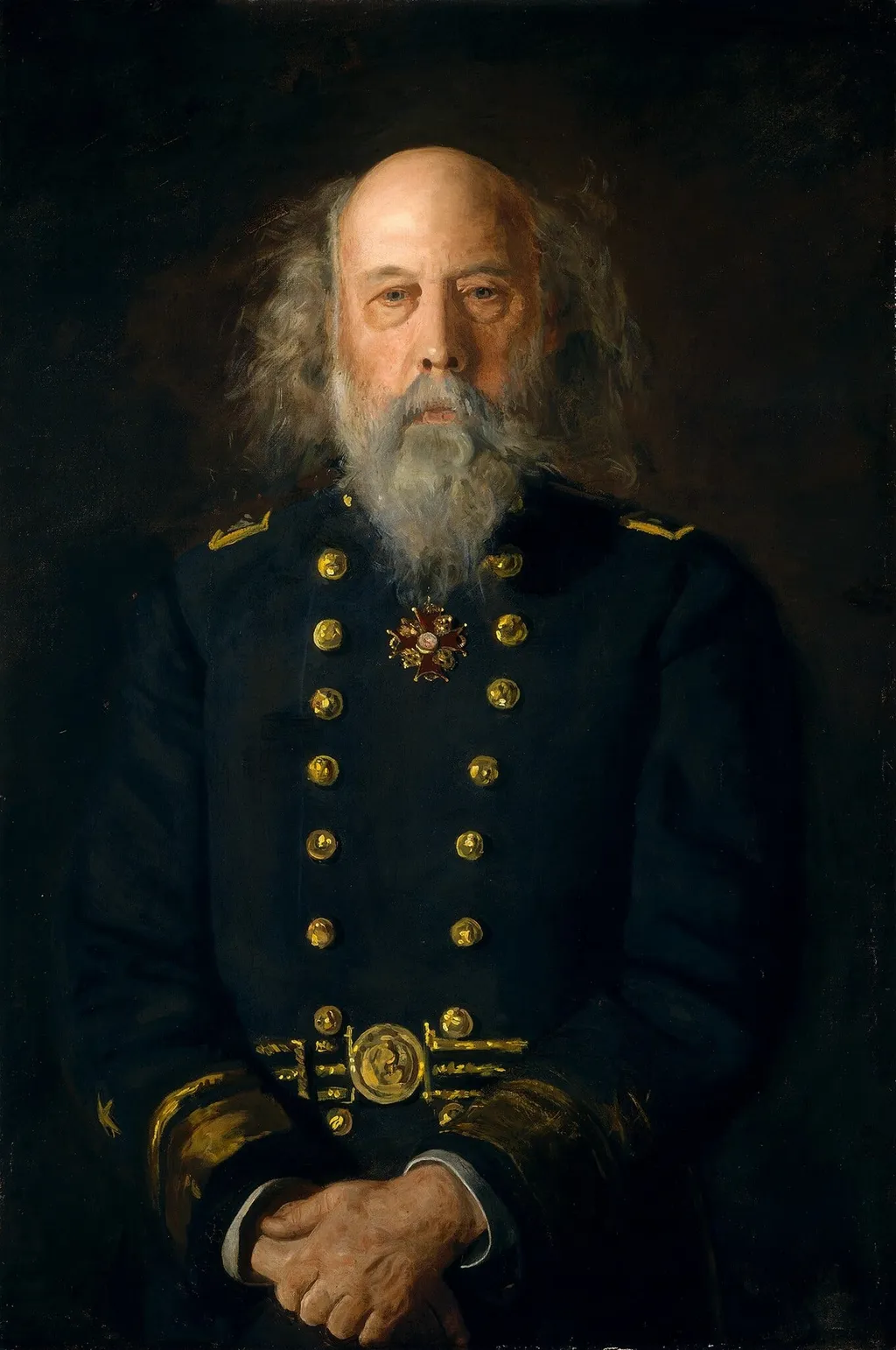
Rear Admiral George W. Melville is an oil painting by the Realist artist Thomas Eakins. It dates from 1905 and is held in the collection of the National Gallery of Art.
- Inscription
- Inscribed:lower right: EAKINS
About this work
Technique & Style
Melville is an oil painting executed on canvas, a medium consistent with Thomas Eakins's mature portrait practice.
Rear Admiral George W. Melville is an oil painting executed on canvas, a medium consistent with Thomas Eakins's mature portrait practice. The work is classified as a portrait and measures 101.6 cm in height by 68.5 cm in width, giving it a vertical format suited to a half- or three-quarter-length depiction of a seated sitter. Painted in 1905, it belongs to the late phase of Eakins's career, when his handling of oil on canvas was characteristically direct and naturalistic, with attention to the sitter's likeness and bearing rather than decorative embellishment.
History & Provenance
Thomas Eakins completed this oil on canvas portrait in 1905, depicting Rear Admiral George W. Melville; the work measures 101.6 cm by 68.5 cm. The painting entered the collection of Susan Macdowell Eakins in Philadelphia and later passed to her son Count Peter A. Salm. It was sold on 29 April 1983 through dealer Lothar Dohna in New York to H. John Heinz III and his wife, and in 1991 it was donated, partially and as a promised gift, to the National Gallery of Art in Washington, D.C.
The painting is held by the National Gallery of Art in Washington, D.C., where it entered the collection in 1991 as a partial and promised gift from Mr. and Mrs. H. John Heinz III of Pittsburgh, Pennsylvania. The Heinzes had acquired the work on 29 April 1983 through the New York dealer Lothar Dohna. Earlier ownership had passed from Susan Macdowell Eakins, the artist's widow, to Millicent Rogers of New York, and subsequently to her son, Count Peter A. Salm. No prior exhibition history is documented in the available records.
Context
Thomas Eakins painted Rear Admiral George W. Melville in 1905, an oil on canvas portrait that exemplifies his rigorous realism and interest in maritime authority. The work entered the National Gallery of Art collection in Washington, D.C., where it is catalogued as a portrait and studied alongside Eakins' other institutional subjects.
Its provenance traces from the artist's widow Susan Macdowell Eakins through Millicent Rogers to Count Peter A. Salm, and was sold in 1983 before being gifted to the National Gallery in 1991.
Overview
Painted in 1905, Thomas Eakins' portrait depicts Rear Admiral George W. Melville, a distinguished naval engineer and Arctic explorer. The work presents the sitter in a formal, three-quarter length view against a dark, neutral background that emphasizes his figure. Melville is shown wearing a dark blue naval uniform adorned with gold buttons and trim, his hands clasped firmly before him.
His face, framed by a long white beard and hair, conveys a sense of stern resolve and intellectual depth characteristic of Eakins' approach to portraiture. The artist employs a realistic style, utilizing visible brushwork to render the texture of the fabric and the subtle modeling of the face with psychological intensity. Created late in Eakins' career, this painting reflects his enduring commitment to truthful observation and his ability to capture the character of American figures.
The composition avoids idealization, focusing instead on the physical presence and dignity of the subject, aligning with Eakins' broader contribution to American Realism.
Subject & Meaning
The portrait depicts Rear Admiral George W. Melville, identifiable by his dark blue, gold-trimmed military jacket and prominent gold buttons, indicative of his naval rank. He is shown with a long white beard and hair, his hands clasped together in a composed posture. The depiction emphasizes his professional identity and a sense of dignified presence, characteristic of formal military portraiture.
Own this work as a print
Artist & collection
Artist
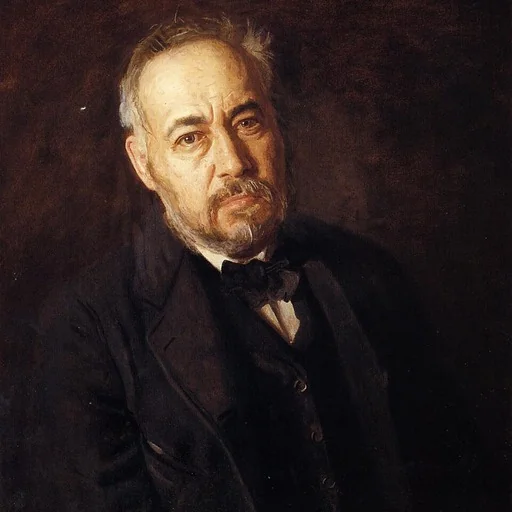
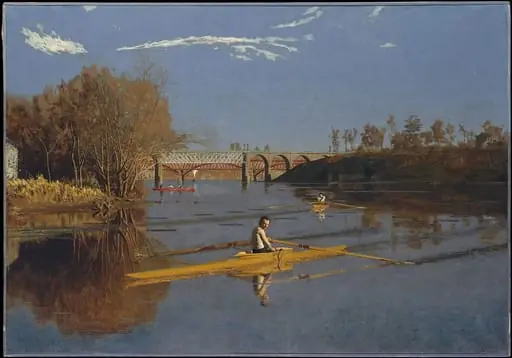
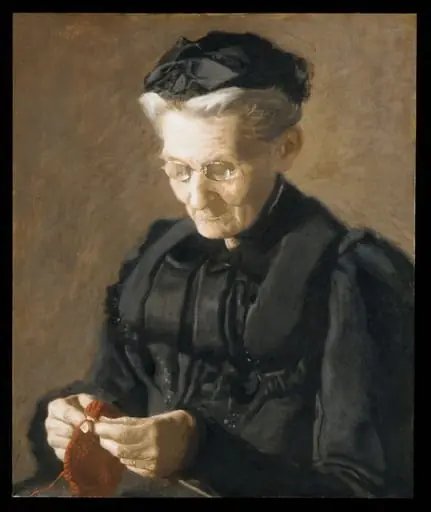
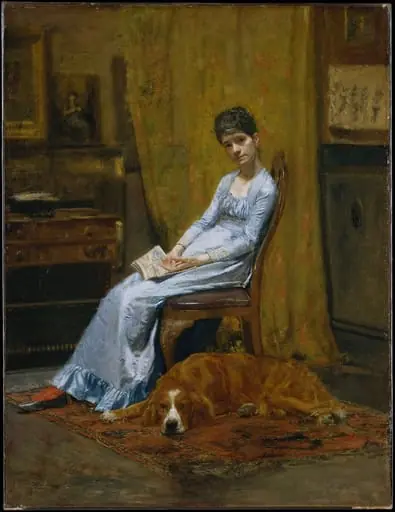
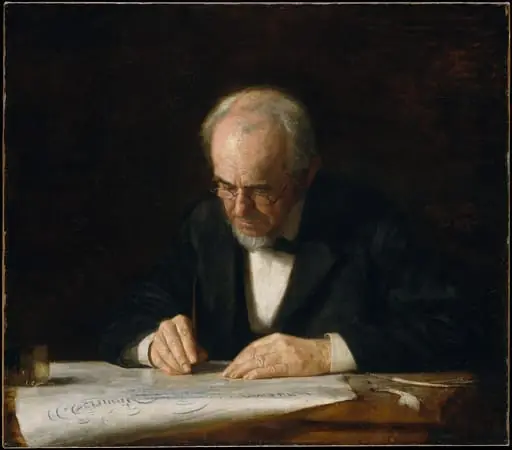
Thomas Cowperthwait Eakins (; July 25, 1844 – June 25, 1916) was an American realist painter, photographer, sculptor, and fine arts educator.

- Portrait of Piotr Vannovsky
 George Cotton Smith
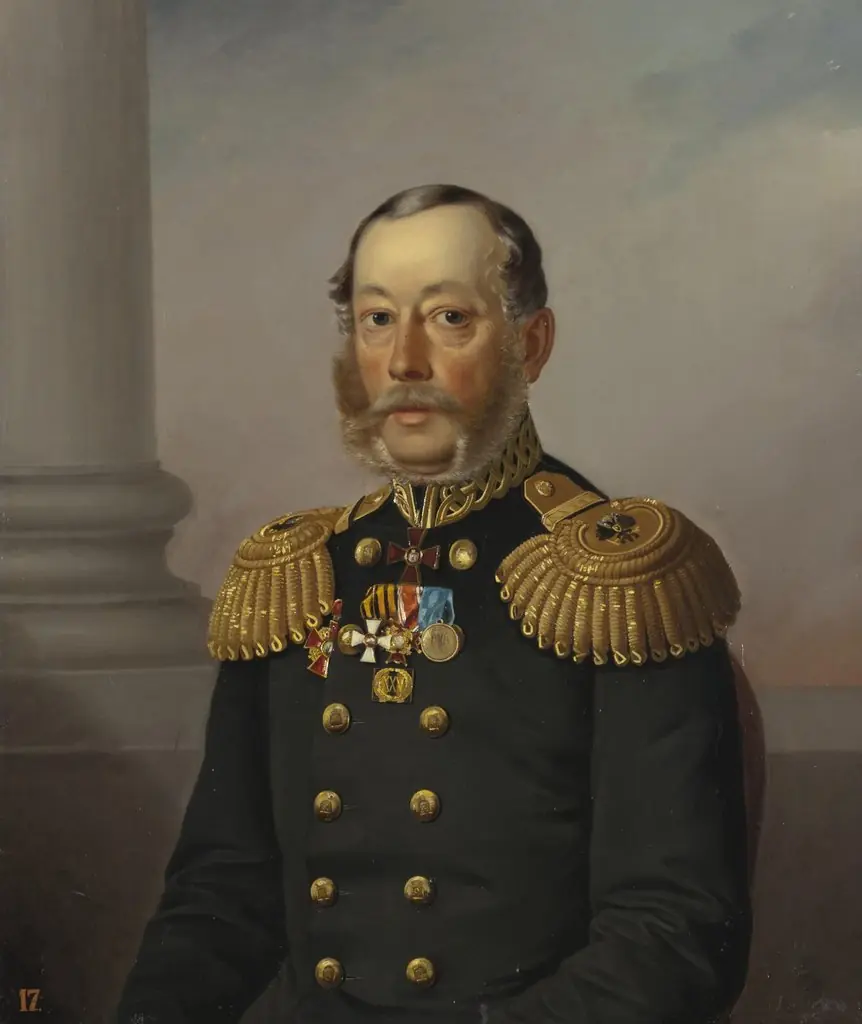 Portrait of S.S. Nakhimov
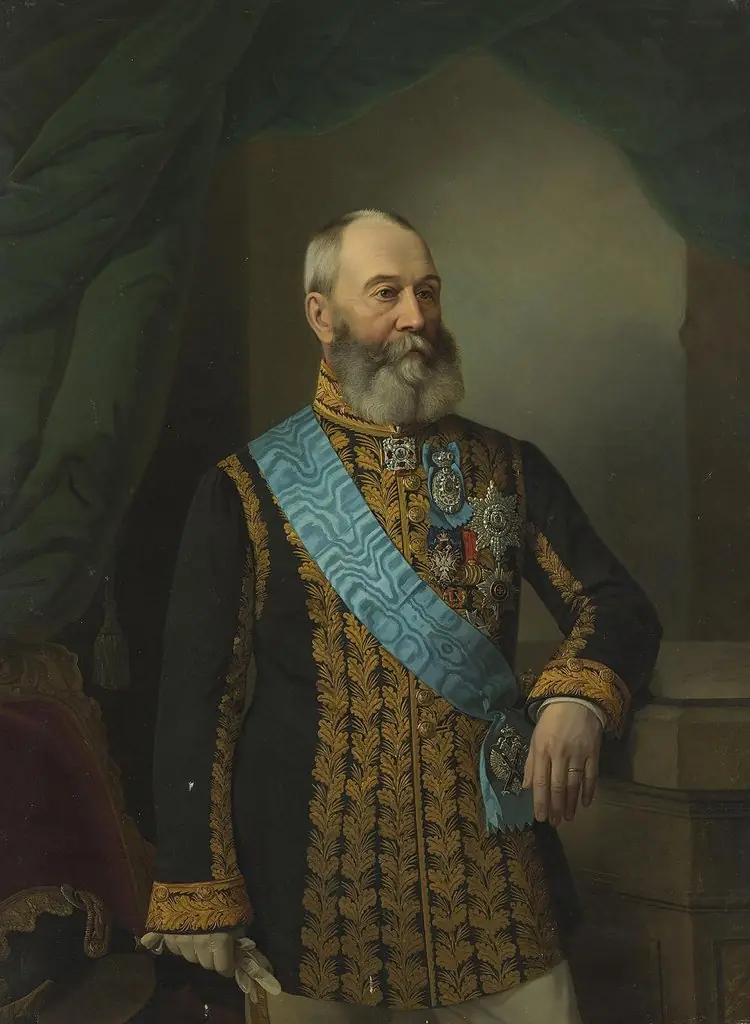 Portrait of P.P. Gagarin
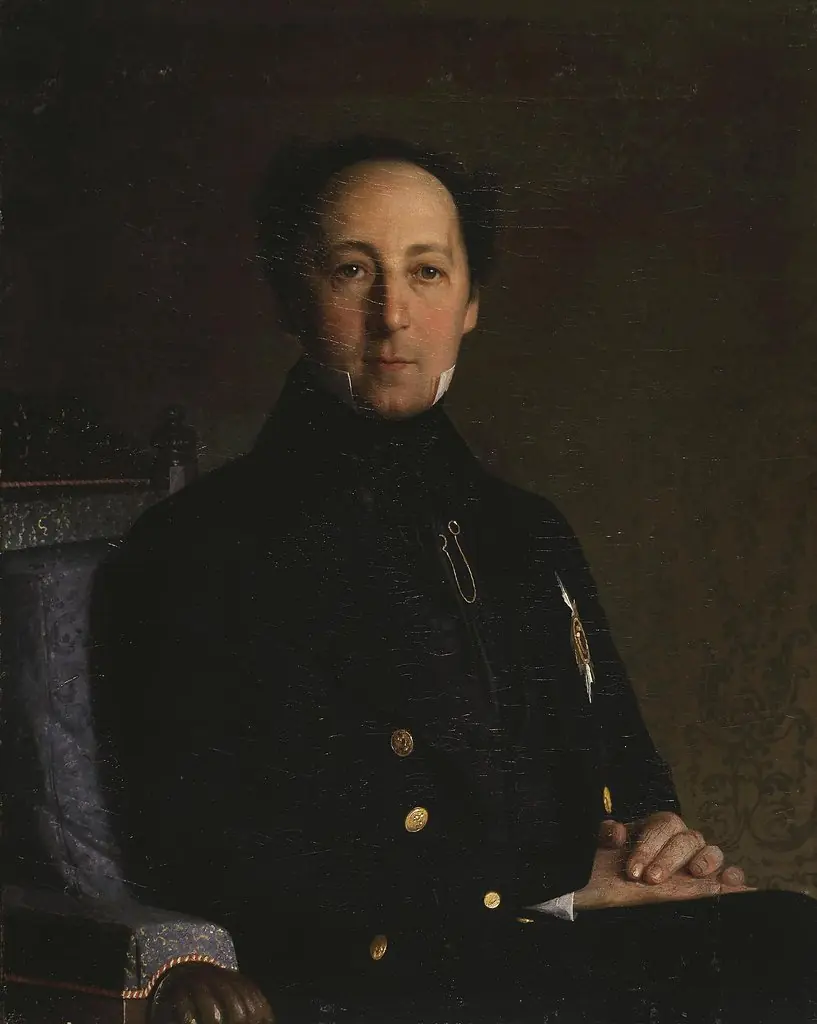 Fyodor Pryanishnikov
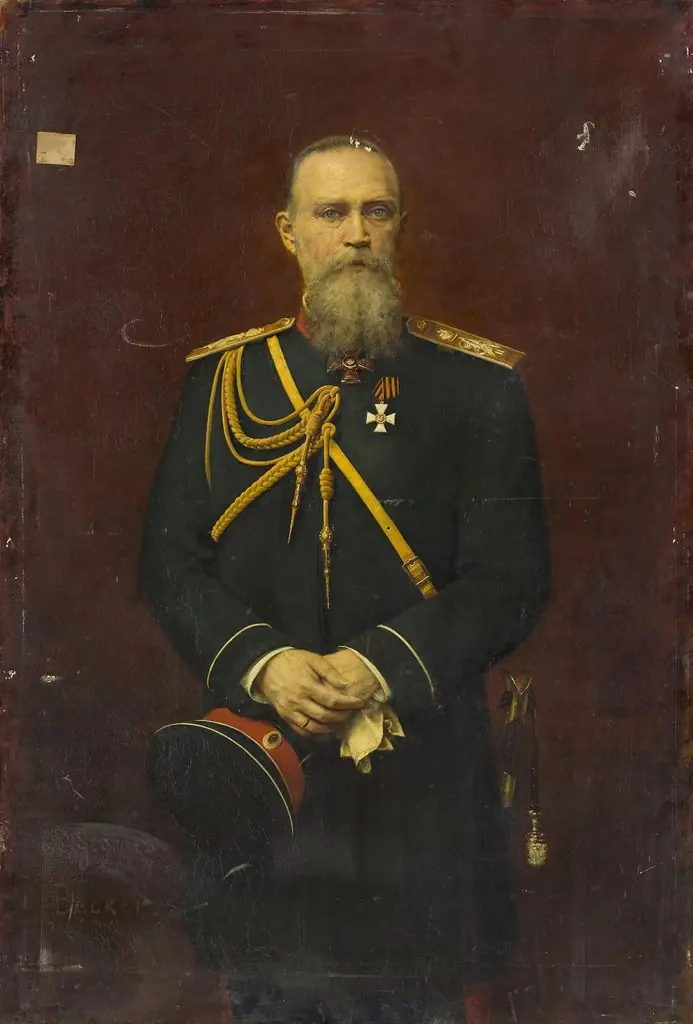 Portrait of General Mikhail Chertkov
 Paul Sinebrychoff vanhempi
 Retrato de Don Alejandro Díaz
 Edward Lewis Pryse of Peithyll
 Portrait of Kazimierz Grocholski
 Portrait of Adam Wyleżyński
 Portrait of Count Alexander von Benkendorff (1781-1844) (copy)