Artwork
The Laundresses
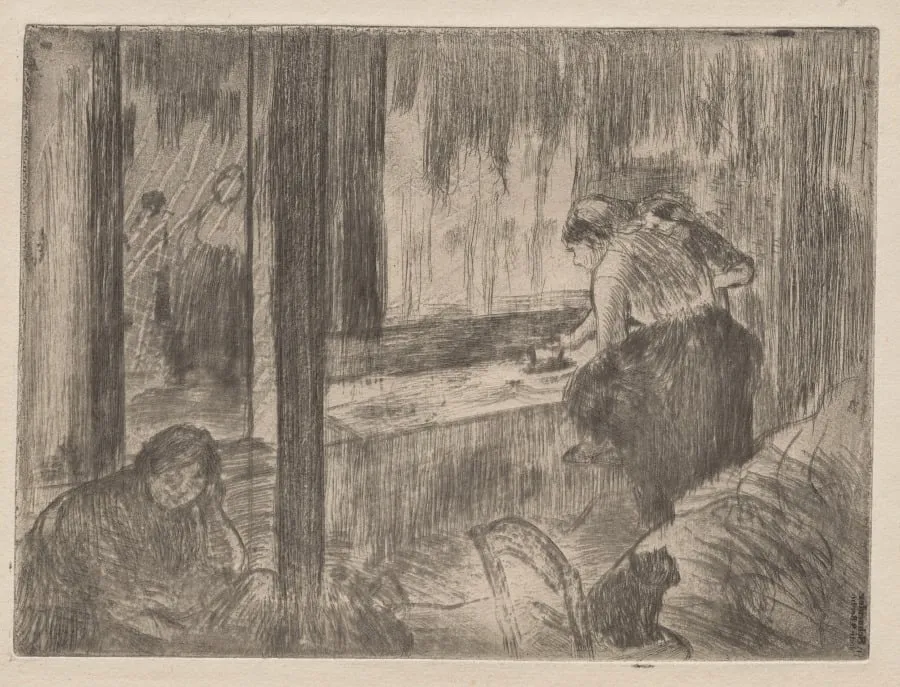
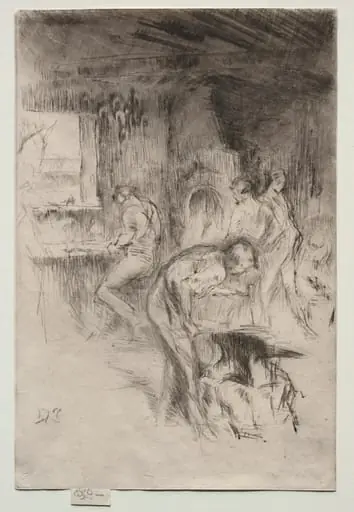
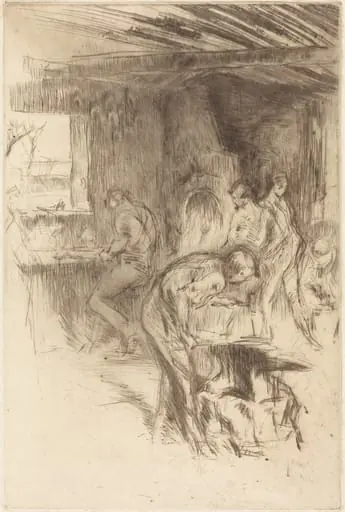
The Laundresses is a print by the Impressionist artist Edgar Degas. It dates from 1880 and is held in the collection of the Cleveland Museum of Art.
- Accession no.
- 2020.223
About this work
Overview
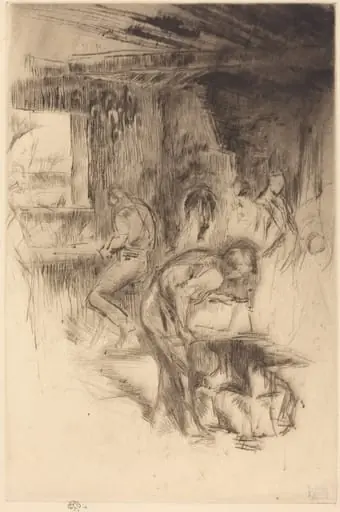
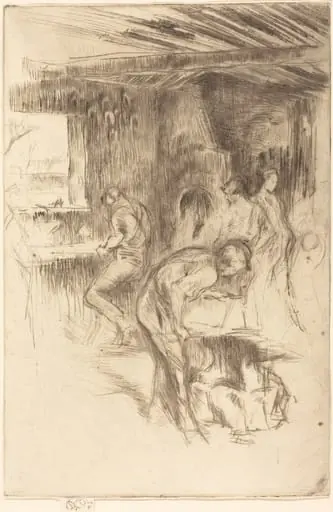
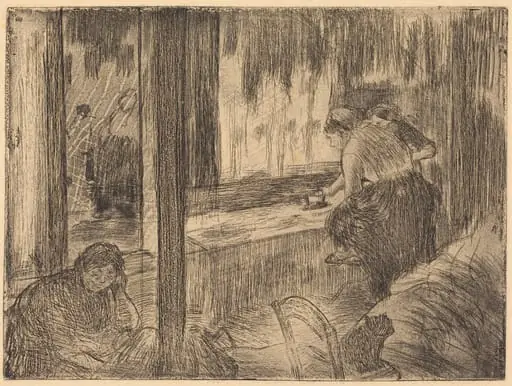
The Laundresses is a print by Edgar Degas, created using intaglio techniques. It depicts a scene of labor in a Parisian laundry shop.
Subject & Meaning
The print shows three young women engaged in physically demanding tasks, their postures conveying the strain of their work. The large pile of laundry emphasizes the scale of their labor.
Technique & Style
Degas used etching to create the image, scratching it into a metal plate before transferring it to paper with ink. The resulting print is characterized by its detailed rendering of the women's movements and the laundry surroundings.
Context
Laundresses were a common subject in contemporary literature, and Degas's print reflects this cultural interest. The work is one of the artist's explorations into printmaking during the late 19th century.
Artist & collection
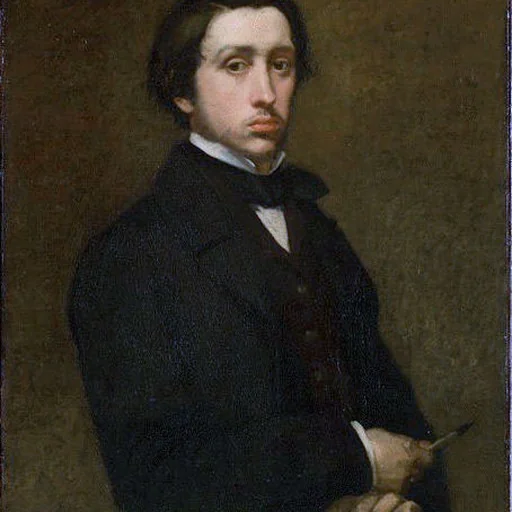
Artist
Born Hilaire-Germain-Edgar De Gas on 19 July 1834 in Paris, Edgar Degas came from an affluent banking family with aristocratic roots and spent his childhood among the cultivated circles of the French capital.