Artwork
The Coppersmith
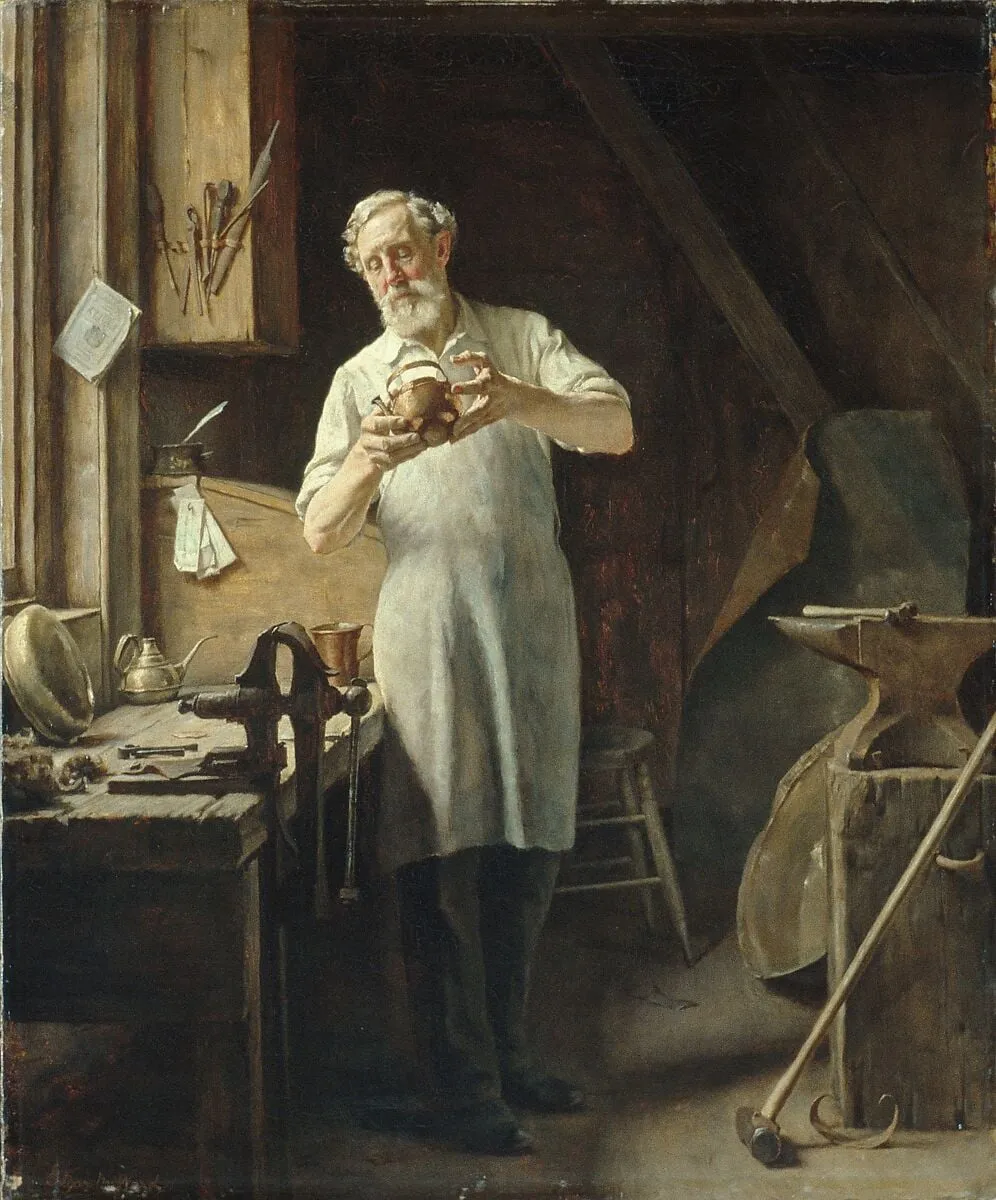
The Coppersmith is an oil painting by the American Impressionist artist Edgar Melville Ward. It dates from 1898 and is held in the collection of the Metropolitan Museum of Art.
About this work
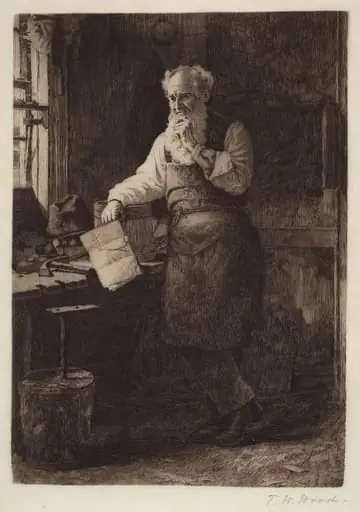
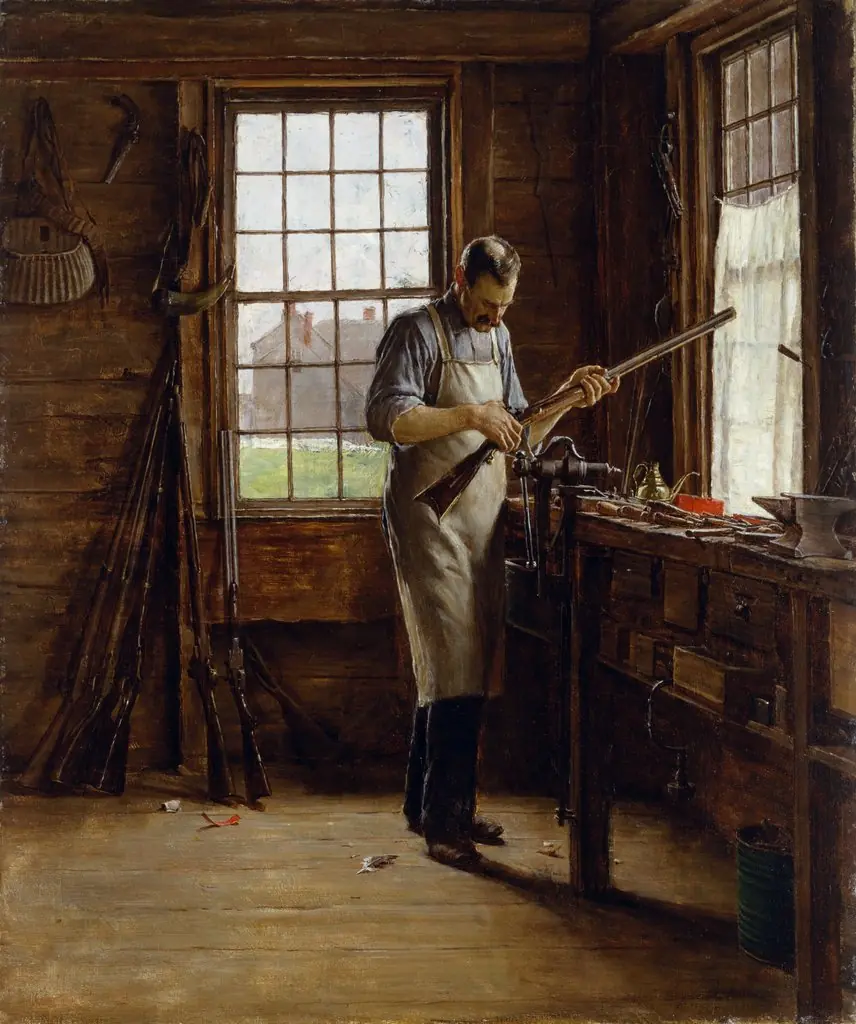
A man hammers a copper pot over an anvil in a dim workshop. Ward painted it in New York in 1898, as factories were replacing small shops. Light from the window falls only on his hands and the glowing metal, leaving everything else in shadow. The work feels quiet and real.
Technique & Style
The painting’s formal qualities reflect a realist approach to genre painting, focusing on narrative detail and spatial depth.
The Coppersmith is an oil on canvas painting measuring about 60.5 × 53.3 cm, housed in the Metropolitan Museum of Art’s American Wing. Executed in 1898, the work belongs to the genre of interior scenes and portrays a solitary craftsman engaged in metalworking, his figure rendered with meticulous realism. The composition emphasizes the occupational activity, using a restrained palette and careful modeling of light to convey the texture of tools and the interior space.
Brushwork is controlled, allowing subtle gradations of tone that highlight the tactile quality of the coppersmith’s labor. The painting’s formal qualities reflect a realist approach to genre painting, focusing on narrative detail and spatial depth.
History & Provenance
Edgar Melville Ward's 1898 oil painting, The Coppersmith, is part of the permanent collection of the Metropolitan Museum of Art in New York. The work is housed within the museum's American Wing, where it is classified as a genre scene depicting a man at work in an interior setting. While the provided records confirm the artwork's presence in the Met's holdings and specify its medium and dimensions, the specific inventory or accession number is not listed in the available documentation.
Furthermore, the current sources do not contain information regarding the painting's exhibition history or a chronological list of public displays. The work remains a documented part of the institution's collection, representing late 19th-century American genre painting.
Context
Edgar Melville Ward (active late 19th century) created The Coppersmith in 1898, an oil on canvas genre scene depicting an interior with a solitary man at work. The painting is part of The American Wing at the Metropolitan Museum of Art, underscoring its significance within the museum’s collection of American art. Its composition and subject matter reflect the era’s interest in realistic depictions of everyday labor, situating the work within the broader narrative of American genre painting during the 1890s.
Overview
Edgar Melville Ward, an American genre painter, created The Coppersmith around 1898. This oil on canvas depicts a solitary craftsman engaged in his trade within a dimly lit workshop. The painting exemplifies Ward's focus on everyday subjects, rendered with a realistic yet evocative approach characteristic of American art at the turn of the century.
Subject & Meaning
The painting centers on a coppersmith, shown mid-action as he hammers a metal pot over an anvil. His focused labor takes place in a shadowed interior, emphasizing the manual skill and dedication to his craft. This portrayal quietly acknowledges the individual artisan's role during a period of industrial change.
Artist & collection

Artist
Edgar Melville Ward (1839–1915) was an American genre painter. Ward was born in Urbana, Ohio. His elder brother was the sculptor, John Quincy Adams Ward. He studied at the National Academy of Design in New York City…