Artwork
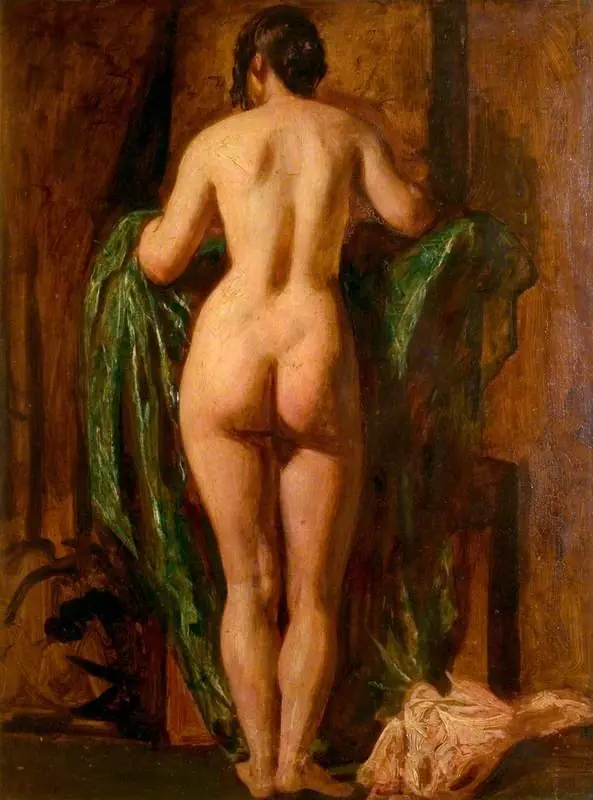
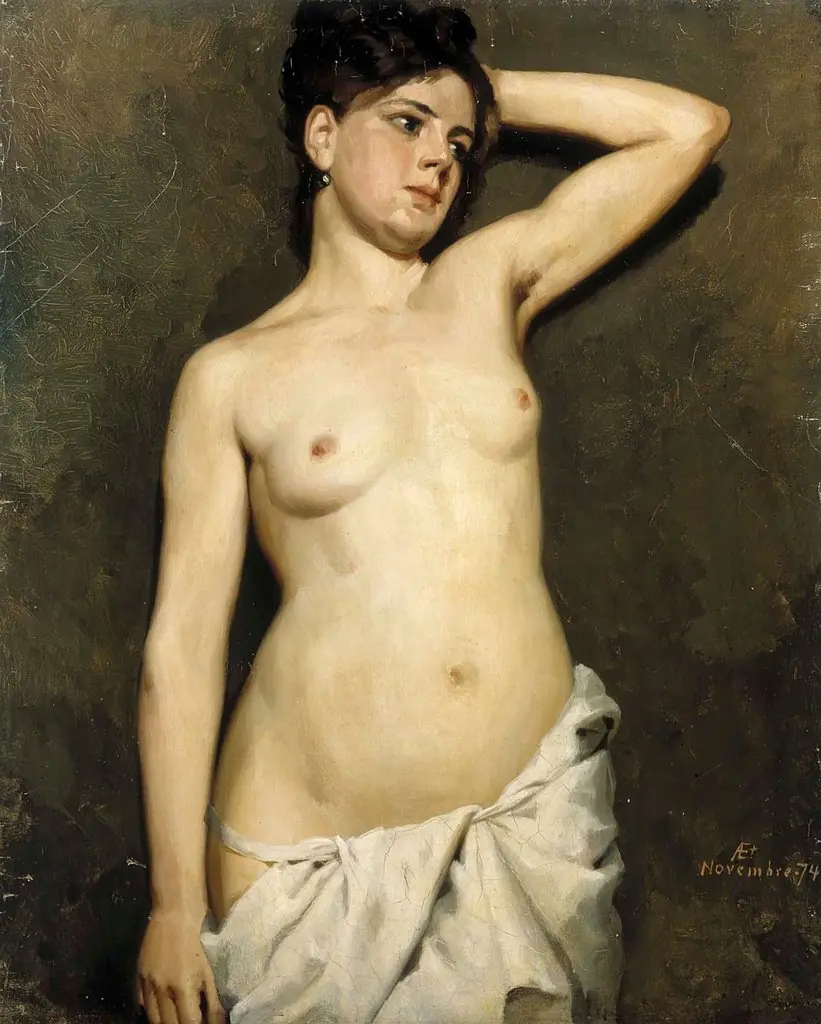
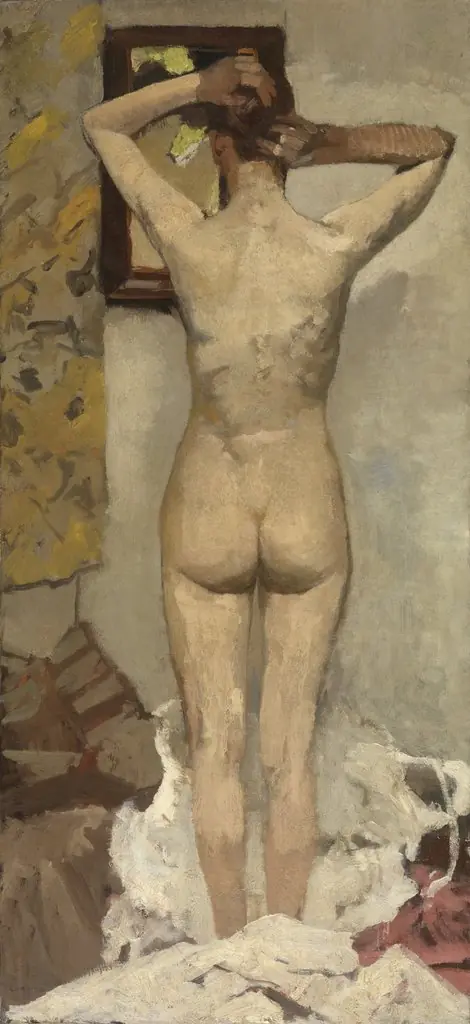
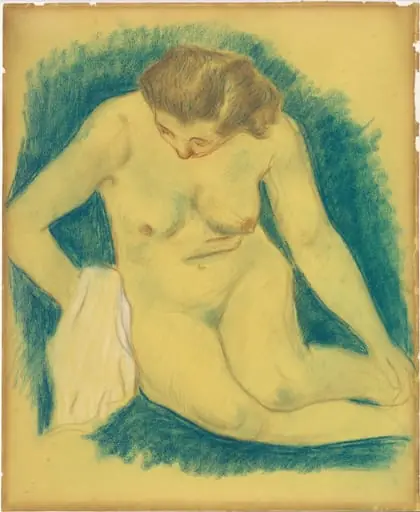
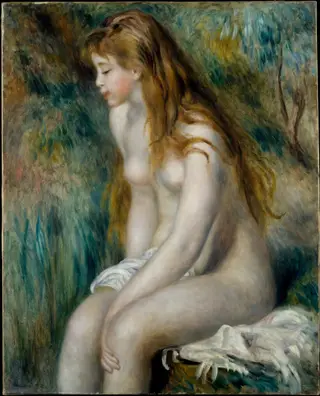
Female Nude or After the bath
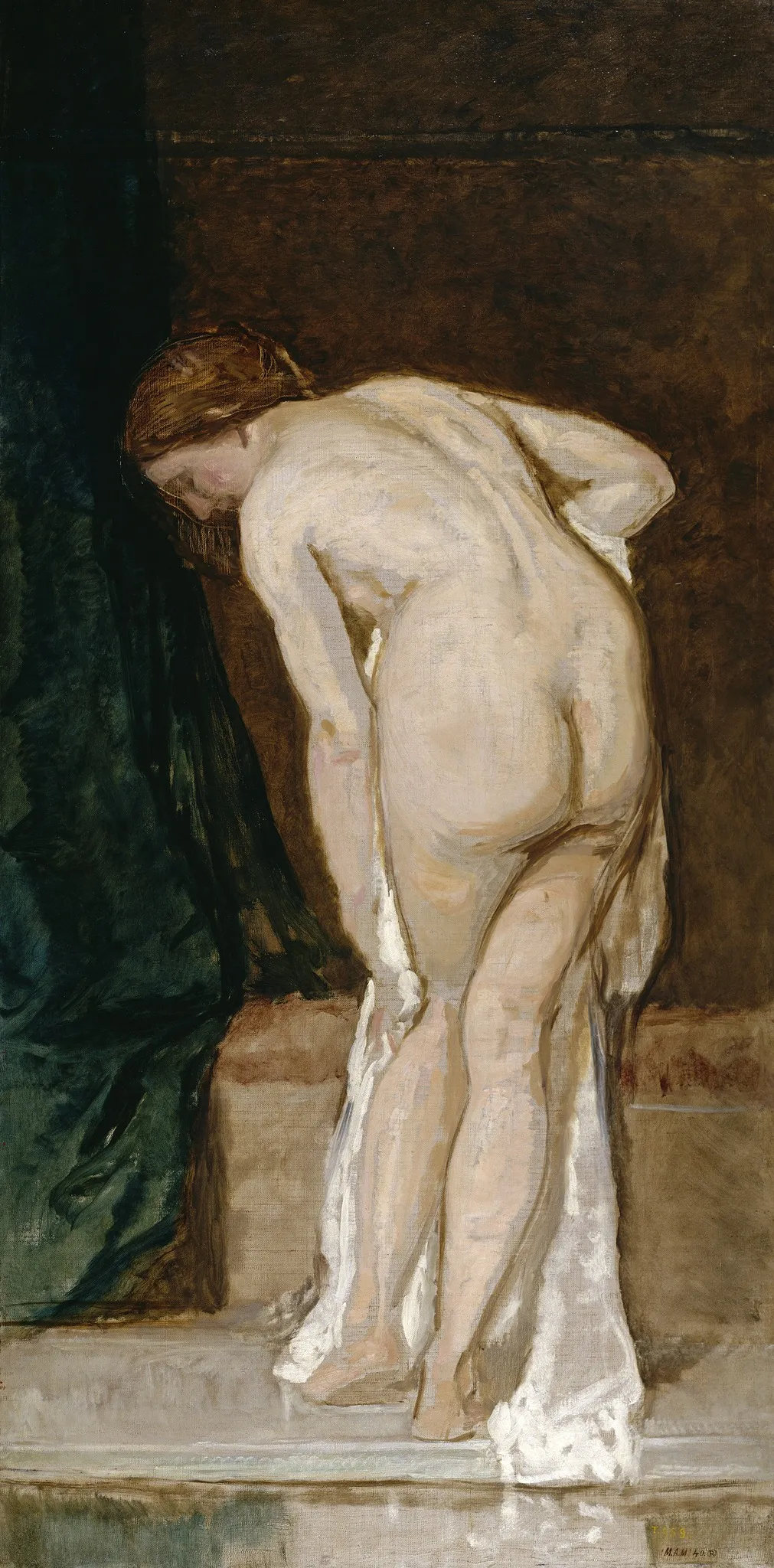
Female Nude or After the bath is an oil painting by the Spanish Baroque Tenebrist artist Eduardo Rosales. It dates from 1869 and is held in the collection of the Museo del Prado.
About this work
Overview
Eduardo Rosales painted this oil-on-canvas work in 1869, capturing a solitary female figure in a private moment after bathing. Though rooted in Spanish artistic traditions, the piece reflects influences from the Italian Purismo movement, which emphasized clarity of form and emotional restraint. The painting resides in the Museo del Prado, Madrid, as part of its 19th-century Spanish collection.
Subject & Meaning
The figure, viewed from behind, stands quietly in a dimly lit interior, her posture suggesting introspection rather than theatrical display.
The figure, viewed from behind, stands quietly in a dimly lit interior, her posture suggesting introspection rather than theatrical display. Rosales avoids overt sensuality, presenting the nude as a quiet, everyday presence. The domestic setting and subdued demeanor align with his broader interest in genre scenes that convey dignity in ordinary moments, distancing the work from classical idealism.
Technique & Style
Rosales employs chiaroscuro to model the figure with soft transitions between light and shadow, enhancing the tactile quality of the skin. The background is built with thicker, more textured brushwork, creating contrast that draws focus to the body. Delicate, flowing strokes define the form, while the surrounding darkness remains unadorned, reinforcing the sense of stillness and intimacy.
History & Provenance
Completed in 1869, the painting entered the Museo del Prado’s collection shortly after its creation. Rosales, known for historical and genre subjects, produced few nudes, making this work a rare example of his engagement with the female form. Its acquisition by the Prado reflects its recognition within Spanish academic circles of the time, though it was not widely exhibited publicly until later.
Context
In mid-19th century Spain, depictions of the nude were often tied to mythological or allegorical themes. Rosales’ choice to portray an anonymous woman in a private, non-narrative moment diverged from convention, aligning more with emerging realist tendencies. His exposure to Italian Purismo encouraged a return to compositional clarity, which tempered the dramatic intensity of traditional Spanish tenebrism.
Legacy
The painting remains a quiet anomaly in Rosales’ oeuvre, noted for its restraint and psychological nuance. While not widely reproduced or studied, it contributes to understanding how Spanish artists negotiated European influences while developing a more intimate, domestic mode of representation. Its presence in the Prado ensures continued access for scholars examining the evolution of Spanish realism.
Artist & collection
Artist
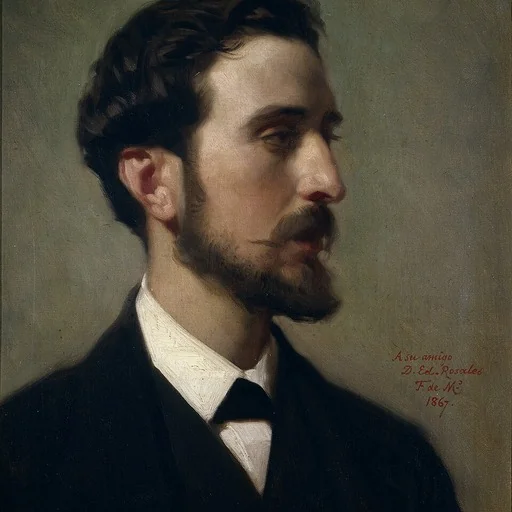
Eduardo Rosales Gallinas (4 November 1836 – 13 September 1873) was a Spanish painter. He was an adherent of the Italian-based art movement known as "Purismo" and specialized in historical scenes.

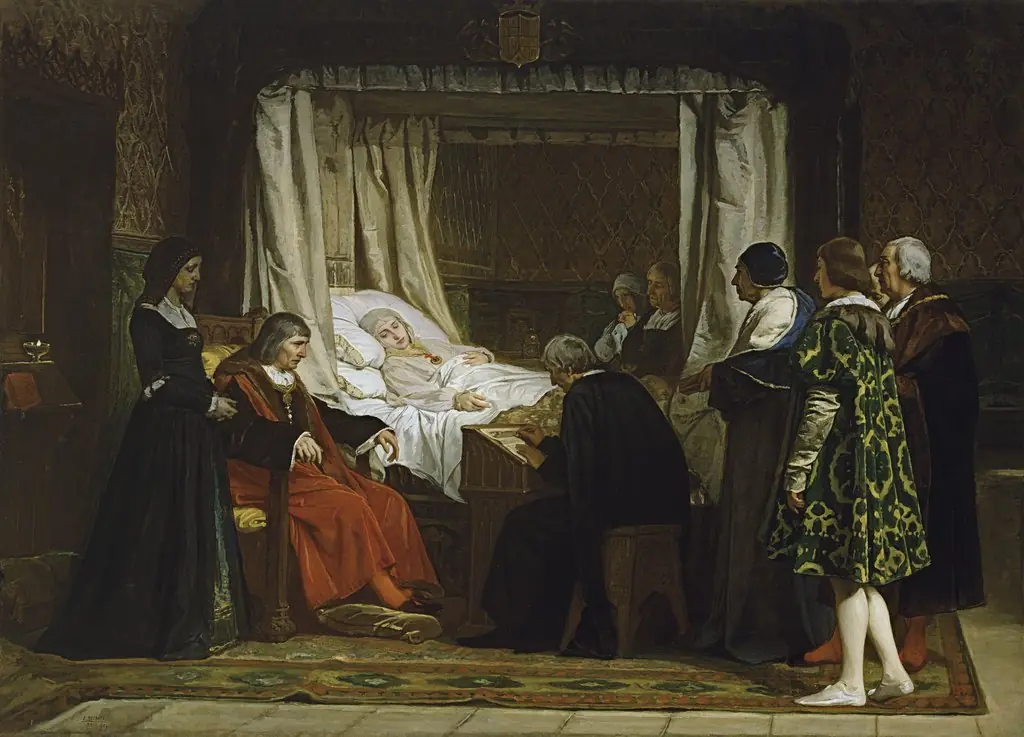 Queen Isabel la Católica dictating her last will and testament
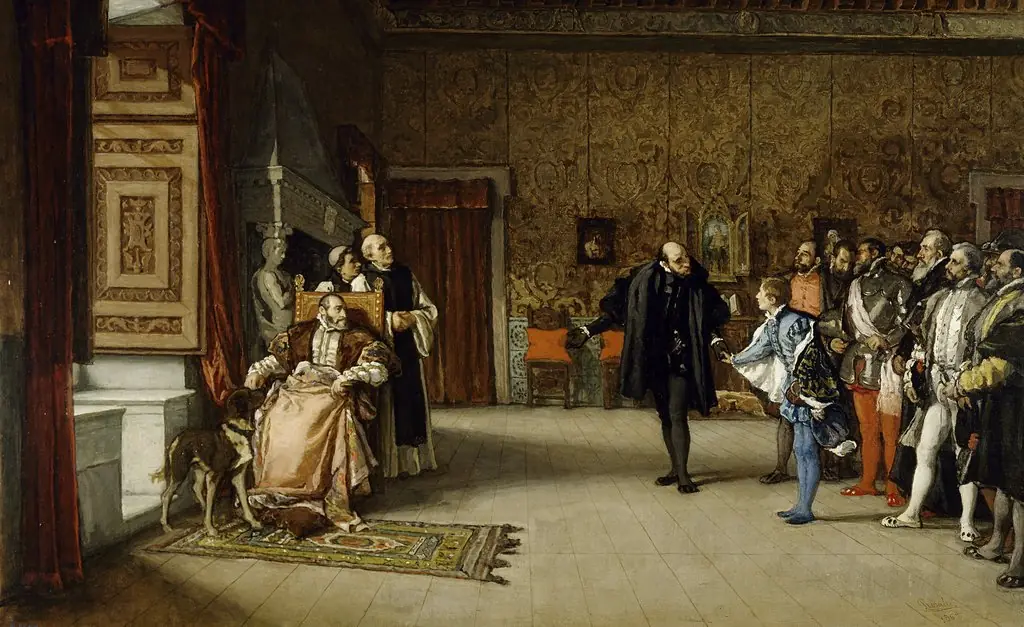 Juan de Austria's presentation to Emperor Carlos V in Yuste
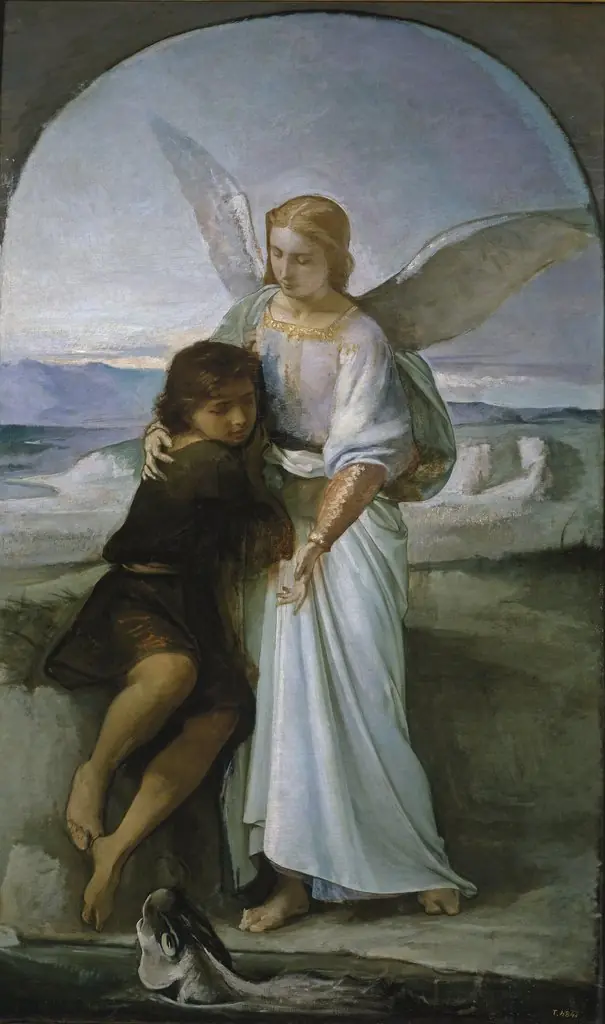 Tobias and the Angel
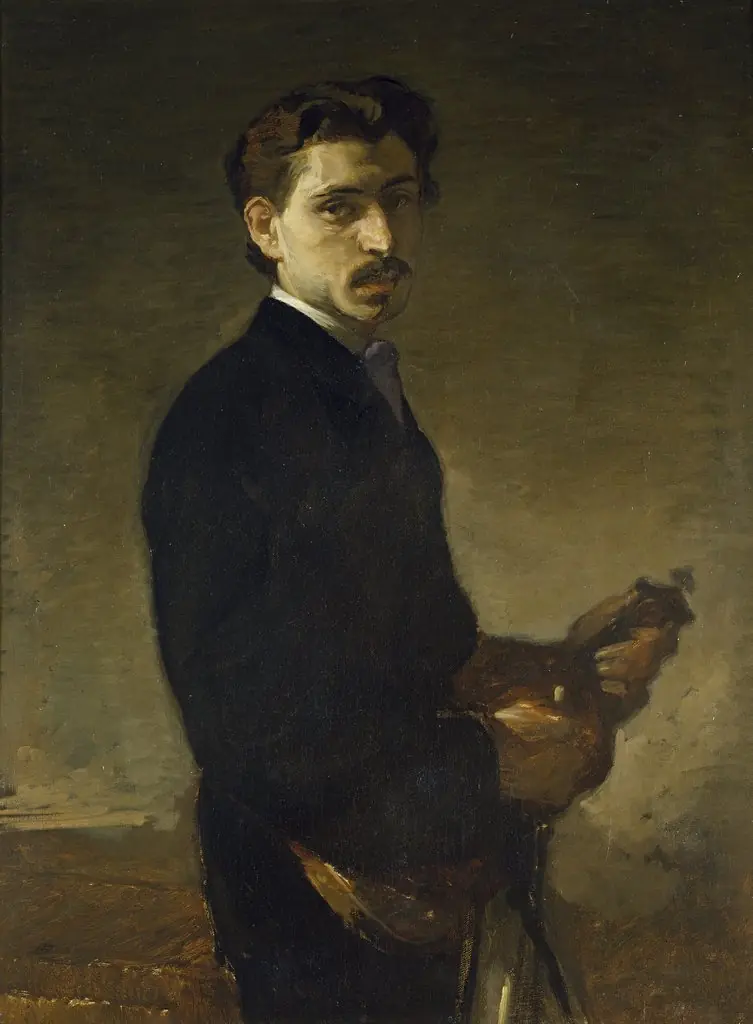 Ettore Pinelli, the Violinist
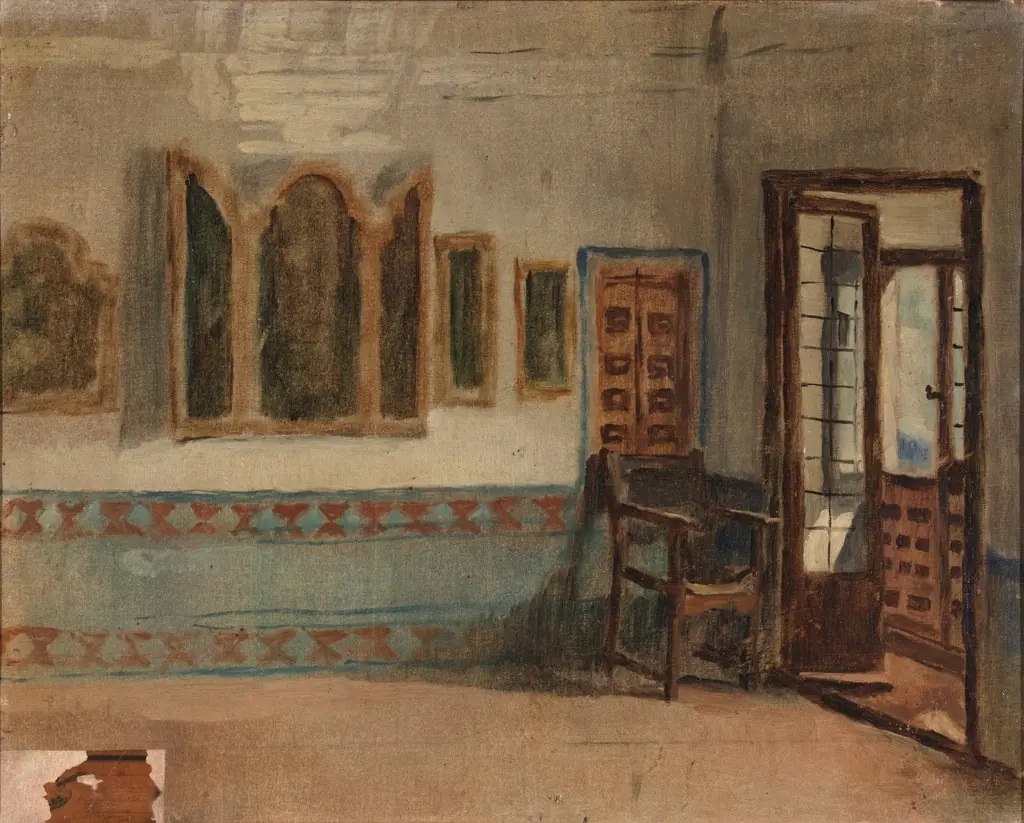 Celda prioral del Monasterio de El Escorial
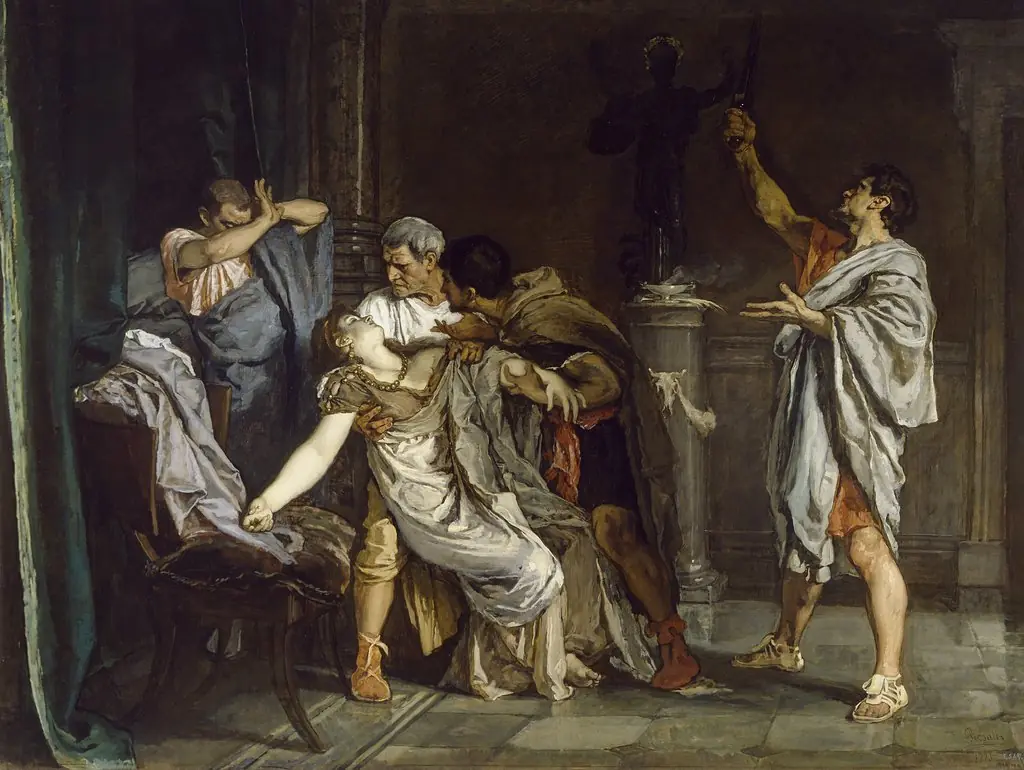 The Death of Lucretia
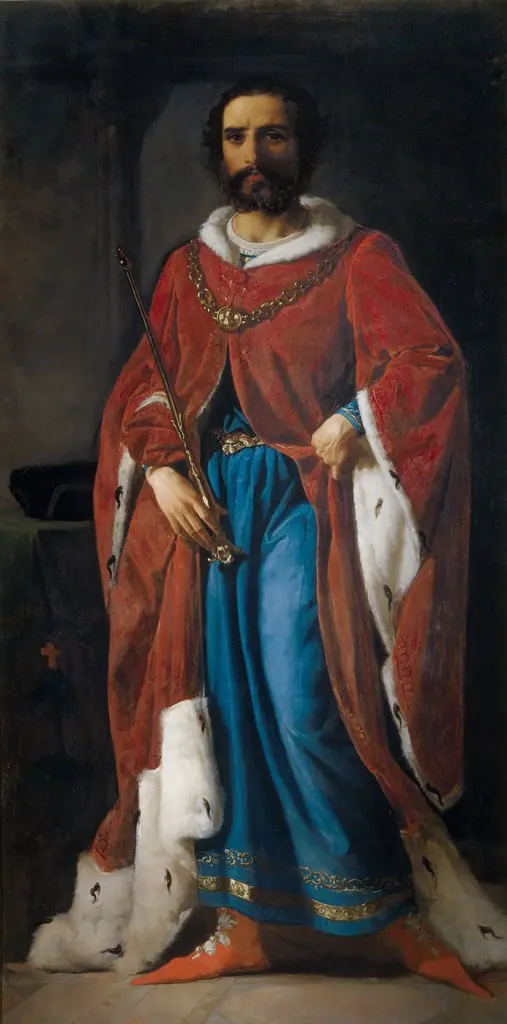 Don García Aznar; conde de Aragón
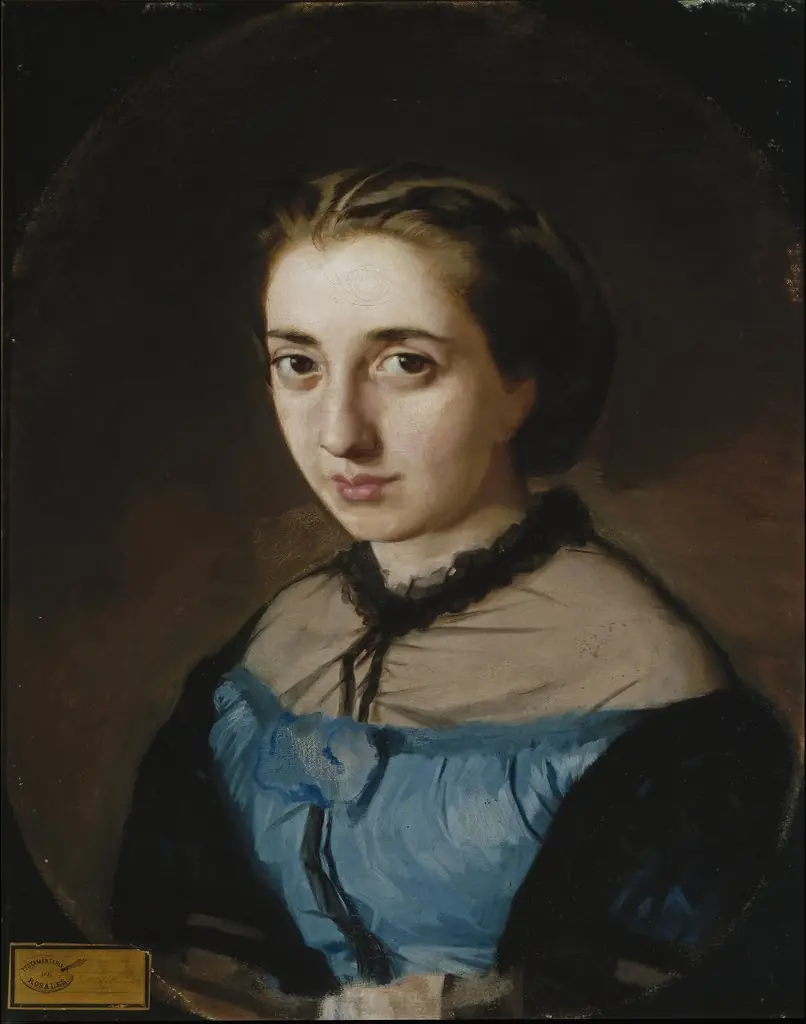 Maximina Martínez de la Pedrosa, the Artist's Wife