Artwork
The Golden Stairs
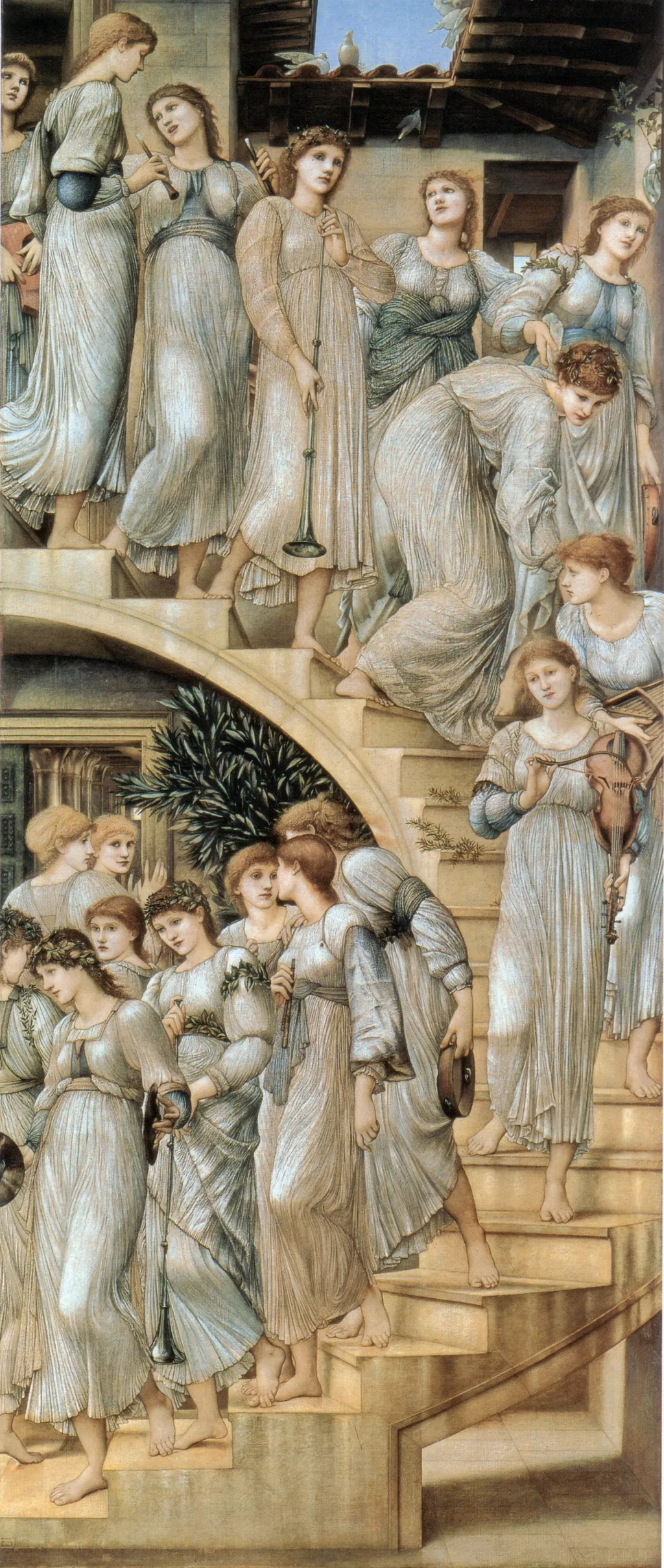
The Golden Stairs is an oil painting by the Aestheticist artist Edward Burne-Jones. It dates from 1888 and is held in the collection of the National Gallery.
About this work
Overview
The Golden Stairs is a painting by Edward Burne-Jones, created between 1876 and 1880. It features a group of young women descending a spiral staircase, dressed in classically inspired, light-colored robes, and carrying musical instruments. The work is characterized by its dreamy, non-narrative quality and emphasis on mood and color harmony.
Subject & Meaning
Unlike many of Burne-Jones's works, The Golden Stairs lacks a literary source and clear narrative. Instead, it evokes a serene, enchanting atmosphere, with the musicians appearing almost spectral. Their destination and identities remain ambiguous, focusing the viewer's attention on the overall ambiance.
Technique & Style
The painting exhibits characteristics of Aesthetic movement art from the 1860s and 1870s, with a focus on color harmony and mood.
The painting exhibits characteristics of Aesthetic movement art from the 1860s and 1870s, with a focus on color harmony and mood. Burne-Jones employed smooth, flowing lines and a predominantly pale, shimmering color palette (white, gold, silver, with noted blues and grays in visual interpretations). The style draws parallels with the works of Piero della Francesca, whose frescoes Burne-Jones had studied.
History & Provenance
Conceived in 1872 after a trip to Italy, The Golden Stairs was begun in 1876 and hurriedly completed in April 1880 for the Grosvenor Gallery exhibition. Models for the figures included professional models for the bodies and acquaintances of the artist for the heads, with identifiable subjects including Burne-Jones's daughter Margaret.
Context
The Golden Stairs reflects Burne-Jones's exposure to Italian art, particularly Piero della Francesca, and aligns with the Aesthetic movement's emphasis on beauty and mood over narrative. The use of classical robes and musical instruments adds to its timeless, old-world feel.
Legacy
The painting is often classified as Symbolist due to its lack of clear narrative and focus on evoking a mood. It remains one of Burne-Jones's most recognized works, appreciated for its serene and enchanting qualities.
Artist & collection
Artist
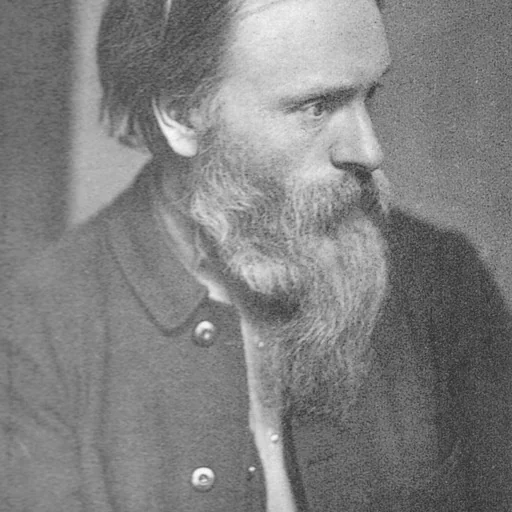
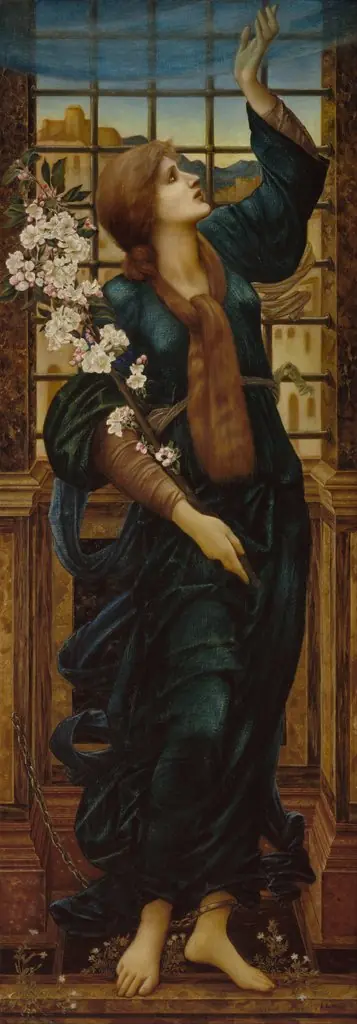
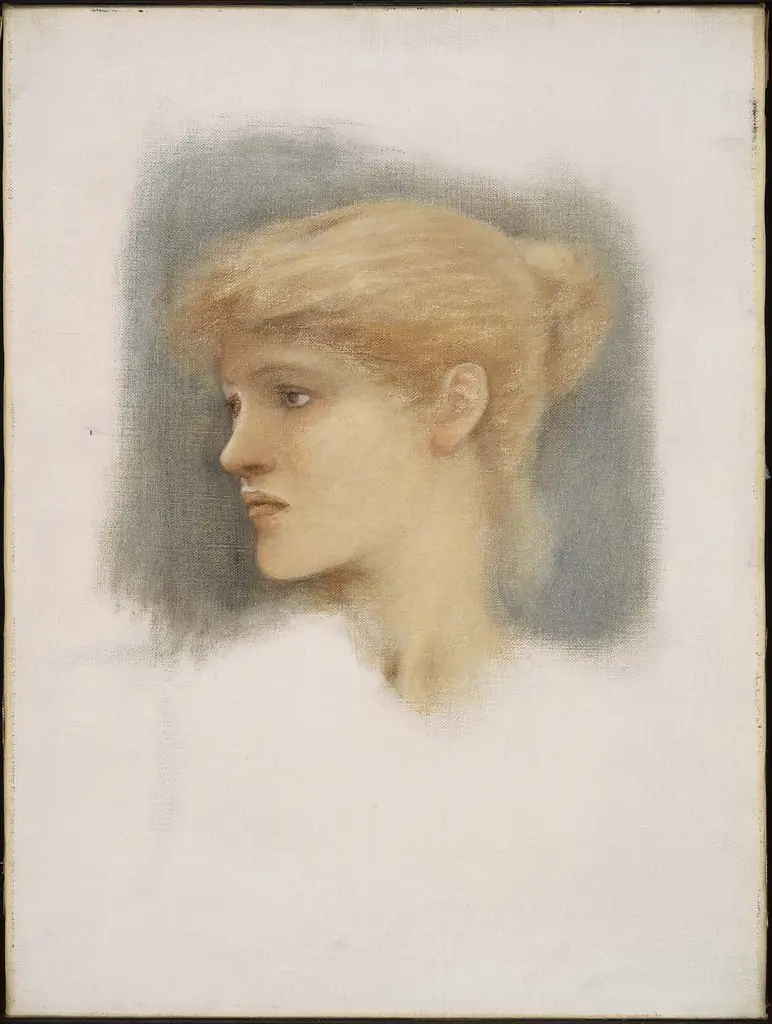
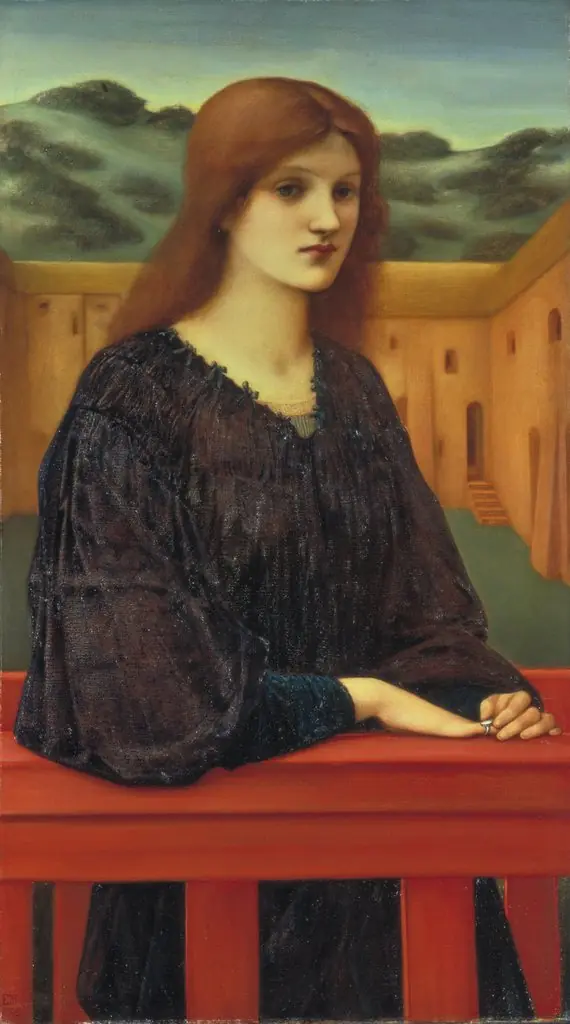
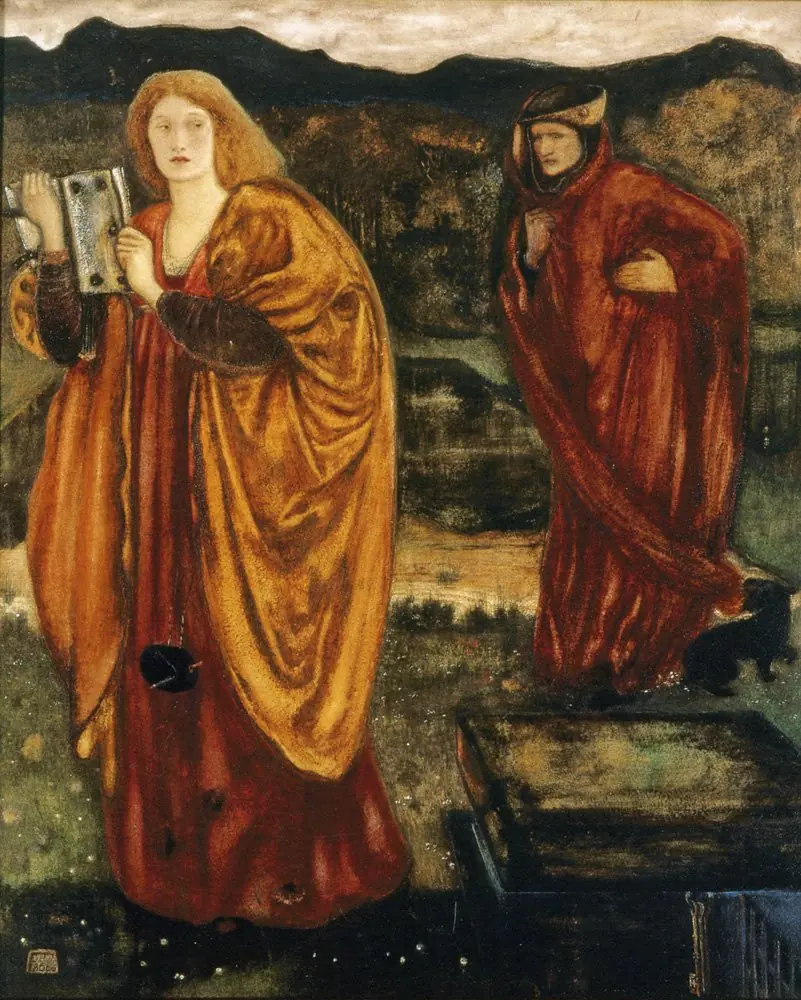
Sir Edward Coley Burne-Jones, 1st Baronet (; 28 August 1833 – 17 June 1898) was an English painter and designer associated with the Pre-Raphaelite Brotherhood's style and subject matter.


 Studied in the Pre-Raphaelites course