Artwork
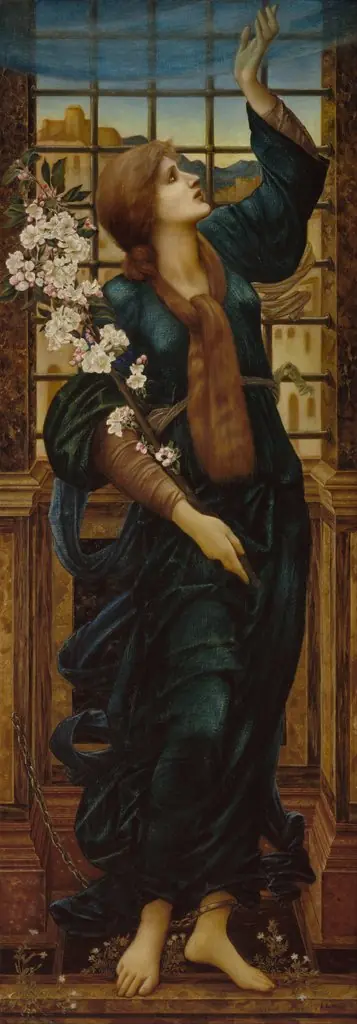
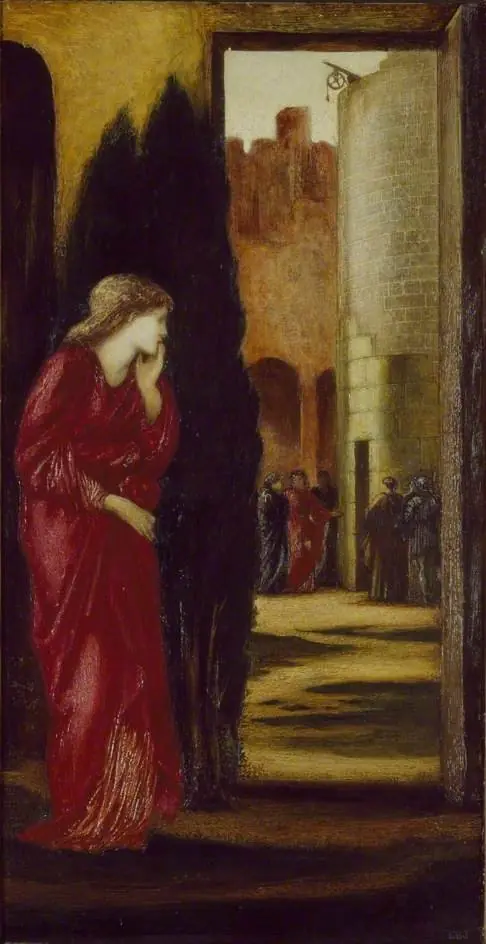
Dorigen of Bretagne longing for the safe return of her husband

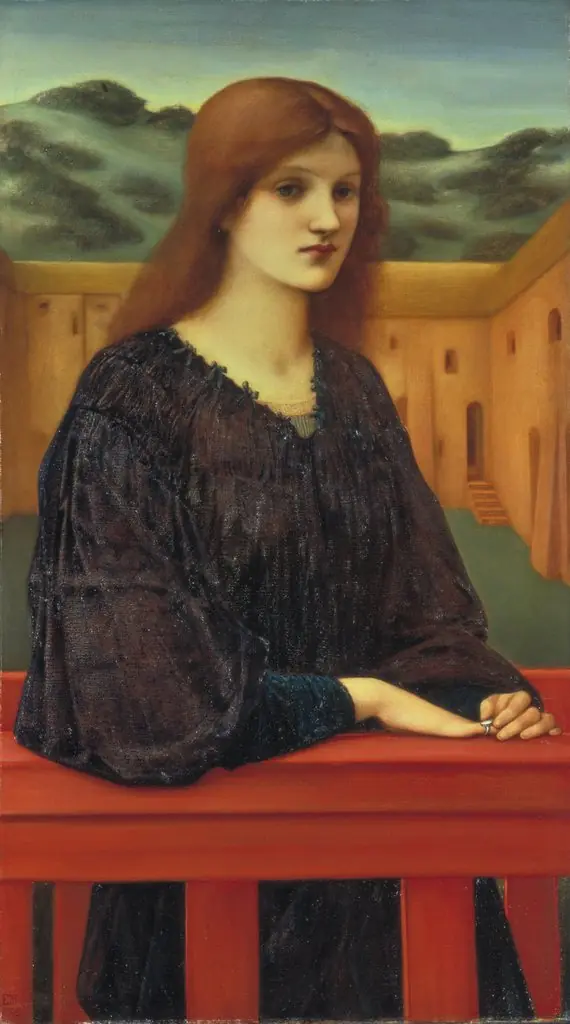
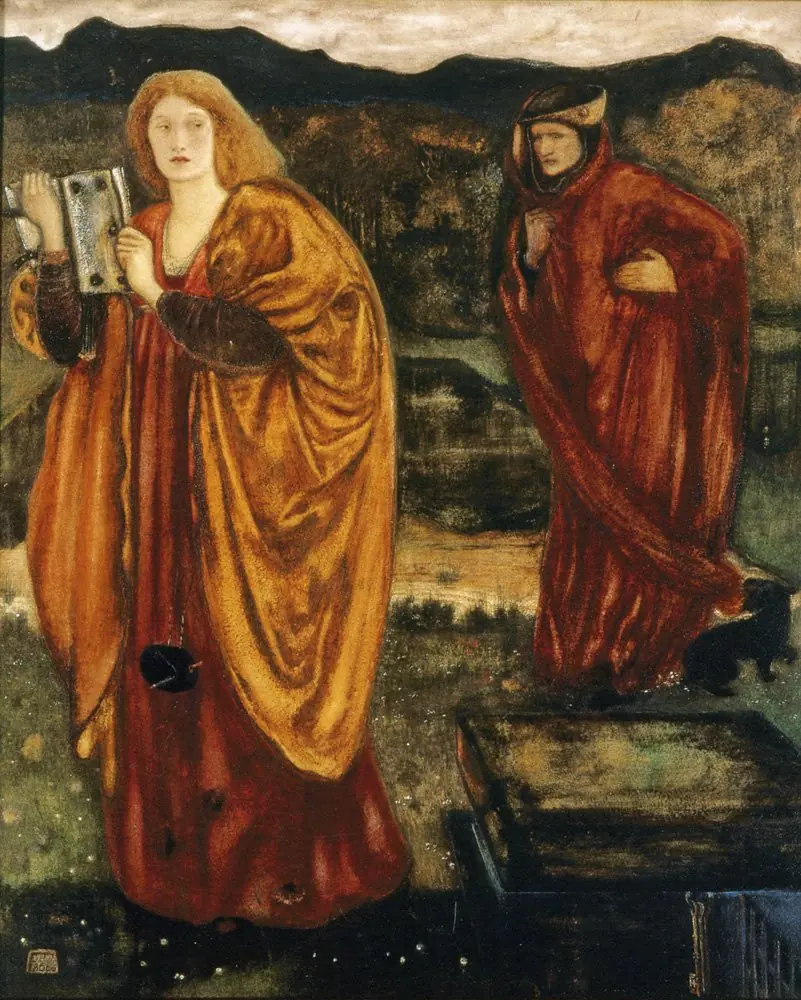
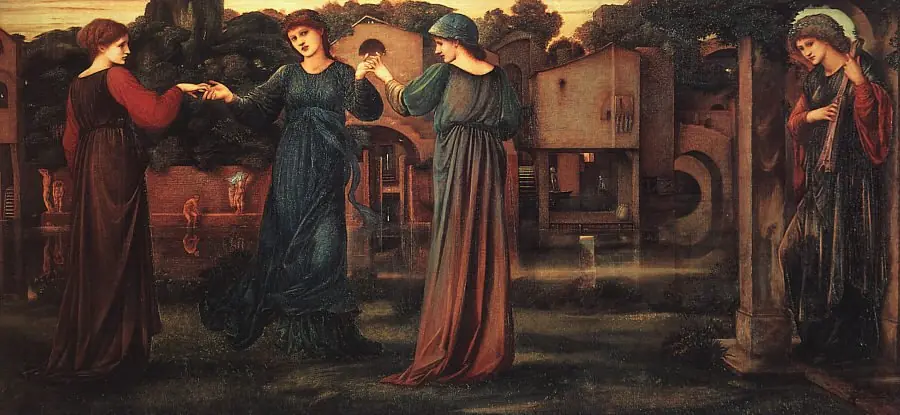
Dorigen of Bretagne longing for the safe return of her husband is an unspecified painting by the Pre-Raphaelite artist Edward Burne-Jones. It dates from 1871 and is held in the collection of the Victoria and Albert Museum.
About this work
Overview
The painting captures a moment of suspended anticipation, drawing from Arthurian and chivalric legend rather than direct biblical or classical sources.
Painted in 1871 by Edward Burne-Jones, this work belongs to his mature period, when he moved beyond the early Pre-Raphaelite emphasis on detail toward a more lyrical, symbolic mode. Though associated with the Pre-Raphaelite circle and William Morris, Burne-Jones developed a personal aesthetic rooted in medieval romance and emotional stillness. The painting captures a moment of suspended anticipation, drawing from Arthurian and chivalric legend rather than direct biblical or classical sources.
Subject & Meaning
The figure is Dorigen, a character from medieval legend who waits anxiously for her husband’s return from sea. Her solitude and gaze toward the stormy horizon reflect themes of fidelity, uncertainty, and the emotional toll of separation. The narrative draws from Geoffrey Chaucer’s 'The Franklin’s Tale,' where Dorigen’s despair is tied to a magical promise. Burne-Jones emphasizes inner feeling over plot, transforming literary reference into a meditation on patience and longing.
Technique & Style
Burne-Jones employs muted tones and soft modeling to create a hushed, introspective mood. The woman’s dark blue gown contrasts with the pale, diffused light from the window, while the rough sea outside is rendered with loose, rhythmic brushwork. Chiaroscuro is used subtly to define form without dramatic contrast, enhancing the painting’s quiet tension.
The interior is sparse, books and a chair suggest intellectual solitude, reinforcing the psychological weight of her vigil.
History & Provenance
Completed in 1871, the painting was exhibited shortly after in London, where it was noted for its emotional restraint and refined composition. It remained in private collections through the late 19th and early 20th centuries before entering a public museum. Unlike many of Burne-Jones’s larger decorative works, this piece was conceived as an easel painting, reflecting his interest in intimate narrative rather than monumental design.
Context
In the 1870s, Burne-Jones distanced himself from the Pre-Raphaelite Brotherhood’s early naturalism, aligning instead with the Aesthetic Movement’s focus on mood and beauty. His interest in medieval literature resonated with contemporary revivals of chivalric romance, while his restrained palette and elongated figures echoed early Renaissance models. This painting reflects a broader cultural turn toward introspective, literary subjects in Victorian art.
Legacy
Though less widely known than his mythological cycles, this work exemplifies Burne-Jones’s ability to convey complex emotion through minimal gesture and atmosphere. It influenced later Symbolist painters who sought to externalize psychological states through setting and posture. The painting remains a quiet testament to the Victorian fascination with inner life, medievalism, and the unspoken endurance of waiting.
Artist & collection
Artist
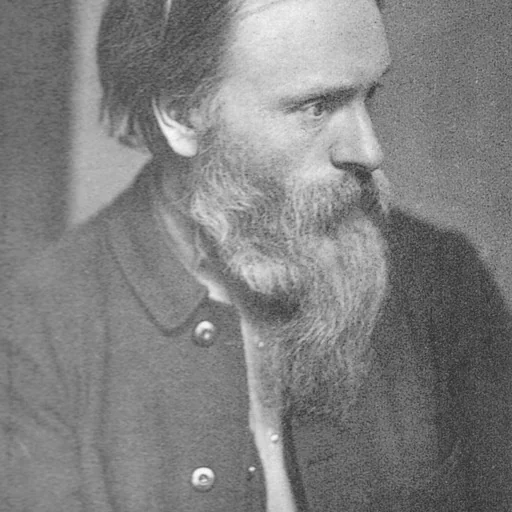
Sir Edward Coley Burne-Jones, 1st Baronet (; 28 August 1833 – 17 June 1898) was an English painter and designer associated with the Pre-Raphaelite Brotherhood's style and subject matter.