Artwork
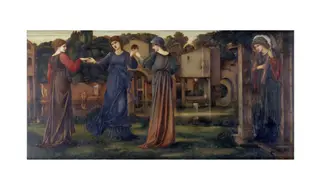
Psyche's wedding
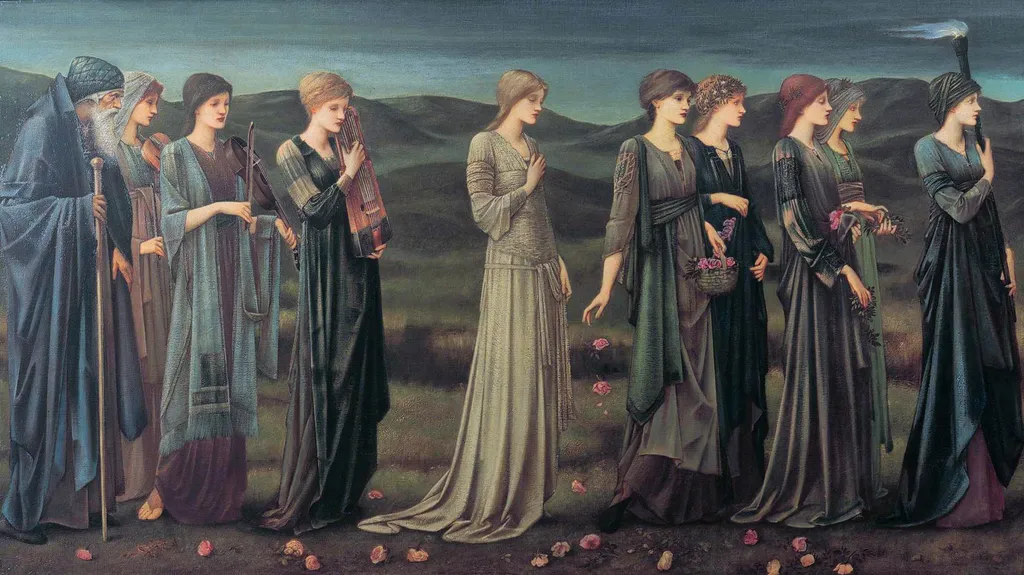
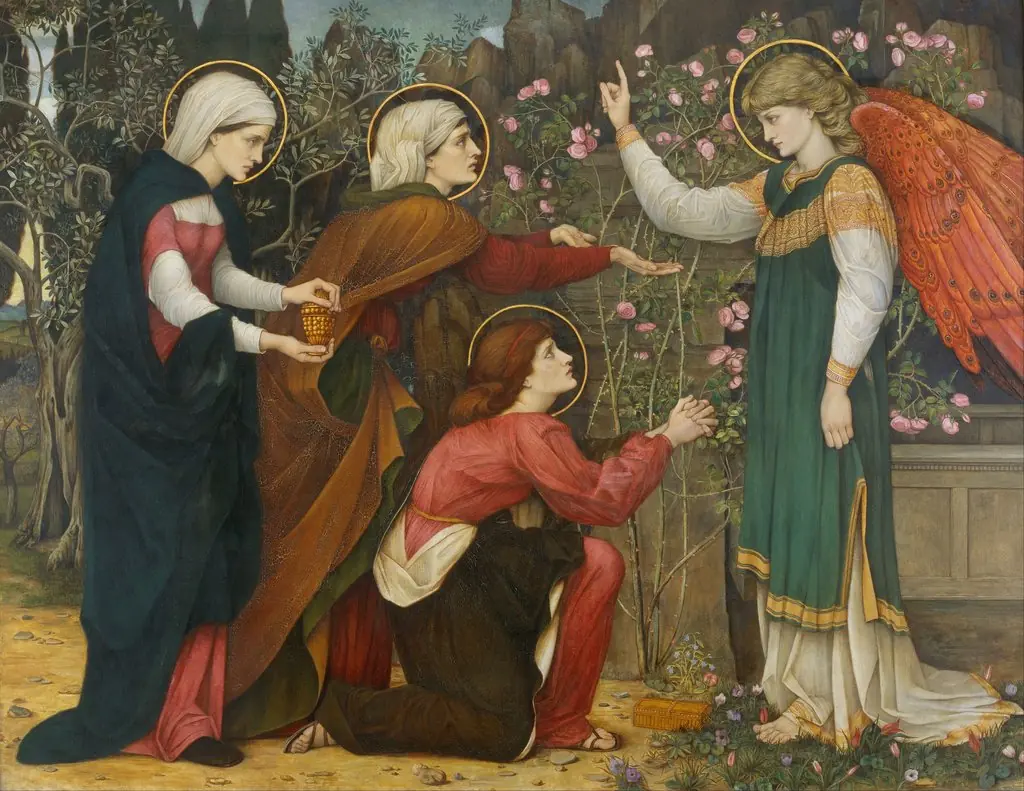
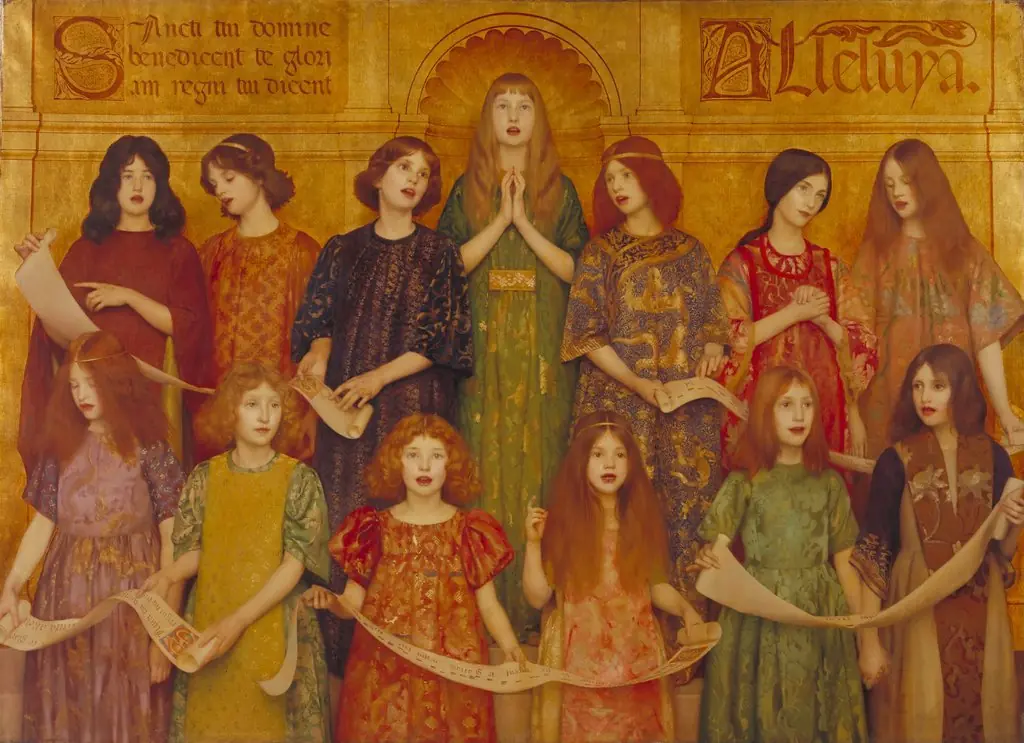
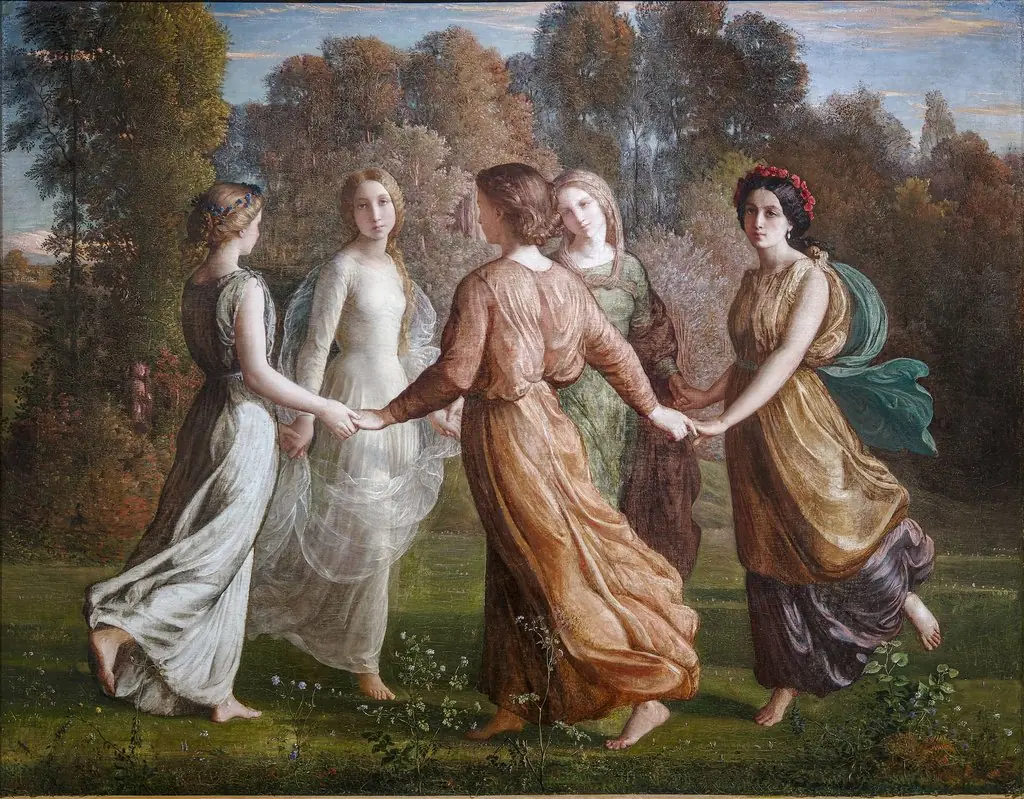
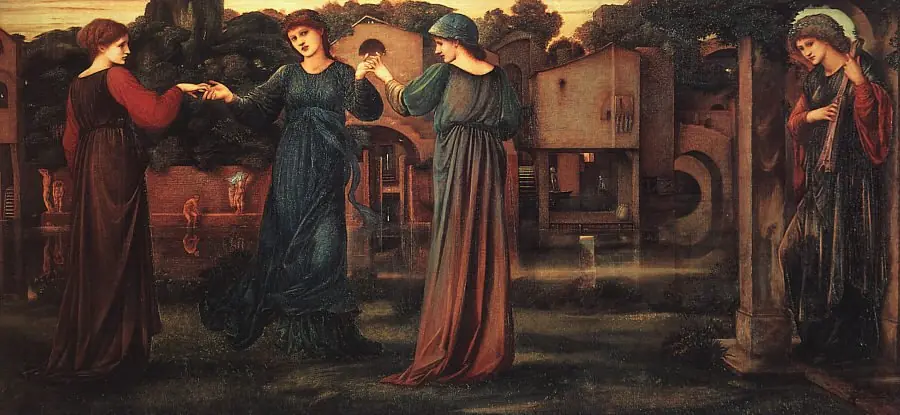
Psyche's wedding is an oil painting by the Pre-Raphaelite artist Edward Burne-Jones. It dates from 1898 and is held in the collection of the Royal Museums of Fine Arts of Belgium.
About this work
Overview
Though not a member of the original Pre-Raphaelite Brotherhood, Burne-Jones aligned closely with its ideals, favoring poetic narrative over realism.
Painted in 1898 by Sir Edward Burne-Jones, Psyche's Wedding is an oil-on-canvas work that reflects the artist’s sustained engagement with mythological themes and medievalist aesthetics. Though not a member of the original Pre-Raphaelite Brotherhood, Burne-Jones aligned closely with its ideals, favoring poetic narrative over realism. The painting is part of the Royal Museums of Fine Arts of Belgium’s collection, where it stands as a late example of his sustained interest in classical legend rendered through a lyrical, otherworldly lens.
Subject & Meaning
The scene depicts the procession accompanying Psyche, the mortal bride, to her union with Cupid, as told in Apuleius’s Metamorphoses. The figures are not individualized characters but symbolic attendants, their varied gestures and attire suggesting a ritualized journey. The bearded man at the forefront, likely a divine guide, leads the group through a liminal landscape, evoking transition between mortal and divine realms.
The absence of Psyche herself heightens the sense of mystery, focusing attention on the ceremony’s solemn, dreamlike atmosphere.
Technique & Style
Burne-Jones employed soft, muted tones and diffused lighting to create a hazy, timeless quality. Figures are elongated and stylized, with flowing drapery that suggests movement without physical weight. Each robe is rendered in subtle gradations of color, ochre, olive, pale blue, enhancing the rhythmic procession.
Facial expressions are distant, eyes turned outward, reinforcing the painting’s introspective mood. The brushwork is deliberate yet unobtrusive, prioritizing harmony over detail, aligning with the aesthetic goals of late Pre-Raphaelitism.
History & Provenance
Completed near the end of Burne-Jones’s career, the painting was acquired by the Belgian state in the early 20th century and entered the collection of the Royal Museums of Fine Arts of Belgium. It was not exhibited widely during the artist’s lifetime, and its reception remained largely within circles familiar with his symbolic style. Unlike his more famous works, it was not reproduced extensively, contributing to its quieter presence in art historical discourse.
Context
In the late 19th century, Burne-Jones continued to explore mythological subjects as alternatives to industrial modernity, drawing from classical texts and medieval romance. His collaboration with William Morris had fostered a broader cultural movement that valued craftsmanship and narrative depth in visual art. Psyche's Wedding reflects this ethos, positioning myth not as spectacle but as a contemplative space, away from the urgency of contemporary life, toward stillness and allegory.
Legacy
Though less known than his earlier works, Psyche's Wedding exemplifies Burne-Jones’s mature style: a quiet, sustained meditation on mythic themes through restrained composition and emotional ambiguity. It influenced later Symbolist painters who sought to evoke inner states rather than depict external events. The painting remains a quiet testament to his belief in art as a vessel for contemplation, not narrative clarity.
Artist & collection
Artist
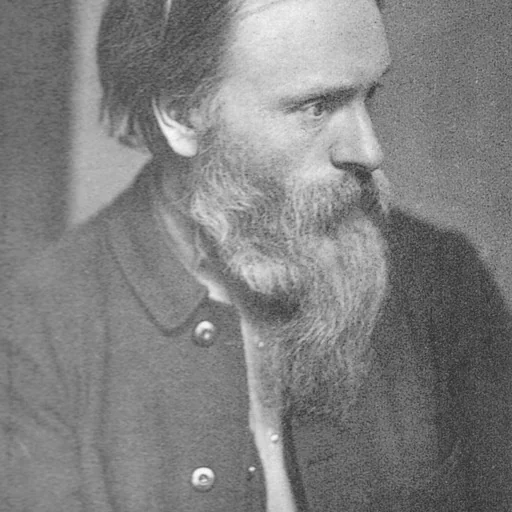
Sir Edward Coley Burne-Jones, 1st Baronet (; 28 August 1833 – 17 June 1898) was an English painter and designer associated with the Pre-Raphaelite Brotherhood's style and subject matter.

Museum
Royal Museums of Fine Arts of Belgium
Continue through works from the same source collection.