Artwork
The Mill: Girls Dancing to Music by a River
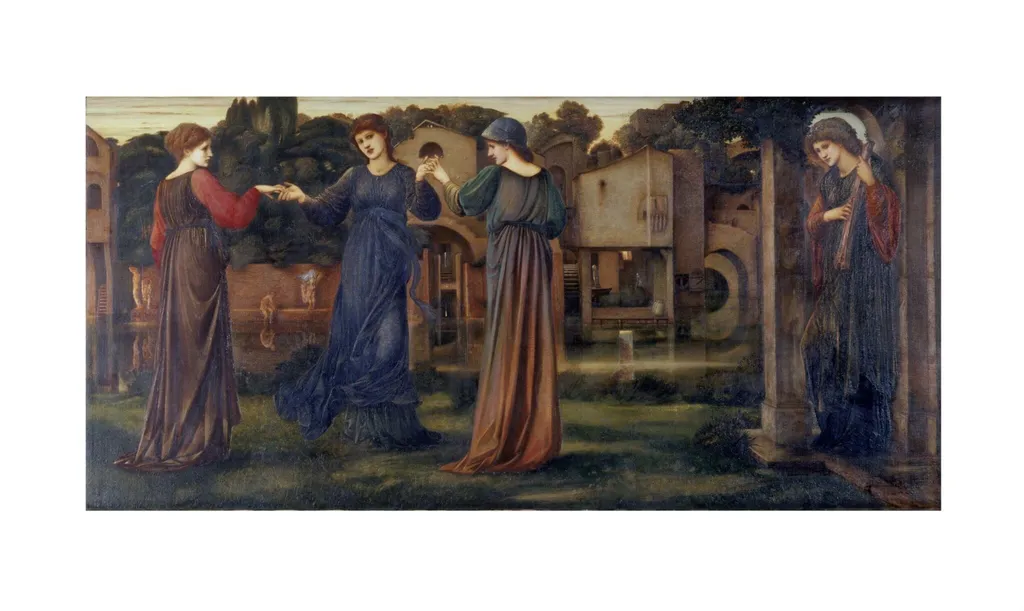
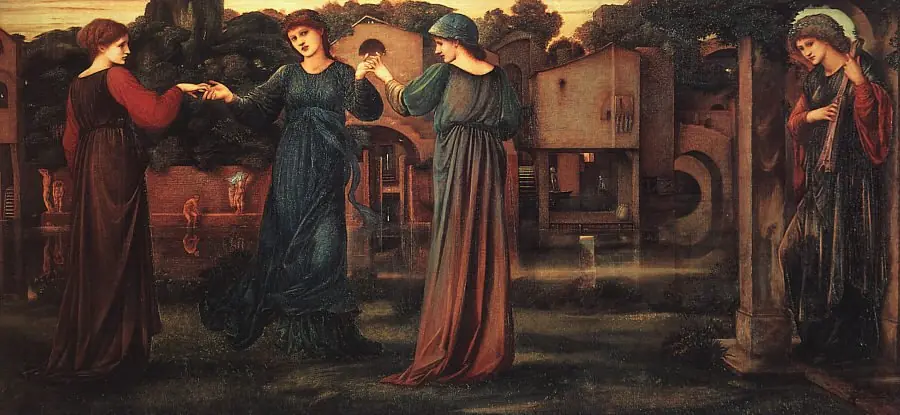
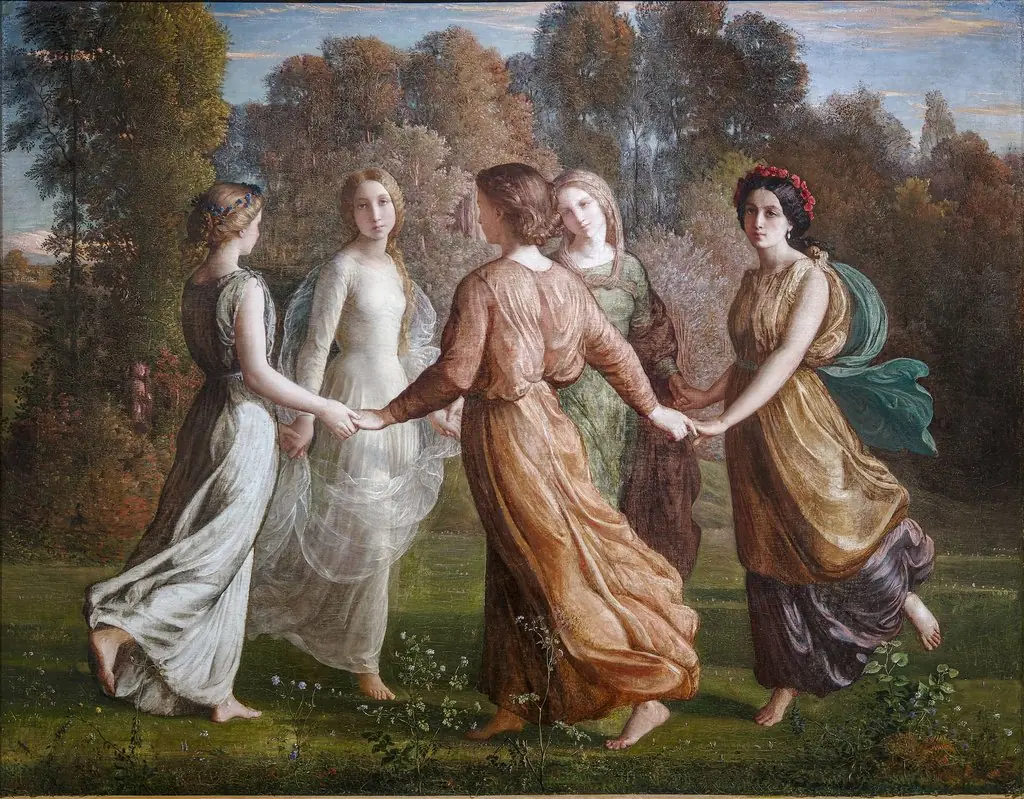
The Mill: Girls Dancing to Music by a River is an oil painting by the Aestheticist artist Edward Coley, Sir Burne-Jones. It dates from 1870 and is held in the collection of the Victoria and Albert Museum. This oil painting depicts three women dancing near a river, clad in light, flowing garments, amid a lush, wooded landscape.
About this work
Overview
This oil painting depicts three women dancing near a river, clad in light, flowing garments, amid a lush, wooded landscape. Though music is implied, no musician is visible. The composition draws from Italian Renaissance ideals, particularly in its harmony and grace, yet it is rendered with the soft, luminous quality characteristic of late 19th-century British art.
Subject & Meaning
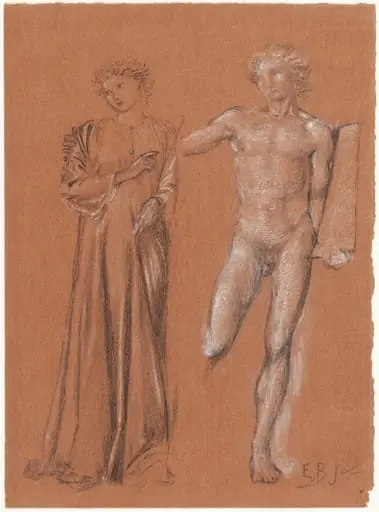
The figures evoke the classical Three Graces, mythological beings associated with beauty, charm, and joy. Their dance suggests a ritual or celebration, framed by nature as a sacred space. The absence of Apollo, their traditional musical companion, shifts focus to the women’s movement and presence, emphasizing quiet elegance over narrative clarity.
Technique & Style
The artist employed glazing techniques to build subtle layers of translucent color, enhancing the luminosity of the white robes and the dappled light filtering through trees. Delicate brushwork and muted tones create a dreamlike atmosphere, blending Renaissance-inspired composition with Pre-Raphaelite attention to natural detail and texture.
History & Provenance
Commissioned by Constantine Alexander Ionides, a prominent collector, the painting features his relatives as models. Mary Zambaco, his cousin and at one time the artist’s romantic partner, is depicted on the far left. The personal connections between subject, patron, and artist add a private dimension to the mythological theme.
Context
Created during a period when British artists were reengaging with classical antiquity through a romantic lens, the work reflects broader Victorian interests in myth, beauty, and idealized femininity. It aligns with the Aesthetic Movement’s emphasis on visual harmony over moral or narrative content, prioritizing mood and form.
Legacy
Though not widely exhibited in its time, the painting remains a quiet example of how classical themes were reinterpreted in late Victorian art. Its restrained palette and introspective tone distinguish it from more dramatic contemporaries, offering a contemplative vision of myth rooted in personal and artistic intimacy.
Artist & collection