Artwork
Adoration of the Shepherds
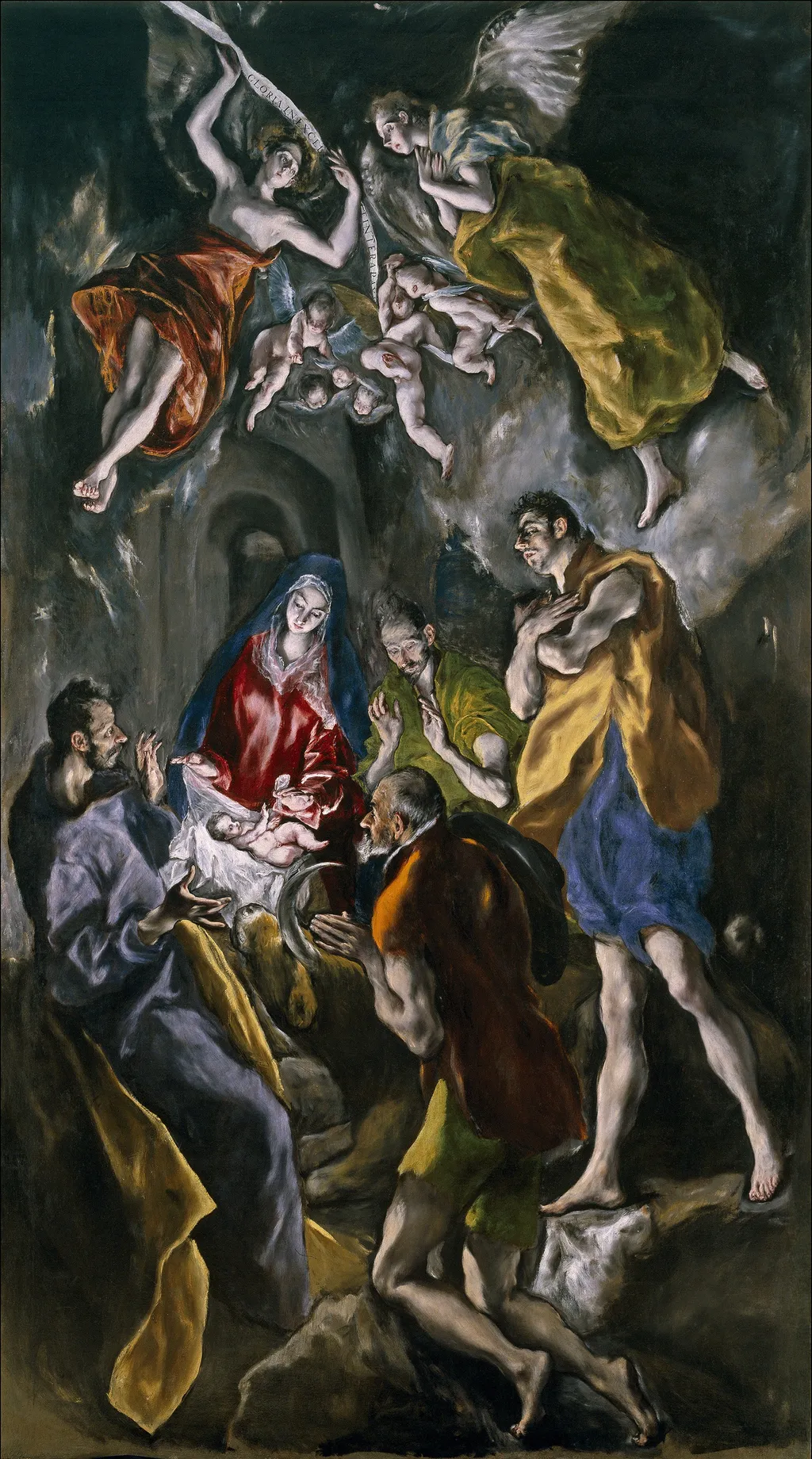
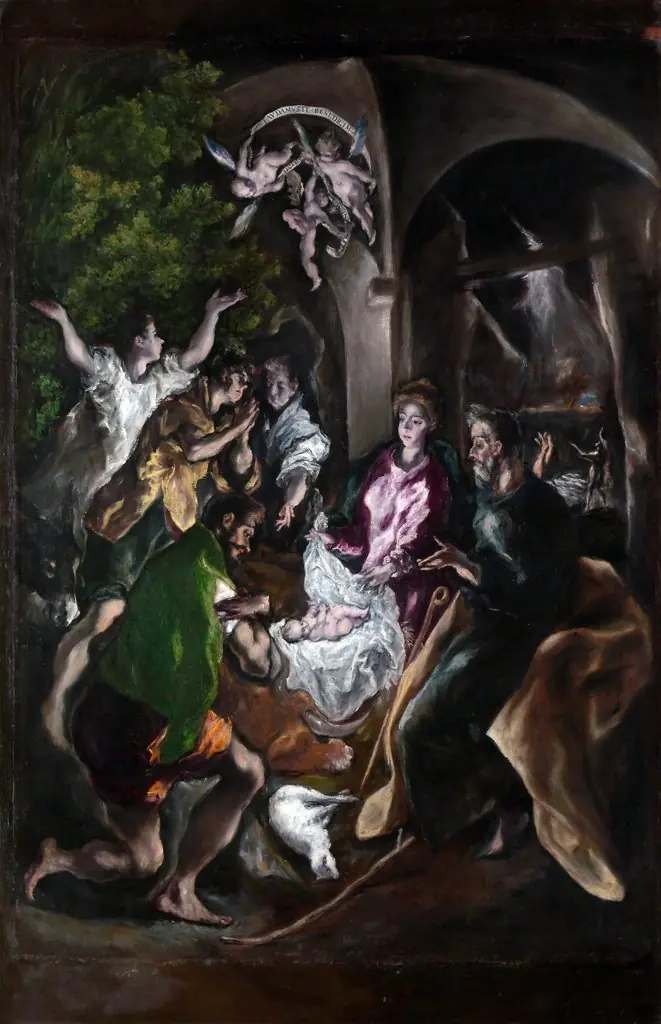
Adoration of the Shepherds is an oil painting by the Mannerist artist El Greco. It dates from 1612 and is held in the collection of the Museo del Prado.
About this work
This painting shows shepherds adoring a newborn. El Greco made it near the end of his life, around 1612. It hangs at the Museo del Prado now.
He painted it to go above his own tomb in a Toledo convent. Look closely and you’ll spot his Greek signature in the lower left corner.
It’s a quiet scene with deep meaning for the artist. If you like this work, check out more by El Greco.
Subject & Meaning
This fusion of the terrestrial and celestial realms reflects the artist's personal faith and the theological emphases of the post-Tridentine era.
This work illustrates the traditional Christian subject of the shepherds visiting the newborn Christ, synthesizing two biblical narratives from Luke: the angelic announcement and the subsequent homage at Bethlehem. The composition centers on the nude Infant Jesus lying on a brilliant white cloth, which serves as a prefiguration of his future shroud. Surrounding figures, including the Virgin Mary, Saint Joseph, and barefoot shepherds offering a lamb, are arranged in a rising spiral that directs the viewer's gaze upward toward a celestial glory of angels holding a banner with the Gloria in excelsis Deo.
The infant emits a divine light that illuminates the faces of the witnesses, creating a mystical atmosphere enhanced by stark contrasts between light and shadow. The extreme elongation and distortion of the figures, combined with dissonant colors and rhythmic, dance-like gestures, express a profound sense of spiritual ecstasy and wonder. This fusion of the terrestrial and celestial realms reflects the artist's personal faith and the theological emphases of the post-Tridentine era.
Technique & Style
Executed in oil on canvas, this large vertical work measures approximately 319 by 180 cm. Created during the final years of El Greco's life, the painting exhibits the extreme bodily distortion and elongated, muscular figures characteristic of his late Mannerist style. The composition is animated by a rhythmic, spiral energy that guides the viewer's eye upward, enhanced by dance-like motions and dramatic gestures.
Striking contrasts between luminous and dark passages heighten the mystical atmosphere, while the Christ Child emits a divine radiance that illuminates the faces of the surrounding figures. The artist employed brilliant, dissonant colors and unusual poses to evoke a sense of wonder and spiritual ecstasy. A Greek signature is visible in the lower left corner of the support.
History & Provenance
The Adoration of the Shepherds was created by El Greco as a commission for his own funerary monument in the church of Santo Domingo el Antiguo, Toledo, around 1612–1614, making it among his last painted works. After remaining in the convent for centuries, the painting was moved to the altar of the monastery and later acquired by the Spanish state for the Museo del Prado in 1954. The work is held in the Museo del Prado in Madrid, where it carries the catalog number P002988.
Context
Completed during the final years of El Greco's life, this painting was commissioned specifically to adorn the artist's own tomb in the convent of Santo Domingo el Antiguo in Toledo. The work exemplifies the extreme stylistic evolution of El Greco's late period, characterized by elongated figures, dissonant colors, and a spiraling composition that merges the celestial with the terrestrial.
Scholars identify the piece as a synthesis of the artist's lifelong engagement with the Nativity subject, reflecting both Spanish religious doctrine and his personal faith. While the painting remained at the convent for centuries before its 1954 acquisition by the Museo del Prado, it is widely regarded as his definitive final statement, showcasing a rhythmic energy and mystical light that heighten the drama of the scene.
Legacy
Created to hang over El Greco's own tomb in the convent of Santo Domingo el Antiguo in Toledo, the painting remained there even after the artist's remains were relocated to another church. The work was later moved to the high altar of the monastery before being acquired by the state in 1954 for the Museo del Prado, which considers it the artist's final painting. Its intensely personal origin and late execution have cemented its reputation as a quintessential example of the exaggerated, spiritualized mannerism characterizing El Greco's final period.
Overview
The Adoration of the Shepherds is an oil painting by El Greco, completed around 1612, during the final year of his life. This work depicts a traditional religious theme, rendered with the artist's distinctive vision. His Greek signature is visible in the lower left corner.
Originally intended for a deeply personal purpose, it now resides in the collection of the Museo del Prado.
Artist & collection
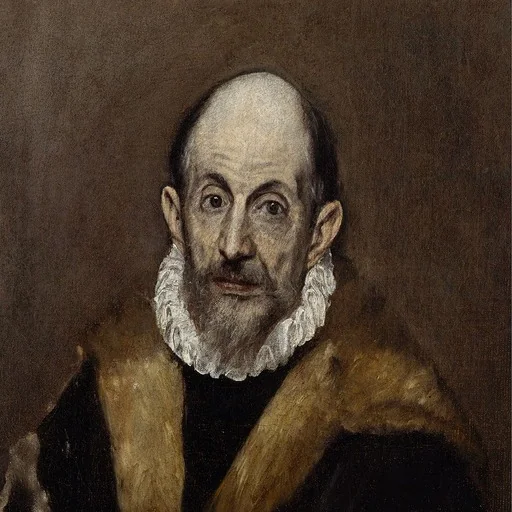
Artist
Doménikos Theotokópoulos was born in 1541 in Candia (modern Heraklion), the capital of Venetian-ruled Crete, where he was trained in the post-Byzantine tradition of icon painting.