Artwork
Cardinal Fernando Niño de Guevara
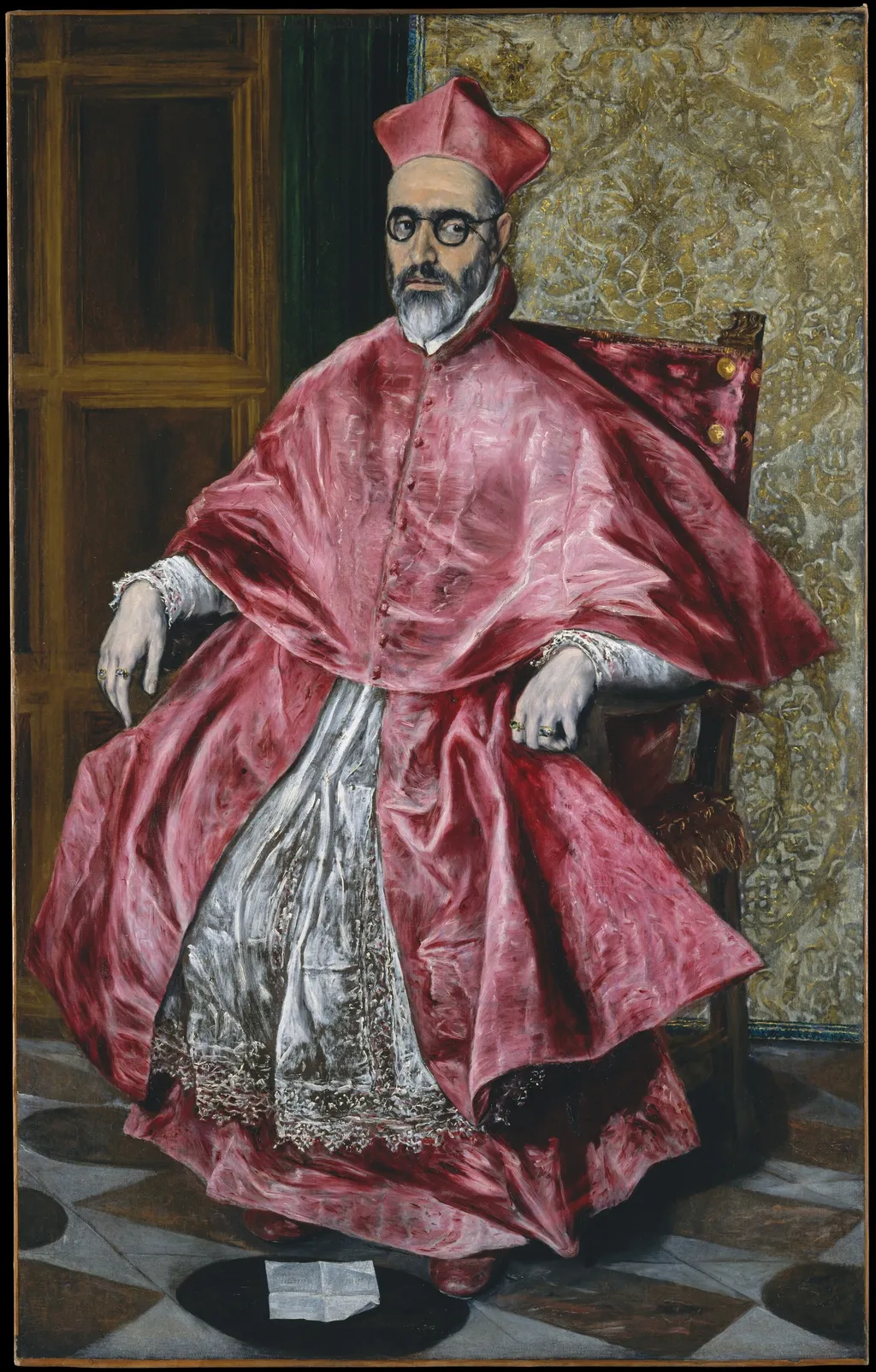
Cardinal Fernando Niño de Guevara is an oil painting by the Mannerist artist El Greco. It dates from 1600 and is held in the collection of the Metropolitan Museum of Art.
About this work
This painting is a portrait of Cardinal Fernando Niño de Guevara. It was created by El Greco.
The portrait is significant because it was made in the early 17th century. El Greco was the artist who created this work, and it is now held in a museum.
To learn more about the style and methods used in this portrait, look up the technique of glazing.
Subject & Meaning
El Greco portrays him full-length, seated on a red velvet chair with a stern, austere expression that emphasizes his cold and decisive nature.
The painting depicts Cardinal Fernando Niño de Guevara (1541–1609), a powerful figure who served as Inquisitor General, Archbishop of Seville, and member of the Council of Castile. El Greco portrays him full-length, seated on a red velvet chair with a stern, austere expression that emphasizes his cold and decisive nature. The Cardinal wears red silk vestments partially open to reveal a white lace alb, along with a red biretta and shoes.
He wears spectacles, which accentuate his severe demeanor, and displays four rings across his fingers. The composition includes a black-and-white marble floor and a background featuring rich brocade and a wooden door. Scholars interpret the work as a prototype of its era, merging technical excellence with the historical weight of the subject, while also serving as a public gesture of family pride commissioned likely by his nephew, Pedro Lasso.
Technique & Style
The Portrait of Cardinal Fernando Niño de Guevara is executed in oil on canvas, measuring approximately 171 × 108 cm, with the Metropolitan Museum cataloging it as 170.8 × 108 cm. El Greco signed the work in cursive Greek minuscule on a cartouche at the lower center, reading δομήνικος θεοτοκóπουλος ε'ποíει. The painting is catalogued as Wethey no. 152 and Frati no. 110-a. Its state of conservation is very good, with only minor points of deterioration on the sitter's nose, forehead, and cheeks of little consequence.
Stylistically, the full-length seated portrait recalls Raphaels's Portrait of Julius II and Titian's portraits of Paul III and Charles V seated, models El Greco could have encountered in Italy or through prints. The cardinal is rendered with a stern, austere expression, bushy brows, a grey beard, and spectacles that heighten his cold, decisive air, seated in a red velvet armchair against a brocade backdrop and wooden door, with a black-and-white marble floor reinforcing perspective. Critics including Cossío and Gudiol have hailed the work as among El Greco's most splendid portraits.
History & Provenance
The portrait of Cardinal Fernando Niño de Guevara, painted by El Greco in 1600, is an oil on canvas work measuring roughly 171 × 108 cm and classified as a portrait. It was likely commissioned by Pedro Lasso de la Vega, the cardinal’s nephew and a known patron of the artist, probably during the cardinal’s spring 1600 visit to Toledo. The painting was created in El Greco’s late Toledo period, signed with Greek letters on a ground‑level cartellino.
After the cardinal’s death the portrait passed through several Spanish aristocratic owners, entered the collection of Louisine Havemeyer, and was bequeathed to the Metropolitan Museum of Art in 1929.
The portrait of Cardinal Fernando Niño de Guevara is held in the Metropolitan Museum of Art in New York, where it is accessioned as 29.100.5. Its exhibition history includes a presentation at the Greco exhibition held at the Grand Palais in Paris from 16 October 2019 to 10 February 2020.
Context
The painting, an oil on canvas portrait of Cardinal Fernando Niño de Guevara, was created circa 1600 in Toledo and is now in the Metropolitan Museum of Art. Scholars note its rare self‑portrait‑like commission by a family member, possibly Pedro Lasso de la Vega, highlighting the practice of noble patronage in Counter‑Reformation Spain. Its formal qualities, stiff pose, red cardinal habit, detailed accessories, reflect El Greco’s Italian influences and his mastery of characterization, a point emphasized in art‑historical surveys.
The work has been featured in major exhibitions, such as the 2019–20 Paris Greco retrospective, underscoring its continued relevance. Critical reception praises it as one of El Greco’s most powerful portraits, exemplifying the fusion of personal identity and artistic innovation that defines his late period.
Legacy
The portrait has achieved recognition as a prototypical representation of its era and country, with scholar José Gudiol ranking it among the finest portraits in history. Manuel Bartolomé Cossío described the work as the most splendid of all El Greco's portraits. The painting's legacy includes a half-length copy by El Greco's disciple, Luis Tristán, currently housed in the Museo del Greco in Toledo.
Culturally, the image inspired Stefan Andres's 1936 novel El Greco malt den Großinquisitor and appeared in fictionalized forms in the films Lady in Ermine (1947) and El Greco (2007). In contemporary art, painter Herman Braun-Vega appropriated the cardinal's image as a disturbing presence in multiple works, notably El poder se nutre de dogmas, using it to explore the artistic lineage between El Greco and Velázquez.
Overview
El Greco's oil painting, Cardinal Fernando Niño de Guevara, dates to 1600. This portrait depicts the Spanish Cardinal Fernando Niño de Guevara, an important figure in the Catholic Church at the turn of the 17th century. The artwork is executed in oil paint and is currently housed in the collection of the Metropolitan Museum of Art in New York. It represents a key example of El Greco's portraiture from this period.
Own this work as a print
Artist & collection
Artist
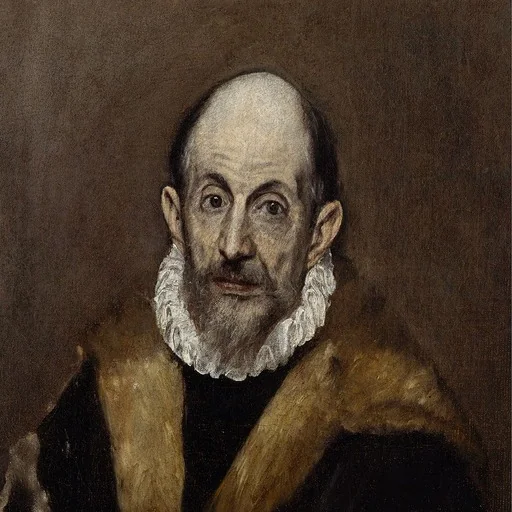
Doménikos Theotokópoulos was born in 1541 in Candia (modern Heraklion), the capital of Venetian-ruled Crete, where he was trained in the post-Byzantine tradition of icon painting.

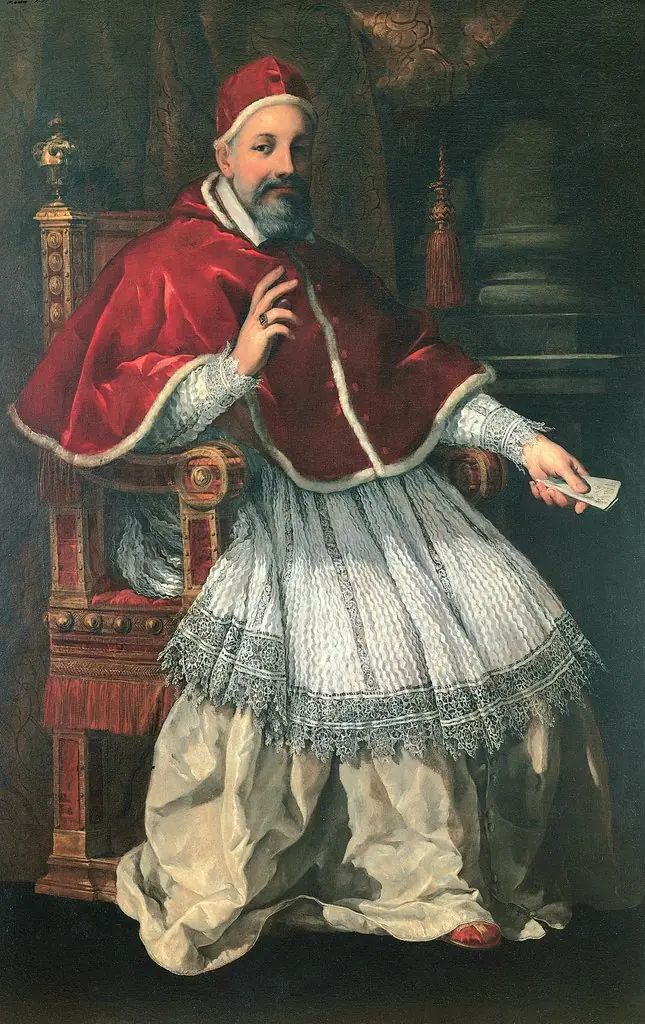 Portrait of Pope Urban VIII
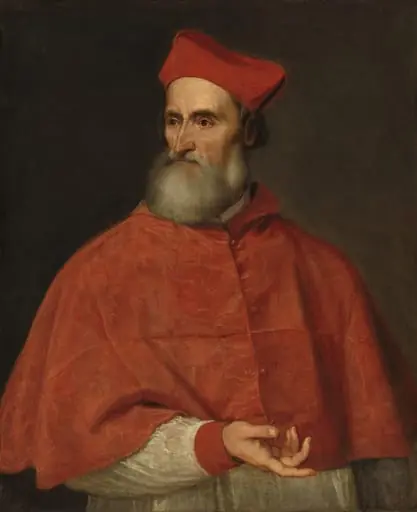 Cardinal Pietro Bembo
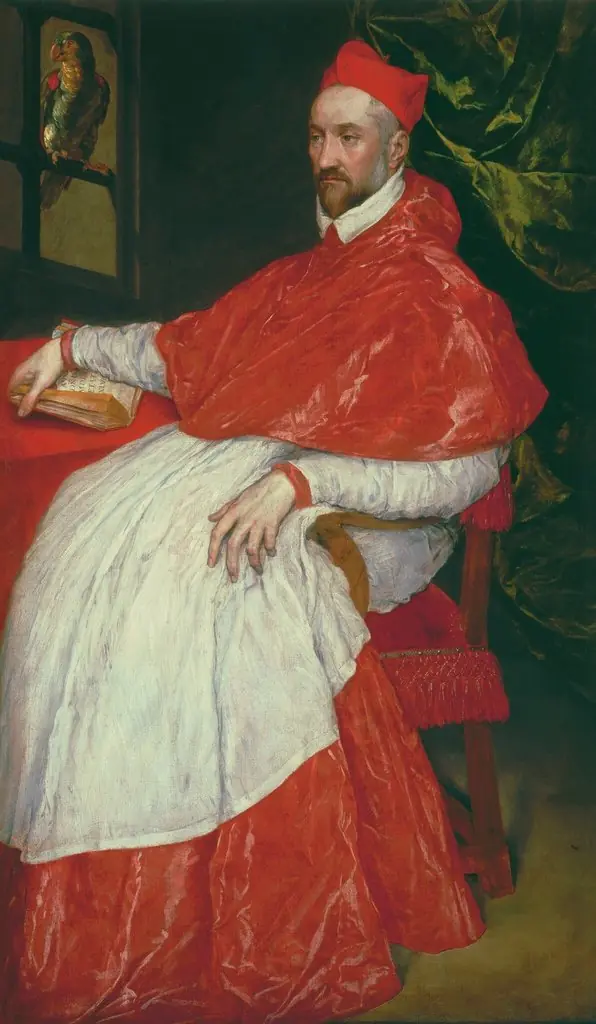 Portrait of Charles de Guise, cardinal of Lorraine, archbishop of Reims
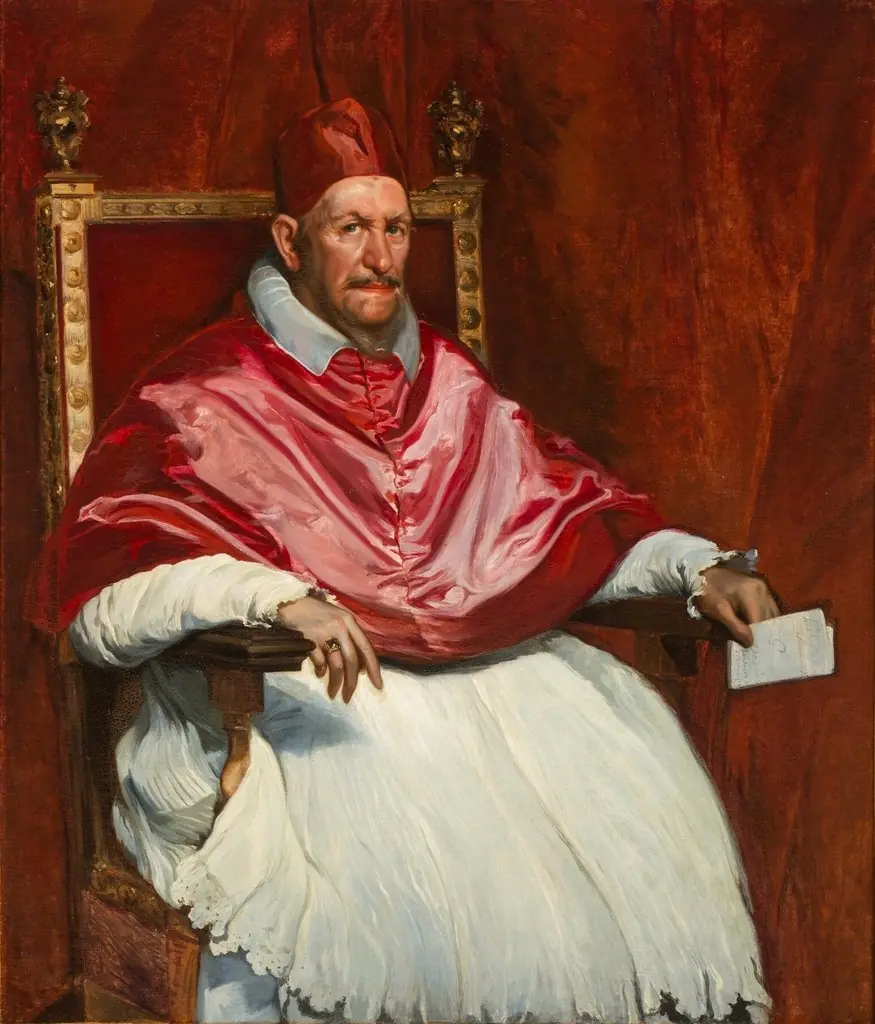 Innocent X, Pope (1574-1655)
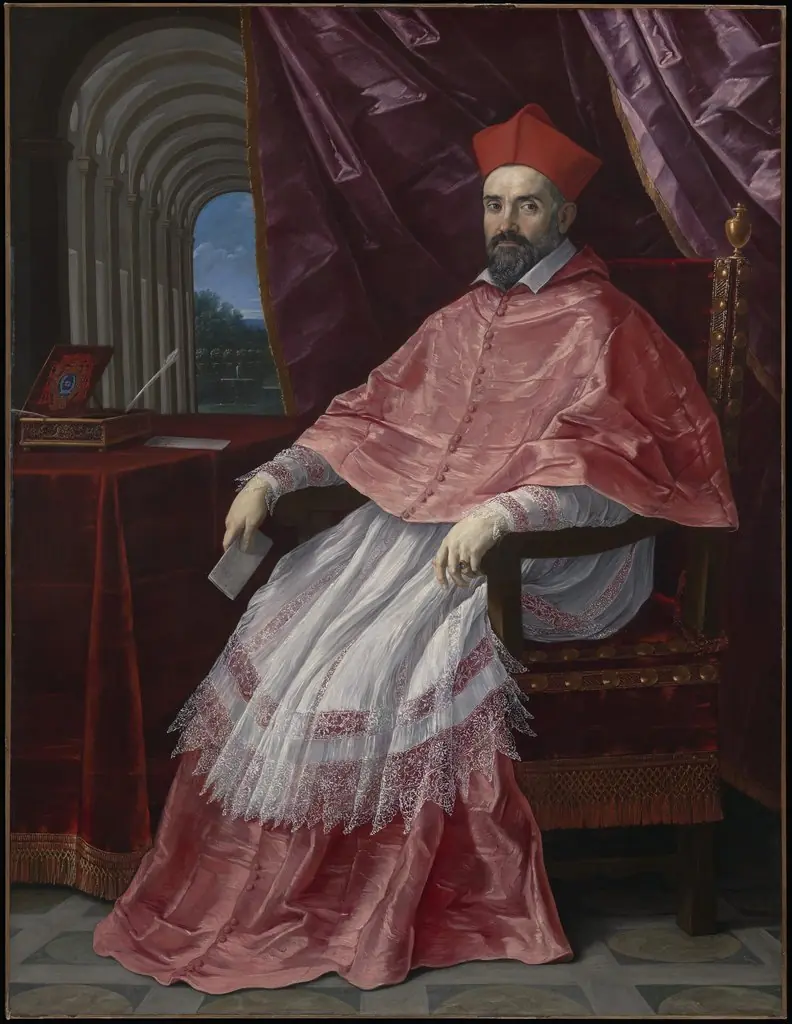 Portrait of Cardinal Roberto Ubaldini, Papal Legate to Bologna
 Bildnis eines Kardinals
 Portrait d'un membre de la famille Foscari
 Portrait of Pope Gregory XV