Artwork
Christ Carrying the Cross
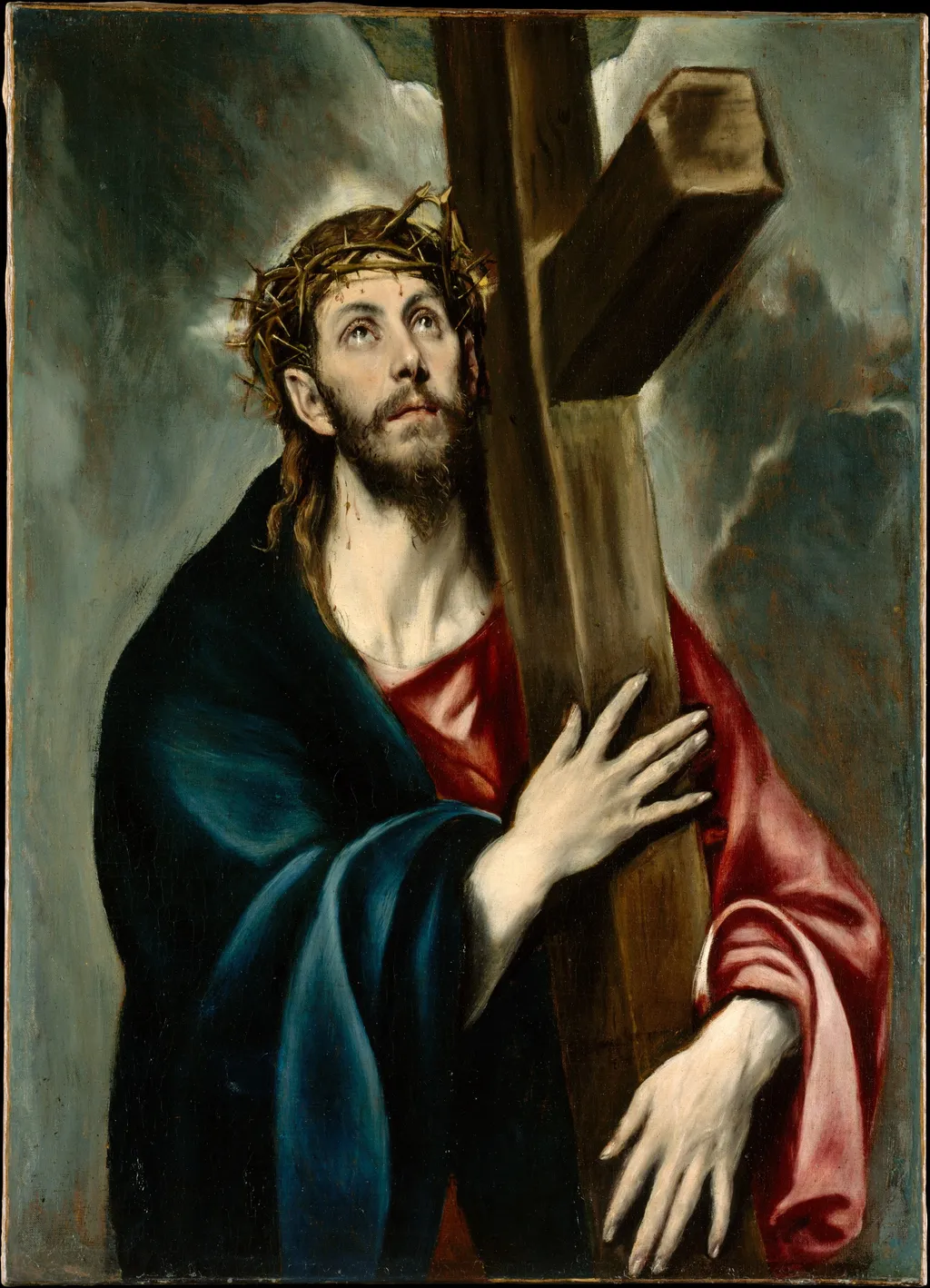
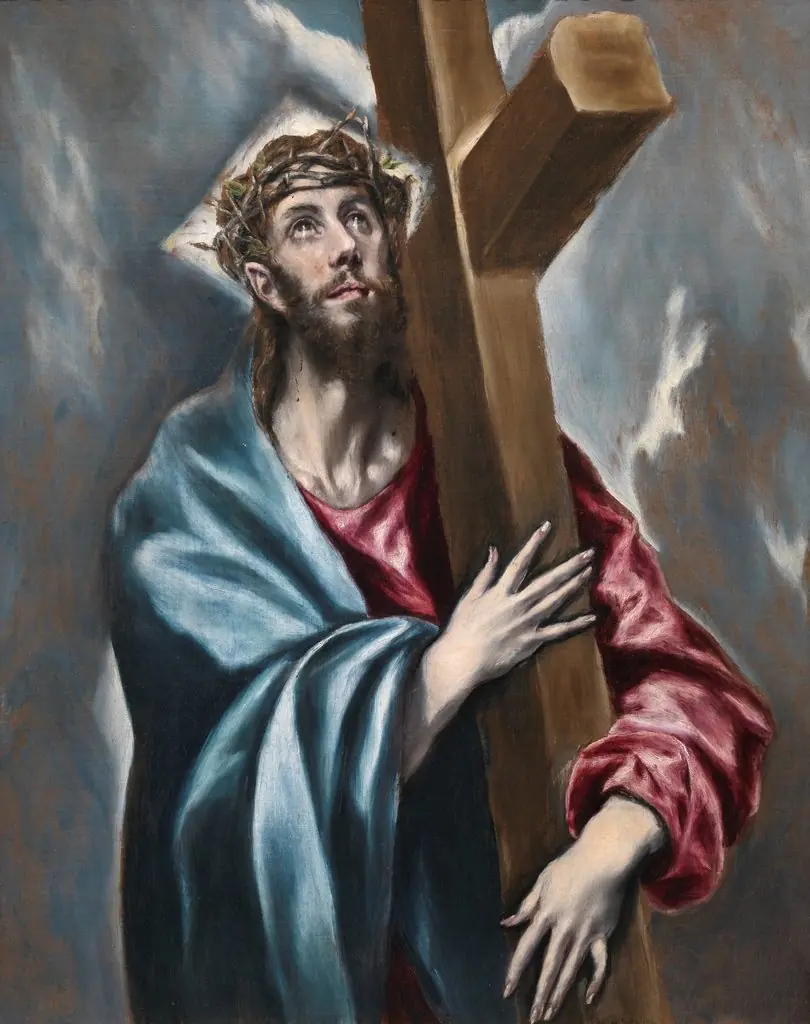
Christ Carrying the Cross is an oil painting by the Mannerist artist El Greco. It dates from 1590 and is held in the collection of the Metropolitan Museum of Art.
About this work
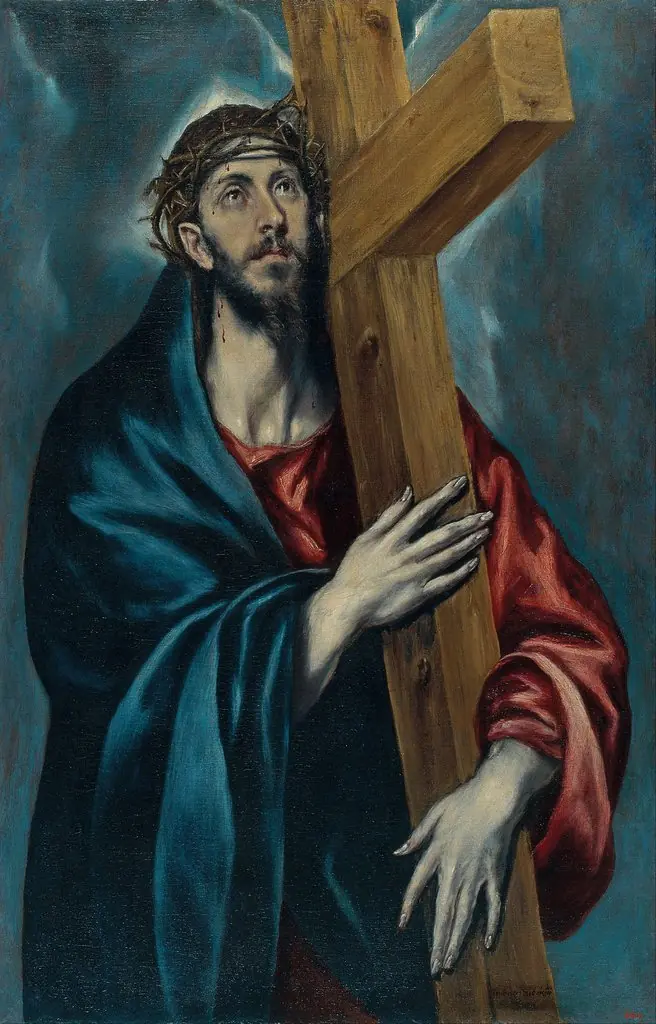
One of El Greco's quietest devotional images, painted early in his Toledo years around 1590. No crowd, no spectacle, just Christ alone, looking up as he grips the wood of the cross. The heavy sky behind him carries the weight of what is coming.
Subject & Meaning
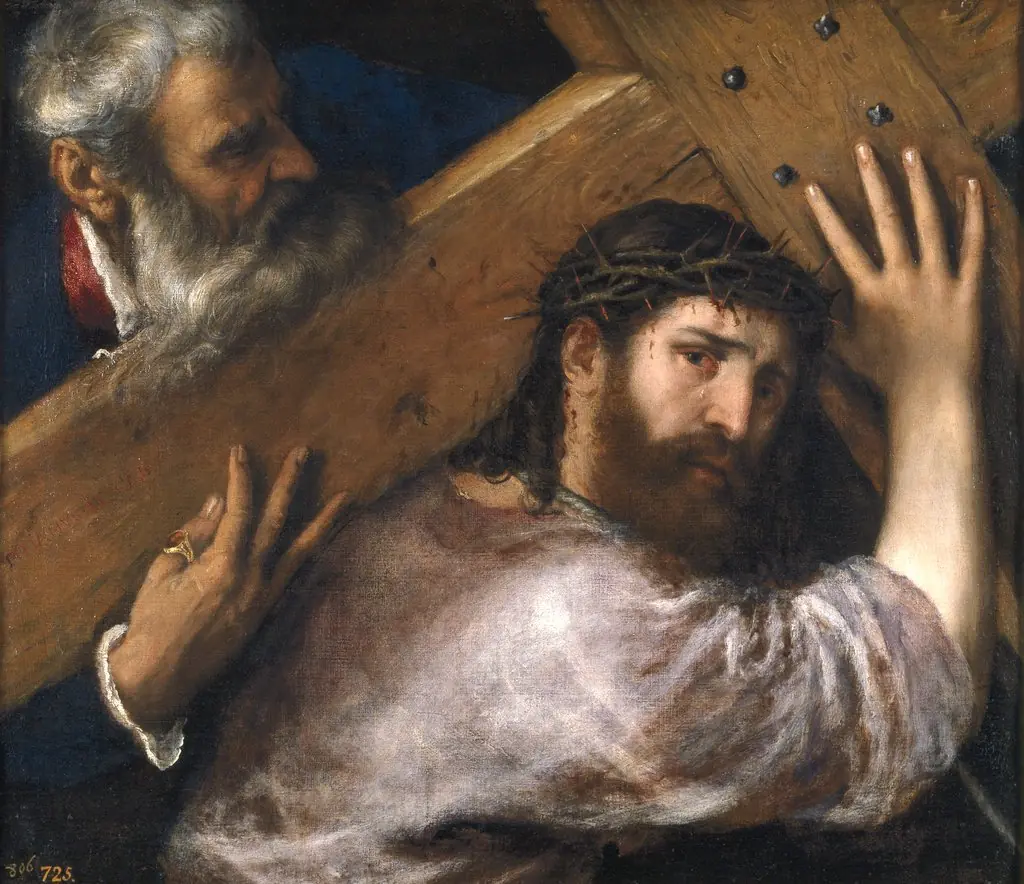
This work depicts Jesus Christ during a moment of personal reflection on the Via Dolorosa as he carries the cross toward his crucifixion.
This work depicts Jesus Christ during a moment of personal reflection on the Via Dolorosa as he carries the cross toward his crucifixion. The subject emphasizes Christ's human vulnerability, showing him looking upward to the heavens with a plea for mercy while accepting his role in the divine plan to forgive humanity's sins. Iconographically, the painting isolates Christ from the crowd, set against a stormy background of dark clouds that symbolizes spiritual struggle, yet also contains breaks of light representing divine presence and acceptance.
The cross serves as a dual symbol: the instrument of his ultimate sacrifice and a metaphor for the individual's spiritual burden, echoing the Gospel of Matthew regarding taking up one's cross. The composition highlights Christ's gentle hands gripping the wood and his luminous, tearful eyes, conveying suffering, devotion, and the connection between human emotion and the divine.
Technique & Style
The painting Christ Carrying the Cross is executed in oil on canvas, measuring about 105 × 79 cm and dating to El Greco's Toledo period, around 1590. Its support is a rectangular canvas, and the work is classified as a religious painting. El Greco's technique combines Mannerist elongation of figures with a dramatic, storm-filled sky that heightens spiritual tension.
Saturated hues of navy, purple and red dominate the palette, while Christ's elongated, fluid form and uplifted gaze convey both suffering and divine acceptance. The composition reflects influences from Michelangelo and Northern Italian narrative traditions, emphasizing a personal, emotional moment rather than idealized perfection.
History & Provenance
El Greco painted Christ Carrying the Cross around 1590, during his Toledo period. The oil-on-canvas work, measuring 105 × 79 cm, passed through the English market, where it was owned by Sir William Stirling Maxwell (1818–1878), General Archibald Stirling, and Lieutenant Colonel William Stirling; earlier provenance records place it with Javier de Quinto, Count of Quinto, and the Countess of Quinto in Madrid and Paris. In 1953 the banker Robert Lehman purchased the painting, and after his death it was bequeathed to the Metropolitan Museum of Art in 1975 as part of the Robert Lehman Collection (accession number 1975.1.145), where it is displayed in Gallery 958.
Context
El Greco produced Christ Carrying the Cross during his Toledo period, around 1590. The work reflects his synthesis of Byzantine icon traditions, Italian Renaissance idealism, and Mannerist emotional intensity: Christ's anatomy draws on Michelangelo's sculptural models, while the stormy sky, saturated palette, and elongated figure dramatize the spiritual drama of the Passion. The painting is signed in cursive Greek letters and entered the Metropolitan Museum of Art in 1975 through the Robert Lehman bequest.
Legacy
The New York version of Christ Carrying the Cross holds a foundational position in El Greco's oeuvre as the earliest known work on this subject, serving as the prototype for subsequent autograph paintings. Art historians Harold Wethey and Tiziana Frati categorize the New York canvas as the primary model for the first variant, with derivative versions appearing in Buenos Aires, Cuenca, and previously in Sinaia. This composition established a recurring thematic motif for the artist, influencing how he portrayed Christ's human vulnerability and spiritual reflection during the Via Dolorosa.
The work's enduring reputation is anchored in its current residence within the Metropolitan Museum of Art's El Greco room, where it is recognized as one of numerous treatments of the subject by the master.
Overview
El Greco's oil painting, Christ Carrying the Cross, dates to approximately 1580, early in his Toledo period. Measuring 105x79cm, this work presents a solitary depiction of Christ bearing the instrument of his crucifixion. It is one of several compositions on this theme by the artist, emphasizing a moment of quiet contemplation rather than dramatic action. The painting is housed in the Metropolitan Museum of Art.
Own this work as a print
Artist & collection
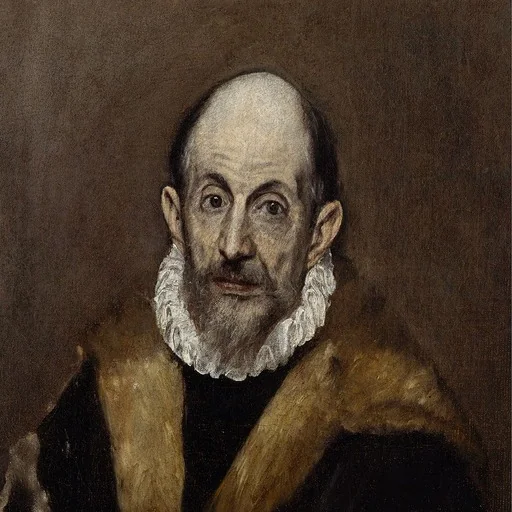
Artist
Doménikos Theotokópoulos was born in 1541 in Candia (modern Heraklion), the capital of Venetian-ruled Crete, where he was trained in the post-Byzantine tradition of icon painting.