Artwork
Christ the Saviour
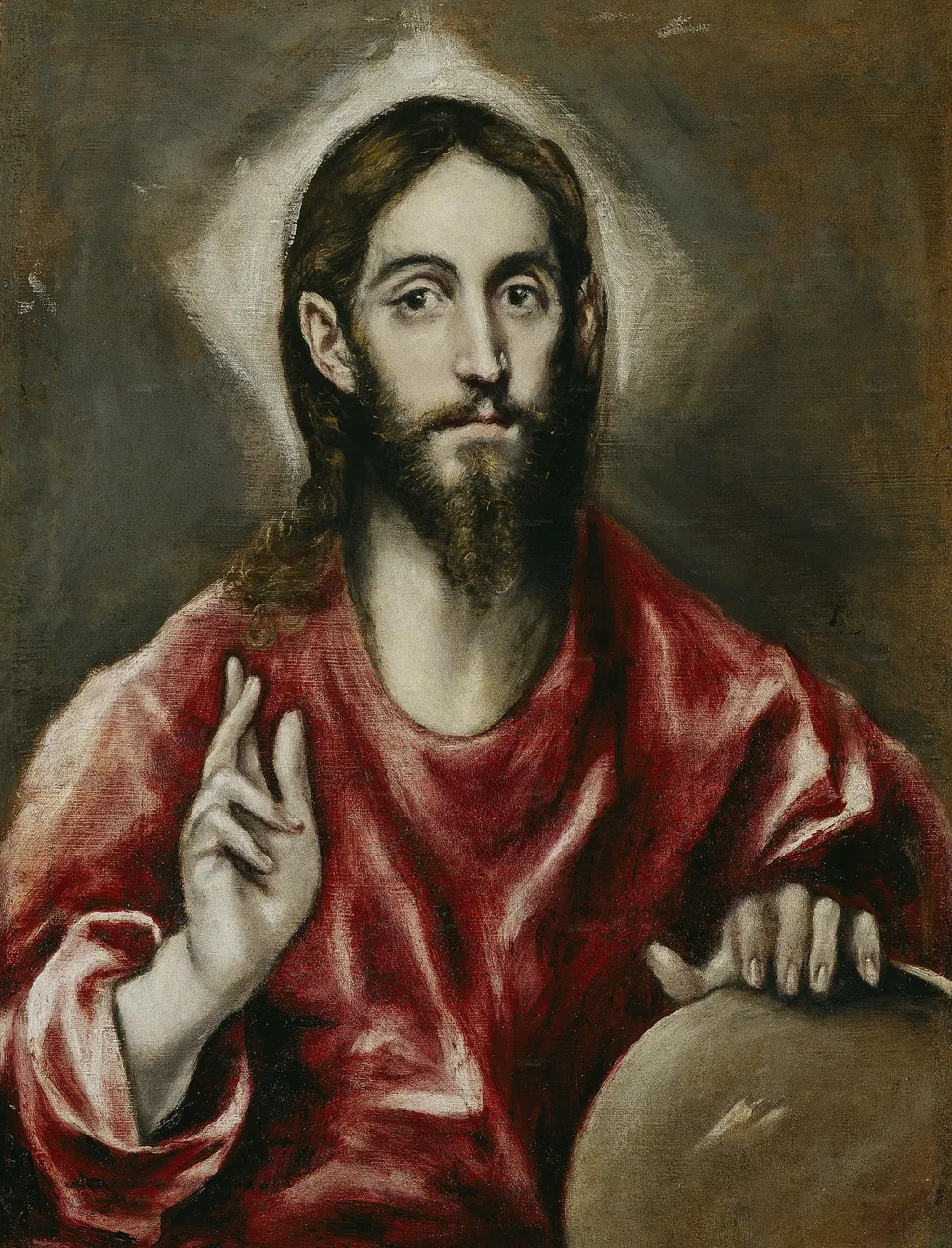
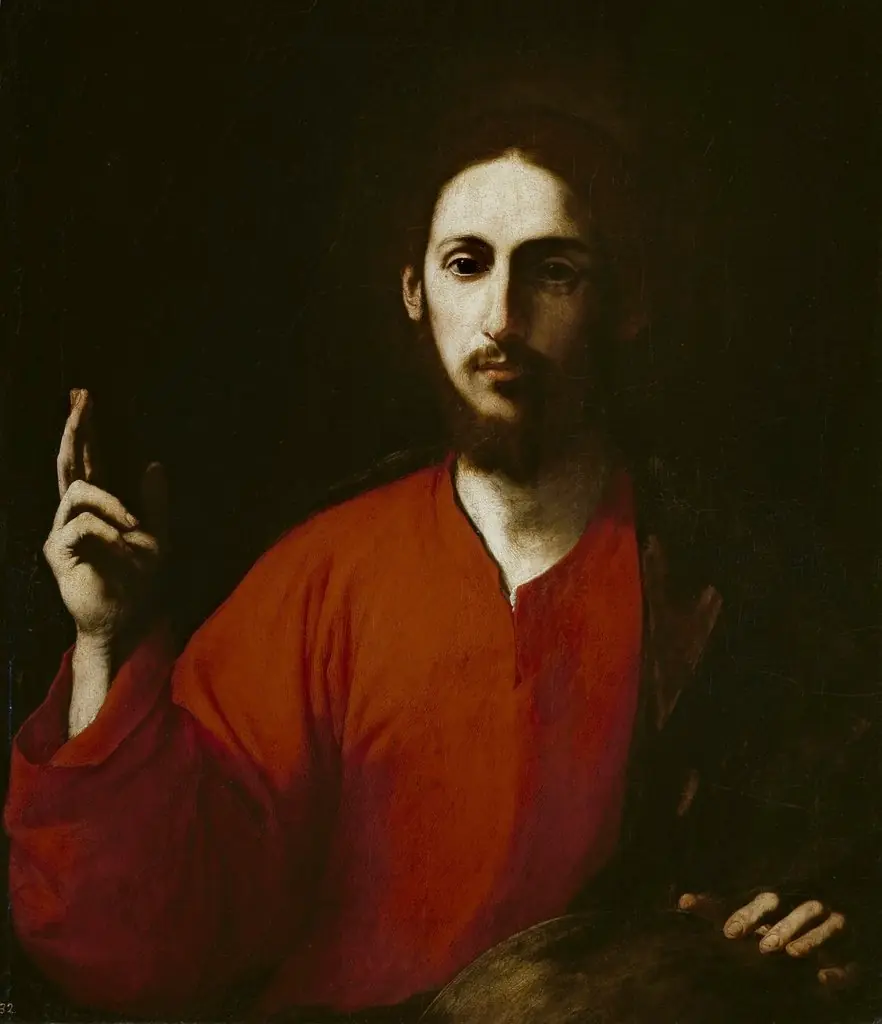
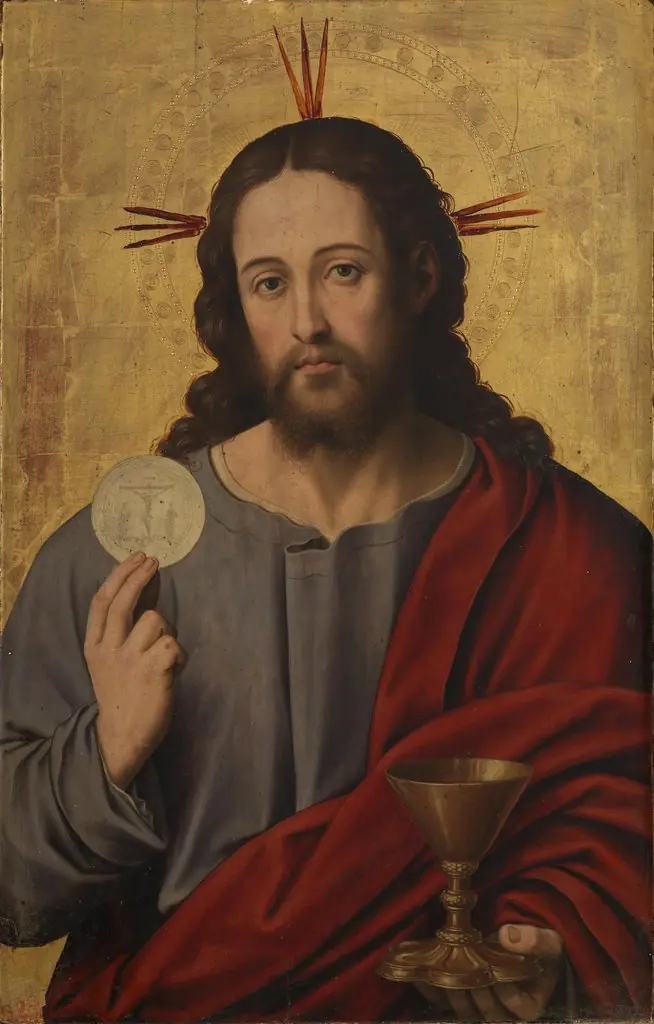
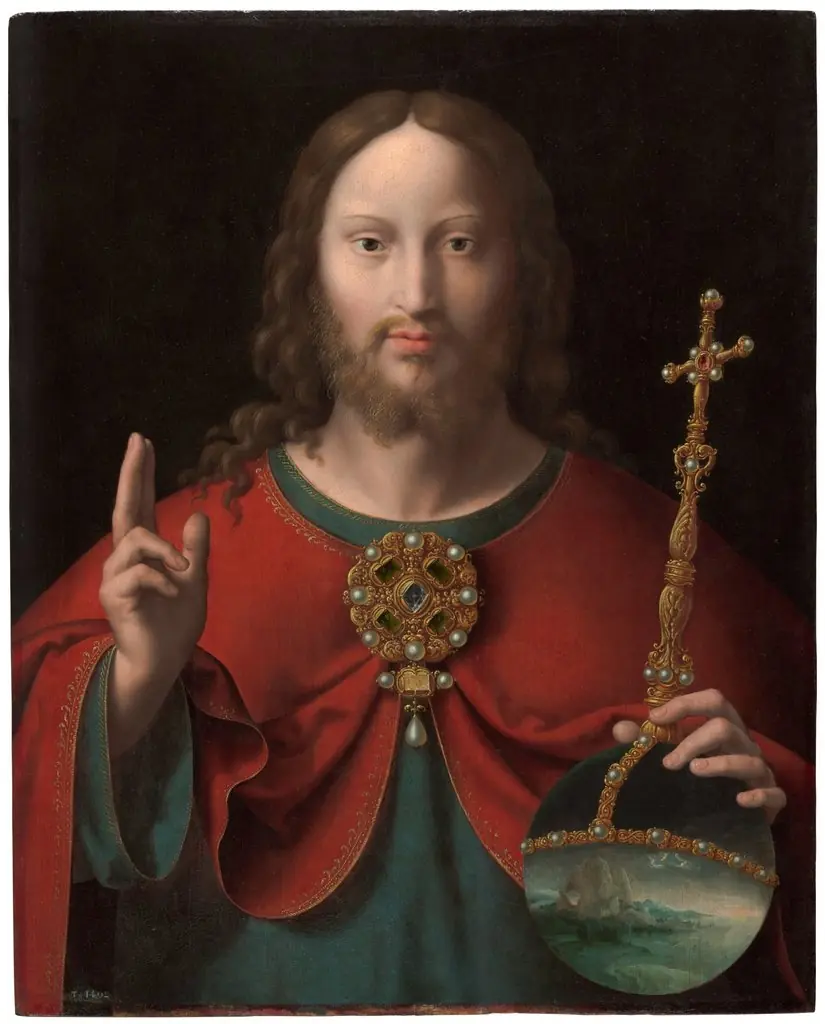
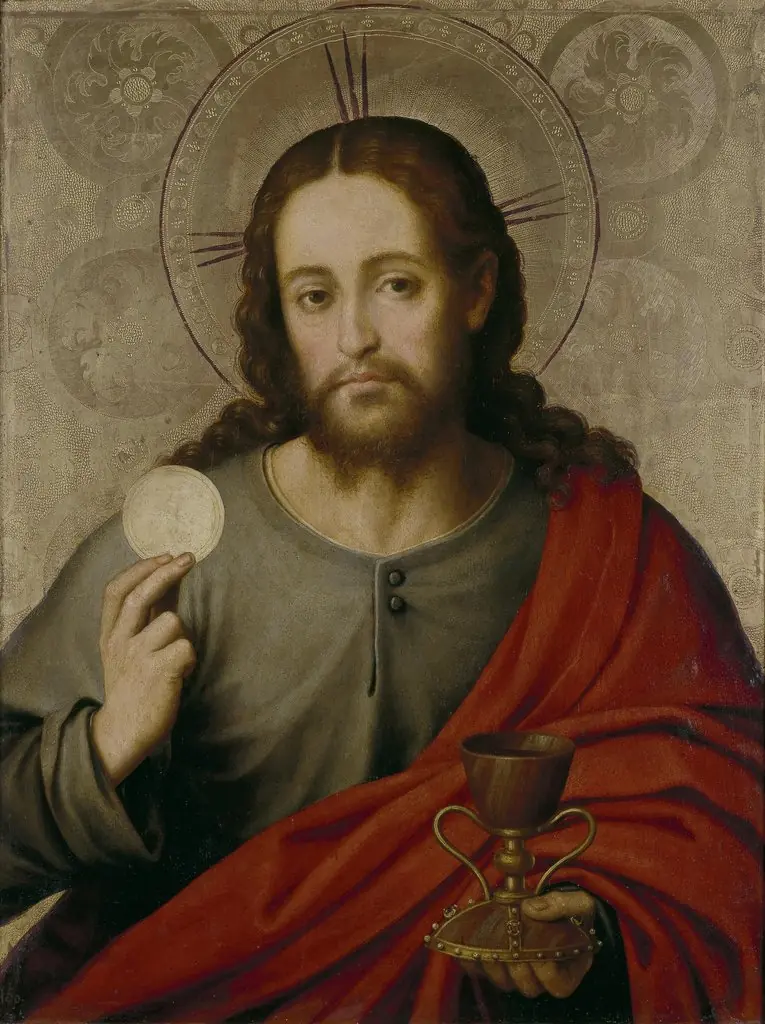
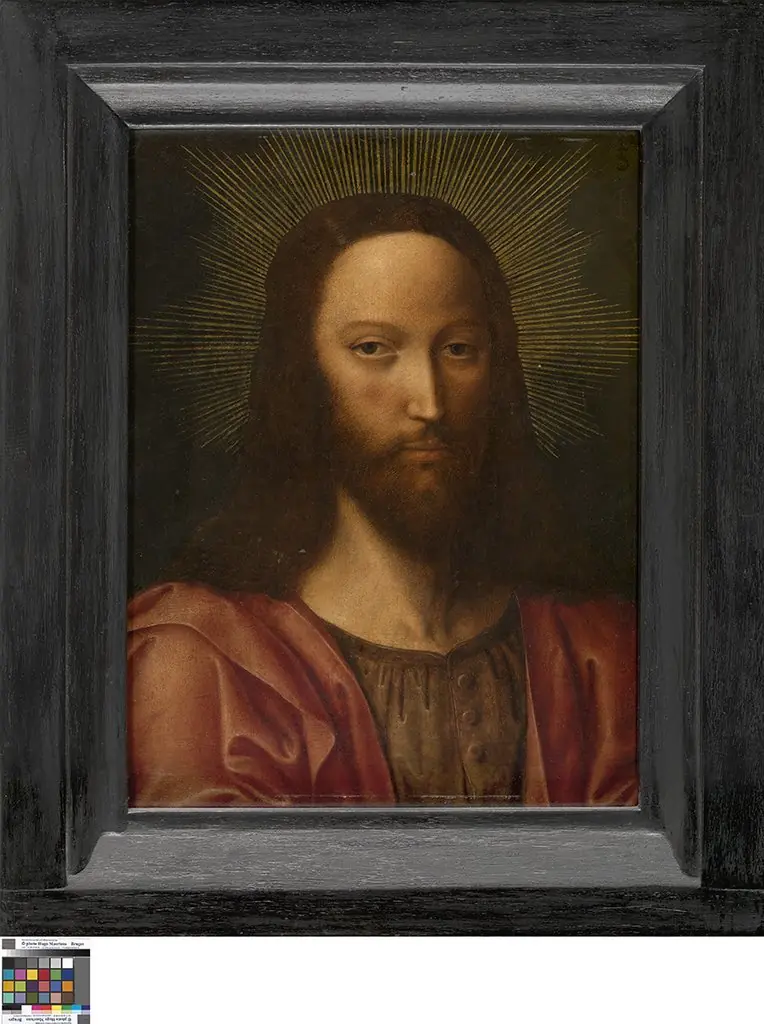
Christ the Saviour is an oil painting by the Mannerist artist El Greco. It dates from 1611 and is held in the collection of the Museo del Prado.
About this work
El Greco painted Christ the Saviour between 1608 and 1614. The work is an oil on canvas now in Madrid’s Museo del Prado. Christ is shown holding a globe beneath his left hand.
This painting is part of El Greco’s late work. He often used dramatic light and color in that period. The globe symbolizes Christ’s power over the world.
Look up the artist El Greco next.
Subject & Meaning
The painting depicts Christ as the Savior of the World (Salvator Mundi), shown nearly frontally but slightly turned to the right.
The painting depicts Christ as the Savior of the World (Salvator Mundi), shown nearly frontally but slightly turned to the right. He raises his right hand in a gesture of blessing while resting his left hand upon a globe, which symbolizes the world he saves. A rhomboid halo surrounds his head, and he is clad in a crimson tunic without an outer mantle, a compositional choice that distinguishes this work from other versions in El Greco's apostolate series. The iconography synthesizes Byzantine artistic traditions with elements characteristic of Counter-Reformation painting. Originally part of a larger commission featuring Christ and the twelve apostles for the church at Almadrones, the image serves as the central figure of this religious ensemble.
Technique & Style
Executed in oil on canvas, this work measures 72 by 55 cm and dates to approximately 1608-1614. The composition depicts Christ nearly frontally, turned slightly right, blessing with his right hand while resting his left upon a globe. A rhomboid nimbus surrounds his head, and he wears a crimson tunic without the mantle typically found in similar apostolate series. This absence of a cloak and the specific elevation of the globe distinguish the painting from other versions. Stylistically, the piece synthesizes Byzantine artistic traditions with elements characteristic of Counter-Reformation art. Scholars remain divided on its execution; while some attribute it directly to El Greco, others classify it as a product of his workshop.
History & Provenance
Christ the Saviour was painted by El Greco circa 1608-1614 as part of an apostolado, a series of thirteen canvases depicting Christ and the Twelve Apostles, commissioned for the church at Almadrones in the Province of Guadalajara. The Almadrones ensemble was modelled on the apostolado paintings in Toledo Cathedral. Not all thirteen works from the original commission survived. The painting was later recovered from the church at Almadrones and entered the collections of the Museo Nacional del Prado in Madrid, Spain, where it is currently held. It is catalogued as number 186 in Harold Wethey's reasoned catalogue of El Greco's work. Christ the Saviour is held in the Museo del Prado in Madrid, Spain, where it forms part of the museum's permanent collections. The painting is catalogued as number 186 in the raisonné compiled by the El Greco scholar Harold Wethey. It measures 72 × 55 cm and was originally commissioned as part of the Apostolado de Almadrones, a series of thirteen canvases produced for the church at Almadrones in the Province of Guadalajara. The series was modelled on the apostolado paintings in Toledo Cathedral. The Almadrones works were later recovered from that church and entered the Prado's holdings, where they remain. No separate temporary-loan or touring exhibition history is documented in the available sources beyond this institutional context.
Context
El Greco’s *Christ the Saviour* occupies a pivotal place in the transition from Byzantine icon traditions to the heightened emotionalism of Counter-Reformation art. Scholars such as José Álvarez Lopera and Michael Scholz-Hänsel situate the work within El Greco’s late *apostolados*, series commissioned for ecclesiastical settings like the church at Almadrones. These cycles, modeled on Toledo Cathedral prototypes, fused devotional immediacy with Mannerist elongation, a synthesis that defined the artist’s mature religious output. The painting’s frontal, almost hieratic presentation of Christ as *Salvator Mundi*, holding the orb and raising his blessing hand, reflects both Byzantine conventions and the Tridentine emphasis on clarity in sacred imagery. Harold Wethey’s catalogue raisonné classifies it as a workshop production, while José Camón Aznar attributes it to El Greco himself, underscoring ongoing debates about authorship and collaboration in the artist’s studio. Its reduced scale and compositional adjustments, such as the elevated globe, distinguish it from larger apostolados, illustrating El Greco’s adaptive approach to serial religious commissions.
Own this work as a print
Artist & collection
Artist
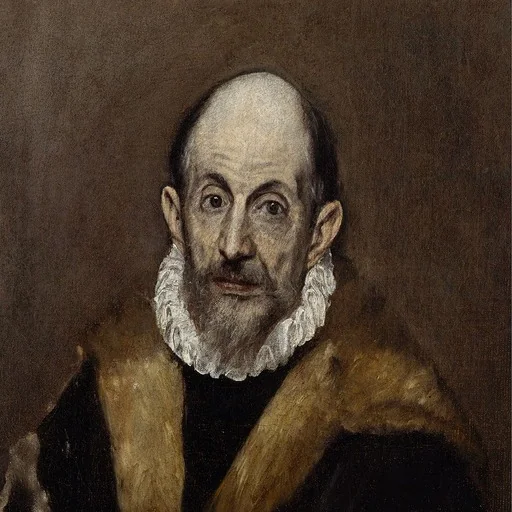
Doménikos Theotokópoulos was born in 1541 in Candia (modern Heraklion), the capital of Venetian-ruled Crete, where he was trained in the post-Byzantine tradition of icon painting.