Artwork
Saint Paul
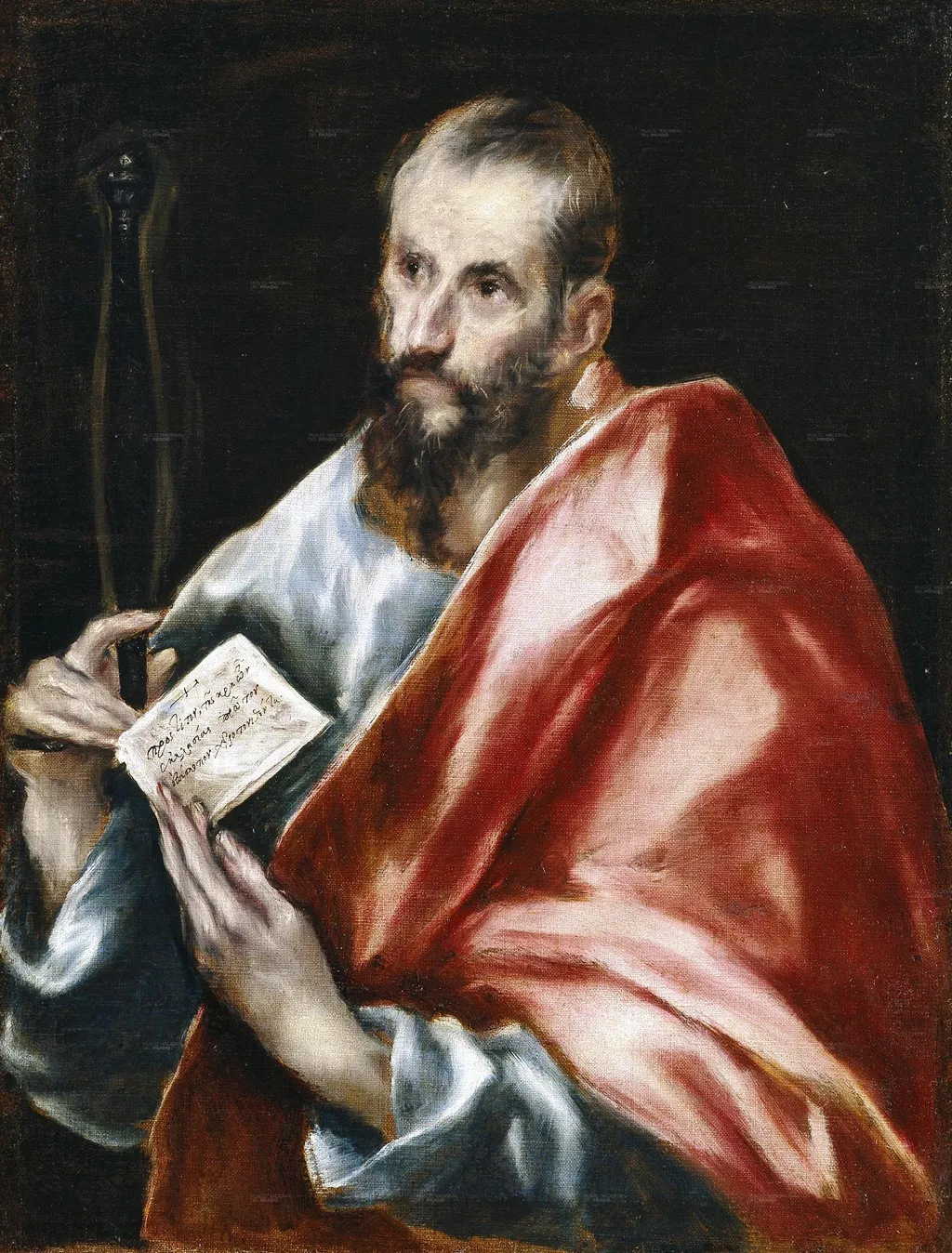
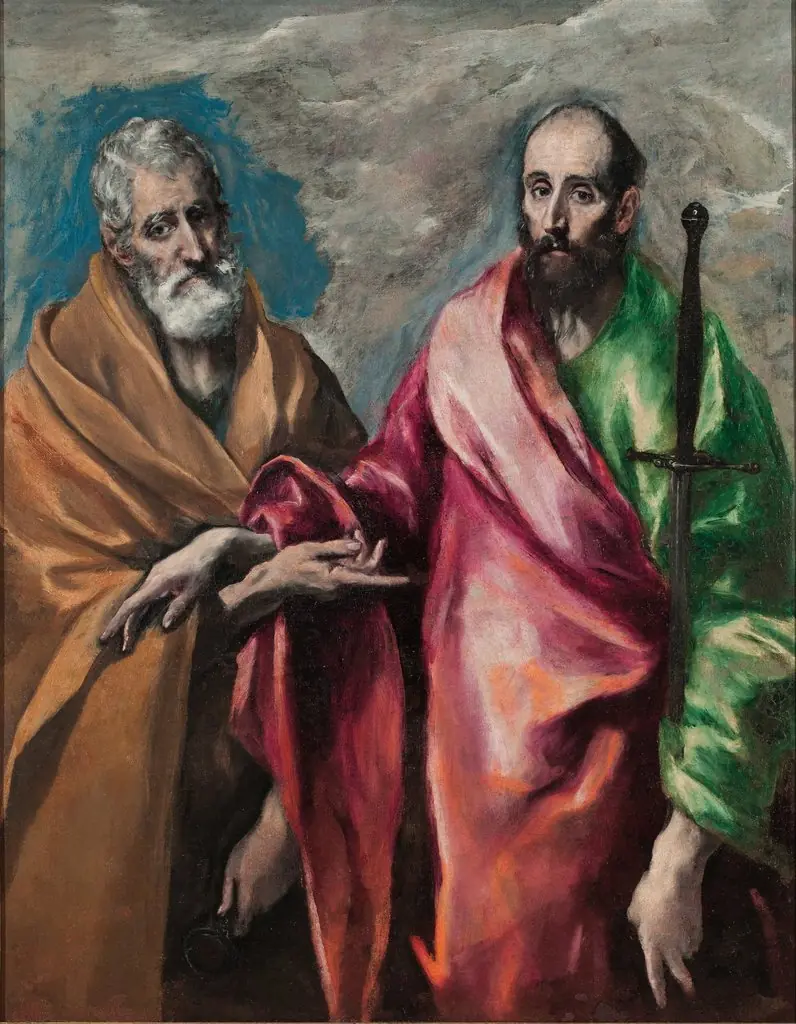
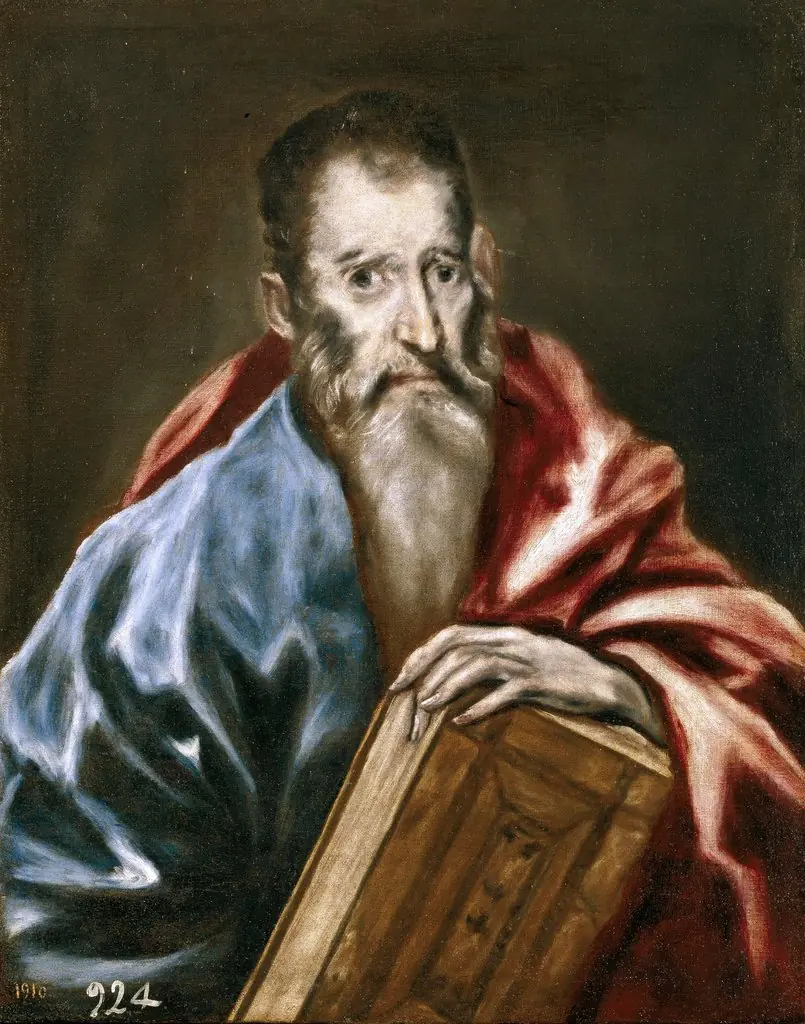
Saint Paul is an oil painting by the Mannerist artist El Greco. It dates from 1608 and is held in the collection of the Museo del Prado.
About this work
Subject & Meaning
The figure shown is identified as Saint Paul, a central apostle in Christian tradition who is depicted holding a letter addressed to Titus, a reference that underscores his role as a missionary and teacher of Gentile churches. In this work, El Greco situates the saint within a series of apostle portraits originally created for the parish church of Almadrones, where Paul replaces Judas as the representative of the apostolic group. The painting’s iconography includes a sword, a traditional attribute of Paul, and its composition aligns with other versions in the series, reflecting a deliberate thematic program rather than a standalone narrative.
The attribution of the piece to El Greco is supported by its inclusion in the Museo del Prado’s collection and by scholarly catalogues such as Harold Wethey’s reasoned catalog, which notes the work’s stylistic and technical characteristics.
Technique & Style
Stylistically, the apostle is rendered as an ordinary man, following the same iconographic type used in the Apostolado of San Félix.
Saint Paul is an oil painting on canvas, measuring 72 by 55 cm. The technique is described as fluid, built up with loose brushstrokes that give the impression of an unfinished work, although its quality is considered superior to most of the other paintings in the Almadrones Apostolado series to which it originally belonged.
Stylistically, the apostle is rendered as an ordinary man, following the same iconographic type used in the Apostolado of San Félix. The figure's expression is muted, and Harold Wethey suggests that the head and neck are only partially completed, indicating that the canvas likely left the artist's studio in an incomplete state and may include contributions from the workshop.
History & Provenance
Saint Paul by El Greco is dated to circa 1610–1614 and measures 72 × 55 cm. It was created as part of a series of apostle paintings produced for the parish church in Almadrones, Spain, replacing Judas in the iconographic program rather than forming one of the Twelve Apostles.
The work entered the Museo del Prado in Madrid, where it remains in the permanent collection. It is catalogued as number 192 in Harold Wethey’s El Greco catalogue raisonné, and its attribution to El Greco has been discussed in relation to the broader Apostolado de Almadrones ensemble.
The painting Saint Paul by El Greco is currently held in the Museo Nacional del Prado in Madrid, Spain. It is cataloged as number 192 in the raisonné by art historian Harold Wethey. The work originally belonged to the Apostolado de Almadrones series, created for the parish church in Almadrones, Guadalajara, where it was discovered.
While the piece has been part of the Prado's collection for some time, the provided sources do not list specific past or future exhibition dates or venues beyond its permanent institutional location.
Context
Saint Paul belongs to the Apostolado de Almadrones, a series of canvases recovered from the parish church of Almadrones in Guadalajara, Spain, and is catalogued as number 192 in Harold Wthey's reasoned catalogue of the artist. The Almadrones set is understood as a group of variants on the earlier Apostolado produced for Toledo Cathedral, with Paul, though not one of the original twelve apostles, substituting for Judas in both series. The work is central to Gregorio Marañón's theory that El Greco drew on mental patients from the Hospital del Nuncio as models, an interpretation reflected in Paul's unidealized, ordinary appearance.
Harold Wethey further observed that the head and neck appear partially unfinished, and the Spanish-language scholarship notes that, while the fluid, loose technique gives the impression of an incomplete canvas, the overall quality is superior to most of the Almadrones series, though the face may be largely the product of the workshop.
Overview
El Greco painted Saint Paul between 1610 and 1614. The oil work now hangs in Madrid’s Museo del Prado. It belongs to a group created for the parish church of Almadrones, a set that echoed a larger series of apostle images originally intended for Toledo Cathedral.
Own this work as a print
Artist & collection
Artist
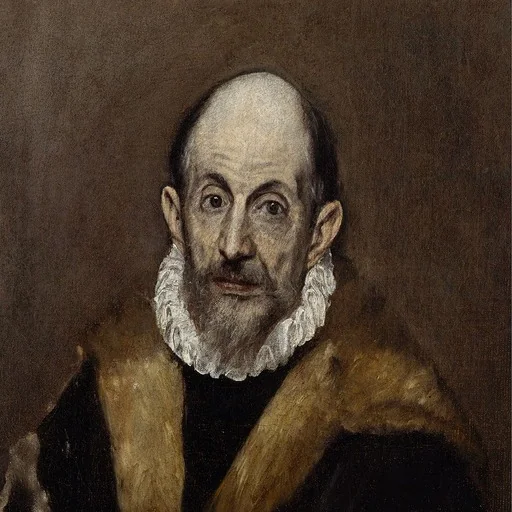
Doménikos Theotokópoulos was born in 1541 in Candia (modern Heraklion), the capital of Venetian-ruled Crete, where he was trained in the post-Byzantine tradition of icon painting.