Artwork
St James
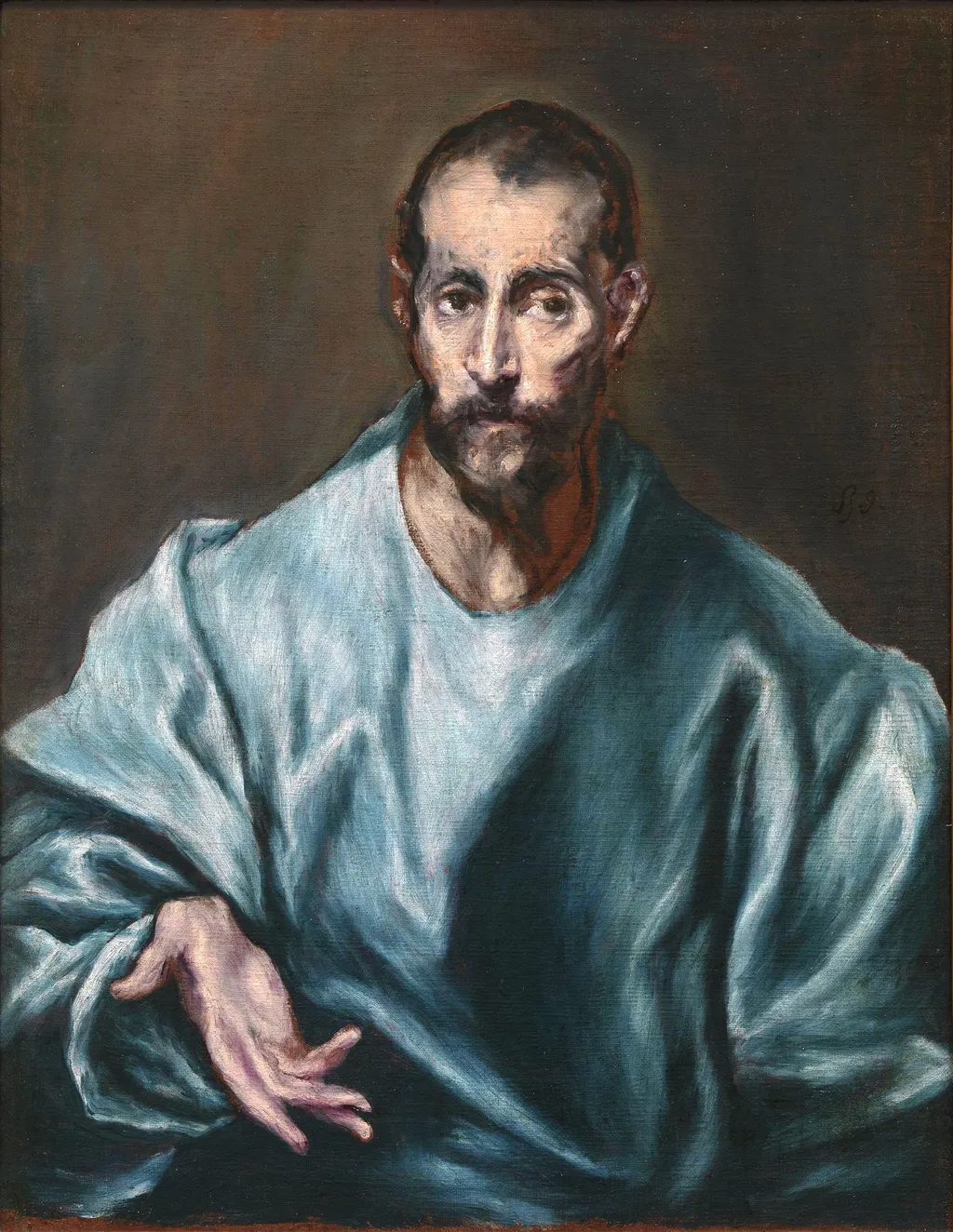
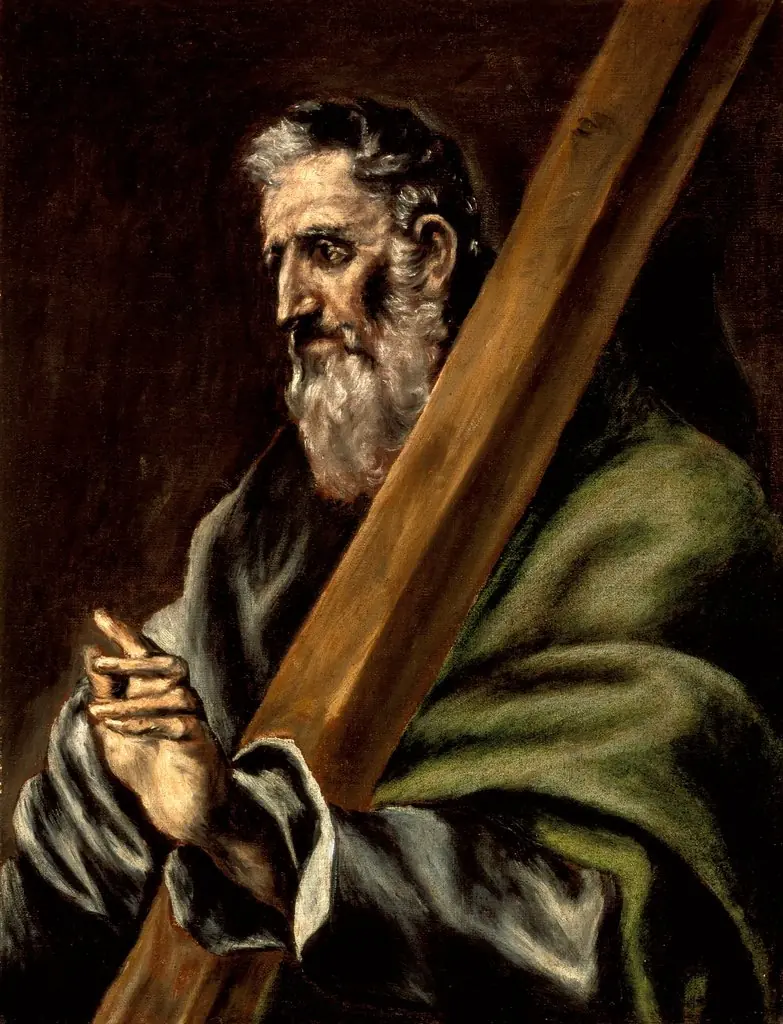
St James is an oil painting by the Mannerist artist El Greco. It dates from 1608 and is held in the collection of the Museo del Prado.
About this work
Subject & Meaning
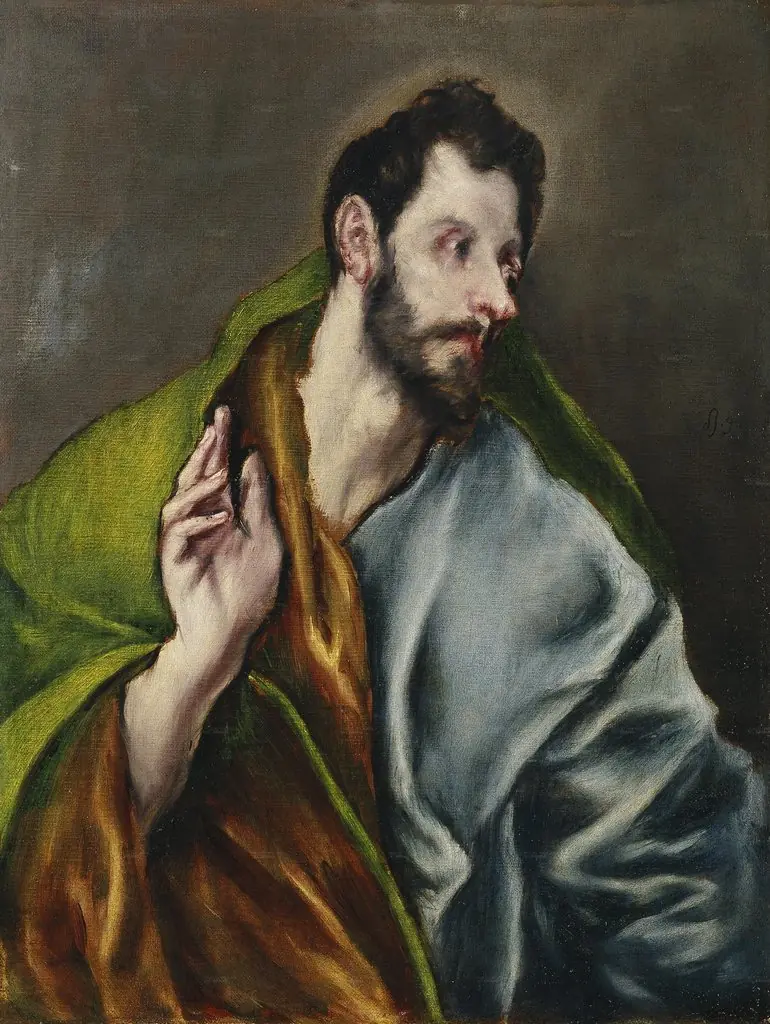
The apostle is shown in a naturalistic, frontal pose with intense gaze directed to the side, dressed in a heavy blue tunic that conceals anatomical structure.
The work depicts Saint James the Great, identifiable by tradition within El Greco’s Apostolado series rather than by explicit attributes in this canvas. The apostle is shown in a naturalistic, frontal pose with intense gaze directed to the side, dressed in a heavy blue tunic that conceals anatomical structure. His right hand is raised in a rhetorical gesture, while the absence of customary symbols, such as the pilgrim’s staff or book, leaves the identification reliant on broader programmatic context. The figure’s pronounced individuality and psychological intensity have been linked by Gregorio Marañón to El Greco’s use of models from the Hospital del Nuncio, underscoring a deliberate humanization of the saint within a Mannerist idiom.
Technique & Style
St James is an oil painting on canvas measuring 72 by 55 centimeters, created between 1608 and 1614 by El Greco for the parish church of Almadrones in Spain. The work depicts St. James the Elder as a common man, lacking identifying attributes but rendered with naturalistic detail and a heavy blue tunic. Strong directional light and expressive brushwork emphasize the figure, reflecting Gregorio Marañón's theory that El Greco used patients from the Hospital del Nuncio as models. The painting is housed in the Museo del Prado and is part of a series of apostle variants produced by the artist for Toledo Cathedral, noted for its Mannerist style and use of oil paint.
History & Provenance
The work titled St James was created by El Greco in 1608 as an oil painting on canvas, originally commissioned for the parish church of Almadrones in Spain as part of a series of apostle paintings intended for Toledo Cathedral. It has been part of the Museo del Prado collection since its acquisition, forming part of the Apostolado de Almadrones series. The painting, measuring 72 by 55 centimeters, depicts Saint James the Greater and is noted for its naturalistic portrayal and use of a blue tunic, reflecting El Greco's distinctive style. Historical records indicate the work was produced between 1608 and 1614, with later scholarship linking its model to patients at the Hospital del Nuncio, as suggested by Gregorio Marañón. The attribution has been subject to scholarly discussion, with some early catalogues identifying the figure as Saint James the Minor, but current consensus, supported by catalogues raisonnés such as those by Harold Wethey, recognizes it as representing Saint James the Greater.
The painting St James is held in the Museo del Prado in Madrid, where it is catalogued under inventory number 188 in Harold Wethey's reasoned catalogue of El Greco's works. It was created in 1608 as an oil on canvas measuring 72 cm by 55 cm and originally formed part of the Apostolado de Almadrones series for the parish church in Almadrones, Spain. The work has been exhibited as part of the museum's online gallery and has been referenced in exhibition materials related to El Greco's apostles series.
Context
This painting is recognized as the most esteemed work within the Almadrones Apostolate series, a group of canvases created for a parish church in Guadalajara that served as variants of apostle portraits intended for Toledo Cathedral. Art historians José Álvarez Lopera and José Camón Aznar have notably challenged the traditional identification of the figure, arguing that the lack of standard attributes like a pilgrim's staff suggests the subject may actually be Saint James the Lesser rather than the Greater.
The work holds a specific place in medical-artistic scholarship due to Gregorio Marañón's theory that El Greco utilized patients from the Hospital del Nuncio as models. The intense, naturalistic expression of the saint is frequently cited as primary evidence supporting this hypothesis regarding the artist's use of unconventional sitters during his late period.
Own this work as a print
Artist & collection
Artist
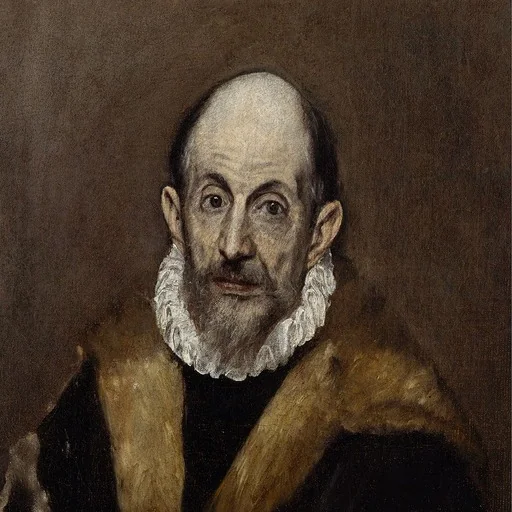
Doménikos Theotokópoulos was born in 1541 in Candia (modern Heraklion), the capital of Venetian-ruled Crete, where he was trained in the post-Byzantine tradition of icon painting.