Artwork
San Bernardino de Siena
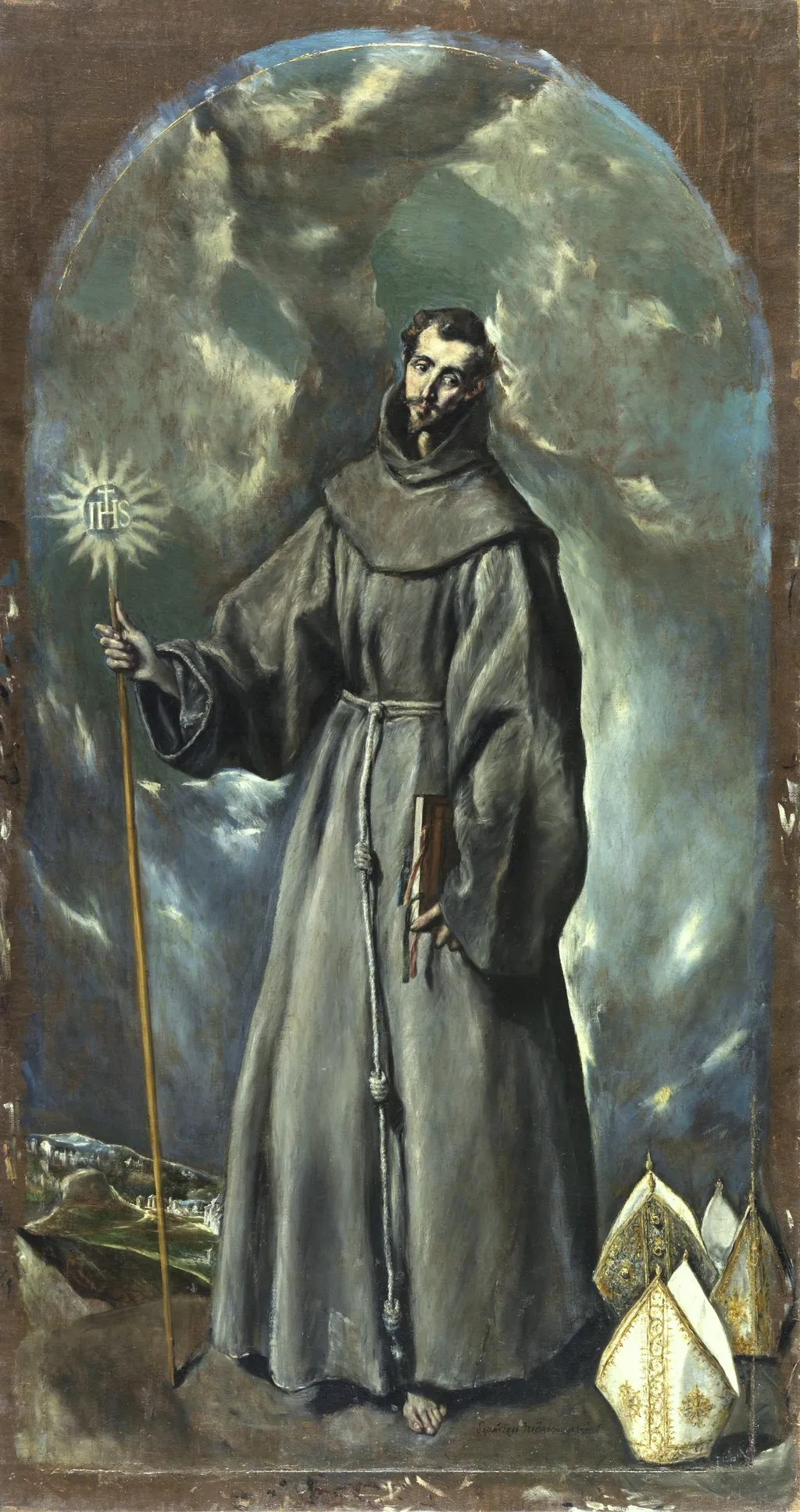
San Bernardino de Siena is an oil painting by the Mannerist artist El Greco. It dates from 1603 and is held in the collection of the Museo del Prado.
About this work
Subject & Meaning
At his feet lie three mitres, each symbolizing the bishoprics of Siena, Urbino, and Ferrara that he declined in order to continue his mission.
The painting depicts Bernardino of Siena, a Franciscan friar known for his preaching and charitable work during the plague of 1400. He is shown standing in a Franciscan habit, holding a staff topped with the IHS monogram, a radiant Christogram signifying Iesus Hominum Salvator (Jesus, Savior of Mankind), and a book under his left arm, referencing his theological writings and sermons. At his feet lie three mitres, each symbolizing the bishoprics of Siena, Urbino, and Ferrara that he declined in order to continue his mission.
The background features a view of Toledo, where the work was commissioned for the university college of San Bernardino, embedding the saint’s local significance within the city’s landscape. El Greco’s stylized, elongated figure and dramatic cloudy sky convey the saint’s spiritual intensity and the weight of his humble rejection of ecclesiastical honors in favor of service.
Technique & Style
The painting is executed in oil on canvas, mounted on wood, measuring 269 × 144 cm. El Greco’s handling emphasizes elongated, geometrized forms: the saint’s body is structured as an isosceles triangle, with his head also rendered in a triangular schema and a diagonal traversing from the IHS monogram through his left hand and the book to the mitres below.
Formal qualities include pronounced monumentality and a restrained, near-monochrome palette. The composition isolates Bernardino in a Franciscan habit, holding a staff topped with the radiant IHS device and a plateresque-bound book under his left arm. Behind him, a stormy sky and a schematic view of Toledo frame the scene, while three mitres at his feet symbolize the bishoprics he declined (Siena, Urbino, Ferrara).
History & Provenance
Created in 1603, this canvas was commissioned by the university college of San Bernardino in Toledo to depict its patron saint. El Greco received payment of 3,000 reales in February 1603, with the work completed by the following September. The painting originally formed part of the altarpiece for the college before entering the collection of the Museo del Prado.
Although legally owned by the Prado, the artwork is currently deposited and displayed at the El Greco Museum in Toledo. It is cataloged as number 200 in Harold Wethey's raisonné of El Greco's works.
The painting San Bernardino de Siena is held by the Museo del Prado but is displayed at the El Greco Museum in Toledo, Spain. It was commissioned by the university college of San Bernardino in Toledo and completed in September 1603 after being paid for in February of that year. The work was created as an altarpiece for the Franciscan saint, depicting him in his habit holding a cane topped with the monogram IHS and a book under his left arm, with three mitres at his feet representing the dioceses of Siena, Urbino, and Ferrara he declined.
The painting measures 269 by 144 centimeters and is cataloged as inventory number 200 in Harold Wethey's reasoned catalogue raisonné. It was previously part of the collection at the Museo del Greco before being moved to its current location.
Context
El Greco painted San Bernardino de Siena in 1603 for the Colegio Universitario de San Bernardino in Toledo, receiving 3,000 reales in February and completing the work in September of that year. The oil-on-canvas painting measures 269 x 144 cm and depicts Saint Bernardino in a Franciscan habit, holding a staff crowned with the IHS monogram and a book bound in plateresque style, with three mitres at his feet symbolizing bishoprics he declined. The composition features a landscape of Toledo in the background and emphasizes the saint's monumental presence against stormy clouds.
Scholars note its stylistic parallels to El Greco's earlier San José with the Christ Child, particularly in geometric structuring and spatial treatment, while its sober palette contrasts with the vibrancy of some works. The painting is part of the Museo del Prado collection but is displayed at the El Greco Museum in Toledo, reflecting its historical ties to the region and its significance within the artist's religious output and Mannerist context.
Legacy
The 1603 San Bernardino de Siena became a reference point for later depictions of the saint, particularly through its distinctive compositional elements such as the stylized proportions, the monogram IHS on a staff, and the three mitres at the figure’s feet representing declined bishoprics. Its legacy is anchored in the extensive documentation of its creation, including the 3,000 reales payment in February 1603 and completion in September of that year, as recorded in contemporary sources. The work’s influence is further evidenced by its enduring presence in scholarly literature and museum records, with references in publications by Álvarez Lopera (2005), Scholz-Häsel (2003), and Wethey’s 1967 catalog raisonné, which assigns it catalog number 200.
The painting’s stylistic traits, notably the geometric structuring of the figure within a triangular composition and its dramatic landscape backdrop featuring Toledo’s landmarks, have been cited as influential in later religious art, particularly in works engaging with Franciscan iconography and Counter-Reformation themes.
Overview
El Greco’s 1603 wooden panel portrays Saint Bernardino of Siena, a Franciscan preacher, in his habit. The figure stands before a cloudy sky, holding a staff crowned with the IHS monogram and a book under his left arm, while three mitres lie at his feet, symbolising the bishoprics he refused.
Artist & collection
Artist
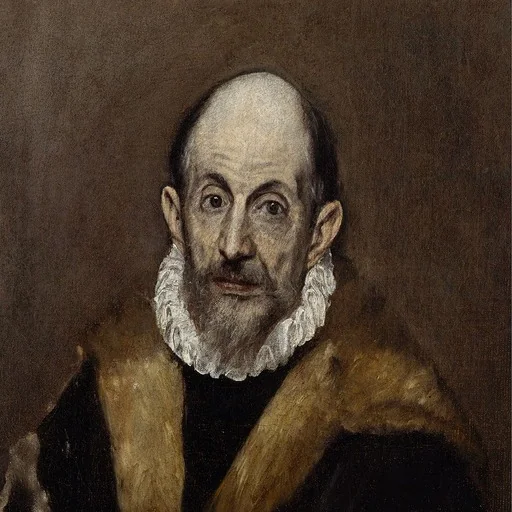
Doménikos Theotokópoulos was born in 1541 in Candia (modern Heraklion), the capital of Venetian-ruled Crete, where he was trained in the post-Byzantine tradition of icon painting.

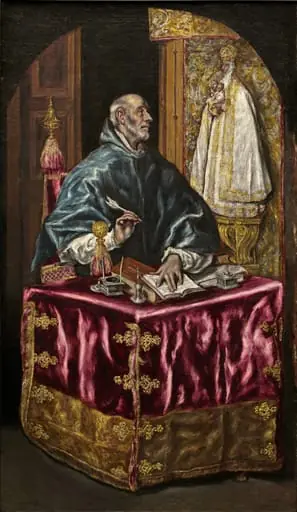
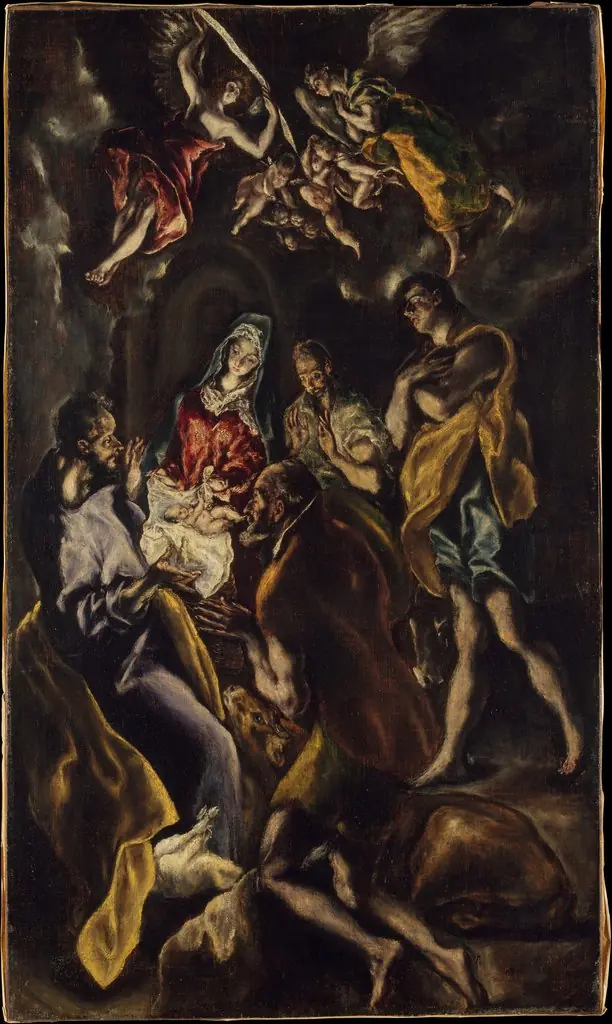
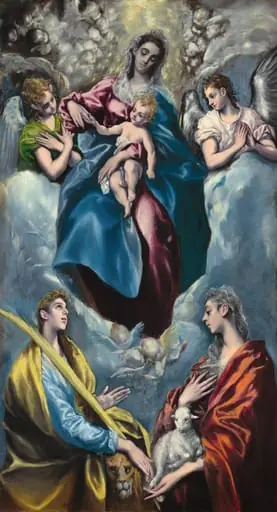
- Apparition of the Child Jesus to Saint Anthony of Padua
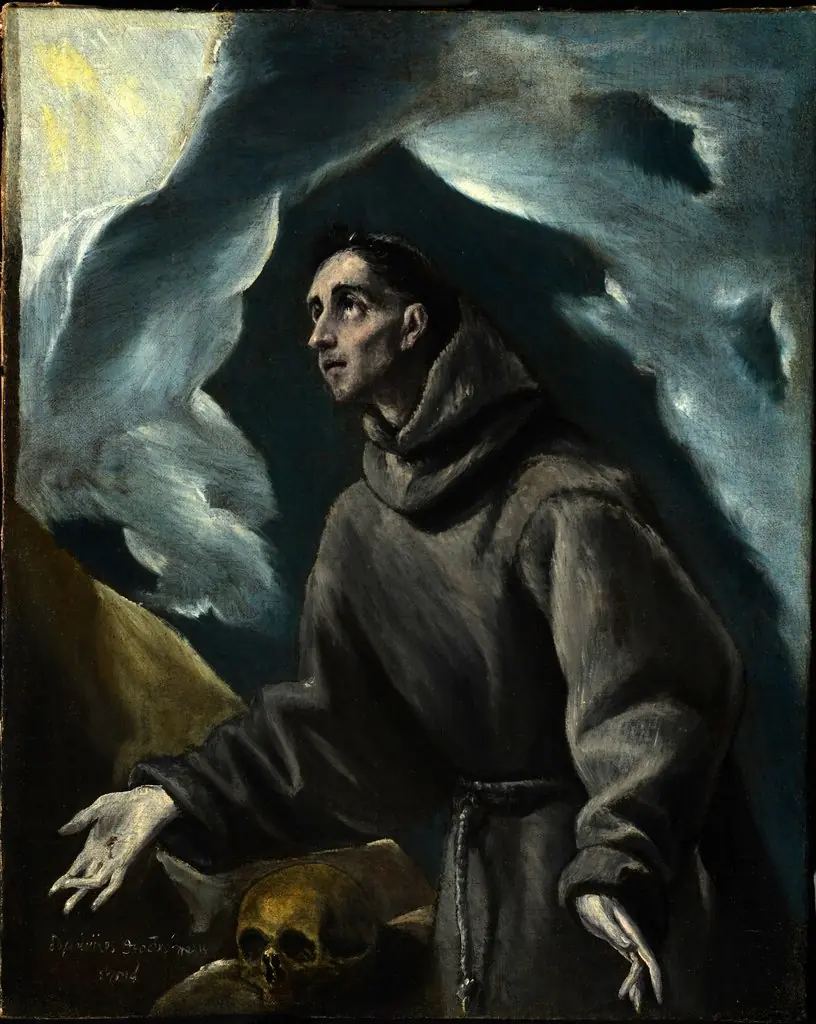 St. Francis receiving the Stigmata
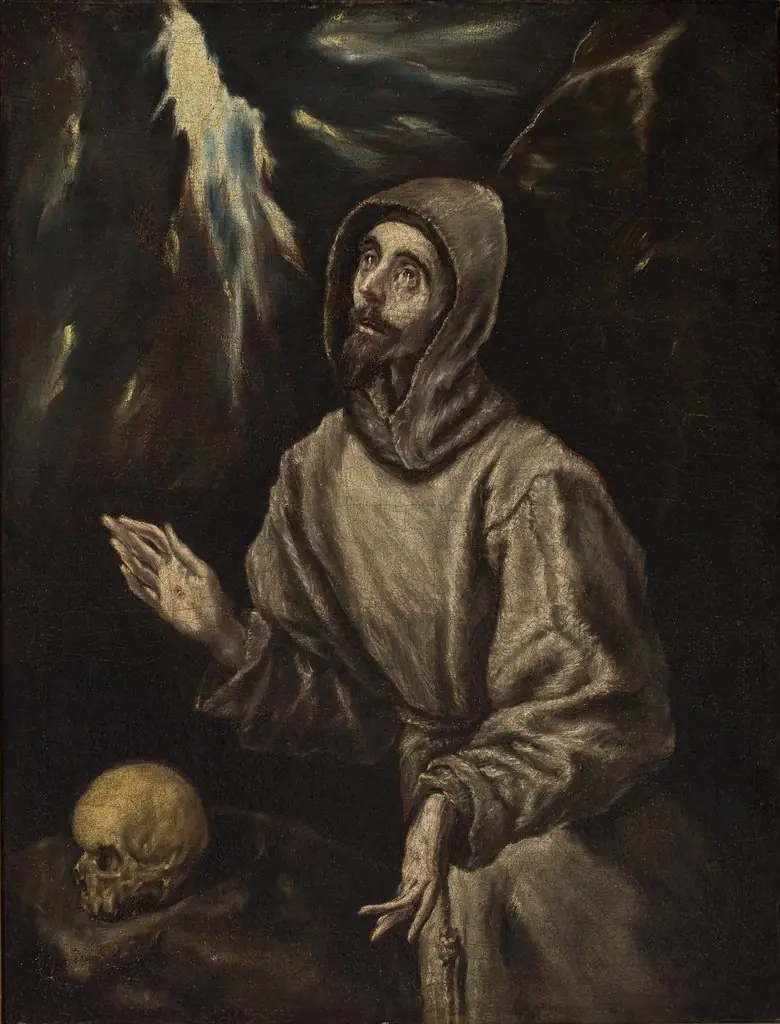 Ecstasy of Saint Francis Receiving the Stigmata
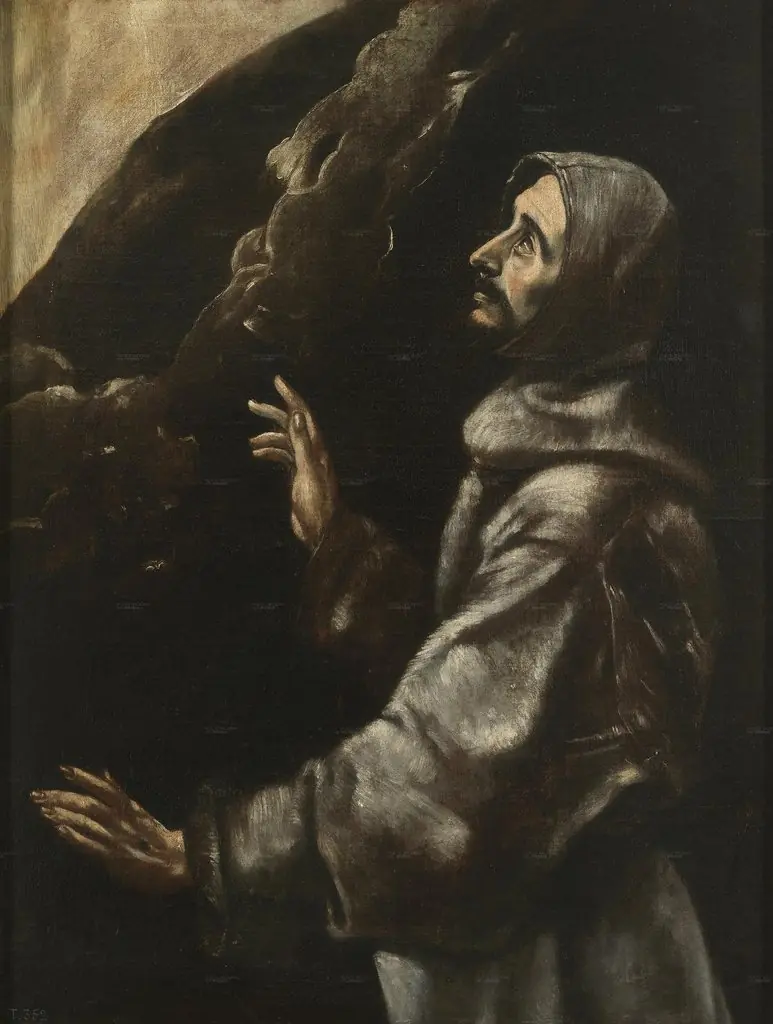 Saint Francis of Assisi in ecstasy
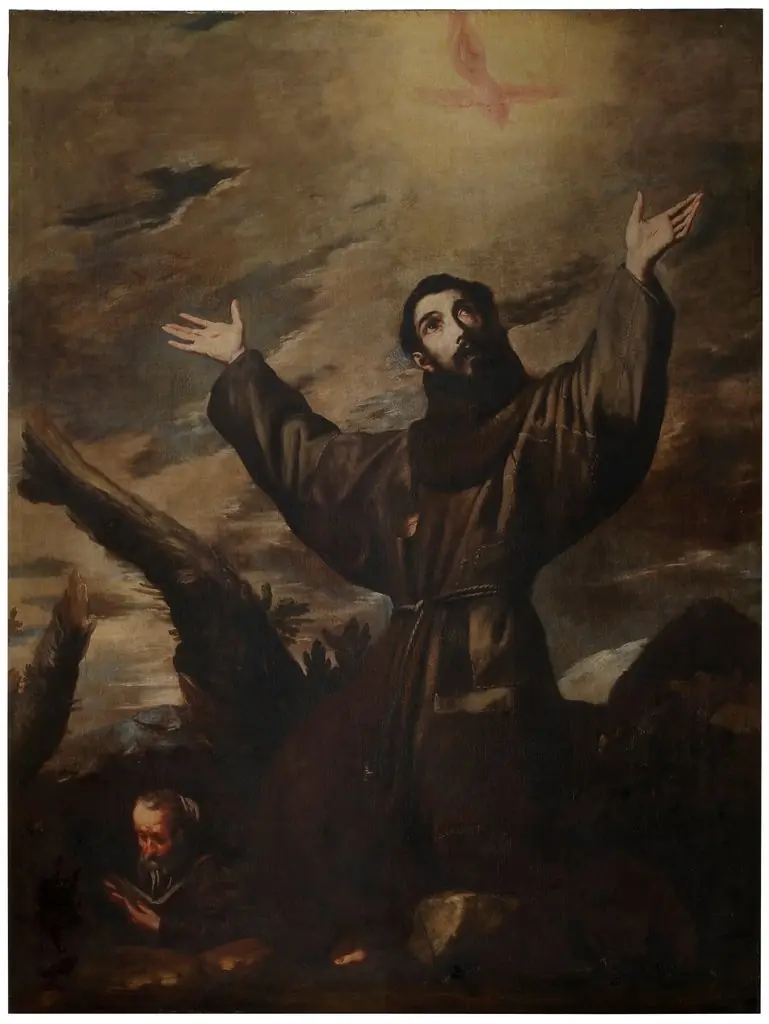 San Francisco recibe los estigmas
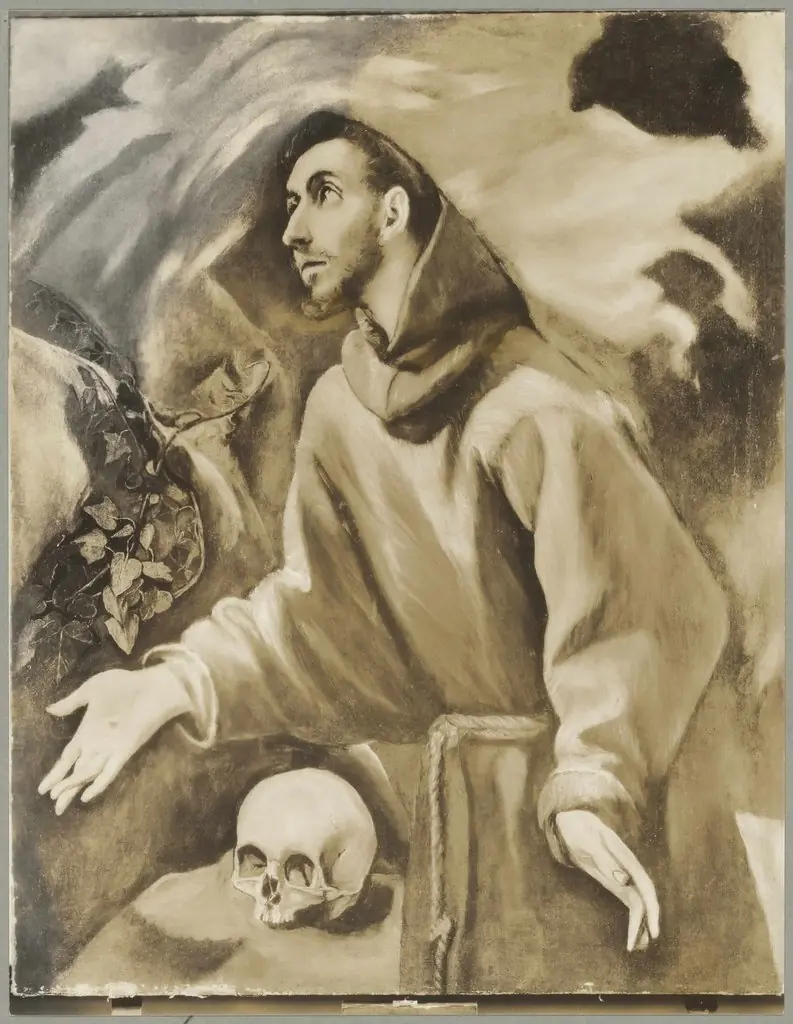 St. Francis receiving the Stigmata
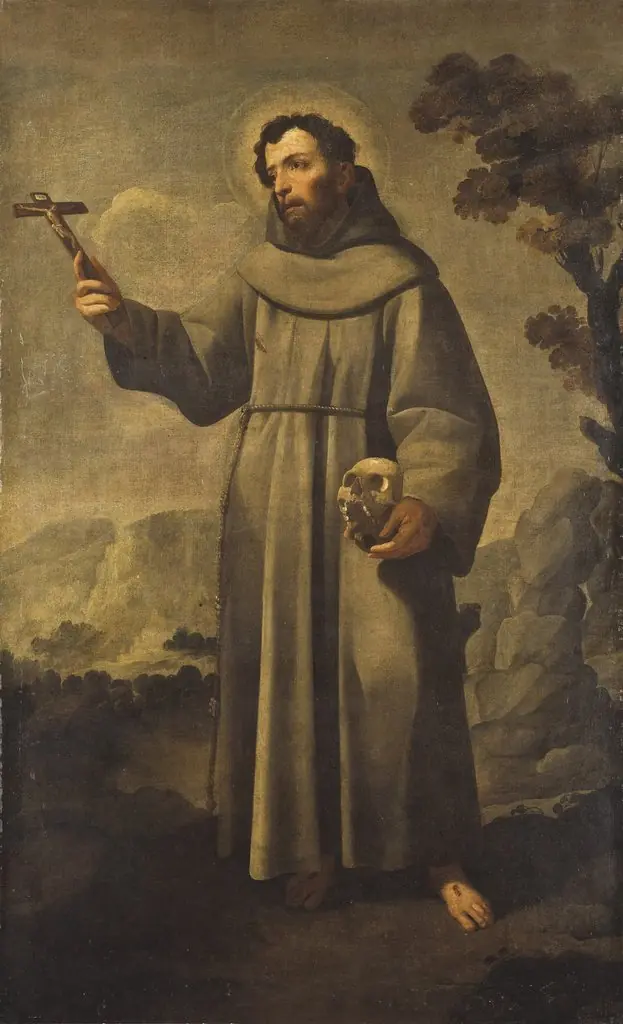 St Francis
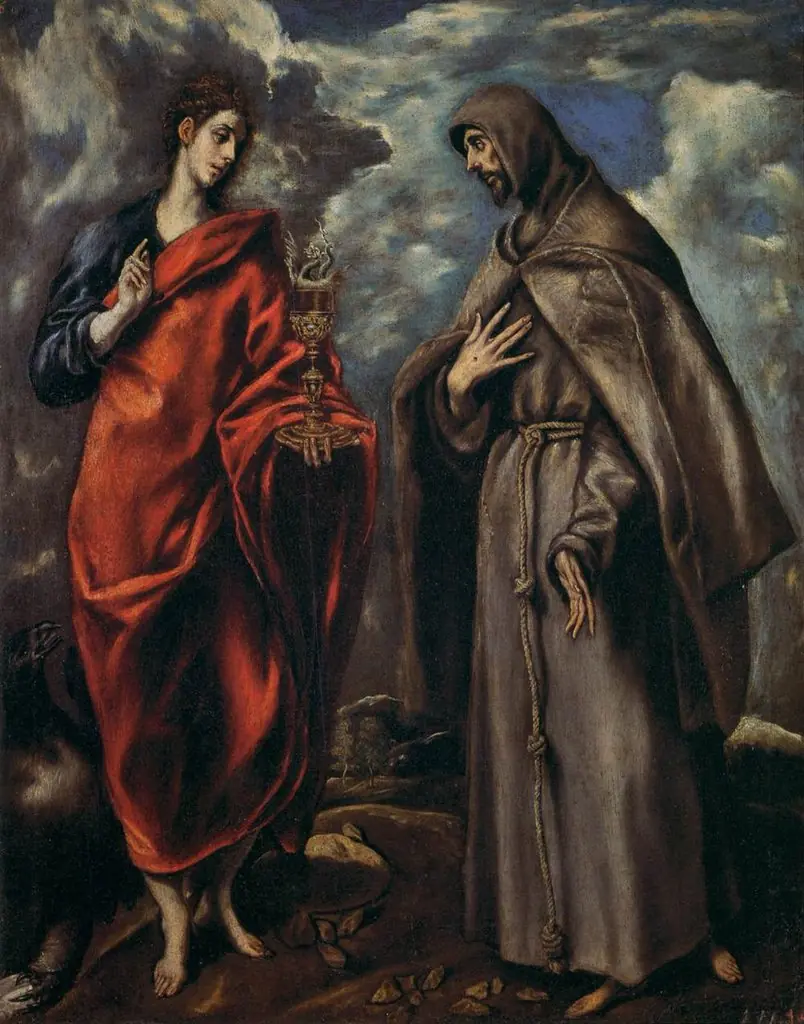 Saint John the Evangelist and Saint Francis
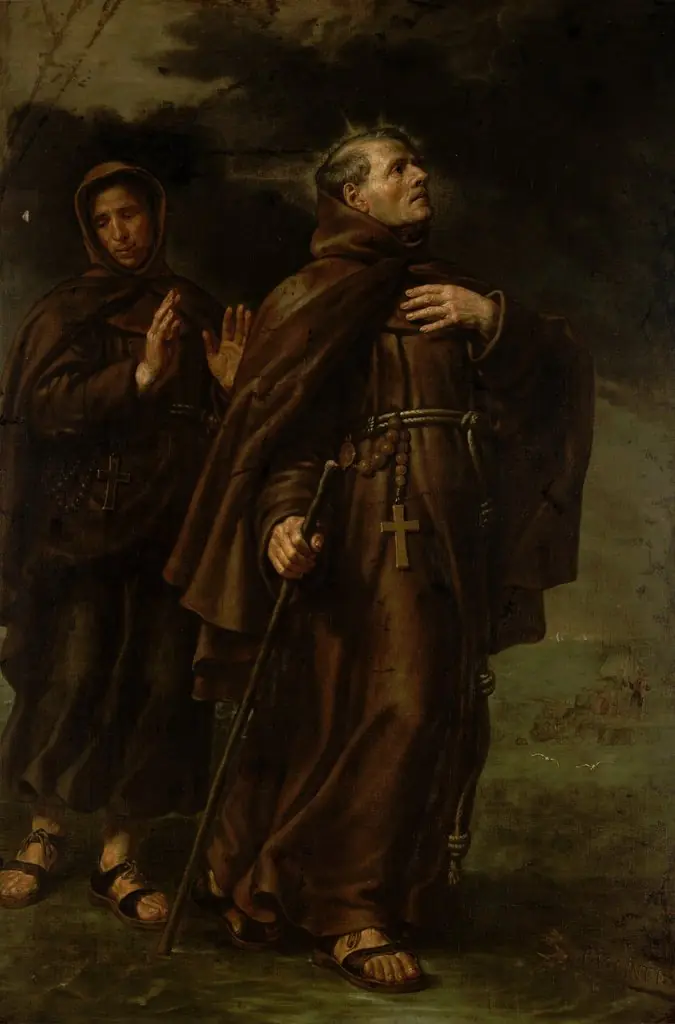 The Miracle of Saint John of Capestrano
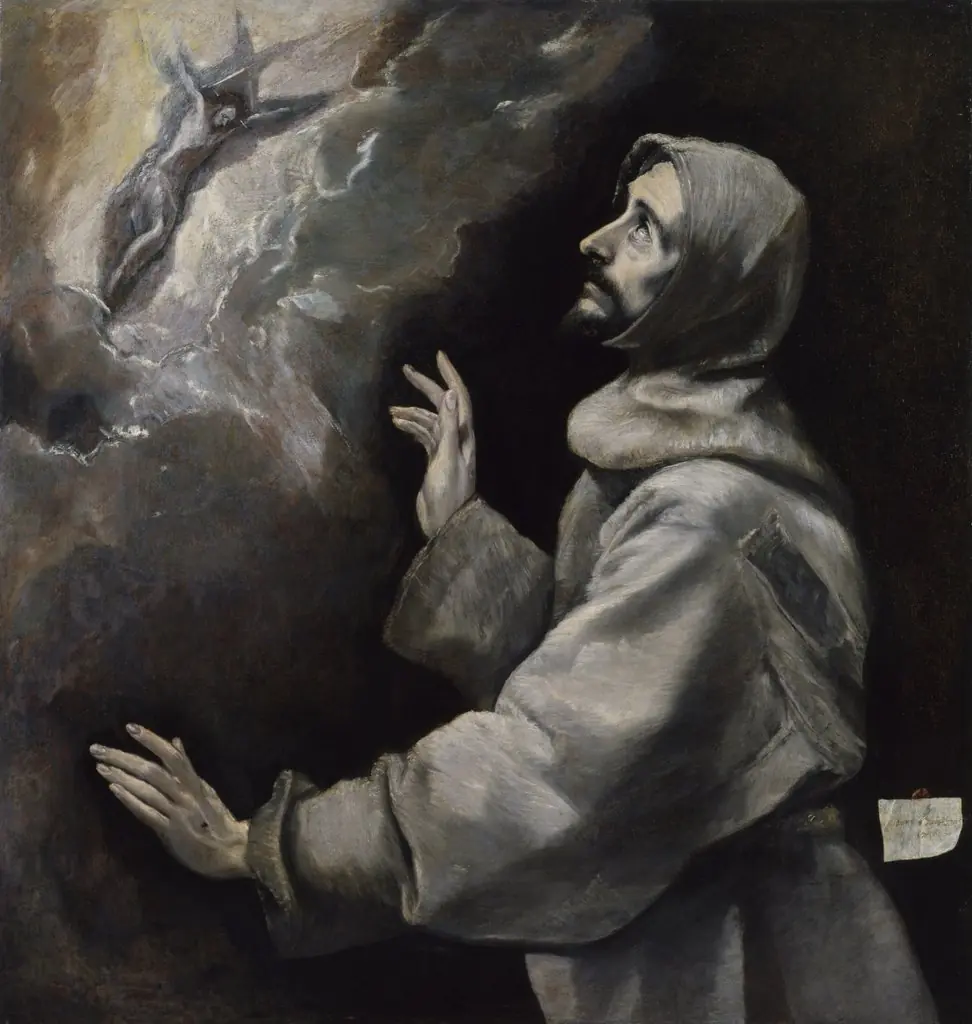 Saint Francis Receiving the Stigmata
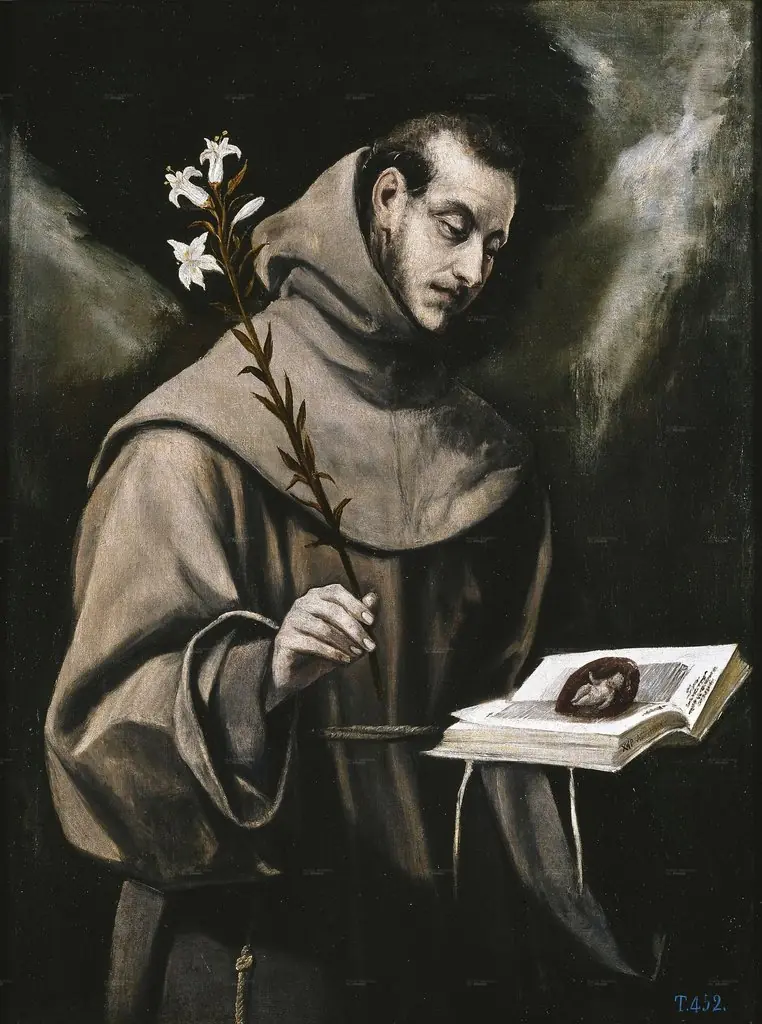 Saint Anthony of Padua
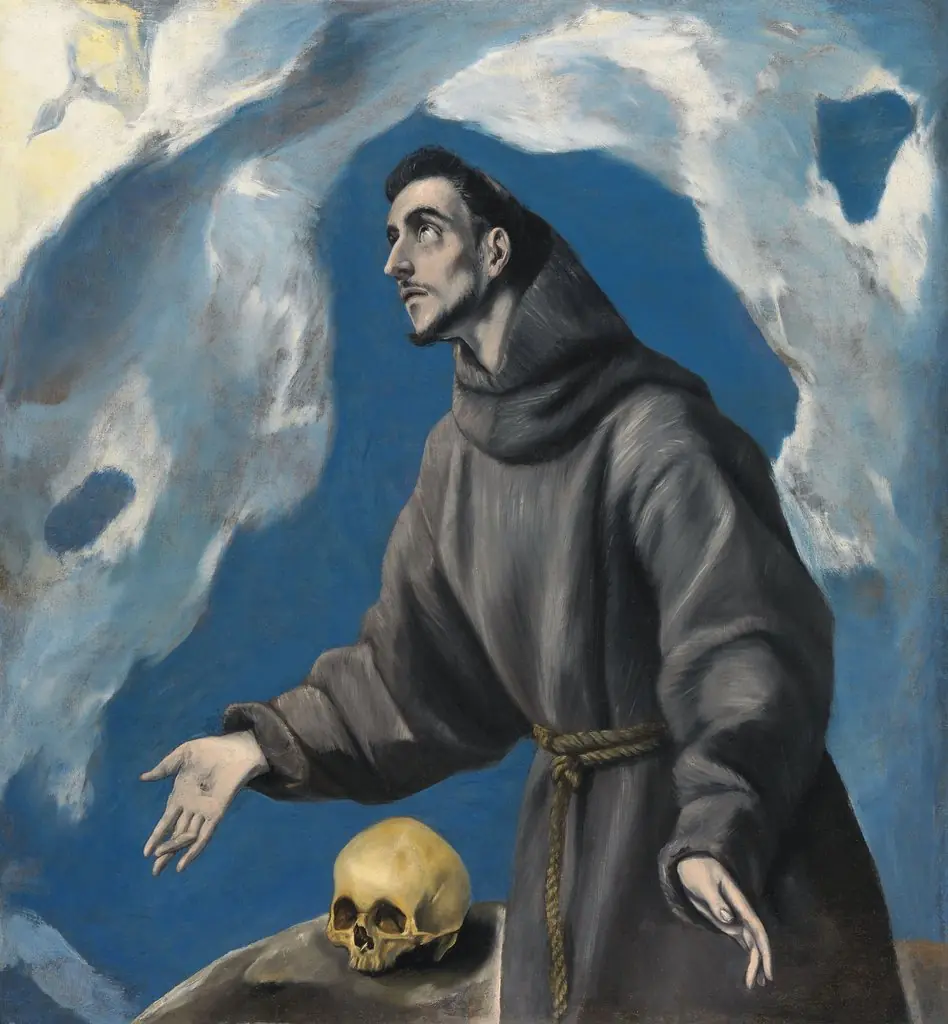 Saint Francis Receiving the Stigmata